

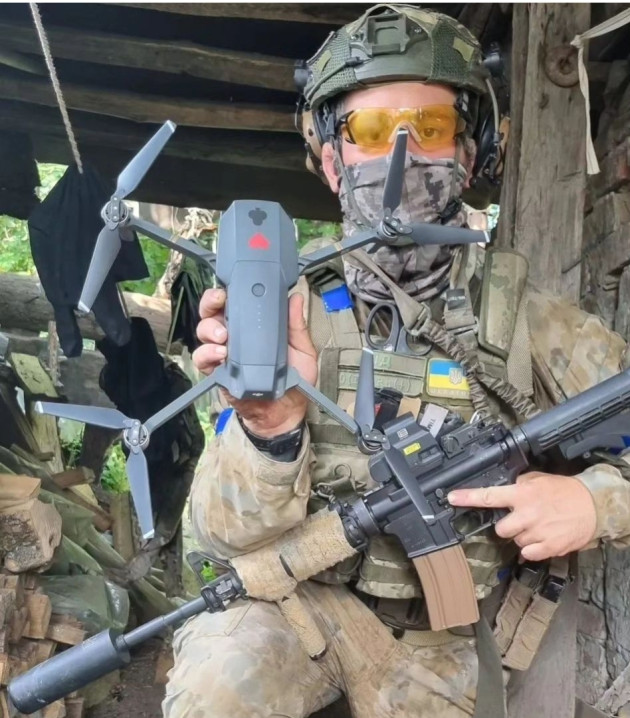
The technical barrier to entry is modest. After roughly thirty hours on a flight simulator, most trainees can control the aircraft with reasonable precision. In Ukraine, my team located a target within minutes during a training exercise. The experience made something clear: the operational knowledge required to use these drones no longer belongs exclusively to militaries.
Payload capacity remains limited. Most FPV drones carry between a few hundred grams and roughly two kilograms of explosive weight depending on configuration. Even so, the danger lies less in raw destructive power than in accessibility. A handful of drones flown into a dense gathering would create chaos.
Defenses exist but remain uneven. Electronic warfare systems can disrupt radio signals, though both sides in Ukraine constantly adapt around them. Fiber-optic drones eliminate jamming altogether by connecting the aircraft to the operator through a cable spool. Physical barriers remain one of the few reliable defenses; quadcopters struggle to navigate dense vegetation or enclosed spaces.
The institutional response is likely still catching up. It is difficult to imagine that most local, state, and federal law enforcement agencies—or the private security sector responsible for large venues and infrastructure—have been thoroughly red teamed against the drone tactics now common on the Ukrainian battlefield. Even if they were, the learning curve is steep. The pathway for such attacks exists; the defenses are still catching up.
Textbook Russo-Ukrainian warfare at this stage:
– Russian idiot running through the open field
– He carries AT mine, for some reason
– Ukrainian FPV drone with great video, rams right into him.
– Russian idiot becomes fertilizer pic.twitter.com/h2ShOR5e7j— Dimko Zhluktenko 🇺🇦⚔️ (@dim0kq) March 13, 2026
The Shahed Question
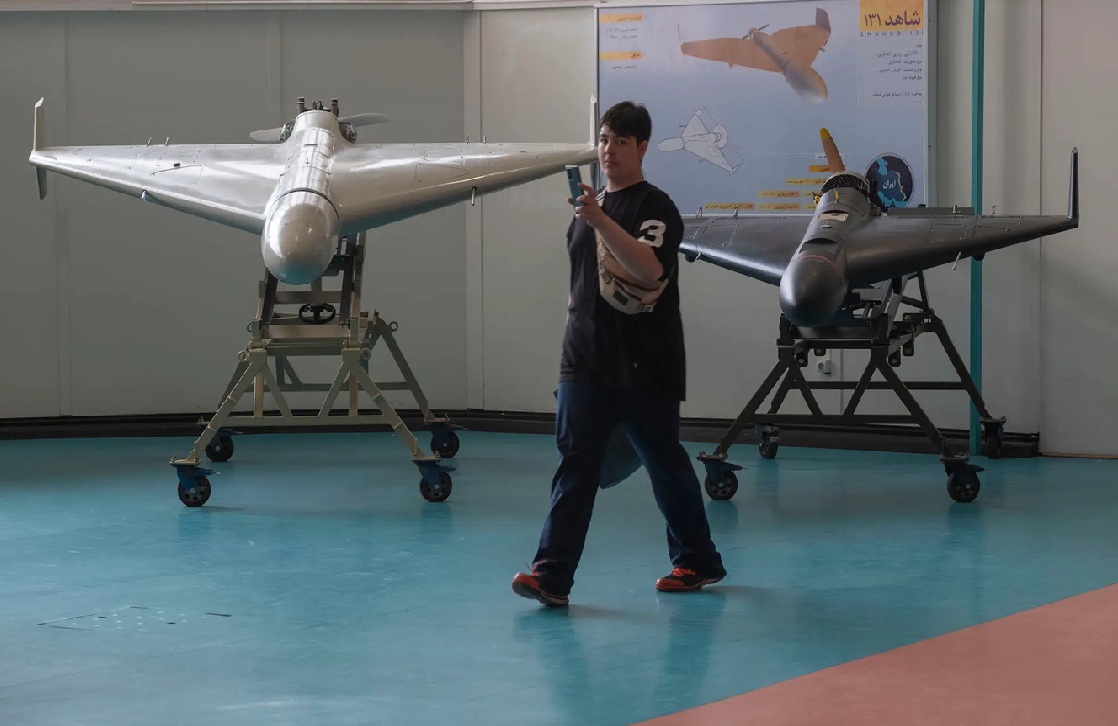
A more dramatic scenario involves long-range loitering munitions such as Iran’s Shahed-series drones. These aircraft have become a familiar feature of Russia’s nightly bombardments of Ukrainian cities.
I witnessed one of the largest drone strikes on Kyiv in 2023. Hundreds of Shahed-type drones approached the city in waves. Residents could hear the distinctive buzzing of their engines echoing between apartment towers as air defenses engaged overhead.
It is unlikely that such drones would appear over North American cities in the near term. Still, Iran’s history shows that distance alone has rarely prevented its networks from acting abroad.
In 1992 a suicide bomber destroyed the Israeli embassy in Buenos Aires, killing twenty-nine people and injuring more than two hundred. Investigators later concluded that Hezbollah carried out the attack with support from Iranian intelligence structures operating in Latin America. Two years later the same network was implicated in the bombing of the AMIA Jewish community center, which killed eighty-five people and remains the deadliest terrorist attack in Argentina’s history.
Iran’s presence in the region did not disappear after those events. In 2023 Tehran and Bolivia signed a defense memorandum, with Bolivian officials expressing interest in Iranian drone technology for border security. Analysts in Washington and Latin America viewed the agreement cautiously, noting Iran’s pattern of blending military partnerships with intelligence networks.
Transporting a Shahed drone into the Western Hemisphere would present significant logistical challenges. The aircraft weighs several hundred pounds and spans several meters. It can be disassembled for shipping and reassembled by trained technicians, yet doing so without attracting attention would be difficult. Sanctions monitoring, intelligence surveillance, and customs inspections would create multiple points of risk.
Still, the platform’s operational range—roughly one to two thousand kilometers depending on variant—means it would not need to originate in Iran itself. In theory a launch could occur from much closer to American territory; a seaborne drone threat remains a particular concern.
That does not mean such an attack is likely. It simply illustrates that geography offers less protection than many assume.
(Editors note: the captions in this Instagram reel are inaccurate, this video is simply a video representation of how Shahed style drones can be deployed)
View this post on Instagram
A Question of Will
Capability and intent rarely move together. Iran possesses the means to conduct attacks through proxies and covert networks. The regime also understands the consequences of striking directly at the United States.
A Shahed strike on American territory would trigger overwhelming retaliation and could place the survival of the regime itself at risk. Tehran has historically preferred indirect pressure over actions that invite full-scale war.
Still, dismissing the possibility entirely would be unwise. The Ukraine conflict has shown how rapidly inexpensive drone technology can reshape warfare. Tools that once belonged only to advanced militaries now circulate through civilian markets.
The uncomfortable reality is that the barrier to violence has fallen. A determined actor with modest technical skill can now project force in ways that would have required a sophisticated weapons program only a decade ago.
Whether Iran chooses to cross that threshold remains uncertain. What can no longer be questioned is the feasibility.









COMMENTS