

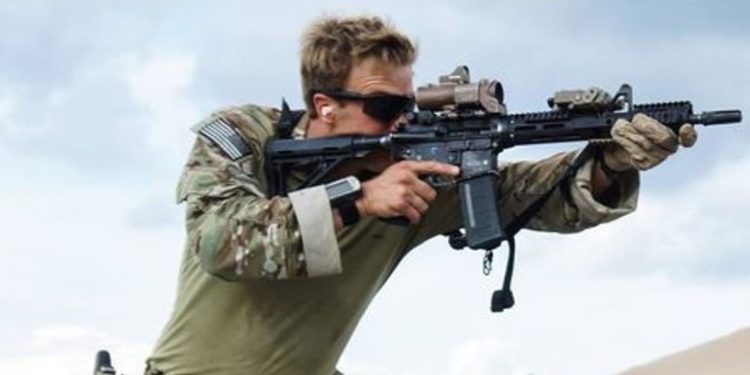
They are thoroughly trained in the use of modern (U.S. and foreign) firearms, explosives, hand-to-hand combat, high-performance driving, lock-picking and escape techniques, cyberwarfare, static-line and freefall parachuting, improvised explosive devices, SCUBA diving, vehicle hot-wiring, extreme-survival and wilderness training, combat medic training, surreptitious-entry techniques, tactical communications, foreign-language proficiency, and survival, evasion, resistance, and escape (SERE) methods. They are also fully trained as intelligence case officers, capable of running covert, agent networks behind enemy lines.
They are most likely to wear unmarked, Crye Precision MultiCam uniforms, like most U.S. Army and Air Force special operations units, but also exactly like the Ukrainian Special Operations Forces (SSO) and Security Service of Ukraine (SBU), with Ops-Core FAST MT Special Operations Forces ballistic helmets. Footwear includes a wide variety of rugged, commercial, brown, hiking boots from several different manufacturers.
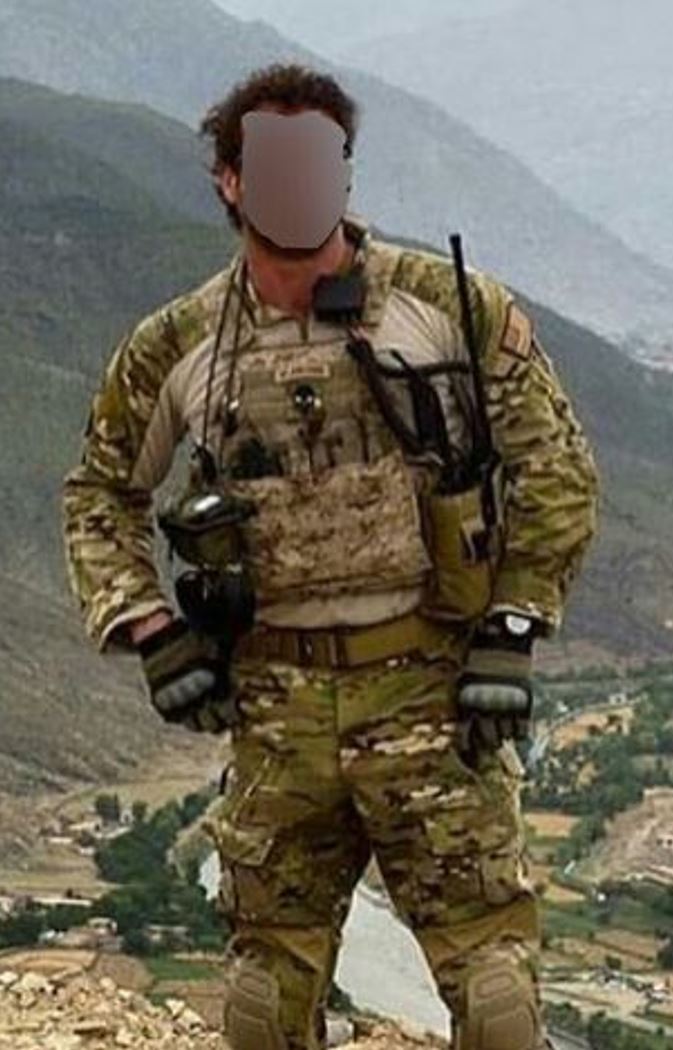
Until about a decade ago, they’d be armed with HK416A5 (German) carbines in 5.56mm NATO, but harsh, combat experience in Afghanistan and Iraq over the past quarter-century has led the Army Rangers, Navy SEALs, and Air Force Special Tactics teams, as a minimum, to transition to the harder-hitting, battle-proven, FN (Belgian-designed) Mk. 17 SCAR-H CQC in 7.62mm NATO (.308 Winchester), due to its much greater range and stopping power. Even the Army’s elite Delta Force uses the SCAR-H in certain situations.
In Europe, the SCAR-H is employed by the armed forces of Belgium, Cyprus, France, Lithuania, Norway, Serbia, Slovenia, and Spain, as well as with eight more non-European nations, so it’s truly an international design, not exclusive to U.S. special operations units.
Likewise, the rugged, time-honored, Glock-19 (Austrian-designed) pistol has been the standard-issue, CIA handgun for the past two and a half decades, but it’s almost too well-known as an Agency sidearm. A better choice in Ukraine might be the brand-new Walther PDP Pro SD Compact (P14K Tactical in Germany Army terminology) in OD green, with suppressor. These were recently selected by the German Special Operations Forces Command (KSK) as their new, standard handguns, replacing the Glock-17 and H&K P30. It has adjustable, suppressor-height sights, and can be equipped with the Aimpoint ACRO 2 red-dot optic.
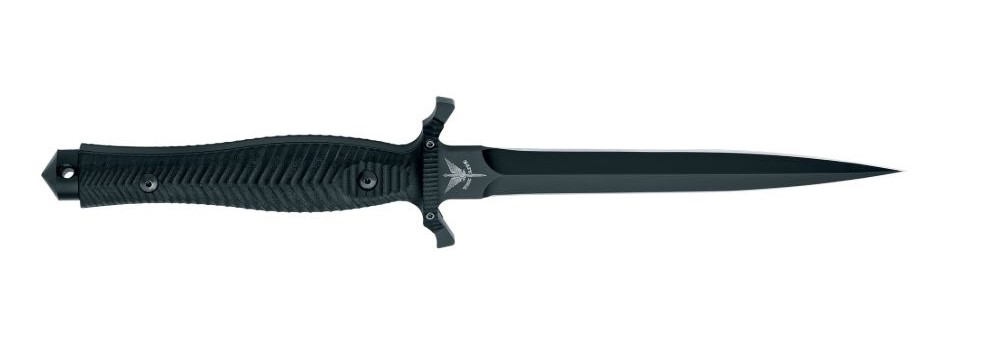
CIA/SOG operators do not ordinarily carry combat daggers, but in case of brutal, hand-to-hand combat in the frontline trenches, such a weapon would certainly be advisable. Fox Knives of Italy makes the superb Bellum Daga (“War Dagger”) with 6.75-inch blade, as a close-defense weapon, or Eickhorn-Solingen of Germany makes the excellent KM5000 dagger. Both are great example of plausibly-deniable, European tactical knives.
SOG teams may also experiment with brand-new (2024) firearms of foreign manufacture, such as the super-lightweight, Bergara (Spanish) Premier MgMicro Lite bolt-action rifle in 6.5mm Creedmoor, with an 18-inch barrel, weighing a mere 5.8 pounds, perfect as a lightweight, compact, nimble sniper rifle with suppressor. It’s accurate to within .48 to .65 MOA, and has an effective range out to 1,500 yards.
At the opposite end of the sniper rifle spectrum is the brand-new Sako (Finnish) TRG 62 A1, chambered in .375 CheyTac, for ultra-long range targeting. Its nominal range is 2,000+ meters, but one .375 rifle successfully hit a 72-inch target during March 2023 testing from 3,865 meters (2.4 miles), using Hornady A-Tip Match bullets.
CIA/SOG choices of vehicles during combat operations have been mostly limited to four-wheel drive, civilian vehicles, with rugged, Toyota Hilux or Tacoma pickup trucks, or Land Cruiser SUVs being especially popular, or non-standard, tactical vehicles.
Small, nimble, all-terrain vehicles (ATVs) are also used quite often. The perfect choice in Ukraine would be the Mercedes-Benz G300 CDI Professional (181 horsepower) military jeep, very similar to the 40 GD290 vehicles already operated by the Ukrainian Army, in olive drab with black wheels, as used by the Swiss Army.
Covert air support is also highly desirable, in the form of an unarmed aircraft with short takeoff and landing (STOL) capability, to be useful for reconnaissance, parachuting, infiltration and exfiltration, resupply, and medical evacuation, if necessary.
There is abundant evidence that the CIA/SOG Air Branch probably already operates a 2011 Quest Kodiak 100 STOL aircraft, painted overall satin-black. It was quietly leased from Aircraft Guaranty Corporation (AGC) of Oklahoma City, a “trustee service…for entities who cannot meet the Federal Aviation Administration (FAA) registration requirements.” This particular Kodiak 100 has been tracked to Canada in 2017, Argentina in 2018, and Uruguay in 2023.
Interestingly enough, it was also photographed at Leadville, Colorado, in November 2020, only 14 miles south of Camp Hale, a former Army base since World War Two, used by the CIA from 1958 to 1964 for training foreign freedom fighters. The remote camp continues to be utilized for mountain warfare training by the 10th Special Forces Group, 10th Mountain Division, and CIA/SOG paramilitary officers.
This black aircraft could be easily upgraded with the latest, optional, five-blade, composite, Hartzell propeller, making it lighter, 50-percent quieter, and able to take off in just 888 feet, or land in a mere 705 feet. Next, MT-Propeller of Atting, Germany, can attach an MT-27 Kevlar-composite spinner (nose cone), further reducing the metallic, radar cross-section of the aircraft. Finally, the aircraft may be modified by SST Flugtechnik of Memmingen, near the Swiss border, which provided a Patrol Aircraft conversion for the Angolan Air Force in early 2024. This kit featured a Leonardo PicoSAR (“Peak SAR”) compact, high-resolution radar with ground-moving-target indicator and 12.5-mile range, and a retracting, TrakkaCam (Swedish) TC-300 12-inch, FLIR infrared sensor.
A European-designed, helicopter gunship for close air support might consist of a dark-gray, Leonardo MH-139A Grey Wolf military helicopter, flown by the U.S. Air Force since 2020, but also by 25 other nations, including Ireland, Italy, Malta, and Slovenia in Europe, so this is a plausibly-deniable choice. Replacing its FLIR sensor with a Star SAFIRE 380-HLDc or MX-15D FLIR laser-designating sensor is a simple task, and the Leonardo factory in Rome, Italy, could quickly add four weapon stations and other essential equipment.
A Leonardo company photograph dated 2017 showed the AW139M armed with two rocket pods, a Nexter 20mm cannon pod, and four AGM-114K Hellfire II missiles, as an example of its possible, combat armament. All U.S. markings would be removed, and it would be flown by veteran, CIA/SOG Air Branch crews.
The CIA is already engaged in secret warfare to assist the Ukrainians as much as humanly possible, apparently with or without the knowledge of much of Congress, and that’s probably a good thing, for now. But, it’s only a matter of time until the U.S. and NATO are forced to provide more aggressive, military assistance to embattled Ukraine, because Russian President Vladimir Putin seems determined to fight to the bitter end.








COMMENTS