DARPA's Blackjack program represents a shift in U.S. military space strategy by testing low-cost, proliferated low-Earth orbit satellite constellations for enhanced resilience and capability. The program aims to demonstrate that small, commercially-built satellites can operate effectively in contested environments, ultimately transitioning technologies to operational military stakeholders.
Key points from this article:
The Blackjack program began in 2017-2018 as a technology demonstration to explore the viability of small satellites in military applications.
How the program's low-cost satellites, estimated at $6 million each, aim to complicate adversary targeting by operating in large numbers rather than relying on a few expensive systems.
Why the focus on high-speed optical inter-satellite links enhances data transmission resilience and reduces reliance on ground stations, making military operations more adaptable and efficient.
Updating summary...
DARPA Blackjack: Proving Resilient Military Space at Commercial Scale
Galen Fries
Speed
1x
Listen
COMMENTS
DARPA’s Blackjack program demonstrates how low-cost, proliferated satellites in low Earth orbit can deliver resilient military space capabilities by leveraging commercial technology, autonomy, and distributed architectures instead of relying on a few vulnerable high-value systems.
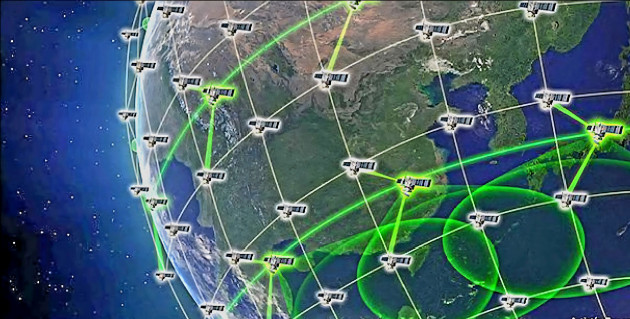
Artist's rendition of the Blackjack concept. Image credit: DARPA
DARPA’s Blackjack program is an important pivot in how the United States thinks about military space power. Instead of relying on a handful of exquisite, expensive satellites parked in predictable orbits, Blackjack tests whether proliferated low-Earth orbit constellations can deliver useful military capability at commercial speed and cost.
Advertisement
The program began in 2017–2018 as a technology demonstration, not an operational system. Its purpose is to show that small satellites, built largely from commercial components and launched in batches, can survive and function in a contested space environment. The logic is, if an adversary can target one satellite, they can target a few. If they have to target dozens, the system becomes more difficult to defeat.
Blackjack satellites operate in low Earth orbit and are designed to be relatively inexpensive by military standards. DARPA sets estimated costs at roughly $6 million per satellite, including the bus (chassis), payload, and launch. The spacecraft are built around standardized designs rather than custom-built platforms, with companies like Blue Canyon Technologies providing satellite buses and SA Photonics supplying optical inter-satellite communication terminals.
In June 2023, DARPA launched four Blackjack demonstration satellites aboard a SpaceX rideshare mission from Vandenberg Space Force Base. These spacecraft are part of a broader on-orbit experiment to test networking, autonomy, and payload integration rather than to deliver full operational coverage.
Advertisement
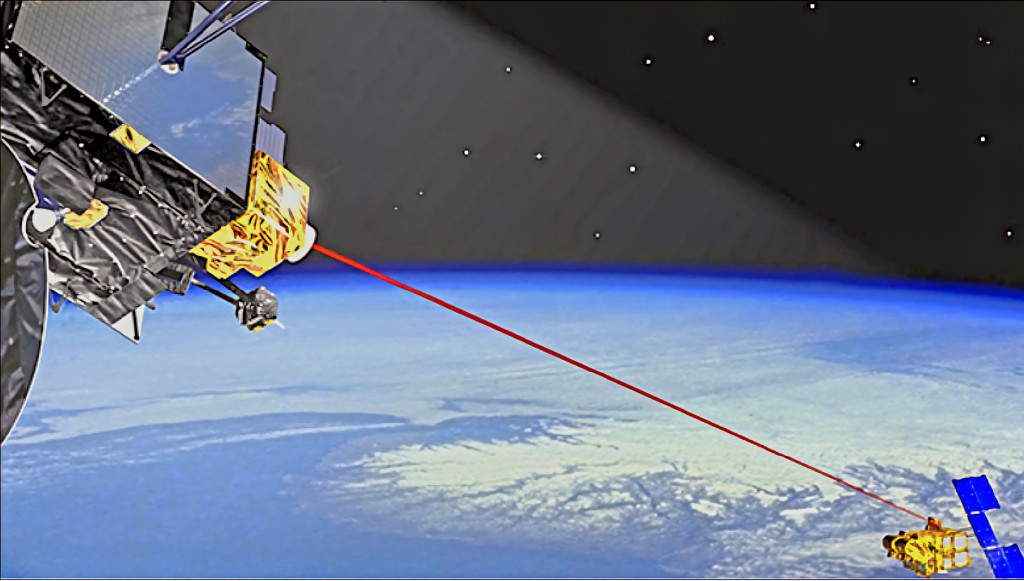
CACI acquired SA Photonics, a manufacturer of laser terminals for inter-satellite links. Image credit: CACI
One of Blackjack’s core goals is demonstrating high-speed optical inter-satellite links. These laser communications allow satellites to pass data directly between one another, reducing reliance on ground stations and improving resilience. A distributed mesh network in orbit is harder to disrupt than a hub-and-spoke architecture tied to a few fixed locations on Earth.
Blackjack also explores hosted payloads relevant to national security missions, including communications and experimental positioning, navigation, and timing concepts. These PNT efforts aim to complement existing GPS capabilities rather than replace them. Operating closer to Earth reduces signal latency and opens options for localized or theater-specific precision support, but Blackjack remains a demonstration program, not a deployed navigation system.
Advertisement
Autonomy is another focus area. DARPA has invested in onboard processing and software architectures that allow satellites to manage workloads, route data, and adapt to disruptions with minimal human intervention. Programs like Pit Boss support this vision, enabling distributed decision-making at the edge rather than pushing all processing back to ground control.
What Blackjack deliberately avoids is over-promising. It does not field a global missile warning constellation. It does not broadcast civilian navigation signals. It does not provide commercial broadband. Every payload, waveform, and architecture choice serves Department of Defense experimentation and future force design.
The strategic value is resilience. A proliferated LEO (low Earth orbit) architecture complicates anti-satellite targeting, shortens sensor-to-decision timelines, and aligns space systems with modern commercial manufacturing cycles.
Advertisement
Satellites can be refreshed, replaced, and upgraded on timelines measured in months instead of decades.
Blackjack technologies are intended to transition to operational stakeholders, particularly the Space Force and the Space Development Agency, which are building their own proliferated LEO transport and tracking layers. Blackjack feeds data, lessons, and hardware maturity into those efforts without locking the military into a single vendor or architecture.
In practical terms, Blackjack is less about any one satellite and more about proving that space no longer belongs exclusively to fragile, billion-dollar systems.
It shows that survivability can come from numbers, adaptability, and speed.
Advertisement
What readers are saying
Generating a quick summary of the conversation...
This summary is AI-generated. AI can make mistakes and this summary is not a replacement for reading the comments.









COMMENTS