

Finally, the objective was secure.
George: “My God, my ears are ringing!”
Sam: “What?”
George (louder): “I said, ‘My God, my ears are ringing!’”
Sam: “Shit, I can’t hear you. My ears are ringing so badly.”
On the ride back in the sardine can, Sam constantly brought his hand up to his ear, snapping his fingers a couple of times at one ear, then the other.
“Tonight reminded me of an Edgar Allan Poe poem, George.”
“Which one is that, Sam?”
“The bells, bells, bells, bells, bells, bells, the klinging and the klanging of the bells!”
“Touché, Sam.”
And that was typical Sam Foster, an out-of-box thinker—one that I don’t think ever thought inside the box during his entire life.
Kid though I may, Sam was always thinking and adjusting to bring the right tool to every fight, to make the maximum amount of positive impact on a situation in his favor. It was often joked that you always wanted to be sitting as close as possible to Sam on an aircraft because if it were to crash, Sam was voted most likely to survive. Proximity to Sam was key where survivability was concerned. He was the one you wanted nearby in the fight.
I confess that Sam was an irreverent sort of fellow, or at least I fancied him one. I recall a year we were in Poland, conducting counterterrorism operations with the Polish GROM, Poland’s counterpart to Delta Force. Hard training brought us an eventual down day where we were free to kick back.
Sam and Geo Go To Auschwitz
Sam and I jumped aboard with a group that was headed from our location in the capital city, Krakow (Krakov), to a neighboring location where the infamous Nazi WWII concentration camp pair, Auschwitz and Birkenau, were located. They were popularly referred to as Auschwitz 1 and Auschwitz 2.
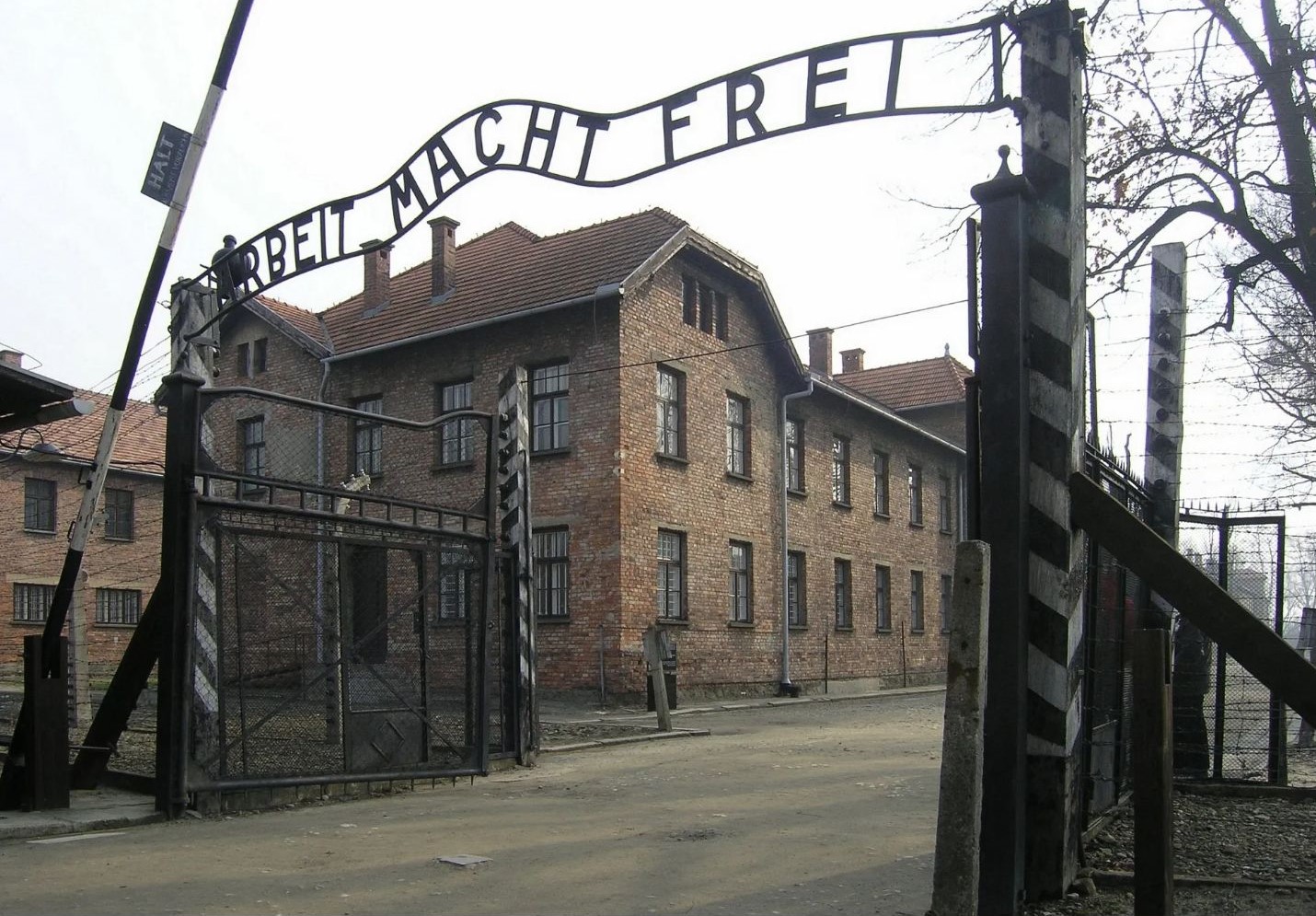
Once we arrived at Auschwitz 1, we passed under the well-known wrought-iron gate, into which the words “Arbeit Macht Fei”—”Work Makes Freedom”—were forged. We took note immediately that, of the many tourists there, nobody spoke in other than a whisper. This wasn’t a rule there; it was understood—implicit in the very aura of the memorial. I was burdened by a tenacious lump in my throat. Sam sported his usual poker face; he was just a hard read.
We stood, taking in a large poster mounted behind glass of a list of camp victims by nation. The list started with Poland—having the highest number of camp deaths at the top—then descending by victim count and nation. Sam, being the overt non-aficionado of France that he was, noted the lower number of French victims toward the bottom of the poster. He eventually leaned over to me and (at least) whispered, “Christ…they executed that plan in reverse priority.”
It is important to me to remind my readers that I just tell the story.
We departed Auschwitz 1 to make the short jaunt across the town of Oświęcim to Auschwitz II, Birkenau, the main entrance and facade of which need no introduction.
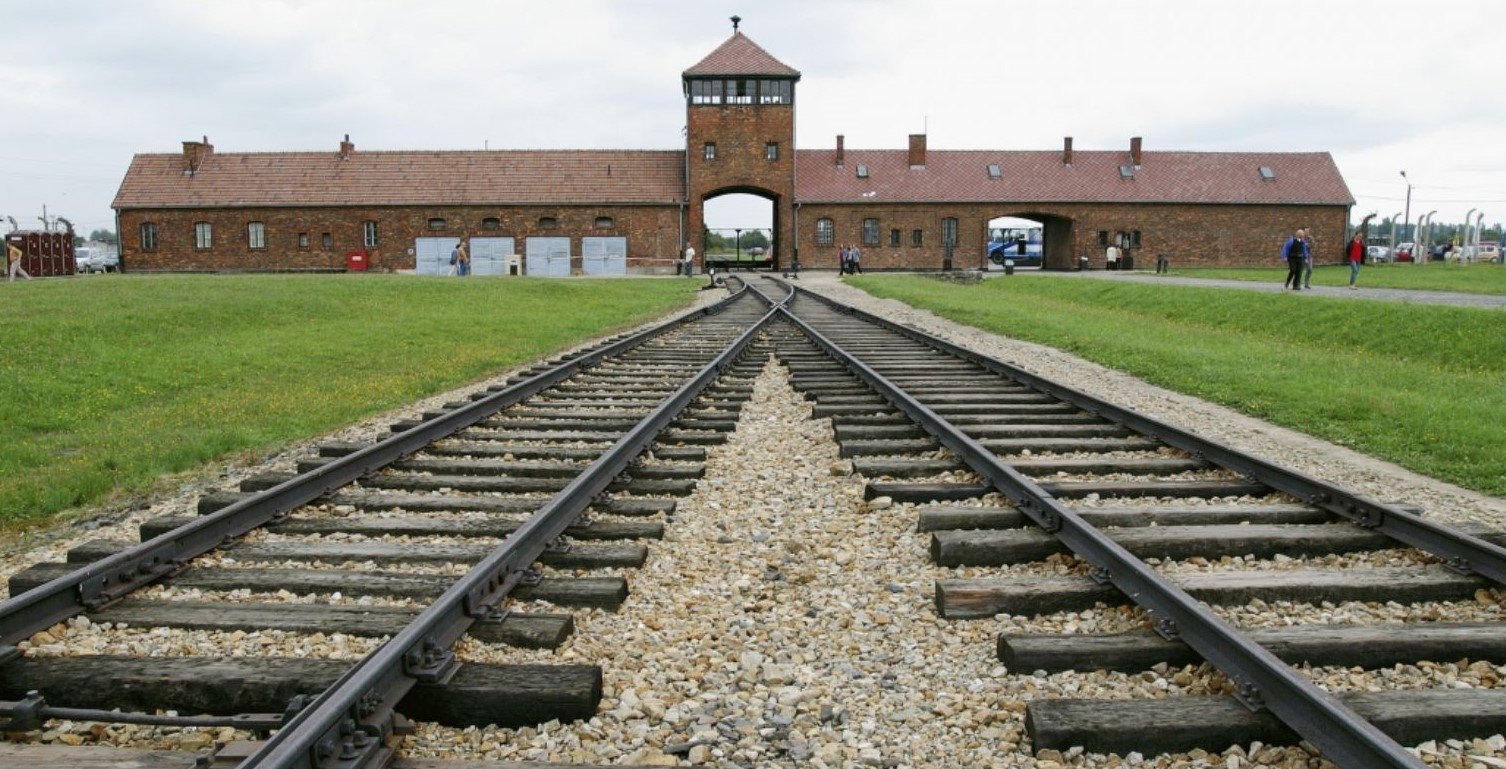
For me, Birkenau was another gut punch. By measure, it is a vast expanse of ground and is readily described as “the largest killing center in the entire Nazi universe.”
Birkenau is rife with a near-palpable sense of long-departed souls who dwelled in such Hell in life that they could discern no difference in death, wallowing in their plight for eternity.
Birkenau is the birthplace of a trove of new vocabulary describing suffering and dehumanization, immense to the summit of immeasurable, though I am loath to admit I fail to convey the sentiment.
“It sure was rude of people to leave their empty beer cans lying around,” Sam eventually (at least) whispered. The remark was referencing the holocaust memorial candles that were scattered throughout the crematorium ruins by hallowed visits of survivors and descendants.
“Yeah, what were they thinking?” I said.
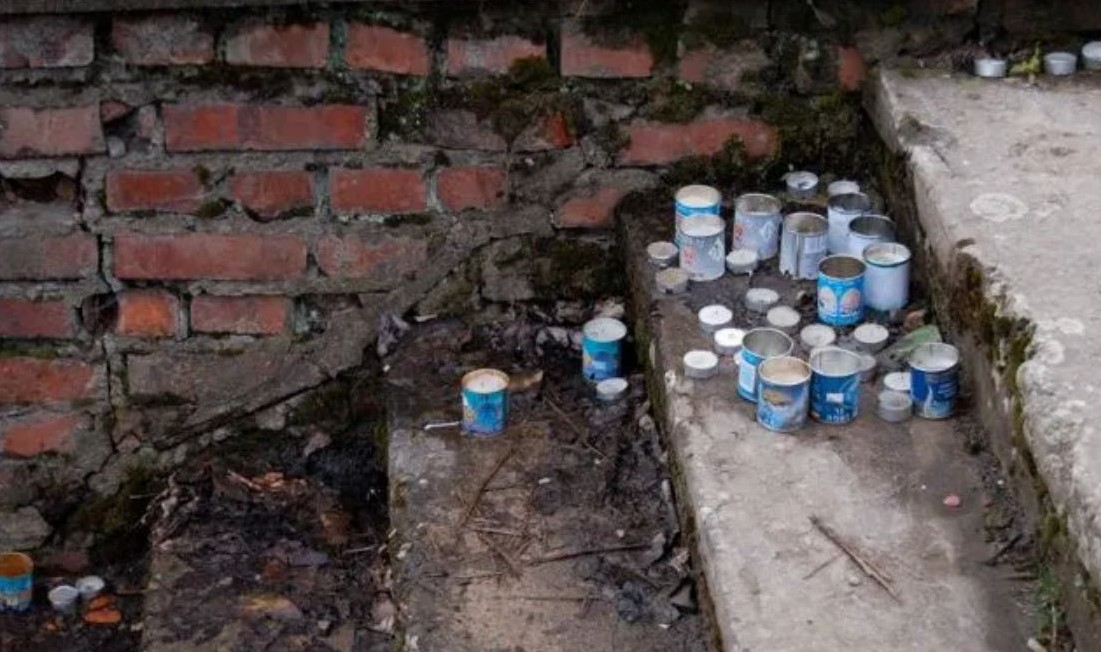
Sam’s BBQ Brick
“What are you looking for?” I queried of Sam, who shifted and sifted through the pile of debris that was crematorium number five, dynamited by the Nazis in an attempt to hide evidence of genocide as the Allied liberation forces loomed.
“I’m looking for the right-size brick,” he replied, then stood up, holding a specimen. “This is the one,” he continued:
“I’m building a BBQ in my backyard back home, and this will be the cornerstone.”
I half cringed, and half ducked my head lest the lightning bolt intended for him graze my cranium. “I’m pretty sure that is at the very least, say, frowned upon here, let alone illegal, Sam.”
“And your point is?” Sam ended the conversation. We continued our trek from the far end of the camp back to the main entrance, me standing clear of the expected radius of a thunderbolt, Sam walking with the awkward gait of a man with a brick in his pants.
Again, I remind my audience that I just tell the story.
Deep Pockets
After a dirt-bike ride through the pine expanse that separated the great drop zones of Ft. Bragg and The Unit compound to the east, we idled through the main gate flashing our IDs to the guards as we entered. It was a rainy day, and the ride down the sandy firebreak and red soil of the behemoth Sicily drop zone had dowsed us all in ruddy mud.
Sam signaled that he wanted to swing by the unit’s clothing issue facility (CIF). I came with. As we walked in, Sam pulled off his GORE-TEX rain jacket and exchanged it for a new one.
“What was wrong with your other one? Leaking?” I asked.
“No,” he said, “it was filthy.”
“Sam, you exchanged a perfectly good GORE-TEX jacket because it was filthy?”
“Chill out, George. Uncle Sam’s pockets run deep.”
The Right Man for the Job
In the words of one of the premier operators to ever grace a wall locker in The Unit, CSM Patrick K. O. S, “The Delta Force isn’t necessarily looking for the best man; they are looking for the right man.” Delta doesn’t care about your politics, your religious convictions, your dick size. Delta is looking for a man who will raze the surface of a parcel of Earth, leaving nothing living in a not-very-big pile of rubble.”
Delta got a landslide victory of a deal in Sam Booth Foster. Sam was an impious sort; I gathered that much from my trip to Auschwitz with him. Sam was irreverent, knew no compunction, was often selfish, and was not at all acquainted with compassion. He knew right from wrong and favored the latter. Still, by job description and measured standard, Sam was, per pound, one of the best, deadliest operators I’ve known.
Geo sends








COMMENTS