
Yet there is a reality the United States has never confronted honestly.
Hardening Democracy Without Abandoning It: Integration Leverage, Enforcement, and Strategic Trade-Offs
In the decades after 9/11, the United States did not reduce immigration from Muslim-majority countries. In aggregate, it expanded it, through refugee admissions, family reunification, and humanitarian pathways embedded in a broader post–Cold War immigration surge. This was not malice. It was denial.
It was as if the country decided that the safest response to Islamist terrorism was to demonstrate, through policy, that it had learned nothing from it.
Immigration does not cause extremism. But large-scale immigration without integration leverage amplifies risk. When states import people from societies where political Islam is normalized, where the separation of religion and state is alien, and where antisemitism is ambient, they are importing social realities that demand serious integration capacity.
For decades, American policy prioritized moral signaling over social cohesion, volume over integration, sentiment over statecraft. Then it expressed surprise when parallel societies formed and radical networks found fertile ground.
This is not racism. It is arithmetic.
Poverty alone does not radicalize. Poverty combined with humiliation, cultural dislocation, and ideological entrepreneurs does. Liberal values are not absorbed automatically. They must be taught, enforced, and reinforced. Too often, they were not.
A serious immigration policy would slow intake to match integration capacity, impose firm civic requirements tied to residency and citizenship, enforce zero tolerance for ideological intimidation, and remove non-citizens involved in extremist facilitation. But enforcement alone is not enough. States must also confront youth unemployment in at-risk migrant communities, where economic marginalization and social isolation create ideal conditions for radicalization. Across ideological movements, it is young men without work, status, or future prospects who are most susceptible to recruitment. Liberal values do not transmit themselves automatically; they require economic inclusion as much as cultural enforcement. None of this violates liberal principles. Other democracies already select for language, education, employability, and civic buy-in. The barrier is not capacity. It is political will.
The far right exploits this vacuum by offering crude answers. Much of the left refuses to answer at all. Meanwhile, the state absorbs the cost downstream through surveillance, policing, and emergency powers that erode civil liberties for everyone.
The Israel Variable: When Foreign Policy Becomes Domestic Fuel
There is one more variable Western societies must confront honestly: Israel.
Islamist movements themselves insist on making Israel their central grievance. That grievance is used to justify violence far beyond the Middle East, against civilians with no connection to the conflict. The ideological claim is not opposition to Israeli policy, but rejection of Israel’s existence.
At the same time, Western governments must ask whether unconditional support for every Israeli action, indefinitely, is worth the cumulative cost to domestic cohesion and internal security. This is not a moral argument against Israel’s right to defend itself. It is a strategic assessment of trade-offs.
Blanket alignment eliminates leverage. It allows jihadist movements to frame Western states as co-belligerents rather than external actors. That framing matters because perception drives mobilization. Supporting Israel’s security does not require endorsing every operational decision. Allies are not clients. Loyalty is not silence.
None of this is easy. Democracies are built for legitimacy, not speed. They assume good faith where none exists. But abandoning liberal norms is not strength. It is surrender by other means.
The task is not to replace democracy, but to harden it. To accept that pluralism requires boundaries, that integration requires leverage, and that free societies must defend themselves actively.
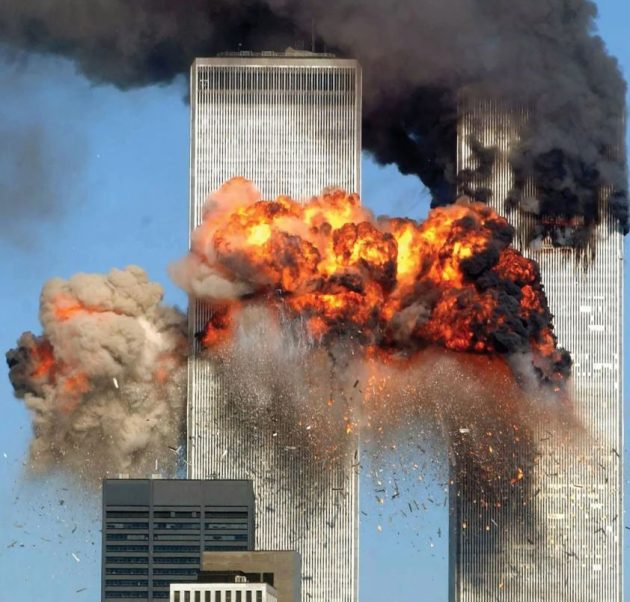
I was a child when the towers fell. I am no longer naïve about the costs of overreaction or inaction. The lesson of the past quarter century is not that democracy is weak, but that it cannot survive on moral aspiration alone.
Lines must be drawn. Laws must be enforced. Trade-offs must be acknowledged openly.
That is not authoritarianism.
It is self-preservation.








COMMENTS