

“Captain Lang is a fully motivated character, serious and calm in his demeanor, yet definitive and energetic when strength was needed. Very good attitude as an officer. Demands of himself first. He understands how to reach the men under his command correctly. Captain Lang possesses an exemplary concept of service, has initiative and talent for improvisation to a large degree.” — Lt. Col. Joseph “Pips” Priller, JG 26 commander, September 28, 1944.
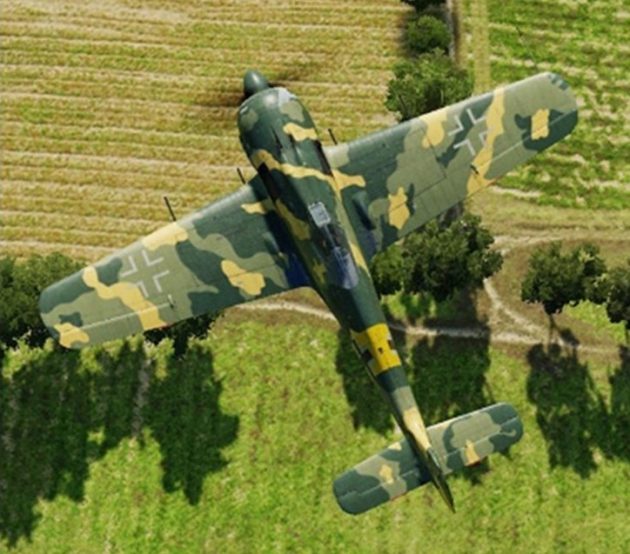
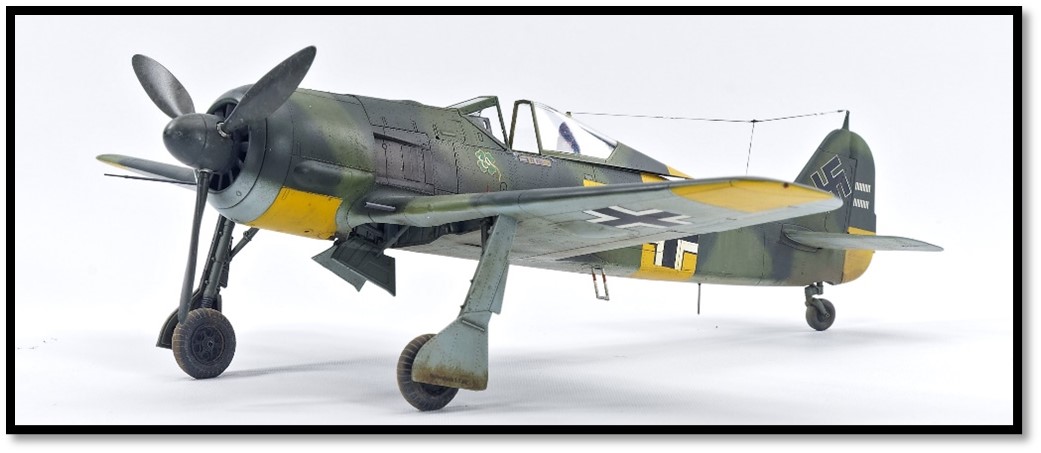
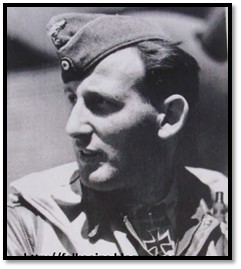
Captain Emil “Bully” Lang, age 35, was a German fighter pilot (former commercial pilot and military transport pilot) in World War II, nicknamed for his rugged, bulldog-like appearance. He was assigned to Fighter Wing 54 (JG 54) at the Eastern Front in Russia in February 1943 as a lieutenant, as one of the oldest pilots in the German fighter command, where he flew a well-camouflaged Focke-Wulf Fw 190 A-5 Würger (“Shrike”) fighter, bearing the black number “7” on its sides. This aircraft was armed with twin 7.92mm MG 17 machine guns in the engine cowling, with two 20x82mm MG 151/20 cannon and two 20x80mm MG FF/M cannon in the wings.

Lang scored 72 aerial victories near Kiev (now Kyiv), in the Ukrainian Soviet Socialist Republic (now Ukraine), within a mere three-week period in October and November 1943, during the Battle of Kiev. In fact, he set an all-time world record for 18 aerial kills achieved in a single day on November 3, 1943!

During a morning patrol near Kiev that day, he attacked a formation of Il-2 Shturmovik ground-attack aircraft and their Yak-7 fighter escorts at 9:31 AM, and by 9:42, he had downed four of the heavily-armored Il-2s, and three Yak-7s. At 1 PM, he shot down an La-5, followed by an unidentified Soviet aircraft in a third mission.
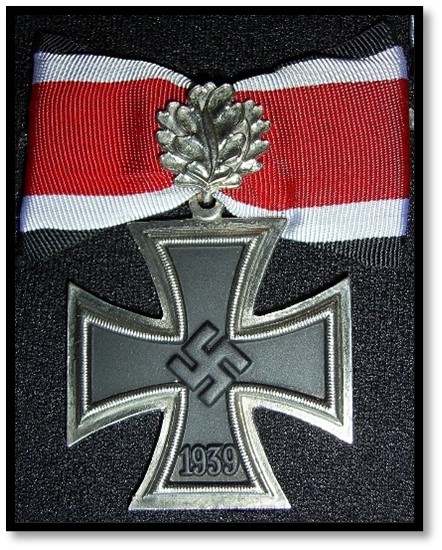
During his fourth sortie, he had a series of dogfights beginning at 2:16 PM and lasting 33 minutes, doubling the day’s victories by bringing down two La-5s, two Yak-9s, and five Il-2s. This brought his total score to 119 confirmed, aerial kills, for which achievement he was awarded the Knight’s Cross of the Iron Cross, equivalent to the U.S. Distinguished Service Cross, and the German Cross in Gold.

By March 1944, Lang’s total score on the Eastern Front had risen to 144 aerial victories, for which he was personally awarded the Knight’s Cross of the Iron Cross with Oak Leaves, equivalent to the U.S. Medal of Honor, by Adolf Hitler at Obersalzberg, Germany. Then, he was transferred to the Western Front, to Villacoublay Airfield in Occupied France, between Paris and Versailles, just before the Normandy invasion. On April 9, 1944, he was promoted to captain as a JG 54 squadron commander.
On June 8, 1944, only two days after the massive Allied invasion, Lang shot down an American P-51 Mustang near Bernay and a British Lysander light transport on June 11th, near Caen. Three days later, he brought down three P-47 Thunderbolts in just three minutes, raising his total tally to 150 aerial victories.
After four more P-51 Mustang kills a few days later, he was made group commander of JG 26, flying another Fw 190 A-5 fighter (# 0150 1240), with the number “1” in green on both sides, not a newer, A-8 model (supposedly # 171 240, an invalid work number, since the factory skipped #s 171 201-449), as has been previously reported. This aircraft was likely an A-5/U3 or A-5/U-8 version, with just two 20mm MG151/20 cannon in the wings, and the outboard MG FF/M guns removed to save weight.
The Fw 190 A-5 was often called the Leichtes Kampfflugzeug (“Light Fighter”) because it was designed with a lighter armament configuration compared to other variants of the Fw 190. This lightweight configuration contributed to its agility and speed, making it a truly formidable fighter in the skies over Europe.
By August 26, Captain Emil Lang had shot down 173 Russian, American, and British aircraft in the course of 408 combat sorties, including 144 aircraft on the Eastern Front and 29 more on the Western Front. His final three victories were against British Spitfire fighters.
On September 3, 1944, he took off on a transfer flight from Melsbroek, Belgium, just northeast of Brussels, at 1:20 PM, immediately experiencing difficulty raising his landing gear, which remained fully extended for the next 10 minutes. At an altitude of only 660 feet, one of his two wingmen urgently reported enemy fighters to the rear.
Lang and the other wingman, Lieutenant Alfred Gross, an ace with 52 confirmed kills, broke upward and to the left, while his second wingman dived away with two fighters on his tail, and force-landed at a nearby airfield. Gross claimed to have shot down an attacking British Spitfire before being shot down himself and parachuting to the ground. Emil Lang’s Fw 190 A-5 was seen by German forces in a vertical dive at Overhespen, Belgium, with the landing gear still extended.
American First Lieutenant Darrel S. Cramer (later a brigadier general), a P-51D Mustang pilot with the 338th Fighter Squadron, led a formation of three Mustangs over Brussels, intercepting a group of three to six Fw 190s. Cramer made a high-angle, deflection shot, struck one of the German fighters, and positively saw it hit the ground and explode.
This was most probably Lieutenant Karl-Heinz Kempf, an ace with 65 kills to his credit, and winner of the Knight’s Cross medal, shot down near Baal, Belgium, 14 miles northeast of Brussels, in an Fw 190 A-8, numbered “Black 9.”
Meanwhile, farther east, four British Spitfire Mk. XIIs of No. 41 Squadron fought with Fw 190s over Tirlemont (Tienen, in Flemish), Belgium, during which time Warrant Officer Peter W. Chattin was shot down and killed, possibly by Alfred Gross, and Pilot Officer Patrick T. Coleman claimed an Fw-190, probably Gross’s aircraft. Flight Lieutenant Terence “Terry” Spencer, age 26, after taking hits to the tail of his Spitfire, shot down another Fw 190, which dove vertically into the ground and exploded.
This combat action resulted in confusion and controversy, with Cramer and Spencer each claiming to have shot down the great German ace, Emil “Bully” Lang. However, the crash site at Overhespen was too far east for the American Mustangs, and the details of the dogfight perfectly matched the British Spitfire version of the story, with Alfred Gross even specifically stating that he shot down a Spitfire, not a Mustang, just as Emil Lang’s last three victories in the same area were all British Spitfires.
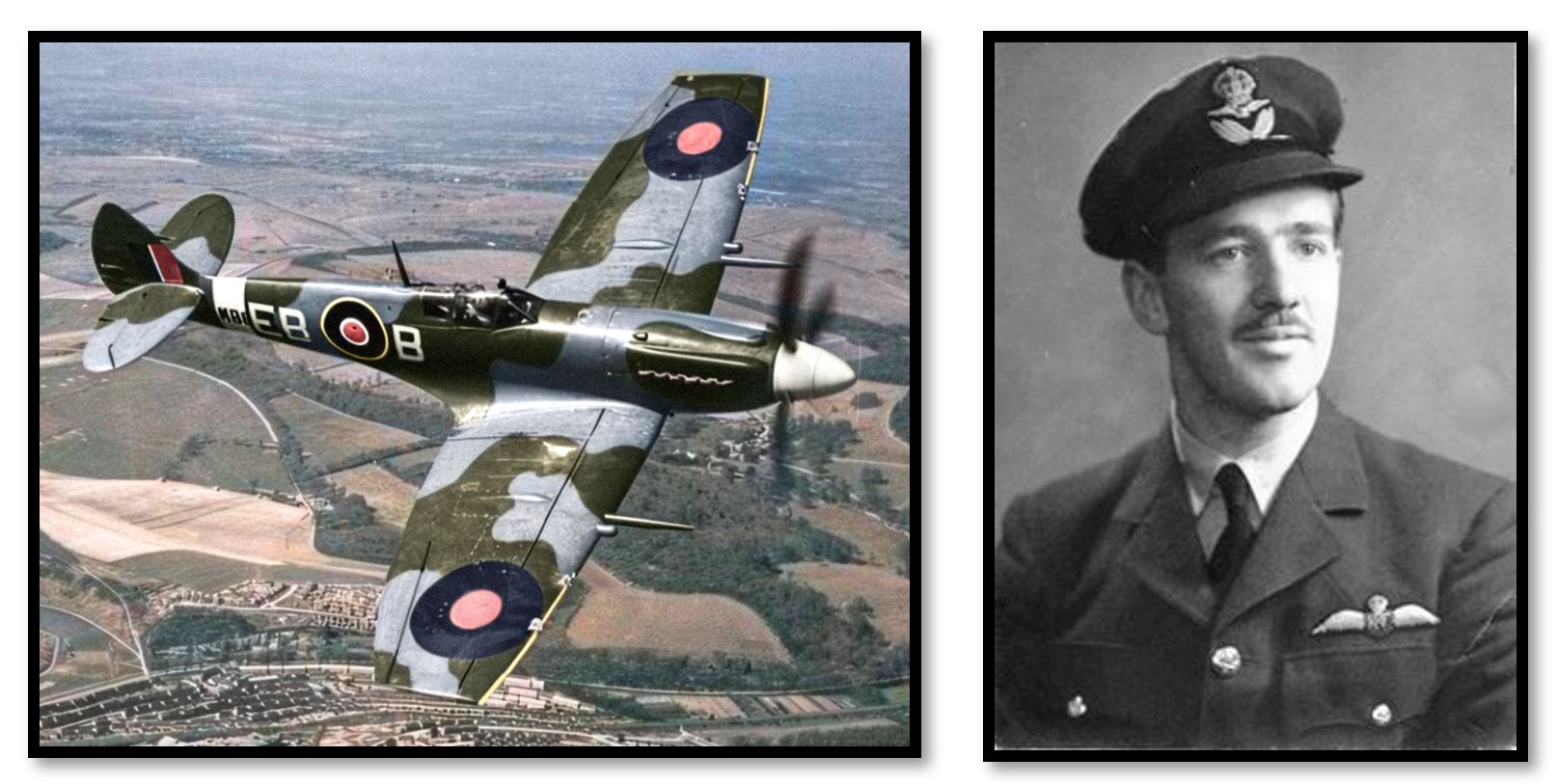
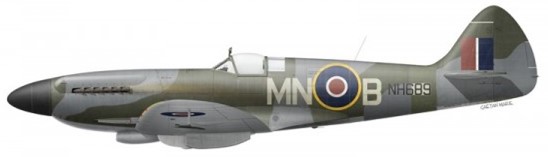
Logically, Lang had to have been shot down by Terry Spencer, a pilot who had previously shot down seven German V-1 flying bombs over Sussex and Kent from June through late-August 1944, plus one more in his logbook, which was never officially credited to him. His 1,735-horsepower Spitfire Mk. XII was one of the fastest fighters in the world at that time, with clipped wingtips for superb, low-altitude maneuverability, armed with two Hispano Mk. II 20x110mm cannon and four Browning .303-caliber machine guns.
Just days later, his squadron converted to a more-powerful (2,050 HP) Spitfire Mk. XIVs, with a new, five-blade propeller, and the .303 guns replaced by two Browning M2 heavy machine guns in .50 caliber. One British pilot aptly described the Mk. XIV as “a hairy beast to fly,” a sleek, brutally-powerful fighter.
Interestingly enough, Terry Spencer also holds an official world record: On April 19, 1945, while flying a Spitfire Mk. XIV, he was shot down over Wismar Bay, in northern Germany, while strafing a German trawler in the harbor with rockets. He successfully bailed out of his stricken Spitfire at the impossibly low altitude of just 30-40 feet, and was injured, captured, and hospitalized, but he survived the jump, the lowest, authenticated, bail-out survival in history, according to the Guinness Book of Records!
The official record book reads: “Lowest Parachute Escape: Sqn. Ldr. Terence Spencer, RAF, achieved the lowest-ever aircraft escape at a height of 9-12m (30-40 ft.), Wismar Bay, Germany, on April 19, 1945.” As dramatic as it seems, such a jump is technically possible.
British parachutes, such as the Spitfire’s Irvin seat harness, open canopy-first, faster than American parachutes, and the speed of the aircraft makes a difference, as well. I once jumped from an MC-130E Combat Talon aircraft at 140 knots, faster than the usual, 125 knots jump speed. My chute was fully deployed in just over two seconds, and the opening shock was noticeably greater than normal.
Assuming that Spencer jumped from about 35 feet altitude, at an estimated 150 knots airspeed (still safe, but just barely), the force of gravity would drop him 48 feet in the first two seconds, not vertically, but at a forward, oblique angle, and his chute would open in just under two seconds.
So, he would likely have just hit the water as his parachute canopy fully deployed above Wismar Bay, abruptly halting his descent speed. It’s survivable over water, not land, but he’d be injured, soaking wet, and be quickly captured by the Germans. That’s probably how it happened.
Spencer was liberated by the Allies two weeks later and was awarded the Distinguished Flying Cross (DFC) for his daring exploits, as well as the Belgian Croix de Guerre (“War Cross”) with Palm. In 2002, he and his wife co-authored a book entitled “Living Dangerously,” and he lived on to the age of 90.
So, Emil Lang’s notable, record-breaking accomplishment of 18 aerial kills in a single day wasn’t the only remarkable aspect of this war story. Mark Twain once observed that “Truth is stranger than fiction,” and this amazing-but-true tale certainly highlights the bizarre twists and turns of fate in wartime.








COMMENTS