By Eric Buer and Alex Vohr
For decades, the dominant assumption in environmental diplomacy has been that bigger is better, that the more nations sign an agreement, the more good it will do. The Paris Climate Agreement, with its 190-plus signatories and sweeping aspirational targets, represented the fullest expression of that philosophy. When the United States withdrew from it at the start of 2025, the foreign policy establishment declared a retreat from global environmental leadership.
That reading missed what was actually happening. The withdrawal was not a rejection of environmental engagement. Instead, it was a rejection of a flawed model of environmental diplomacy. A model that produced more symbolism than results, imposed asymmetric costs on American workers and taxpayers, and exempted the world’s largest emitters from binding accountability. In its place, a different approach has been quietly taking shape. This approach is bilateral, results-oriented environmental agreements that embed ecological commitments inside the architecture of trade, economics, energy, and national security. This is a new form of environmental statecraft, not always considered a standalone approach, and it is producing measurable outcomes that decades of multilateral processes failed to deliver.
As the Middle East enters its most volatile period in a generation, events there add an urgent dimension to this argument: adversaries are already weaponizing the environment, and a foreign policy that treats ecological issues as separate from security issues is strategically incomplete.
The Structural Failure of the Multilateral Model
The case against Paris was not simply ideological. The framework-imposed financing obligations on developed nations – including requirements to subsidize climate adaptation elsewhere through technology transfer and direct contributions to the Green Climate Fund, which sought to raise $100 billion annually. US commitments exceeded $11 billion per year under the prior administration, while the world’s largest greenhouse gas emitter faced no binding near-term constraints. That asymmetry undermined both the agreement’s environmental integrity and its political durability.
But the deeper problem with Paris – and with multilateral environmental agreements broadly – is institutional. COP stands for Conference of the Parties, the annual gathering of nations that have signed the United Nations Framework Convention on Climate Change (UNFCCC). The negotiating table at COP summits is populated almost entirely by environmental ministers and climate experts whose mandates are defined entirely by their own frameworks. What is absent are the officials who actually pull the levers of power that shape environmental outcomes. These include trade representatives who can link market access to environmental performance standards; Treasury officials who can condition financial flows on compliance; defense and national security officials who understand the strategic dimensions of energy dependence and cross-border contamination; and economic development officials who negotiate the growth tradeoffs their counterparts face. When the people writing environmental rules are isolated from those writing trade, energy, and finance rules, the result is an agreement that can be celebrated but quietly ignored.
A 2024 report by the UNFCCC Secretariat found that national climate commitments reflected a “stagnation in aggregate ambition”, a damning verdict on nearly a decade of COP diplomacy. The executive order initiating the US withdrawal was explicit about how to fix it. It directed the Secretary of State, the Secretary of Commerce, and the heads of any agencies coordinating international energy agreements to prioritize economic efficiency, American prosperity, and fiscal restraint in all foreign engagements concerning energy policy. State, Commerce, and the economic agencies at the same table as environmental policy – that integration is precisely what has been missing from the multilateral model.
When the Environment Becomes a Weapon: Lessons from the Middle East
While multilateral climate diplomacy debates targets, adversaries of the United States have been deploying environmental destruction as a deliberate instrument of conflict. This dimension of modern warfare is underreported, and it represents one of the strongest arguments for integrating environmental policy into the full architecture of American foreign and security strategy.
The Houthi campaign against Red Sea shipping, sustained since late 2023, is the most documented recent example. The bulk carrier, MV Rubymar, sank carrying 200 tons of heavy fuel oil and more than 21,000 tons of ammonium phosphate sulfate fertilizer, leaving an 18-mile oil slick in the Bab el-Mandeb Strait. The tanker Chios Lion, which struck in July 2024, trailed a slick stretching more than 124 miles. The Greek-flagged Sounion, carrying 150,000 tons of crude oil, was attacked and set ablaze. It created a hull breach that would have produced the fifth-largest oil spill in recorded history. Forced rerouting around the Cape of Good Hope added roughly 3,000 nautical miles per voyage – driving a 30 to 35 percent increase in carbon emissions on affected routes. The Red Sea, home to more than 1,200 species of fish and some of the world’s most biodiverse coral systems, now absorbs deliberate pollution on top of the existing pressure of warming waters.
The Houthi playbook did not emerge in a vacuum. It reflects a broader pattern within Iran’s network of proxies and partners, in which environmental infrastructure – water systems, oil facilities, maritime chokepoints – is understood as a domain of coercive power. Iraq’s water crisis, one of the most severe in the region’s history, has been deepened by decades of deliberate upstream manipulation, militia interference with water governance, and the weaponization of infrastructure access as political leverage. Hezbollah has long understood that threatening Lebanon’s energy and water infrastructure creates civilian pressure extending far beyond any military target. Most recently, the broader regional escalation involving Iran produced more than 300 documented incidents of environmental harm across Iran, Iraq, Israel, Kuwait, Jordan, and the Gulf states – from burning military facilities releasing toxic smoke over civilian populations to damage to Iran’s already critically stressed water and wetland systems. Iran entered that conflict already experiencing what leading researchers have called a condition of water bankruptcy, with groundwater depletion so severe it has caused land subsidence in major cities, and air pollution in Tehran regularly ranking among the worst in the world.
Environmental degradation in this region is not a side effect of conflict; it is frequently a deliberate instrument of it, compounding over time into instability, displacement, and humanitarian crisis. Environmental statecraft is not a soft addendum to hard power. It is part of the same analytical framework.
Already have an account? Sign In
Two ways to continue to read this article.
Subscribe
$1.99
every 4 weeks
- Unlimited access to all articles
- Support independent journalism
- Ad-free reading experience
Subscribe Now
Recurring Monthly. Cancel Anytime.
The Tijuana Model: What Results-Based Diplomacy Looks Like
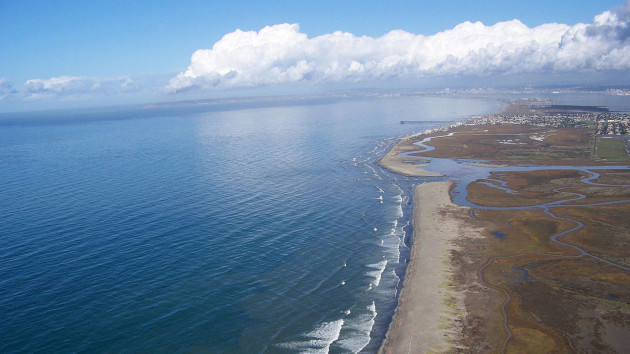
The Tijuana River case illustrates what accountable bilateral environmental diplomacy can achieve. For decades, more than 200 billion gallons of toxic sewage, trash, and unmanaged stormwater flowed across the US-Mexico border into the Tijuana River Valley, closing Southern California beaches and sickening communities on both sides. It was a public health emergency and a direct threat to national security infrastructure. The US Navy SEALs, three nuclear-powered aircraft carriers, and tens of thousands of sailors are stationed at Coronado, immediately downstream.
Previous agreements had addressed the crisis on paper. Infrastructure projects had been planned and funded. Deadlines had been set and missed. The sewage kept flowing. What changed in 2025 was the composition of a new diplomatic effort. EPA Administrator Zeldin traveled to the region, toured it by helicopter, and met directly with military personnel, local officials, and community representatives. He then negotiated in coordination with Secretary of State Rubio and the National Security Council, bringing together environmental, diplomatic, and national security equities in a single framework. The result was a binding memorandum of understanding (MOU) with specific infrastructure deliverables, hard deadlines, and conditioned funding – US Border Water Infrastructure Program dollars tied directly to verified Mexican project completion.
Mexico committed to $93 million in infrastructure improvements. The US International Boundary and Water Commission completed a 10-million-gallon-per-day expansion of the South Bay International Wastewater Treatment Plant in 100 days. This was a project estimated to take two years. Congressman Scott Peters of San Diego, a Democrat who had worked on the issue for years, captured what made this different:
“I am extremely grateful to Administrator Zeldin for his steadfast dedication to a 100% solution that upholds U.S. obligations and, most importantly, commits Mexico to build, maintain and fund the projects it must have to protect its people now, as well as future population growth.”
The agreement escalated further. In December 2025, the two nations signed Minute 333, holding Mexico to more demanding commitments than any prior framework and incorporating Tijuana’s population growth into its infrastructure planning – a variable absent from each previous agreement. The agreement also mandated a water infrastructure master plan within six months and established an operations and maintenance account at the North American Development Bank to fund long-term system upkeep. The total timeline compression since the July 2025 MOU amounted to approximately 12 years of deferred infrastructure work. This bilateral diplomacy was only achievable through unprecedented intergovernmental commitment, focus, and cooperation.
Why Bilateral Accountability Outperforms Multilateral Aspiration
In a bilateral agreement, there is no crowd to hide in. There are two parties, named obligations, and a specific counterpart who either delivers or does not. Accountability is direct and public, reinforced by reporting requirements – making progress and non-compliance visible to communities, legislators, and diplomats on both sides of the border. A nation that shrugs at the prospect of missing a voluntary COP target responds very differently to the prospect of losing preferential trade terms or watching development finance shift to a more compliant partner. When environmental commitments are negotiated in the same room as trade and economic agreements, by the same officials, they carry real weight. As researchers at the Carnegie Endowment for International Peace have observed, few challenges haunt trade negotiators more than a lack of meaningful deadlines – a problem especially acute at the intersection of trade and environmental policy. The bilateral model resolves that by design.
This logic is already operating across multiple relationships. The EU-US energy framework negotiated in mid-2025 integrated LNG supply agreements, energy security commitments, and trade terms under joint State Department and foreign affairs leadership. This shows how the US is treating energy and environment as central elements of the transatlantic relationship, not peripheral ones. That is the template.
“The Doctrine” Applied Broadly
Environmental statecraft is appearing across the full range of bilateral relationships wherever environmental performance intersects with US economic, energy, or security interests – which is nearly everywhere. It includes conditioning market access on pollution reduction, linking arms transfers to energy infrastructure standards, and tying Export-Import Bank financing to waste management compliance. All of these make environmental performance a relevant variable in the bilateral relationship, one that can be tracked and enforced by the same leaders who built and manage the relationship.
The Middle East context makes this especially urgent. Where environmental infrastructure is already being weaponized, where water access is leveraged as political coercion, shipping lanes are turned into ecological battlefields, and proxy networks exploit humanitarian crises born of environmental degradation. The United States needs to leverage a foreign policy doctrine that treats the environment not as a philanthropic concern but as a strategic one. That means bilateral agreements with partners in the region that tie environmental remediation to security cooperation, condition military and economic assistance on measurable improvements in water governance and pollution control, and build the interagency architecture to monitor and enforce those commitments. None of this requires abandoning the aspiration goals of global environmental cooperation, but it does require recognizing that aspiration is not statecraft. Statecraft requires leverage, accountability, timelines, and consequences.
Conclusion
The Tijuana River is cleaner today than it has been in decades. A public health crisis that had defied resolution for twenty years was addressed in eighteen months – because EPA, State, the NSC, and Treasury sat at the same table and held a partner to account against specific, measurable, conditioned commitments. Across the Middle East, adversaries have already grasped what multilateral environmental diplomacy has been slow to acknowledge – that the environment is not separate from security, economics, and military power. Instead, it is woven through all of them.
Environmental statecraft is not ideological. It is not partisan. It is the recognition that the most durable environmental outcomes come not from collective aspiration, but from the disciplined integration of environmental objectives into the full portfolio of how America engages the world. The model is working. The only question is whether we are paying attention.
—
Alex Vohr is a retired Marine Corps Colonel and combat veteran. He served as a commanding officer, Director of the USMC School of Advanced Warfighting, and as the J4 for US Southern Command. He is the author of Speed Kills and is currently the President of One LNG, a Texas-based energy company.










COMMENTS