Frankenberg Technologies in Estonia has developed the Mark 1 missile, a miniature air-defense system designed to combat Russian drones, emphasizing affordability and rapid production. The missile, guided by AI, aims to provide NATO nations with a cost-effective solution to modern aerial threats.
Key points from this article:
The Mark 1 missile, measuring 25.6 inches, is specifically designed to intercept Russian reconnaissance and attack drones, addressing a critical need for NATO nations like Estonia.
How the Mark 1 missile's estimated cost of $50,000 allows for a more practical defense against low-cost Russian drones, which often require expensive missile systems to neutralize.
Why the development of the Mark 1 is crucial for Estonia, which shares a 183-mile border with Russia and ranks second in NATO defense spending as a percentage of GDP, highlighting the urgency of bolstering air defense capabilities.
Updating summary...
Estonian Mark 1 Missiles for “Ending This Madness”
Warren Gray
Speed
1x
Listen
COMMENTS
Estonia’s Frankenberg Technologies is betting that its AI guided, “good enough” Mark 1 mini missile, built cheap and in huge numbers, is the practical way to swat Russian drones out of NATO skies without going bankrupt.
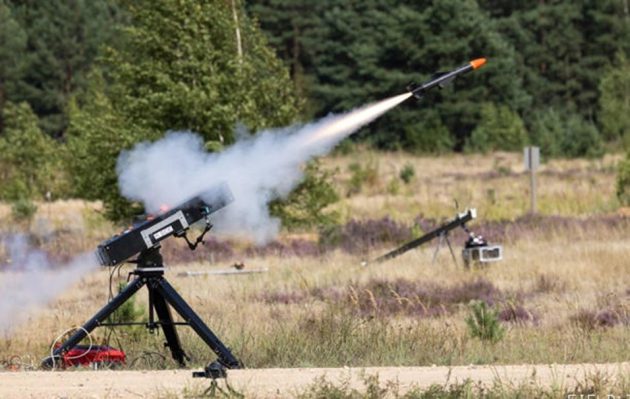
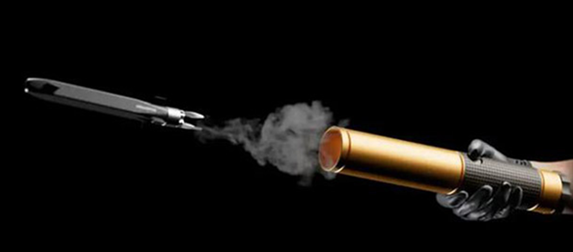
Frankenberg Mark 1 missile being test-fired. Photo credit: Frankenberg Technologies.
“We are not apologetic about the fact we manufacture weapons…to take down Russian, long-range drones…this will be the most-needed capability in the Western world in the next five to 10 years…in somehow ending this madness.” — Kusti Salm, CEO of Frankenberg Technologies, 2025.
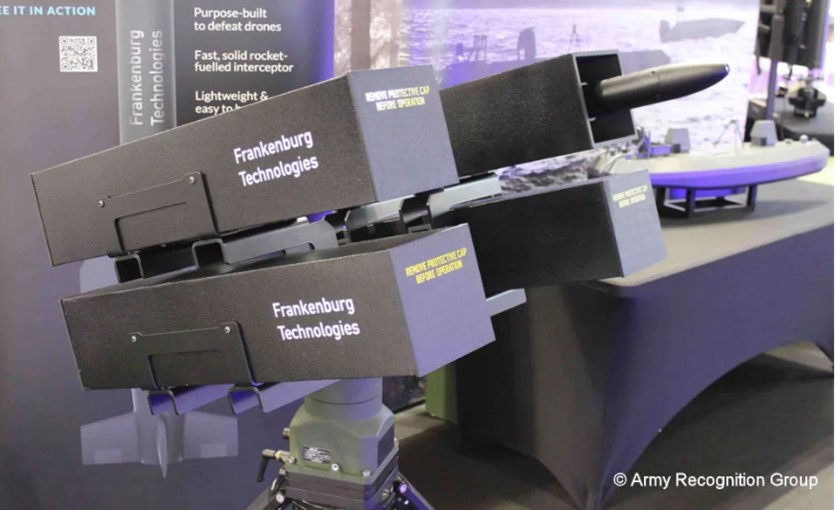
Frankenberg Technologies of Tallinn, Estonia, a NATO nation, has developed an astounding, new, miniature, air-defense missile, specifically designed for shooting down Russian reconnaissance and attack drones. The tiny, solid-fueled, Mark 1 (or Mk. 1) missile measures a mere 25.6 inches in length, about the same size as the still-experimental, Lockheed MHTK (Miniature Hit-to-Kill) missile.
Advertisement
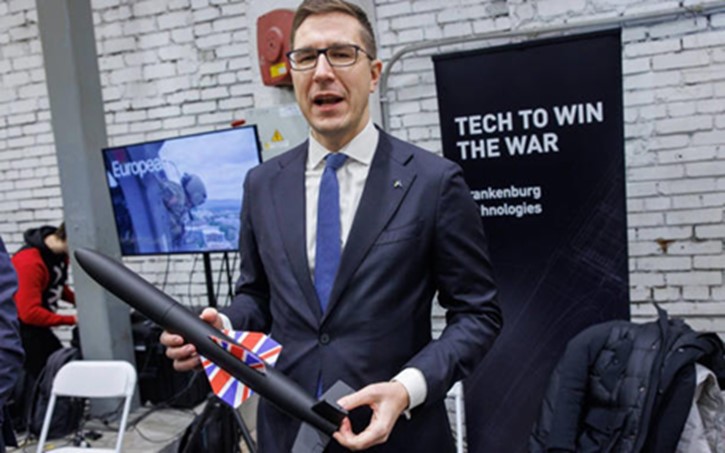
Kusti Salm, CEO of Frankenberg Technologies, holding a replica of the Mark 1 missile. Photo credit: Frankenberg Technologies.
The company CEO, Kusti Salm, is the former Secretary General of the Estonian Ministry of Defense from 2021 to 2024, and their chief engineer is Andreas Bappert, who designed the high-technologyAIM-2000 IRIS-T air-defense missile, now used throughout NATO, and in Ukraine.
“Our mission,” Mr. Salm states bluntly, “is to equip the free world with the technologies needed to win the war. We are in the rocket-science business. Our aim is to develop missile systems that are 10 times more affordable, 100 times faster to produce, and in quantities far exceeding current industry capabilities. We revolutionize missile targeting by employing our cutting-edge, AI-powered situational awareness platform, enabling us to anticipate threats and stay ahead of our adversaries. We operate in Estonia, Latvia, Lithuania, Ukraine, Denmark, Poland, (andthe) United Kingdom.”
The miniature, Mark 1 missile is guided by artificial intelligence (AI), and can engage aerial targets, such as drones, flying at altitudes up to 6,600 feet (1.25 miles), in a weapon system that they state is “conventional, low-cost, and optimized for mass production—intended specifically for neutralizing drones and loitering munitions on today’s contested battlefields,” at a fraction of the cost of a new, FIM-92J Stinger heat-seeking missile, which is currently about $120,000.
Advertisement
Affordable, mass-produced missiles are an absolute necessity in this shocking era of modern warfare, featuring very-low-cost, Russian drones invading Ukrainian and NATO airspace, and it quickly becomes outrageously expensive to shoot down a $5,000 drone with an AIM-120C-7 Slammer ($1 million) or AIM-9X-2 Super Sidewinder ($381,000) missile, so a much smaller and more practical option is required.
Estonia shares a 183-mile border with the belligerent Russian Federation, and it is the northernmost of the three Baltic States, all former Soviet Socialist Republics, and now members of the NATO alliance. Their very existence today infuriates Russian President Vladimir Putin, who desperately seeks to reestablish the Soviet empire, and this fact alone provides these three free and democratic nations ample incentive to bolster their armed forces. In fact, of the 32 NATO members, Estonia is ranked #2 in defense spending as a percentage of gross domestic product, behind Poland, but ahead of the United States, whileLatvia comes in at #4, and Lithuania at #6, so they very clearly recognize the ever-present threat of Russian aggression.
Advertisement
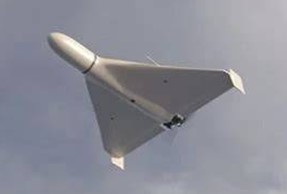
In fact, the Estonian Air Force is much too small to respond to massive incursions by hordes of Russian-operated drones, such as the Iranian-made Shahed-131 and Shahed-136.
Estonia currently possess only four unarmed aircraft, including two L-39C Albatros jet trainers, leased from a Czech company for training Joint Terminal Attack Controllers (JTACs) on the ground, and a pair of PZL M28 Skytrucks (actually, former C-145A Combat Coyote light transports), retired from the U.S. Air Force’s 6th Special Operations Squadron, and used for parachuting and JTAC training.
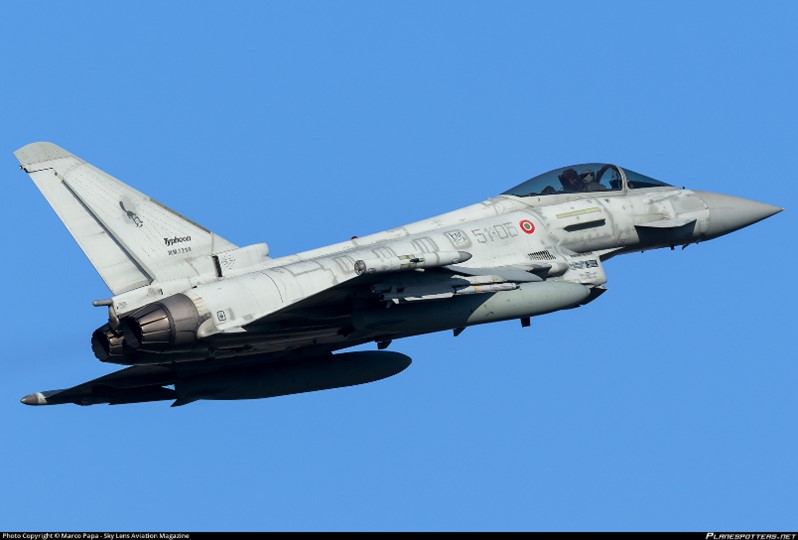
Daily, air defense of Estonia by fighter aircraft is performed on a rotating basis by NATO’s Baltic Air Policing mission at Ämari Air Base, most recently undertaken by four Eurofighter F-2000A Typhoons of the Italian Air Force, since September 29, 2025.
Advertisement
Italian Air Force F-2000A Typhoon, with IRIS-T missiles. Photo credit: Marco Papa, Sky Lens Aviation Magazine.
On September 9, 2025, Poland, another NATO nation, was forced to deploy their F-16CM Fighting Falcon jets to shoot down 20 Russian drones that crossed the border. But they fired missiles worth approximately $685,000 to intercept Shahed drones, each worth less than one-tenth of that, and failed in half of those attempts.
So, the tiny, Frankenberg Technologies Mark 1 missile fills a particularly important role in intercepting and destroying low-flying, Russian drones, out to a horizontal range of about 1.25 miles, at a speed of 750 miles per hour (Mach .98), at an estimated cost of about $50,000 per missile, which is still quite expensive, compared to their cheaper, Russian drone targets. The seeker head employs AI guidance and operates autonomously after launch, making it a highly desired, “fire-and-forget” weapon.
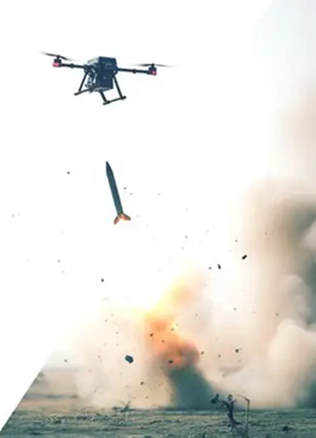
Frankenberg Mark 1 missile attacking a drone. Photo by Frankenberg Technologies.
Kusti Salm openly declares that, “Our goal is to help Ukraine win this war. To do this, we offer a sample of a new, low-cost missile to shoot down air targets, primarily unmanned, aerial vehicles.” They’re trying to attain a delicate balance between precision and affordability. “We aim to produce missiles 10 times cheaper and 100 times more than what’s currently possible.”
Thus, the Mark 1 is designed to be “good enough,” but not perfect or prohibitively expensive. Frankenberg Technologies plans for combat testing of the Mark 1 in Ukraine very soon, to provide critical, real-world data to refine the missile’s design.The company hopes to produce hundreds of missiles per day once theyattain full-scale output levels by the end of 2025.Currently, the Mark 1’s hit rate is about 56 percent, during 53 live-fire tests, but they are aiming to improve that very soon to 90 percent.
Separately, the Nordic Air Defense company of Sweden has just introduced the Kreuger 100 kinetic (hit-to-kill) ultra-mini, interceptor missile, which, at about 10 inches long, is quite a bit smaller than a Mark 1 missile, slower (168 mph), less complex, and less expensive (only $5,000), with infrared guidance, and no explosive warhead.
Swedish Krueger 100 mini-missile. Photo by Popularairsoft.com.
The Frankenberg Technologies Mark 1 missile represents a bold and very timely approach to the challenges of modern warfare, fending off the virtual swarms of small, inexpensive, Russian reconnaissance and attack drones that are constantly launched against Ukraine, and have recently penetrated the sovereign airspace of Poland, Estonia, and other NATO nations, so the requirement for this rapid innovation, using AI-guided mini-missiles, is quite urgent, and Estonia is taking the lead to help Ukraine win the current war.
Advertisement
What readers are saying
Generating a quick summary of the conversation...
This summary is AI-generated. AI can make mistakes and this summary is not a replacement for reading the comments.










COMMENTS