10th Mountain Division Will Support CENTCOM in the Middle East
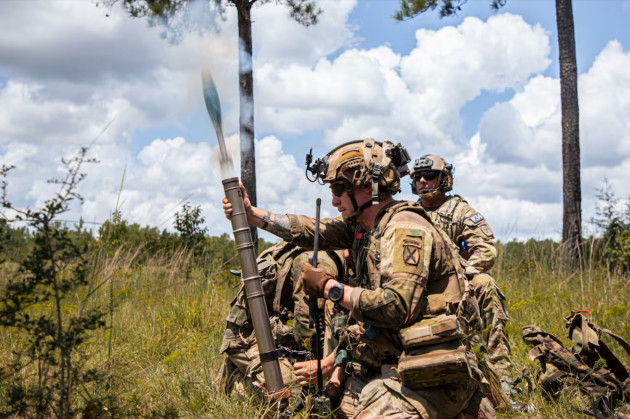
The U.S. Army has announced that the 2nd Mobile Brigade Combat Team, 10th Mountain Division, stationed at Fort Drum, New York, will deploy to the U.S. Central Command area of responsibility as part of a regular rotation into the Middle East. This is a confirmed deployment, not speculation. The brigade will replace the 2nd Infantry Brigade Combat Team, 34th Infantry Division, from the Iowa Army National Guard, which has been serving in support of Operation Inherent Resolve. That operation remains the long-running coalition campaign to counter remnants of the Islamic State group and support Iraqi and Syrian partner forces. While ISIS no longer controls territory, U.S. and coalition forces continue working with local partners to prevent its resurgence and stabilize previously contested areas.
This rotation is part of a broader CENTCOM strategy that has guided U.S. forces in the region for decades. The command relies on distributed presence, rotational forces, advisory roles, and partnerships rather than large, permanently forward-deployed combat formations. Bases across Kuwait, Qatar, Bahrain, and elsewhere serve as hubs from which American troops advise, train, and deter, maintaining influence while allowing flexibility to respond to shifting threats. The incoming 10th Mountain brigade fits this model: it will sustain ongoing partner training, advisory efforts, and combined operations without disrupting readiness at home.
The 2nd Mobile Brigade Combat Team is part of the Army’s newer, reorganized mobile brigade structure. Designed for agility and dispersed operations, it emphasizes mobility, reconnaissance, and modern communications, allowing the brigade to operate effectively across wide areas with minimal footprint. This reflects a continuing shift in how rotational units are postured — capable, flexible, and ready to support coalition partners while remaining prepared for contingencies.
CENTCOM’s approach is deliberate and consistent. U.S. troops remain dispersed, alert, and embedded with partners, sustaining influence from multiple vantage points rather than concentrating large forces in one location. The 10th Mountain’s rotation will contribute to these goals while maintaining the familiar rhythm of American engagement in the Middle East: persistent presence, partner enablement, and flexible, responsive operations. It is not a change in fundamentals, but a continuation of the strategy that has guided U.S. land forces through years of conflict, instability, and complex alliances, ensuring that the fight against ISIS and other threats continues with trained, capable soldiers at the ready.
This rotation underscores the enduring nature of U.S. commitments in the region. Exact dates, locations, and length of deployment have not been released publicly, but the brigade’s arrival will ensure continuity of CENTCOM’s mission while reinforcing the broader pattern of rotational deployments that define America’s strategic posture in the Middle East.
Royce Williams’ Korean War Heroism to Be Honored
At 100 years old, Royce Williams is finally getting the recognition he earned decades ago. The retired Navy captain, a Korean War pilot, is set to receive the Medal of Honor, or at least the legislation is now in place for the President to award it, pending final action. His story is the kind of long‑buried heroism that makes military history feel alive and wild.
The event that would define his career — a 35‑minute air battle over the Sea of Japan on November 18, 1952 — reads like a script from a war movie. Then‑Lieutenant Williams, flying a Grumman F9F‑5 Panther off the deck of the USS Oriskany, ran into seven Soviet MiG‑15s. His wingman and the flight leader were forced out of the fight by fuel and mechanical issues, leaving Williams alone against the odds. Against a superior plane in every performance metric, he shot down four enemy aircraft while returning fire under punishing conditions. His Panther came back riddled with 263 holes.
For decades, the Cold War’s political realities buried the story. The MiGs were Soviet, and the U.S. was not officially at war with the Soviet Union. Williams was ordered to keep quiet, and the incident remained classified for more than 50 years.
Already have an account? Sign In
Two ways to continue to read this article.
Subscribe
$1.99
every 4 weeks
- Unlimited access to all articles
- Support independent journalism
- Ad-free reading experience
Subscribe Now
Recurring Monthly. Cancel Anytime.
Eventually, records were declassified, and a campaign of veterans and legislators brought long-overdue attention to his actions. Williams’ Silver Star was upgraded to a Navy Cross in 2023, and Congress recently passed legislation clearing the way for the Medal of Honor, waiving the usual time limitations for awarding it. This legislation now allows the President to formally recognize Williams, though as of now, the award has not yet been presented.
What makes this story remarkable is the scale of heroism combined with the patience it required. Williams never sought fame, never shouted from the rooftops, and lived a long life with this secret tucked into it. History has finally caught up, giving him a chance to stand among the few Americans who earned the nation’s highest military honor in combat — even if it took a century to get there.
U.S. and Iran Revive Nuclear Talks, Set to Meet Friday in Oman
After days of uncertainty that left diplomacy on the brink, nuclear negotiations between the United States and Iran are back on track, with talks scheduled for Friday in Muscat, Oman.
The meeting has been confirmed by officials on both sides following a dispute earlier this week over where the talks would be held and how narrowly they would be structured. Iran pressed for moving the venue from Istanbul to Muscat and for limiting discussions strictly to nuclear issues. U.S. officials initially resisted that format, expressing concern that it would constrain leverage and exclude broader security questions.
Ultimately, Washington agreed to the change, allowing the talks to proceed in Oman. Regional governments across the Gulf quietly encouraged both sides to keep diplomacy alive, warning that a collapse in talks risked further destabilizing an already tense security environment and threatening regional economic stability.
Iranian Foreign Minister Abbas Araghchi confirmed the meeting publicly and departed for Muscat on Wednesday. He thanked Oman for facilitating the negotiations, underscoring Muscat’s long-standing role as a discreet intermediary between Tehran and Washington. Oman has hosted sensitive exchanges in past nuclear standoffs when direct engagement proved politically difficult for both sides.
U.S. officials are approaching the talks cautiously, emphasizing that major disagreements remain unresolved. Central issues include limits on uranium enrichment, verification and inspection mechanisms, and the degree of international oversight. Iran has reiterated that its nuclear program is a sovereign right and has stated it will not accept an expanded agenda that includes missile development or regional influence.
The talks come amid heightened regional tensions and increased U.S. military activity in the broader Middle East, though officials on both sides have stressed that Friday’s meeting is exploratory rather than a prelude to any immediate agreement.
This round of negotiations does not represent a restoration of diplomatic relations or a breakthrough in U.S.–Iran ties. Instead, it reflects a decision by both governments to pull talks back from collapse and test whether limited engagement can prevent further escalation.
Friday’s session in Muscat will be closely watched across the region, from Gulf capitals to Israel, as governments assess whether diplomacy can still contain the risks surrounding Iran’s nuclear program, or whether the window for negotiated restraint is continuing to narrow.










COMMENTS