

A government under pressure can become many things.
One of them is a war government.
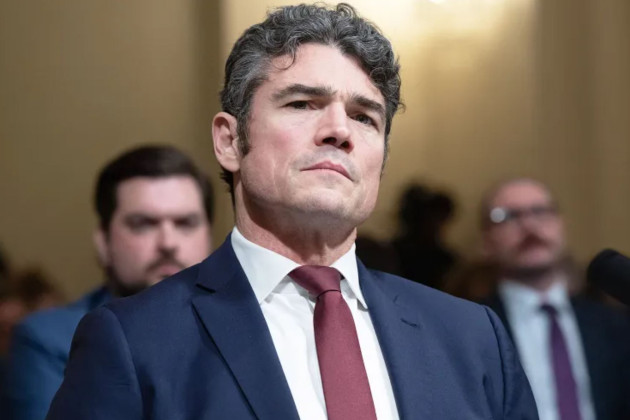
Joe Kent Steps Down
Joe Kent stepped down Tuesday from his role as Director of the National Counterterrorism Center, leaving a gap at the center of the U.S. intelligence system as the war with Iran continues to boil.
Kent is not a peripheral figure. He is a former Army Special Forces soldier and CIA officer who moved from the post-9/11 battlefield into politics, running for Congress in Washington state before entering the Trump administration’s national security structure. His confirmation to lead NCTC placed him in one of the government’s most sensitive coordination roles, responsible for integrating intelligence on terrorist threats across agencies.
His departure comes at a moment when the administration has been emphasizing unity on national security. Officials have pointed to intelligence assessments indicating a credible threat environment tied to Iran, while the White House has defended its posture publicly.
Kent’s resignation has not been accompanied by a fully detailed public explanation. Reporting indicates there were internal disagreements over policy direction, though the specifics remain closely held. What is clear is that losing the sitting director of NCTC in the middle of an ongoing conflict is not routine.
Part of Kent’s public profile has long been shaped by the loss of his wife, Shannon Kent. A Navy cryptologic technician supporting special operations, she was killed in a 2019 suicide bombing in Manbij, Syria. Her death became a defining element of his public life and informed his views on risk, cost, and the long arc of American wars.
Inside Washington, attention now turns to succession. The National Counterterrorism Center plays a central role in fusing intelligence from across the government into a coherent operational picture. In the near term, a senior deputy is expected to assume acting leadership. Longer term, the administration will have to decide whether to install a continuity candidate with deep institutional experience or someone more closely aligned with its current strategic posture.
Kent’s exit will not change the trajectory of U.S. policy overnight.
It does, however, introduce a variable inside the system at a time when consistency is usually treated as a strategic asset.
“We’ll Do Something Very Soon”: Trump, Cuba, and the Sound of a Door Being Kicked Half Open
President Donald Trump looked at Cuba this week and did what he does best: he left a sentence hanging in the air like a live wire in a flooded basement.
Cuba is talking to Marco Rubio; we will do something very soon.
That’s it. No policy paper. Just a promise, or a warning, depending on which side of the Florida Straits you’re standing on.
But here’s what makes this different from the usual Trump riff: there are indications of talks happening. Cuba has acknowledged discussions with U.S. officials, and multiple outlets have reported that Rubio has been in contact with figures tied to Havana, including through channels that do not always follow the traditional diplomatic script. Something is moving.
Layer onto that the pressure Cuba is under right now. The island’s economy is grinding through a prolonged crisis, its power grid buckling under rolling blackouts, and the old energy lifeline from Venezuela is no longer what it once was.
Havana is running out of runway, and Washington knows it.
So when Trump says “very soon,” it lands differently.
It could be a deal. Sanctions relief in exchange for structural concessions, possibly including movement at the top where Miguel Díaz-Canel remains in power. Some reporting has suggested Washington may be seeking exactly that, a shift in leadership as part of any broader arrangement.
Or it could go the other direction entirely. More pressure. More isolation. A tightening of the economic vise designed to force the issue from the outside.
Trump has hinted at both in the span of a day, calling Cuba a failed nation while also signaling that negotiations are underway. That’s not inconsistency. That’s leverage.
What complicates the picture is timing.
The United States is already engaged in a widening war with Iran. Opening a second front, even a political or economic one, carries risk. It stretches attention, resources, and credibility. It turns a controlled burn into something closer to a brush fire.
But Trump has never been a wait-your-turn player. He plays the board like a man shoving chips forward while the dealer is still counting the last hand.
Cuba is important because of what it represents.
It is the last Cold War holdout in the Western Hemisphere, long viewed in Washington as a platform for adversarial intelligence activity and a persistent irritant to U.S. influence in Latin America.
For decades, Washington has treated Havana as a problem to be managed, not solved. Trump is signaling he wants to change that calculation.
So “something very soon” could mean a deal. It could mean pressure. It could mean both at once, sequenced in a way that gives neither side time to dig in.
What it means for certain is that the card table just got more crowded, and Cuba is sitting in a chair it can’t afford to leave.








COMMENTS