Florida-Registered Speedboat in Gunfight with Cuban Forces Leaves Four Dead
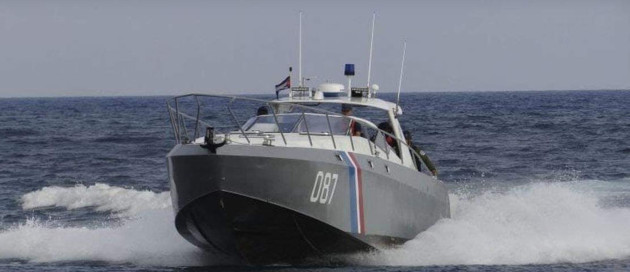
Cuban authorities say four people were killed and six wounded Wednesday after an exchange of gunfire between Cuban border troops and a Florida-registered speedboat near Cuba’s north-central coast.
According to a statement from Cuba’s Interior Ministry, the vessel entered Cuban territorial waters near Villa Clara province and was approached by border guard personnel attempting to identify it. Cuban officials say individuals aboard the speedboat opened fire first, wounding at least one Cuban officer. Cuban forces returned fire.
Cuba’s government reported that four people aboard the boat were killed in the exchange and six others were injured. The wounded were transported for medical treatment.
The identities and nationalities of those aboard the vessel have not been released. It remains unclear why the boat entered Cuban waters or what the purpose of the approach may have been.
As of publication, U.S. authorities have not issued a public statement regarding the incident.
Because the current details come primarily from Cuban government sources, independent confirmation of the sequence of events has not yet been publicly reported. Investigations are reportedly ongoing.
The confrontation immediately raises questions about maritime security, territorial waters, and the potential for diplomatic fallout. Any armed clash involving a U.S.-registered vessel near Cuban territory carries political weight, particularly given the long history of tension between Washington and Havana over travel, migration, and maritime activity.
For now, the confirmed facts are limited: a Florida-registered speedboat, an exchange of gunfire, four dead, six wounded, and at least one Cuban officer injured. Further clarity will depend on statements from U.S. authorities and any additional evidence that emerges in the coming days.
Freedom Shield 2026: Ready, Visible, and Under Scrutiny
Freedom Shield, the combined U.S.–Republic of Korea spring exercise, is set to run March 9–19, 2026, and that’s important, not just on a training calendar but as a live demonstration of alliance coherence at a time of enduring threats and diplomatic friction.
On paper, Freedom Shield is about readiness: moving staffs, synchronizing communications, and rehearsing responses ahead of a crisis. In practice, it is about deterrence; signaling to Pyongyang that Seoul and Washington can operate jointly across command posts and field elements under stress. This year’s plans, as described by military officials, include command post scenarios and an integrated training track called Warrior Shield. The latter is intended to exercise ground units alongside higher echelon decision cycles, reinforcing how tactical moves link to strategic effects.
South Korea has publicly acknowledged that roughly 18,000 of its troops will take part. U.S. Forces Korea and Republic of Korea joint staff elements will be central to the effort, although U.S. troop numbers are not publicly disclosed. The command post components anchor the exercise, while Warrior Shield provides a more observable field training dimension.
Freedom Shield’s importance is amplified by its connection to ongoing planning for a conditions-based transfer of wartime operational control (OPCON) from the United States to South Korea, a shift that has been under discussion for years.
The drills help leaders evaluate how such a transition could work in practice without creating gaps in deterrence or defense cohesion.
As expected, North Korea’s official line frames the exercise as a threat: Pyongyang denounces it as an “invasion rehearsal” and uses the announcement cycle to justify its own rhetoric on readiness and weapons development.
Beyond the peninsula, allied defense planners and regional analysts will be watching because combined exercises offer insight into interoperability, decision tempo, and alliance responses to layered threats. For the public, Freedom Shield provides a snapshot of how two of the world’s most capable militaries prepare to deter conflict and reassure partners, while navigating the diplomatic edges of long-standing geopolitical friction.
After the Deep Freeze: Counting the Cost of a Winter That Reached Too Far South
The cold has moved on, but the bill is still sitting on the table. What began as a brutal stretch of Arctic air across much of the United States has turned into a multi-billion-dollar recovery effort, with early estimates putting the damage from the 2026 winter cold wave at $4 billion or more. Millions of Americans were affected by outages, burst pipes, frozen infrastructure, and transportation disruptions that rippled well beyond the initial storm window.
This wasn’t just a Midwest or Northeast problem. The freeze pushed deep into territory that rarely sees sustained cold. Hard freezes reached as far south as mid-Florida, where agriculture, utilities, and local governments had to scramble to protect crops and infrastructure that simply aren’t built for prolonged cold snaps. Citrus, winter vegetables, and nursery operations took hits, and municipal crews across the Southeast found themselves responding to frozen water lines and power demand spikes that looked more like a northern winter than a subtropical one.
Across the country, the broader impact has been cumulative. Insurance claims are stacking up. Municipal budgets are absorbing emergency repair costs. Energy demand surged during the coldest periods, putting stress on regional grids and prompting utilities to reassess winterization and reserve capacity. Even where the lights stayed on, heating costs rose sharply for households already navigating tight budgets. The result is a slow-moving financial aftershock that will continue to show up in state and local ledgers through the spring.
There is also a quiet national-security angle. Severe weather events that stress energy infrastructure and transportation networks inevitably draw attention from defense planners and emergency-management officials. National Guard units were activated in several states to assist with logistics, warming shelters, and response coordination. Military bases across colder regions ran through cold-weather contingency plans, ensuring power resilience and continuity of operations. Events like this serve as reminders that domestic resilience — power, water, transportation, communications — underpins readiness just as surely as any training cycle.
For the average American, though, the takeaway is more immediate: pipes burst, power bills climbed, and daily routines were disrupted in ways that linger. Supply chains slowed. Flights were canceled. Schools closed. The storm itself lasted days, but its effects will be measured in repair crews, insurance payouts, and infrastructure upgrades for months.
The United States is still counting the cost of one of the harshest winter stretches in recent memory. From frozen farmland in Florida to stressed power grids in the Midwest and Northeast, the cold wave left behind a familiar lesson. Weather is not just a forecast. It is an economic event, an infrastructure test, and occasionally a reminder that even in a high-tech age, nature still gets a vote.
The Pentagon’s Amazon for Drone Defense Is Open for Business
The U.S. military has spent years talking about speed. Speed in buying gear. Speed in fielding technology. Speed in responding to threats that move faster than a traditional procurement cycle ever could. Now it has built something designed to deliver exactly that: an online, Amazon-style marketplace where military units can quickly find and order counter-drone technology.
The War Department’s new counter-UAS marketplace has officially reached initial operational capability, giving authorized users a centralized platform to identify, compare, and order anti-drone systems from a growing catalog of more than 1,600 vetted items. The goal is simple: get effective equipment into the hands of operators without forcing them through the usual years-long contracting maze.
The platform is run by Joint Interagency Task Force 401, an Army-led organization created to unify the Pentagon’s scattered counter-drone efforts. Instead of writing a fresh contract every time a base or unit needs protection from small unmanned aircraft, buyers can now order from pre-approved systems using an existing contract structure. That means orders can be placed immediately, rather than waiting for a new acquisition process to crawl through the bureaucracy.
Think of it as a military supply catalog built for the drone age. The marketplace links equipment listings to real-world performance data collected through testing and evaluation, allowing users to compare sensors, interceptors, jammers, and command-and-control tools based on how they actually perform against different drone threats. The intent is to shift purchases toward evidence-based decisions and create a more interoperable defensive network across installations and operational theaters.
Why now? Because the drone problem is no longer theoretical. Small unmanned aircraft have become a daily concern for U.S. bases and a defining feature of modern conflict overseas. Reports of drone incursions over American installations have climbed in recent years, prompting the Pentagon to expand authorities and search for faster ways to protect facilities and personnel.
The marketplace is part of a broader push to accelerate unmanned-systems development and fielding. The Pentagon has launched multiple initiatives aimed at rapidly scaling drone and counter-drone capabilities, with leaders emphasizing the need to cut red tape and move at what one official called “the speed of relevance.”
For troops on the ground, the change is practical. Instead of waiting months or years for a new system to be approved, they can identify a solution that already meets standards and get it into position faster. For the defense industry, it creates a clearer path from prototype to fielded capability. For adversaries, it signals that the United States intends to adapt just as quickly as the threats evolve.
The Pentagon’s Amazon for drone defense is not a silver bullet. But it is a sign of how modern military logistics are changing. In an era when a cheap quadcopter can disrupt an airfield or a convoy, the side that can adapt fastest will have the advantage. This marketplace is built to make sure that side is wearing the same uniform.









COMMENTS