
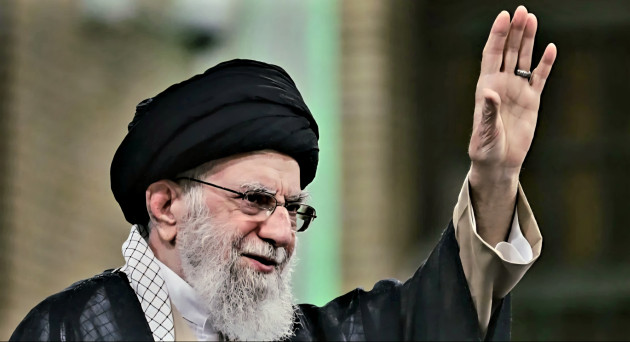
Khamenei Reportedly Killed as US–Israel Strike Campaign Expands Across Region
Multiple outlets are reporting that Iran’s Supreme Leader, Ayatollah Ali Khamenei, has been killed in the opening wave of US–Israeli strikes. A senior Israeli official told Reuters that Khamenei is dead and that his body was recovered following attacks on his compound.
That claim remains contested.
Iranian state media quickly cited the Supreme Leader’s office calling the report “mental warfare,” and earlier in the day the foreign ministry stated that Khamenei and President Masoud Pezeshkian were “safe and sound.” Prime Minister Benjamin Netanyahu later said there are “signs” that Khamenei is “no longer,” but he stopped short of issuing formal confirmation.
Satellite imagery shows extensive damage to Khamenei’s compound, but there has been no independent verification of his presence at the time of the strike and no official succession announcement from Tehran. As of this evening, his status remains unverified.
At approximately 7:30 a.m. Eastern Time, President Donald Trump announced that the United States had begun what he described as “major combat operations” against Iran. Roughly an hour earlier, Israel confirmed it had launched what it called a preventative strike. NBC reports the US action includes air and sea-based assets and could continue for several days.
The Pentagon has named the campaign Operation Epic Fury.
Israeli officials refer to their operation as Operation Lion’s Roar. The Israeli Defense Forces state that approximately 200 aircraft struck targets across western and central Iran and that hundreds of munitions were dropped on roughly 500 objectives, including missile launchers and air defense systems. Those figures are Israeli military claims and have not been independently verified.
Both Washington and Jerusalem have framed the operation around neutralizing Iran’s ballistic missile capability and preventing a nuclear breakout. Both leaders also went further. Trump urged Iranians to rise up and said he could end the conflict in “two or three days” or expand it and “take over the whole thing.” He claimed Iran will require years to recover from the strikes and said recent nuclear talks failed because Iran did not want a deal. Netanyahu called on the Iranian people to “seize the opportunity” and remove the regime.
Iran responded within hours. Missiles and drones were launched toward Israel, triggering sirens in Tel Aviv and other cities.
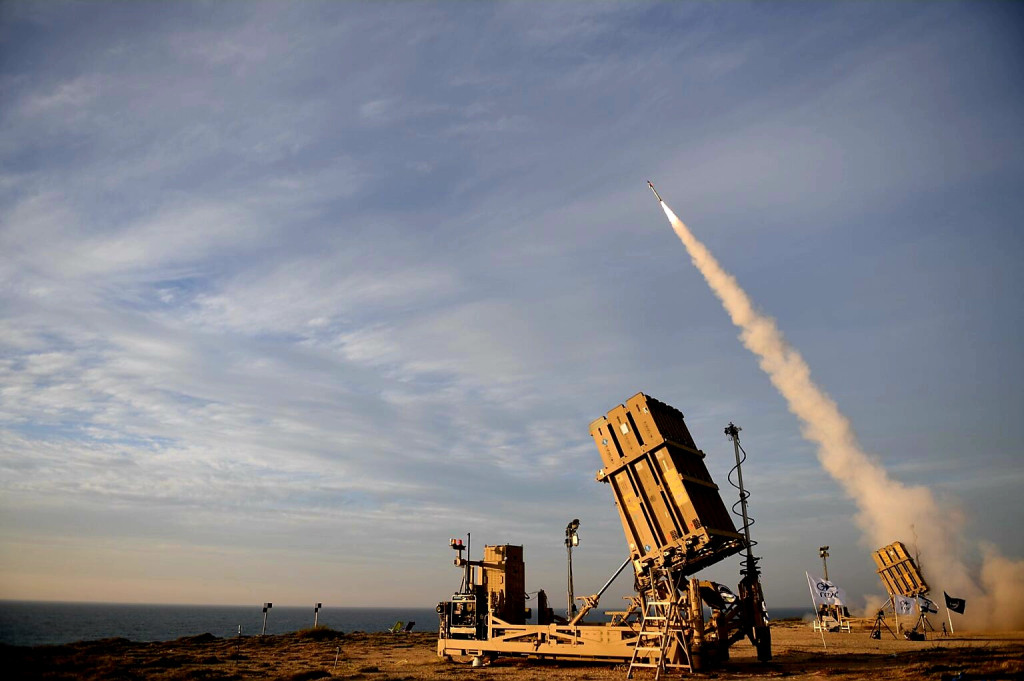
Israeli missile defense systems engaged, and multiple interception flashes were visible over populated areas. Iran also launched attacks against US-linked military sites in the Gulf. Missile activity was reported in Bahrain, Qatar, the United Arab Emirates, Kuwait, and Jordan.
US Central Command states that US forces defended against what it described as hundreds of Iranian missiles and drones.
CENTCOM reports no US casualties, no combat-related injuries, and minimal damage to installations that did not impact operations. That is the official US position as of this update.
In the United Arab Emirates, debris reportedly fell near the Fairmont The Palm hotel in Dubai following an engagement overhead. UAE reporting confirms at least one civilian fatality in Abu Dhabi linked to missile activity. Bahrain confirmed a strike in an area associated with US Fifth Fleet support facilities. Qatar, Kuwait, and Jordan report successful interceptions.
Inside Iran, casualty figures are being reported by state media. Iranian outlets, citing the Red Crescent, claim 201 people have been killed and 747 injured across 24 provinces. State reporting also claims that 80 children were killed when a school was struck. Those figures have not been independently verified. Given the scale of Israeli claims regarding the number of targets and munitions employed, civilian casualties are plausible, but the exact toll remains unclear.
Regional posture continues to shift. Israel has closed its airspace. Iraq has closed its airspace. Commercial aviation is rerouting around the conflict zone. According to the White House press secretary, President Trump has spoken with the leaders of Saudi Arabia, Qatar, and the UAE, as well as NATO Secretary General Mark Rutte. No regional government has announced participation in offensive strikes.
At this hour, what is confirmed is straightforward. The United States and Israel launched coordinated strikes inside Iran using air and sea-based assets. Iran retaliated with missile and drone attacks against Israel and Gulf states hosting US forces. US Central Command reports no American casualties. Visible damage has been confirmed at Khamenei’s compound.
What remains unconfirmed is just as important. The death of Ayatollah Ali Khamenei has not been independently verified. There has been no confirmed reporting of senior Iranian leadership fatalities. Full battle damage assessment on Iranian nuclear facilities and missile production sites has not been released.
Civilian casualty numbers inside Iran remain based on state reporting.
If Khamenei is confirmed dead, Iran enters a leadership succession crisis in the middle of an active war. If he is alive, Tehran retains centralized command authority and the ability to manage escalation deliberately.
Iran has demonstrated that it retains missile launch capability despite the opening strikes. The United States and Israel have demonstrated they can strike deeply and across multiple provinces.
The next 24 hours will determine whether this becomes a sustained regional missile campaign or a short, violent decapitation operation followed by negotiated containment. The battlefield now stretches from Tehran to Tel Aviv to Gulf installations.
It is no longer confined to a single front.
Watch for SOFREP’s Sunday Morning Brief for updated information.
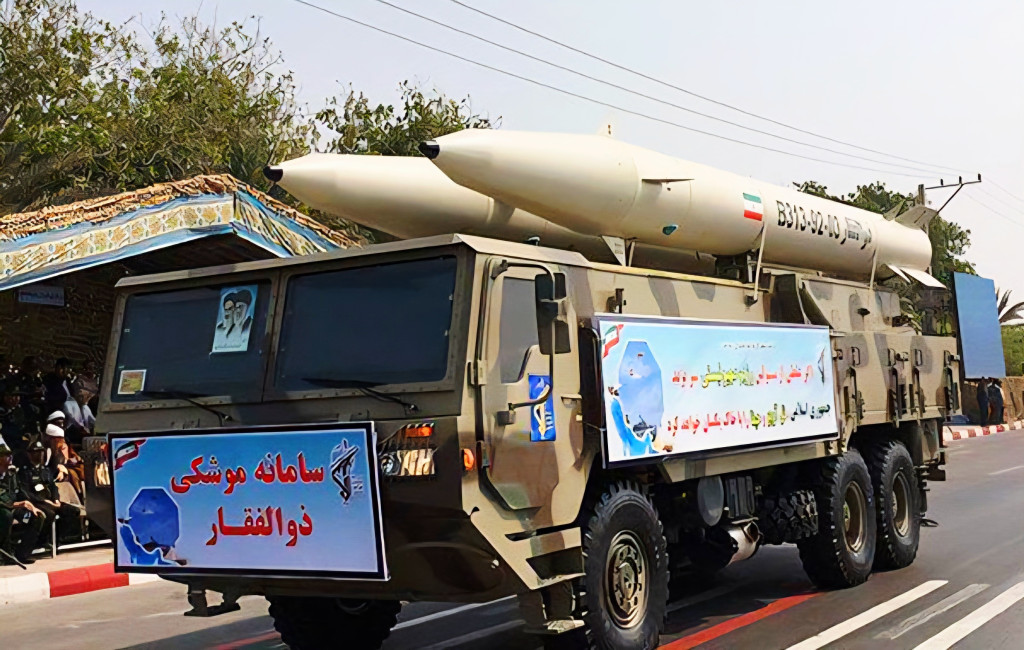
WEAPONS IN PLAY: IRAN, ISRAEL, AND THE UNITED STATES
IRAN
The Core of Iran’s Strike Strategy
Iran’s conventional military power rests on three pillars: ballistic missiles, land-attack cruise missiles, and one-way attack drones.
Iran does not depend on air superiority to strike regional targets. It depends on survivable launchers, mobile basing, and inventory depth.
Iran’s doctrine is simple. Fire from inside Iranian territory. Saturate defenses. Force the enemy to spend interceptors. Keep firing long enough to create political and economic pressure.
Iranian Ballistic Missiles
Short-Range Systems (Regional Gulf Threat)
Iran fields a large inventory of solid-fuel, road-mobile short-range ballistic missiles in the 200 to 700 kilometer class. These include variants of the Fateh family and extended-range derivatives.
These systems hold Iraq, Kuwait, Bahrain, Qatar, the UAE, and much of Saudi Arabia at risk. Solid fuel means faster launch preparation and greater survivability compared to older liquid-fuel systems.
Warheads in this class are typically several hundred kilograms of high explosive.
Against soft targets such as fuel farms, aircraft on ramps, power infrastructure, and command facilities, a single hit can cause serious damage. Against hardened bunkers, they are far less effective.
The real danger comes from salvos. One missile is a strike. Twenty missiles is an operational disruption.
Medium-Range Ballistic Missiles (Israel Threat)
Iran’s medium-range ballistic missile inventory extends into the 1,300 to 2,000 kilometer class. Systems in this category include the Shahab, Ghadr, Sejil, Emad, and Khorramshahr families.
These systems allow Iran to strike Israel from deep inside Iranian territory. Some are liquid-fuel. Some are solid-fuel. Solid fuel systems allow quicker response and better survivability.
Warhead size varies by system. Some models are built for heavier payloads.
Accuracy is the determining factor. A heavy warhead with limited accuracy is primarily a city and infrastructure threat. A heavy warhead with improved guidance becomes an airbase and strategic facility threat.
Ballistic missiles descend at high speed, which makes interception difficult but not impossible. The defender’s success depends on early detection, layered defense, and interceptor availability.
Iranian Land-Attack Cruise Missiles
Iran operates subsonic cruise missiles with ranges reportedly exceeding 1,000 kilometers in some variants.
Cruise missiles fly lower than ballistic missiles and can be programmed to approach from less predictable angles. They generally carry smaller warheads than medium-range ballistic missiles, but they offer better precision against fixed targets such as radar sites, air defense batteries, and command nodes.
In combination with drones, cruise missiles complicate air defense by forcing radar operators to divide attention between altitude layers.
Iranian One-Way Attack Drones
Iran’s one-way attack drones are designed for saturation and cost exchange. They are cheaper than interceptors used to shoot them down. That cost imbalance is part of Iran’s strategy.
Their warheads are smaller than ballistic missile payloads, but they are effective against soft targets. Fuel storage, exposed aircraft, logistics hubs, and civilian infrastructure are vulnerable.
The most dangerous scenario is a mixed raid. Drones go first. Air defenses engage. Ballistic missiles follow behind.
Iranian Air Defense
Iran’s air defense network is layered but uneven. It includes Russian-supplied long-range systems, domestically produced systems, mid-range batteries, and numerous radar installations.
The S-300 family forms the backbone of Iran’s long-range defense. These systems can engage aircraft at significant distances and altitudes if properly integrated and cued.
Iran also fields the Bavar-373, an indigenous long-range surface-to-air system intended to replicate or approximate the S-300’s role. It is road-mobile and radar dependent.
Mid-range systems such as Khordad variants fill gaps between long-range and point defense.
Effectiveness depends on survivability. A surface-to-air missile system that is detected, jammed, and destroyed early in a strike cycle does not shape the rest of the war. A mobile system that survives can create real risk for non-stealth aircraft.
Iran’s air defense can complicate operations. It is not widely assessed as capable of denying airspace to a coordinated stealth-enabled strike campaign backed by electronic warfare.
ISRAEL
Israeli Strike Power
Israel’s advantage lies in integration. Stealth aircraft, high-quality intelligence, standoff weapons, electronic warfare, and layered missile defense are tied together into a coherent system.
Israeli Aircraft
The F-35I serves as Israel’s stealth penetration platform. It is designed to operate in contested airspace and suppress or bypass advanced air defenses.
F-15 and F-16 variants provide payload volume and flexibility. They can launch precision standoff weapons without flying directly over the most heavily defended zones.
Israel does not need to overfly every target to destroy it.
Israeli Standoff Weapons
Israel fields a range of air-launched precision weapons capable of striking targets from outside dense air defense envelopes.
Guidance kits such as SPICE convert large conventional bombs into precision glide weapons. When paired with 1,000 or 2,000 pound bomb bodies, they become structure-destroying weapons capable of collapsing reinforced buildings, cutting runways, and eliminating hardened facilities.
Blast and fragmentation from a 2,000 pound class weapon is substantial. Against above-ground infrastructure, these are demolition tools.
Israel also operates longer-range air-to-surface weapons designed for deep precision strikes. These systems allow aircraft to release weapons from significant stand-off distance.
Israeli Missile Defense
-Israel operates a layered missile defense architecture.
-Iron Dome handles rockets and some drones.
-David’s Sling covers larger and more sophisticated threats.
-Arrow systems are designed to intercept ballistic missiles at higher altitudes.
No missile defense is perfect. Saturation can overwhelm layers. Leakers can still cause damage. The purpose is mitigation, not invincibility.
UNITED STATES
U.S. Regional Strike Power
The United States brings scale, reach, and hardened target capability.
The U.S. can strike Iran from surface ships, submarines, long-range bombers, and tactical aircraft. It can operate from outside the immediate threat rings of many Iranian systems.
Cruise Missiles
Tomahawk land-attack cruise missiles are designed for precision strikes against fixed targets. They are launched from ships and submarines and allow deep strikes without risking manned aircraft.
Warheads are conventional high explosive. Effects include destruction of radar sites, command facilities, air defense nodes, and infrastructure.
Air-Launched Standoff Weapons
The Joint Air-to-Surface Standoff Missile family allows aircraft to launch precision weapons from outside dense air defense zones.
These missiles are used against high-value targets such as missile production facilities, command centers, and hardened infrastructure.
Heavy Penetrators
The United States fields true heavy bunker-penetration weapons designed for deeply buried facilities.
The Massive Ordnance Penetrator is a 30,000 pound class weapon specifically built for hard and deeply buried targets. Its purpose is not wide blast radius. Its purpose is penetration, shock, and structural collapse underground.
Battle damage assessment for hardened underground sites takes time. Surface damage does not automatically equal functional destruction.
U.S. Defensive Posture in the Gulf
The U.S. defends regional bases and shipping lanes using layered missile defense systems, Aegis warships, and ground-based batteries.
Defense consumes resources. Interceptors are finite. High operational tempo strains crews and logistics.
Iran’s geographic advantage allows it to fire from dispersed launch sites within its own borders while using proxies to expand the battlespace.
The U.S. advantage lies in integration, sensor fusion, and sustained strike capacity.
IRANIAN PROXY CAPABILITIES
Iran’s conventional missile force is only one layer of its power. The second layer is its proxy network. That network extends across Lebanon, Iraq, Syria, Yemen, and into maritime domains.
These groups do not just add firepower. They add geography.
Hezbollah (Lebanon)
Hezbollah is the most capable and dangerous Iranian proxy.
It possesses a large rocket and missile inventory, including short-range rockets, medium-range missiles, and more precise guided systems. Some of its longer-range systems are assessed to reach deep into Israel.
Hezbollah’s threat is not one precision missile. It is massed fire. Thousands of rockets can be launched in waves. Even with Israeli layered missile defense, saturation can create damage, strain interceptors, and disrupt daily life.
Hezbollah also fields anti-ship missiles and has experience using them. Israeli naval vessels operating in the Eastern Mediterranean must factor that into their posture.
If Hezbollah remains restrained, that signals either strategic calculation or limited resupply. If it opens fully, Israel faces a two-front missile war.
Iraqi Militias
Iran-aligned militias inside Iraq provide Tehran with a way to strike U.S. forces without launching directly from Iranian soil.
These groups possess short-range rockets, ballistic rockets, drones, and improvised long-range systems. U.S. bases in Iraq and Syria have historically been targeted by these groups.
The danger is proximity. These militias operate near U.S. facilities. Even limited attacks can cause casualties, damage aircraft on the ground, and disrupt logistics.
Iraq becomes the pressure valve.
Syrian Territory
Iran maintains networks and logistical corridors through Syria. Weapons transit routes move through this corridor toward Lebanon.
Strikes inside Syria can become part of the wider war if Israel or the U.S. chooses to interdict these routes aggressively.
The Houthis (Yemen)
The Houthis extend the battlefield south into the Red Sea and Bab el-Mandeb Strait.
They have demonstrated capability with drones, anti-ship cruise missiles, and ballistic missiles. Their maritime focus threatens commercial shipping and Western naval vessels.
A Red Sea escalation affects global shipping routes. Insurance rates rise. Transit reroutes. Naval assets are tied down protecting merchant traffic.
The Houthis allow Iran to stretch U.S. and allied naval defenses across a wider maritime arc.
Maritime Swarm Threat
Iran’s Islamic Revolutionary Guard Corps Navy specializes in fast attack craft, small boats, and swarm tactics.
In confined waters like the Strait of Hormuz, swarms of small, fast vessels armed with rockets or anti-ship missiles can complicate escort missions.
Closing the Strait entirely would be difficult and likely temporary. Disrupting traffic and driving up energy prices is far more achievable.
That disruption may be Iran’s real maritime objective.
Putting It All Together
This conflict is not just Iran versus Israel or Iran versus the United States. It is a layered network war.
Iran’s strength is geography, missile inventory, and proxy depth. Even if parts of its domestic missile infrastructure are degraded, its proxies can continue launching rockets, drones, and anti-ship weapons from multiple directions.
Israel’s strength is intelligence integration, precision strike capability, and layered missile defense. Its immediate challenge is managing saturation from both Iran and potentially Hezbollah while continuing to degrade Iranian launch capacity.
The United States brings scale, standoff reach, naval dominance, and hardened target capability. Its challenge is defending regional bases, protecting Gulf energy corridors, and preventing the proxy layer from expanding faster than Iranian launch sites can be neutralized.
If Hezbollah fully engages, Israel fights a northern missile war while still under Iranian fire.
If Iraqi militias escalate, U.S. ground forces and air bases face sustained harassment.
If the Houthis surge, Red Sea shipping becomes a second maritime front.
The battlefield is no longer a straight line between Tehran and Tel Aviv. It is an arc that runs from the Persian Gulf to Lebanon to the Red Sea.
The decisive factors now are endurance and inventory. How many interceptors remain. How many missiles remain. How many launchers survive. How quickly battle damage can be assessed and re-strikes executed.
This is not a one-week campaign. It is a systems war across multiple domains.
SYSTEMS IN PLAY
IRAN:
Ballistic Missiles
Fateh-110 / Fateh-313
This is one of Iran’s most widely fielded solid-fuel short-range ballistic missiles.
Range: roughly 200 to 500 km depending on variant.
Launch platform: road-mobile transporter erector launchers.
Flight profile: high arc ballistic descent, terminal dive.
Warhead: roughly 500 kg class high explosive.
Signature: Bright boost phase plume for several seconds, then high-speed descent. Impact produces a tight, violent blast with significant fragmentation but not a massive wide-area city-level destruction pattern.
If you see Gulf bases taking single large crater hits with limited but severe localized destruction, this family is a strong candidate.
Zolfaghar / Dezful
Extended-range development of the Fateh class.
Range: approximately 700–1,000 km depending on version.
Purpose: allows Iran to strike deeper Gulf targets while launching from interior positions.
Signature: Similar to Fateh in profile, but often used in salvos. Designed to saturate fixed infrastructure like airfields.
If runways are cut in multiple parallel impacts spaced across a strip, this is consistent with this category.
Shahab-3
One of Iran’s older medium-range ballistic missiles.
Range: around 1,300 km.
Fuel: liquid fuel.
Launch prep time: longer than solid fuel systems.
Signature: Longer, more sustained boost phase. Larger airframe.
Impact: heavier warhead than short-range systems but generally less precise.
If large urban-area impacts are seen rather than tight airfield hits, Shahab-class systems are plausible.
Sejil, or Sejjil
Solid-fuel medium-range ballistic missile.
Range: roughly 2,000 km class.
Faster launch readiness than Shahab variants.
Signature: High-speed descent and shorter prep time.
Operational significance: survivability. Harder to catch pre-launch.
If Israel reports launches from deep inside Iran with rapid turnaround, Sejil-class systems are likely part of that picture.
Khorramshahr (Hwasong-derived family)
Heavy payload MRBM.
Range: approximately 2,000 km class.
Warhead: assessed heavier than many earlier Iranian MRBMs.
Signature: Large booster, heavier terminal impact.
Damage expectation: significant structural destruction at impact point, particularly against above-ground infrastructure.
If you see unusually large impact devastation relative to other ballistic strikes, this family is a candidate.
Hypersonic Claim: Fattah
Iran has publicly unveiled what it calls the “Fattah” hypersonic missile.
Range claims: approximately 1,400 km.
Claimed maneuvering reentry vehicle.
Important: True operational hypersonic maneuvering capability remains debated in defense circles.
Signature if genuine: depressed trajectory, potential terminal maneuvering, extremely short warning time.
If Israeli defenses describe unusual terminal maneuvers and shorter-than-expected engagement windows, this is the system Iran would claim was used.
Cruise Missiles
Hoveyzeh
Land-attack cruise missile.
Range: approximately 1,300 km class.
Flight profile: low altitude terrain-following.
Signature: Subsonic, smaller explosion than heavy ballistic missile, but precise.
Use case: radar sites, command nodes, infrastructure.
If footage shows low-flying inbound object rather than steep ballistic descent, cruise missile involvement is likely.
One-Way Attack Drones
Shahed-136 / Shahed-131
Iran’s most recognized loitering munition family.
Range: over 1,000 km depending on variant.
Speed: slow compared to missiles.
Warhead: small relative to ballistic systems.
Signature: Distinctive engine sound. Loud, buzzing, lawnmower-like audio before impact.
Impact: limited blast compared to missiles, effective against soft targets.
If videos include prolonged buzzing audio and delayed explosion, this is the signature.
Air Defense Systems
S-300PMU-2
Russian-supplied long-range surface-to-air missile system.
Engagement range: approximately 200 km class depending on missile.
Role: high-altitude, long-range air defense.
Signature: Large vertical missile launch with thick smoke trail.
Threat: non-stealth aircraft in contested airspace.
Bavar-373
Iran’s domestic long-range SAM system.
Claimed engagement ranges vary by source.
Designed as S-300 analogue.
Operational note: Mobile. Radar-dependent. Vulnerable to SEAD.
ISRAEL: NAMED SYSTEMS
F-35I “Adir”
Israel’s stealth penetration aircraft.
Role: air defense suppression, precision strike in contested airspace.
Strength: sensor fusion and low observability.
If Iranian air defenses are hit early with minimal aircraft loss, this platform likely played a role.
F-15I “Ra’am”
Heavy payload strike aircraft.
Role: deep strike with large precision munitions.
Often paired with long-range guided weapons.
SPICE-2000
Guidance kit for 2,000 lb class bombs.
Range: stand-off glide capability.
Warhead effect: building collapse, hardened structure destruction.
If hardened structures are destroyed with minimal collateral spread, this is consistent with precision glide bomb employment.
Delilah / Rampage
Air-to-surface standoff weapons.
Role: precision strike against high-value targets from outside dense SAM envelopes.
Missile Defense
Iron Dome
David’s Sling
Arrow-2 / Arrow-3
Signature: vertical interceptor launches and mid-air intercept flashes.
If multiple high-altitude intercept flashes are visible before ballistic impact, Arrow-class systems are engaged.
UNITED STATES: NAMED SYSTEMS
B-2 Spirit
Stealth bomber capable of delivering heavy penetrators.
Role: hardened underground target defeat.
If deeply buried facilities are struck, B-2 platforms are historically associated with that mission.
GBU-57 Massive Ordnance Penetrator
30,000 lb class bunker buster.
Purpose: collapse deeply buried facilities.
Effect: penetration and subsurface shock, not wide blast radius.
If mountainsides are visibly cratered above hardened sites, this weapon class is implicated.
Tomahawk Land Attack Missile
Ship- or submarine-launched cruise missile.
Role: first-wave strike on radar, command, and infrastructure.
Signature: low-altitude inbound strike, moderate explosion compared to heavy bombs.
JASSM-ER
Air-launched stealth cruise missile.
Role: deep precision strike from outside SAM envelopes.
Aegis Combat System / SM-3 / SM-6
Naval missile defense and strike.
Role: ballistic missile interception and regional air defense.
If Gulf interceptions occur at sea, Aegis-equipped ships are likely involved.
Revised Strategic Picture Including Proxies
Iran does not fight with just Shahab and Fateh missiles. It fights with Hezbollah rockets, Shahed drones from multiple axes, Iraqi militia launches near U.S. bases, and Houthi anti-ship missiles in the Red Sea.
Hezbollah fields systems like the Fateh-110 derivatives and precision-guided rockets. That opens a northern Israeli front.
The Houthis have demonstrated use of anti-ship cruise missiles and drones that can threaten Red Sea shipping lanes.
Iraqi militias operate rockets and drones capable of targeting U.S. facilities at close range.
The battlefield signature to watch now is pattern:
Ballistic arcs from Iran.
Buzzing drone saturation from multiple directions.
Northern rocket barrages from Lebanon.
Maritime threats in the Strait of Hormuz and Bab el-Mandeb.
This is no longer a single-lane missile exchange. It is a layered multi-domain fight.








COMMENTS