



Lincoln brings a full air wing of Super Hornets, Growlers, and F-35s, supported by Arleigh Burke–class destroyers carrying Tomahawk cruise missiles. Additional US forces are flowing into bases across Saudi Arabia, Bahrain, Qatar, and the United Arab Emirates. That posture gives the White House a menu that runs from sustained deterrence to rapid strike options if talks fail.
This is how Washington prefers to negotiate with Tehran. Diplomacy up front. Steel in the background.
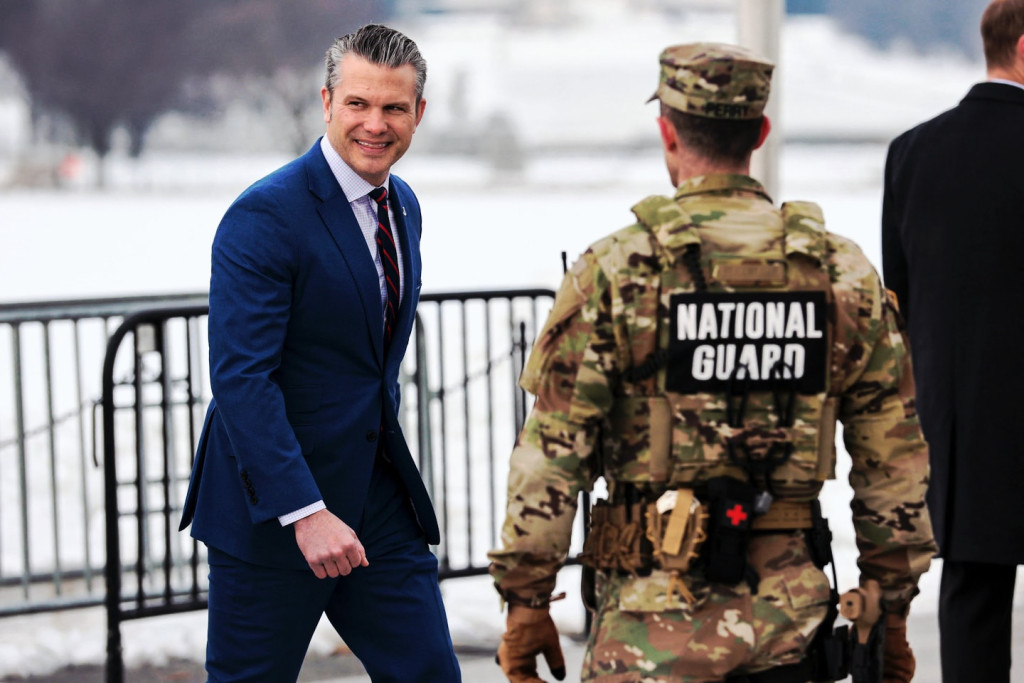
War Department Cuts Ties With Harvard, Ends Military Education Programs
The War Department has cut formal academic ties with Harvard University, ending graduate-level professional military education, fellowships, and certificate programs starting in the 2026–27 academic year. Current officers already enrolled will be allowed to finish their courses, but no new students will be sent.
Secretary of War Pete Hegseth announced the decision late Friday, arguing that Harvard no longer provides value aligned with warfighting leadership or national defense. Hegseth, a Harvard Kennedy School graduate himself, said the department spent decades sending officers to the Ivy League expecting strategic rigor and professional return. What it gets now, in his view, is ideological conditioning that weakens judgment and readiness.
The break follows months of escalating tension between the Trump administration and elite universities. President Trump moved aggressively against Harvard over campus antisemitism tied to pro-Palestinian protests, freezing federal research funding and demanding changes to admissions and diversity programs. Harvard challenged the funding freeze in court and won, but the broader relationship continued to deteriorate.
From the War Department’s perspective, the issue goes beyond politics. Senior leaders increasingly question whether civilian academic environments focused on theory, activism, and global governance actually prepare officers for command in high-intensity conflict. Harvard faculty criticism of the military and U.S. foreign policy only sharpened that divide.
Hegseth’s order triggers a wider review of military education partnerships across Ivy League and civilian graduate programs.
Public universities and in-house professional military education will take priority, with an emphasis on cost, relevance, and operational focus. Schools like Leavenworth, Newport, and Maxwell are positioned to absorb redirected officers, along with select public institutions.
Harvard still claims a long record of military alumni and Medal of Honor recipients, but the War Department’s position is blunt. Prestige does not equal preparedness. High tuition and ideological drift make the partnership expendable.
For SOF units and conventional forces alike, the signal is clear. Leader development stays inside the wire or with institutions that understand war as a profession, not a seminar topic. Harvard’s role as a military finishing school is over, at least for now.

Nigeria Deploys Army Battalion to Kwara State After Deadly Attacks Near Benin Border
North-central Nigeria, roughly halfway between Lagos and the capital city of Abuja, is not where most Americans picture jihadist violence. That changed this week in Kwara State, a farming region that borders Benin and has long sat outside Nigeria’s main insurgency belts.
Vice President Kashim Shettima traveled to Kaiama Local Government Area on Saturday after deadly Tuesday night attacks on the nearby communities of Woro and Nuku. Federal officials say at least 75 bodies have been recovered and buried so far, with search efforts still underway.
Shettima delivered a message from President Bola Tinubu that Abuja intends to lock the area down. The president has ordered the deployment of a Nigerian Army battalion to Kaiama and tasked the National Emergency Management Agency to push relief support into the affected villages alongside Kwara State authorities.
Nigerian officials have described the attackers as terrorists or extremists, though they have not publicly identified a specific group. What is clear is that the violence marks a dangerous expansion of militant activity into territory previously considered outside the main conflict zones.
Shettima avoided discussing tactics or timelines, saying only that security operations are ongoing and that the federal government will pursue those responsible. Kwara officials say troops are already on the ground as part of a broader stabilization effort.
The strategic concern is less about one raid and more about precedent. Kwara sits between Nigeria’s northwest bandit regions and its southern economic corridor. If armed groups can operate there without resistance, the map of Nigeria’s internal conflict just got wider.
Abuja is responding with massed manpower and visible federal attention. Whether that battalion presence prevents follow-on attacks, reprisals, or copycat violence will determine if this stays a localized atrocity or becomes a new front.
Peace in Kaiama is the stated goal. Woro and Nuku show the cost of failure.








COMMENTS