

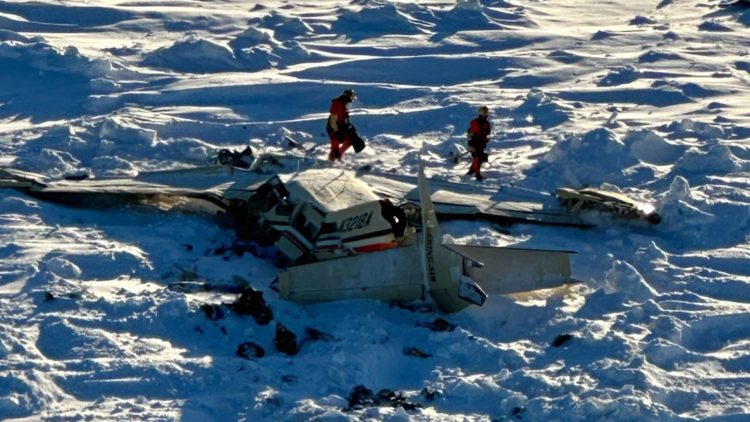
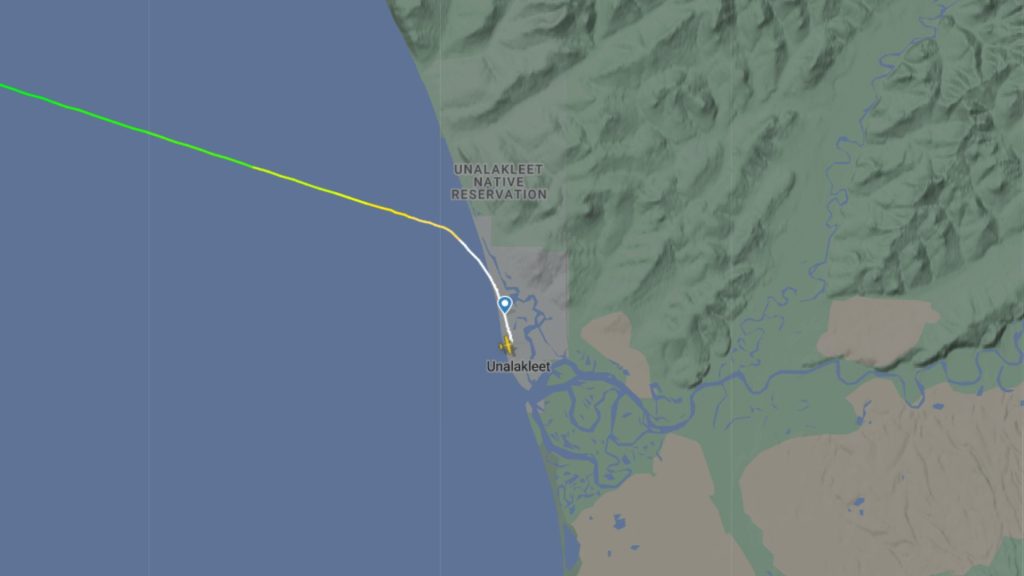
The National Guard, Coast Guard, and other federal and state agencies worked tirelessly in the search operation, utilizing aerial support and ground teams on snowmobiles to cover vast distances of frozen tundra and ice-covered waters.
Search efforts continued for hours on February 6 as Bering Air’s own planes conducted grid searches off the coastline, and additional personnel were involved in recovery efforts.
The crash site was ultimately located, and authorities confirmed the fatalities of all passengers and crew.
Impact on the Community
Unalakleet, with a population of about 690, is situated along the Iditarod Trail, which famously hosts the annual sled dog race.
The remote location means that aviation is often the only feasible means of transportation between villages, particularly in winter when road travel is limited.
#UPDATE (2/2) The remaining 7 people are believed to be inside the aircraft but are currently inaccessible due to the condition of the plane. Our heartfelt condolences are with those affected by this tragic incident.
— USCGAlaska (@USCGAlaska) February 8, 2025
As Alaska’s transportation infrastructure heavily relies on air travel, this incident has shaken not only the immediate community but also the state as a whole.
The small commuter plane was a vital link for many residents of rural Alaska, where scheduled flights by Bering Air connect smaller villages to larger hubs.
The tragic crash serves as a stark reminder of the risks involved in flying in remote regions with harsh, unpredictable weather conditions.
Political and Community Reactions
The devastating news prompted condolences from Alaska’s political leaders.
US Senators Lisa Murkowski and Dan Sullivan, along with Representative Nick Begich, expressed their support for the victims’ families and the community of Nome.
Prayer vigils were held in the area for those who perished and for the responders involved in the search and recovery operations.
“All of Alaska is praying for the families and friends of those who lost loved ones, for the Bering Air family, and the communities of Unalakleet and Nome,” Murkowski noted in a statement.
Aviation Challenges in Alaska
Alaska’s aviation industry faces unique challenges due to the state’s vast and rugged geography.
With many communities isolated and not connected by roads, air travel remains the primary method of transportation. The region’s sudden snow squalls, high winds, and long winters make flying especially hazardous, particularly for small aircraft.
The crash highlights the ongoing risks associated with aviation in Alaska, where aviation remains a lifeline for many residents in remote communities.
The community, while accustomed to difficult conditions, faces ongoing challenges as it deals with the aftermath of this heartbreaking event.
Final Thoughts
The crash of the Bering Air commuter plane in western Alaska is a tragic reminder of the dangers of flying in harsh and isolated regions.
The investigation into the cause of the crash is still underway, but the focus remains on the victims, their families, and the community that has been deeply affected by the loss.
As search efforts and recovery operations continue, Alaska’s resilience in the face of adversity is once again on display, as the state comes together to mourn and offer support during this difficult time.








COMMENTS