

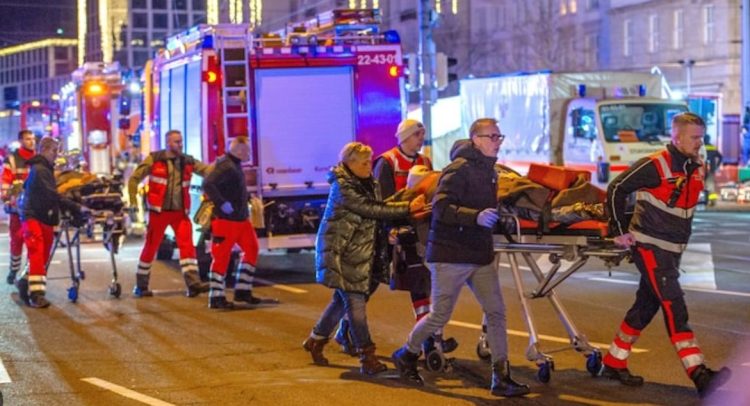
Yet, authorities in Magdeburg are hesitant to label this incident as terrorism without hard evidence. “We need to let the investigation take its course,” a spokesperson for the German Federal Police stated. Still, the mere possibility of terrorism has heightened public anxiety, especially during the holiday season, when crowds in public spaces make for tempting targets.
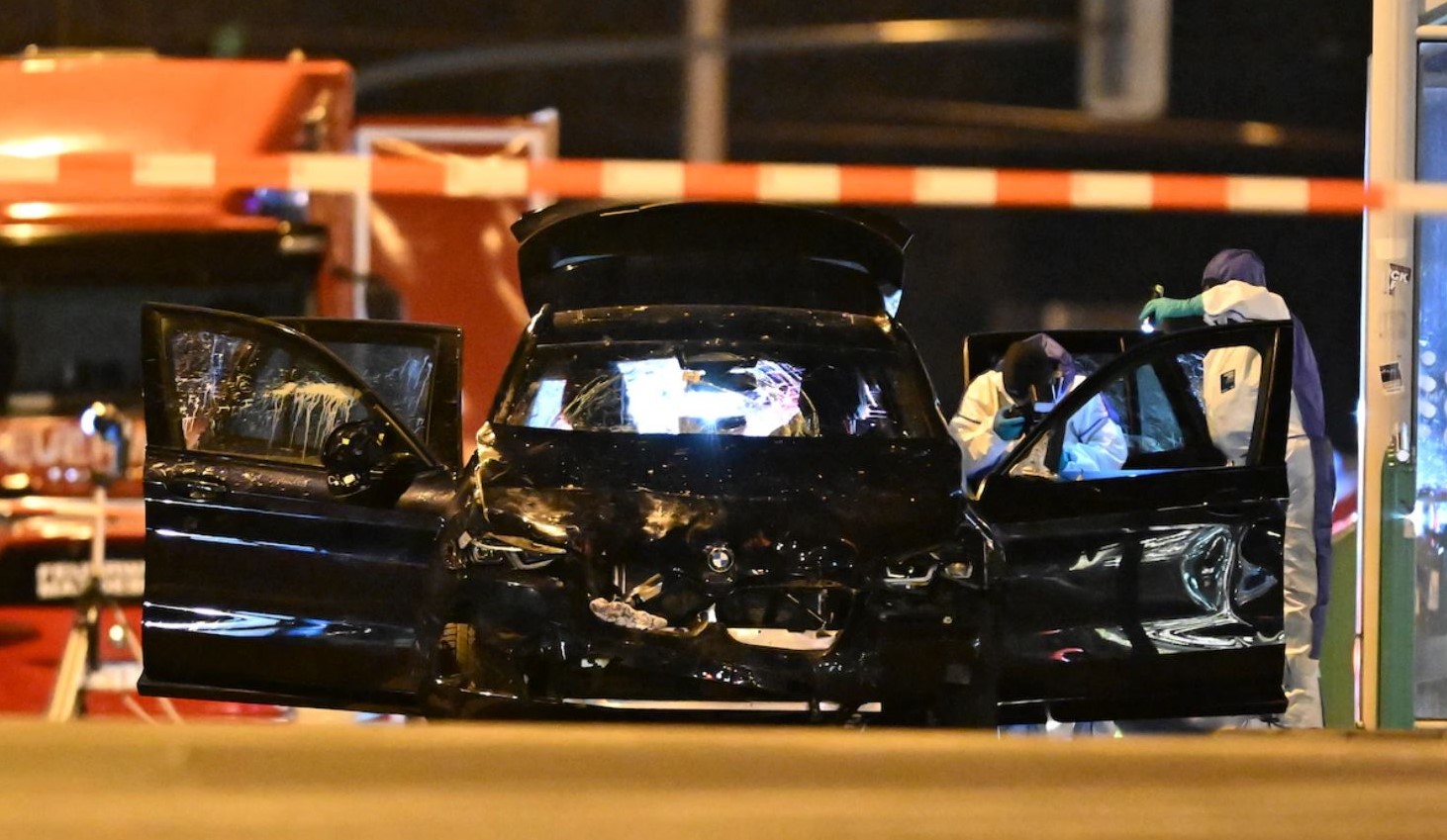
Implications for the United States
As news of the Magdeburg attack spread, American officials undoubtedly took note. In the U.S., vehicle-based attacks are not unheard of. The 2017 attack in Manhattan, where a man drove a rental truck down a bike path, killing eight, remains a grim reminder of the threat.
Urban planners and law enforcement have since implemented preventive measures, such as installing barriers in high-traffic pedestrian zones. But can those measures stop every attack? The short answer is no. A determined attacker can always find a way to exploit soft targets, leaving American cities constantly walking the tightrope between security and preserving public freedoms.
The Magdeburg incident also reignites debates over domestic terrorism. While this attack occurred overseas, its methodology is universal. Whether driven by ideology, mental illness, or personal vendettas, the act of weaponizing a vehicle transcends borders. The U.S. must remain vigilant, not only against foreign-inspired plots but also against threats from within.
The Global Challenge of Soft Targets
The Magdeburg attack underscores a harsh reality for cities worldwide: soft targets are virtually impossible to defend completely. Pedestrian zones, markets, and holiday celebrations are integral to urban life, but they are also prime targets for those intent on causing harm.
In Europe, where open-air markets are a cherished tradition, the holiday season has become a time of heightened alert. Cities like Berlin, Paris, and London have ramped up security, with armed police patrols and vehicle barriers becoming standard practice. Yet, as Magdeburg shows, even the best precautions can be circumvented.
For cities in Asia, Africa, and the Americas, the lesson is clear: preparation is key. This means not only physical defenses but also robust intelligence networks and public awareness campaigns. A well-informed citizenry can be an invaluable asset in identifying and thwarting potential threats.
Terrorism or Not: Does It Matter?
Whether the Magdeburg attack is ultimately classified as terrorism may seem like a semantic debate, but the distinction has real-world implications. Terrorism carries political weight, often prompting international cooperation, increased funding for counterterrorism efforts, and broader public support for enhanced security measures.
On the other hand, labeling the attack as a personal act of violence might minimize its significance, potentially leading to complacency in addressing systemic vulnerabilities. Regardless of motive, the impact on the victims, their families, and the community is the same.
A Wake-Up Call for the World
Magdeburg reminds us all that the threat of vehicular attacks is far from over. Whether driven by ideology, mental health crises, or personal vendettas, these acts exploit the very openness that makes cities vibrant and livable.
For the U.S. and other global cities, the message is clear: complacency is not an option. While we cannot eliminate every risk, we can invest in smarter security measures, better mental health resources, and stronger community resilience. The world is watching Germany’s response, not just to determine exactly what happened in Magdeburg but to learn how we might prevent the next tragedy.
In the end, it doesn’t matter whether you’re walking down a street in Magdeburg, Berlin, or Manhattan. The threat is real, and the responsibility to stay vigilant belongs to all of us.








COMMENTS