
My Own Experience With Blackwater
My first experience with BW was when I was asked by Naval Special Warfare Command (WARCOM) to serve as the Naval Special Warfare (NSW) representative on US Special Operations Command (US SOCOM) SOPMOD weapons acquisition update panel. At the time I was an instructor at the west coast training detachment’s sniper cell. The panel of SOCOM reps and I met daily at Blackwater’s facility , and analyzed a myriad of vendors vying for the opportunity for a spot on the Gen 2 SOPMOD kit. EOTECH, and other well-known manufacturers were virtual unknowns at this time.
I came away from the experience impressed at Blackwater, it was a squared away facility.
I had a second brush with the company when I was a Chief Petty Officer on instructor duty stationed at the Naval Special Warfare Center. We had problems with one of our sniper instructors, and it turned out the problem was drug related. He popped positive on a urinalysis. The Navy doesn’t tolerate illicit drug use, and he was rightfully dishonorably discharged. This particular individual threw away over sixteen years of service, and his retirement, for a nasty coke habit. Make no mistake, the SEALs and SOF community have our own problems, just like professional sports. It’s always a minority, but we face the same challenges and aren’t immune to this sort of behavior.
I still remember getting a call from this guy at the office, “Guess what? I’m not even processed out yet, and I have a job making $500 a day,” he said. “Ok,” I replied, although I was secretly thinking to myself that whoever hires this guy is in for quite the ride. I’d refused to give him an endorsement at his request. To this day I don’t give my endorsement to someone unless it’s earned. His next few words, I’ve never forgotten. “Blackwater hired me,” he said. I’d known the company from a few years back, and I couldn’t believe they’d hire someone with a dishonorable discharge that was drug-related. They did. I’m not sure how long he lasted but he wasn’t the only SEAL or SOF guy with a questionable background who was snatched up due to massive growth, and an even bigger manpower shortage. This was the cancer that would slowly start to kill the company regardless of the high-caliber of men at the top.
In 2006, I was working as a contractor for an agency in northern Iraq. I was on a team of incredibly talented men, all former Spec Ops guys. We were running ops out in town in indigenous vehicles, when we were almost run off the road by an aggressive BW convoy. I can still see their expressions in my sleep. Their artificial hostility was unnecessary given the geographic location and threat environment, and in my professional opinion, it only made things worse.
Then there’s the BW guys we’d see in the chow hall at BIAP (Baghdad International Airport) wearing tight shirts, and wearing their gear in a manner that indicated everything but professional. It was not uncommon to run into an old acquaintance with a shady past who was now suddenly working for the company. At this point in late 2006, the company was spiraling downward from an outsider’s perspective. Once well-respected, in 2006 no good Operator (former SOF guy) would touch the company as a new opportunity. Triple Canopy, and the others had taken a stand when it came to quality, they poached a lot of good talent who were leaving in droves, and were used it as a competitive advantage to chip away at BW’s enormous market share. This drove home an important lesson for me at the time. Quality people attract more quality people. I’ve always remembered this.
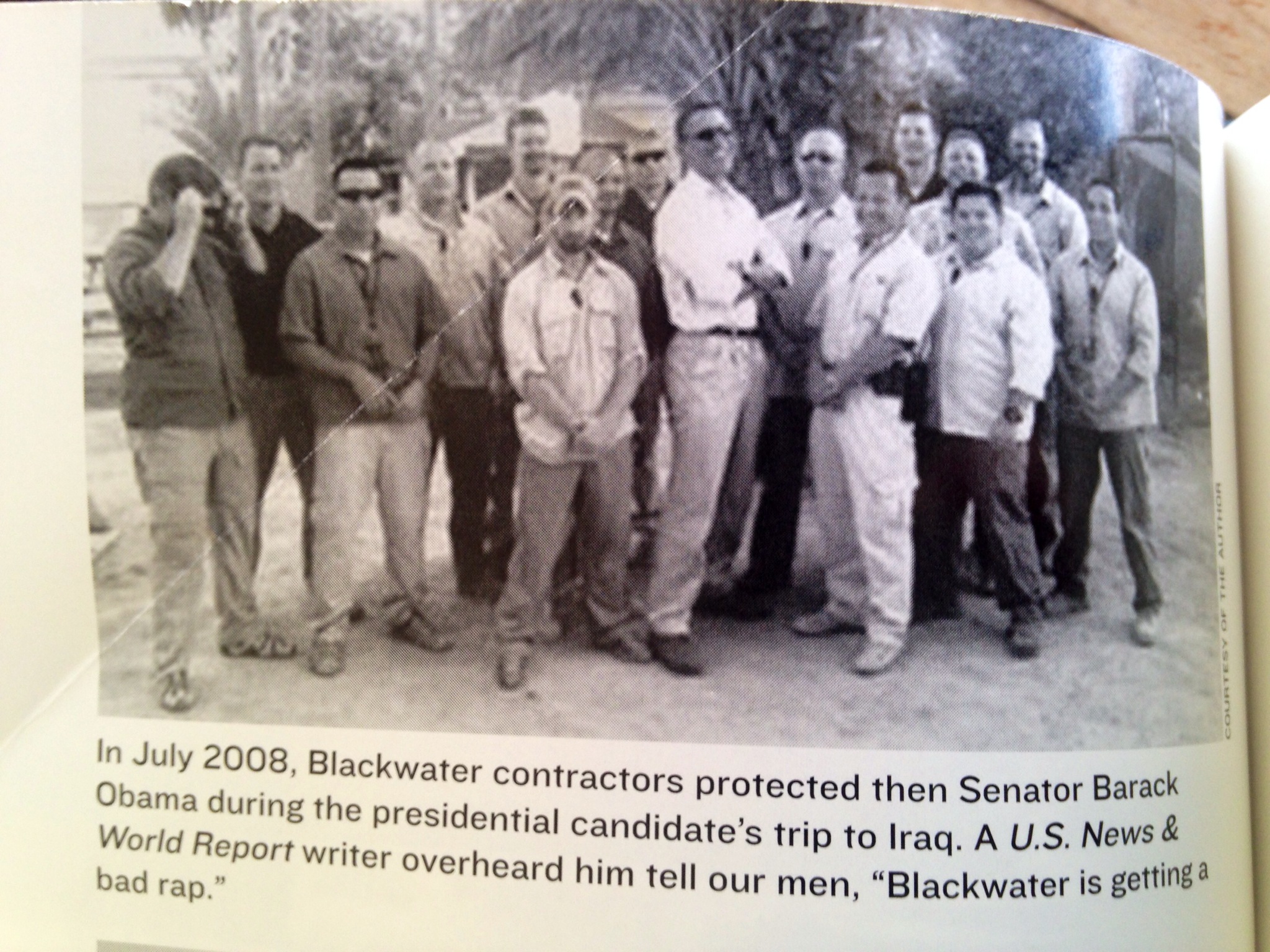
(Image Courtesy of Civilian Warriors)
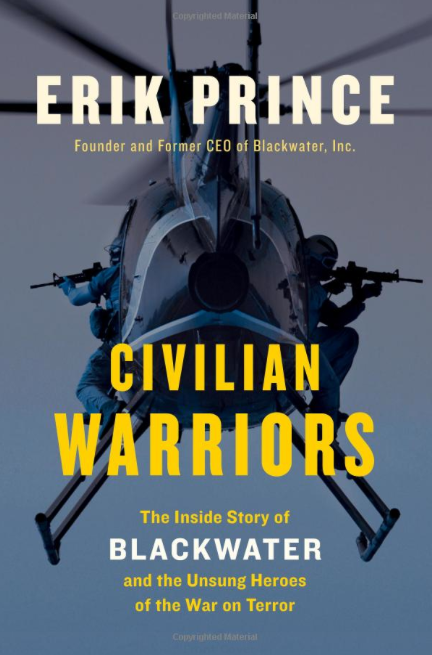
The PMC business is one of the world’s oldest trades, as Prince smartly points out in Civilian Warriors. In 2009, more contractors were dying in Iraq then active duty, and essentially, “Privatizing the ultimate sacrifice”, as Prince’s Civilian Warriors puts it.
Prince grew his business so quickly because he saw the need, took the risk, and reaped the rewards. It’s the all American story with a bad twist. First boosted by the Columbine shootings, and the need to train law enforcement for the active shooter. Then thrust into the stratosphere after the USS Cole, and 9-11 terrorist attacks. At the time, Blackwater was the only one selling water in the desert. It’s all in there, and worth reading.
Aside from learning about the rise of BW from Prince’s perspective, I enjoyed getting to know Erik as a person, and respected that he admitted his own shortcomings. Having penned a book myself, I realize how terrifying it can be to admit sins of the past, and to display them for the world to read about, and judge. I’m specifically talking about his telling of his experience with his wife’s battle with cancer, and the extramarital affair during this challenging time in his life. It takes guts to write this stuff, and he could have easily left it out of the book. The fact he left it in speaks highly of his character, and his own moral courage, and I respect him for this.
You’ll learn, and not be surprised, that some of the very people his company protected turned their backs on the business when the going got tough. Ironically, the same people, Secretary of State Hillary Clinton included, who were so critical of Blackwater, continued to push contracts to the company under a different name. This proves how much we’ve come to rely on the private and flexible services offered by modern-day PMCs.
If you want the full story, then read Civilian Warriors by Erik Prince. You won’t regret it.








COMMENTS