


These lessons, gleaned from both sides of the bullying aisle, inform how I interact with people in the adult world on a daily basis. I try not to say or do things that would lead to the same kind of regret I feel about high school, while also trying to behave in a socially conscious manner that helps me avoid the kind of regret I feel about junior high. I try to not be a bully, and I try not to be bullied. I could do neither as well without having real experiences to pull from.
Today’s anti-bullying culture hasn’t done away with bullying, it’s just changed its face. As a culture, we now harshly judge children for the way they treat other kids. It’s wrong for kids to bully other kids, but at what point do we begin to consider that the bullies we see in the viral videos being shared getting “what’s coming to them” are being victimized on a far larger scale by us. If the bully in the video was anything like me, he might have grown up in a house full of alcohol and violence and without enough money to put dinner on the table. Being a child means he’s not great at managing those negative feelings, so as a society, we’d better shame him on the internet in front of millions of people in the name of social justice, right? After all, he did shove another kid his own age.
The socially accepted stance we’ve adopted about bullying just changed the tools of the trade. Instead of throwing punches, we share cell phone videos. Instead of standing up for ourselves, we ask the internet to dispense justice. And it only gets worse as we get older. Bullying is bad, but what we’ve become is worse.
When I was at recruit training, one of my drill instructors was relieved halfway through our cycle. He had dislocated a recruit’s arm in what I believe was an accident that began as fairly normal, if not rough, training. It was the first time I heard the dreaded word “hazing” in the military, but it would be far from the last. Throughout the rest of my time in, every leader at every level was terrified of being accused of hazing, which is probably a good thing, but it had far-reaching ramifications in the ways we established unit cohesion.
There were still hazing traditions that were alive and well, they were just seen as entirely voluntary. When I became a non-commissioned officer, I received my “blood stripes” like many noncommissioned officers (NCOs) had before me, which is the time-honored tradition of having all of your friends kick the crap out of the sides of your legs to represent the honor of wearing a red stripe down the sides of our dress blue trousers. I knew plenty of guys that didn’t get the same treatment…but it wasn’t because I was being picked on.
It was actually the opposite.
Hazing took a new form in the Marines (at least for many of us). We all feared the guys that seemed frail because it would only take one bullying or hazing accusation to ruin our careers, so those of us who “opted in” to the abuse felt a tighter bond than those who didn’t. I knew I could trust Vic because he congratulated me on my promotion by stabbing me in the collar bone with a chevron pin. He gave me the power to ruin his career, and although it hurt, I recognized it as a sign of trust.
I’d like to place a disclaimer here: I’m not suggesting that alpha males are an oppressed minority in a military full of weaklings, nor am I suggesting that opting out of these practices makes anyone less of a Marine or a tough guy. What I am suggesting is that bullying is about fear, and although bigger, meaner Marines weren’t beating us up, we were all still plenty afraid. The Marine Corps is a war-fighting organization, and I always believed that the reality of fighting wars often meant things would hurt. Trying to avoid pain wasn’t what we signed up for.
In the civilian world, where punching coworkers is never tolerated, we’ve taken anti-bullying rules to a different extreme: No one is allowed to speak ill of anyone or anything that socially liberal people like.
To be fair, I’m a pretty socially liberal guy. My stance on marriage equality, drugs, transgender people, and this season of The Voice are all exactly the same: What makes other people happy is none of my business. That said, however, I can’t help but recognize the intense and culturally accepted hate anyone with a socially conservative viewpoint is met with immediately upon voicing their opinions.
When people in cities like Ferguson, Missouri take to the streets to voice their grievances by burning down the neighborhood, our culture tells us that they have the right to be heard, but when a conservative has the audacity to say they don’t think changing genders makes Caitlyn Jenner a hero, they’re immediately labeled prejudiced, ignorant, and awful.
Those aren’t the only two options. Can’t we agree that there are systemic issues in the way some police departments deal with race without supporting the people burning down their local grocery stores? Can’t we accept that, while it’s true that Caitlin Jenner leads a public life and it took courage to do what she did, not all Americans have to be unanimous in our approval? Isn’t it okay to just disagree sometimes? Or crazier still, can’t we discuss it without resorting to name-calling?
It seems we can’t, and that social push to ban any discussion that doesn’t support the liberal mindset is exactly why Donald Trump resonated with so many people. It’s not that he’s a bully, it’s that he responds to the left with the same dirty boxing they use in the media every day. When it comes out that liberals were faking stories about discrimination in an effort to make Trump seem like a monster, it just goes to show that neither party has the moral high ground, no matter what the Left may claim.
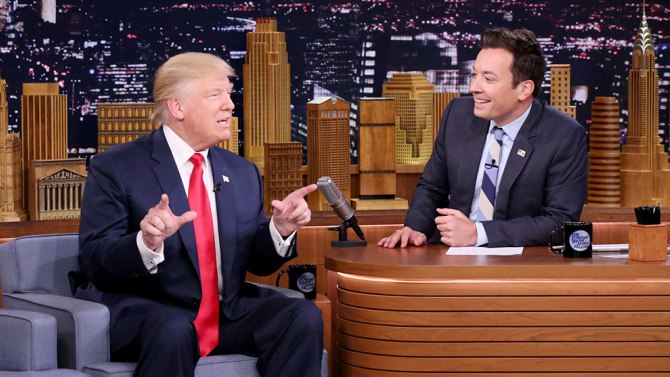
If you don’t believe me, Google the response Jimmy Fallon got for just being nice to Donald Trump when he appeared on his show a few months ago. The show received 2,324 percent more “hate” Tweets than ever before, all without Fallon claiming allegiance to any political viewpoint or camp. All he did was ruffle Trump’s hair and thank him for giving him so much material to make jokes about.
Bullying isn’t going away, it’s just changing with the times, and it’s time we stopped pretending that public shaming is a tool of the righteous, or that the military should prioritize feelings over combat effectiveness, or that being conservative is the same as being racist. It’s time we acknowledged that the anti-bullying crusaders that demand our strict adherence to their social rules are bullies themselves, and standing up to them, from time to time, is okay.
Instead of banning conversations, it’s time to start having them. Otherwise, opposing viewpoints become opposing factions, and our country becomes further and further divided.
And even bullies shouldn’t want that.
Image courtesy of NBC








COMMENTS