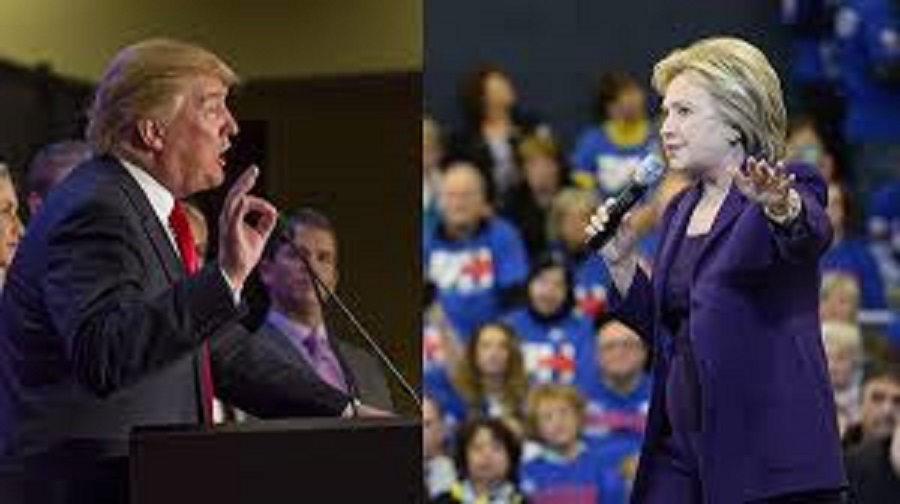
Most Americans think Donald Trump as president would handle terrorism better than Hillary Clinton, according to the latest polls. But when it comes to homegrown extremism, there isn’t much difference between their platforms. The messages and delivery vary, but Trump and Clinton’s proposals are effectively the same, and they are equally ignorant. Their words prove it.
A narrow focus on Islam. After the Orlando night club shooting, Trump said there are people in “our” country who are “sick with hate, and people that are around him [referring to the shooter], Muslims, know who they are, largely. They know who they are. They have to turn them in.”
Meanwhile, Clinton said during a counterterrorism speech at Stanford University, “There are millions of peace-loving Muslims … These Americans are a crucial line of defense against terrorism. They are the most likely to recognize the warning signs of radicalization before it’s too late, and the best positioned to block it.”
In sentiment, these statements are worlds apart, but in practice, the ideas are the same. The counterterrorism focus is on Muslims, ignoring other motivating ideologies; the solution is for Muslim communities to identify potential threats; and the implication, by extension, is that Muslim-American communities to this point have not sufficiently rejected radicalization.
Read More: US News
Featured Image – France Bleu
Already have an account? Sign In
Two ways to continue to read this article.
Subscribe
$1.99
every 4 weeks
- Unlimited access to all articles
- Support independent journalism
- Ad-free reading experience
Subscribe Now
Recurring Monthly. Cancel Anytime.
Most Americans think Donald Trump as president would handle terrorism better than Hillary Clinton, according to the latest polls. But when it comes to homegrown extremism, there isn’t much difference between their platforms. The messages and delivery vary, but Trump and Clinton’s proposals are effectively the same, and they are equally ignorant. Their words prove it.
A narrow focus on Islam. After the Orlando night club shooting, Trump said there are people in “our” country who are “sick with hate, and people that are around him [referring to the shooter], Muslims, know who they are, largely. They know who they are. They have to turn them in.”
Meanwhile, Clinton said during a counterterrorism speech at Stanford University, “There are millions of peace-loving Muslims … These Americans are a crucial line of defense against terrorism. They are the most likely to recognize the warning signs of radicalization before it’s too late, and the best positioned to block it.”
In sentiment, these statements are worlds apart, but in practice, the ideas are the same. The counterterrorism focus is on Muslims, ignoring other motivating ideologies; the solution is for Muslim communities to identify potential threats; and the implication, by extension, is that Muslim-American communities to this point have not sufficiently rejected radicalization.
Read More: US News
Featured Image – France Bleu










COMMENTS