

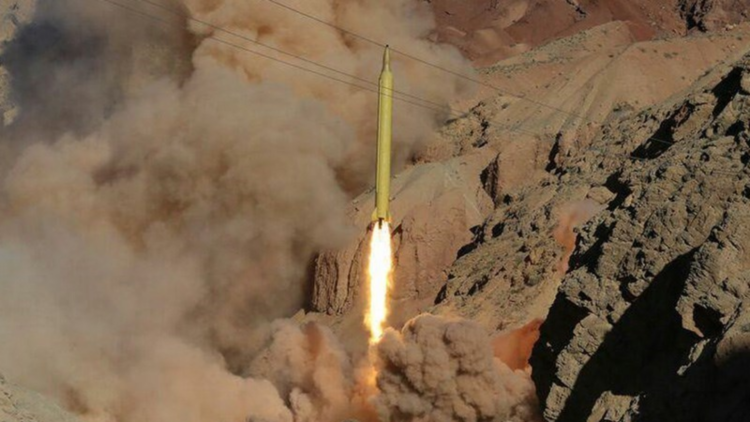

Some analysts suggest it’s also a way to manage relations with Arab allies, acknowledging Iranian involvement while potentially distancing themselves from direct attacks.
By acknowledging involvement, Iran takes some ownership while potentially distancing itself from the direct act of attacking ships, a move that could further strain relations with some Arab states.
Domestic politics within Iran might also play a role.
Hardliners within the Iranian government could be flexing their muscles on the world stage in an attempt to bolster their domestic standing.
Uncertain Future for the Region
This development has significant implications for the already volatile region.
The increased capabilities of the Houthis, coupled with Iran’s growing influence, threaten to further destabilize the Red Sea.
The international community will be closely watching how this situation unfolds, with potential consequences for regional security, the free flow of goods through the crucial Red Sea corridor, and the broader geopolitical landscape in the Middle East.
🇺🇸USS Dwight D. Eisenhower, 🇺🇸USS Laboon and 🇺🇸USS Gravely conduct PHOTEX with Italian carrier 🇮🇹ITS Cavour, 🇮🇹ITS Alpino and 🇫🇷FS Forbin in the Red Sea.
Cavour is on her way to the Indo-Pacific region for a 5-month deployment. pic.twitter.com/TTAwPVAbcq
— Navy Lookout (@NavyLookout) June 10, 2024
Potential Flashpoints and Diplomatic Challenges
The recent escalation raises several questions.
Will the Houthis use their newfound capabilities to launch more frequent or devastating attacks on shipping? How will Western nations and regional powers respond? Can a diplomatic solution be found to de-escalate tensions and prevent a wider conflict?
The answers remain unclear, and the coming weeks and months will be crucial in determining the trajectory of the situation.
This crisis also highlights the complex web of alliances and rivalries that define the Middle East.
Iran’s support for the Houthis can be seen as a way to counter Saudi Arabia’s influence in the region.
The Saudis, along with other Arab states, view Iran’s expansionist ambitions with concern and may feel compelled to take a more active role in the Red Sea.
Not to mention, the potential disruption of Red Sea shipping lanes is a major concern for the global economy. Any significant disruption could lead to yet another spike in oil prices and shortages of essential goods, further straining economies already grappling with inflation and supply chain issues.








COMMENTS