

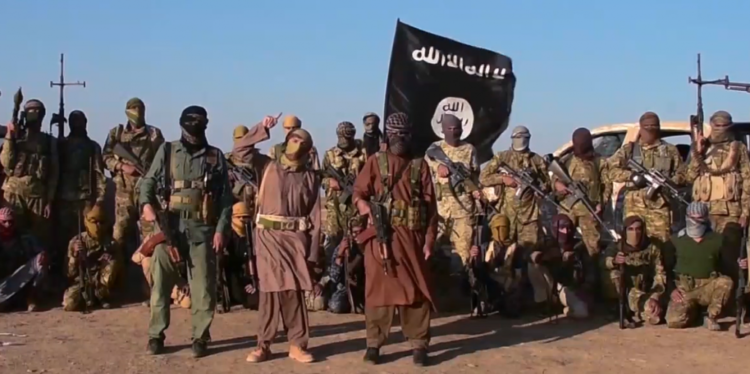
“These acts caused pain to the Jews and showed the world that there is a difference between those who fight and die for God and those who fight for empty political slogans,” Al-Muhajir said.
Al-Muhajir called on the extremist group’s supporters to “arm themselves with weapons and carry out further attacks.” Echoing the previous ISIS agenda, he further stated that the return of their “caliphate” was necessary to liberate Jerusalem.
This announcement also came during a time when Christians all over the world were celebrating Easter, a season when people of Islamic, Christian, and Jewish faith flock to Jerusalem. Establishing a caliphate, a political-religious state that is said to “unite” all Muslims, has long been the group’s goal and ambition.
“The opportunity is ripe for you,” Al-Muhajir said, encouraging their followers to conduct terrorist attacks in Europe.
The self-proclaimed Islamic State, which proclaimed itself to be a worldwide caliphate in 2014, once controlled surmountable parts of Iraq and Syria and held control over millions of people. However, a long and brutal conflict led by Syrian and Iraqi forces with support from the West pushed ISIS out of its former territory, forcing them into scattered hideouts in the region.
ISIS Succession
After suffering from crushing defeats in Syria and Iraq in 2019, the terror group leader and founder Abu Bakr al-Baghdadi was killed in October that same year in a raid by the U.S. Delta Force in Syria.
Al-Qurashi, a former soldier in Saddam Hussein’s army, was given the role of Al-Baghdadi’s successor. He led the group in its continued campaign of terror in its former stronghold. He also expanded the group’s influence overseas which led to ISIS-inspired attacks by individuals and groups abroad.
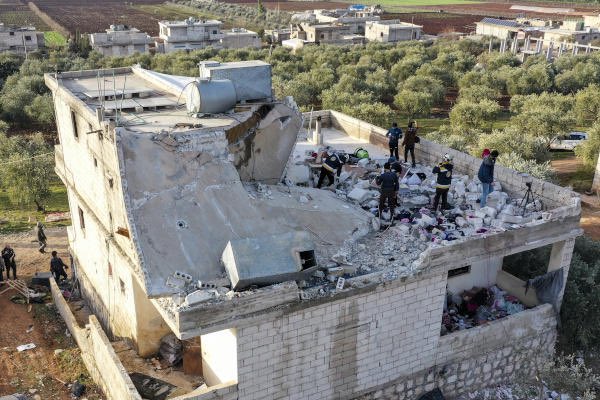
Al-Qurashi, however, met a similar fate to his predecessor Al-Baghdadi. The group’s secret base in northern Syria was identified and raided in February. According to a previous report by SOFREP, US troops arrived by helicopter and surrounded Al-Qurashi’s residence. Rather than surrendering, the ISIS leader blew himself up along with his family, which included four women and six children.
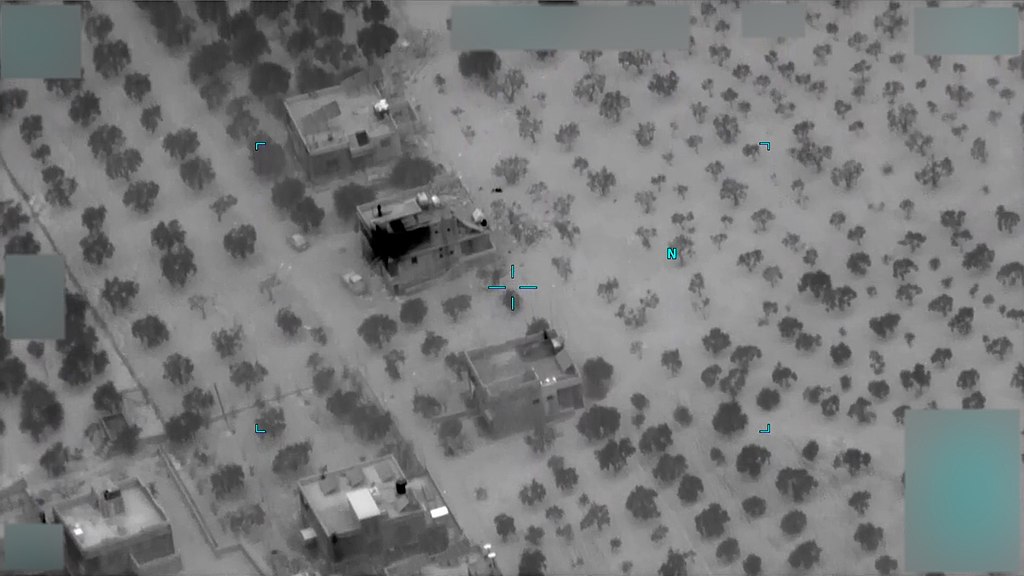
The raid happened just days after the terror group attempted a large-scale prison break in Syria, which would have freed thousands of ISIS supporters. It was the group’s most significant attack on Syria in recent years.
Since then, the group has announced Abu Hasan al-Hashimi al-Qurashi as their new leader. Little is known about the new ISIS head, but sources say that he has been a long-time senior member and was supposedly chosen by his predecessor before he died in the raid.
Weakened State
Since its downfall, ISIS activity has been limited to guerrilla-style operations against security forces and civilians in Syria and Iraq. Experts believe that the terror group is no longer capable of mounting more sophisticated attacks in the West like what it did in Europe over the past few years.
Managing Director of International Security and Geopolitical Risk Consultancy, Global Strat, Olivier Guitta, said that the terror group had not made any significant attacks in Europe in recent years. Any attacks seen on the media are often individuals or groups inspired by ISIS rather than organized by the group itself.
“ISIS [believes it] needs to carry out attacks in Europe and in the US in order to regain credibility and put itself back in the news,’’ Guitta said. “The question is whether ISIS has the logistical capacity to carry out a spectacular attack in Europe like in 2015 in Paris or 2016 in Brussels.’’
Researcher at the Swedish Defense Research Agency Aron Lund said ISIS’ latest threat sounded like “the ravings of a leadership that doesn’t have much contact with its European adherents.”









COMMENTS