The Jagdkommando is Austria's elite special forces unit, established in 1962, known for its rigorous selection and training processes. With a focus on counterterrorism and special reconnaissance, the unit operates under extreme conditions and has participated in various international missions.
Key points from this article:
The Jagdkommando, based at Flugfeld Kaserne in Wiener Neustadt, was formally established in 1962 after Austrian officers trained at the U.S. Army Ranger School.
How the rigorous selection process eliminates about 75% of candidates within the first three weeks highlights the extreme physical and mental demands required to join the unit.
Why the Jagdkommando's operational readiness and elite status are crucial for Austria, a non-NATO member, as it maintains strong relationships with NATO nations and engages in international peacekeeping missions.
Updating summary...
Jagdkommando: Austrian Special Forces
Warren Gray
Speed
1x
Listen
COMMENTS
Austria’s Jagdkommando is an elite special forces unit shaped by brutal selection, alpine warfare, global deployments, and a Never Retreat ethos.
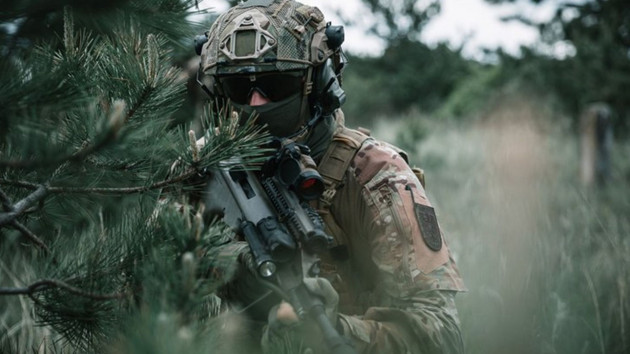
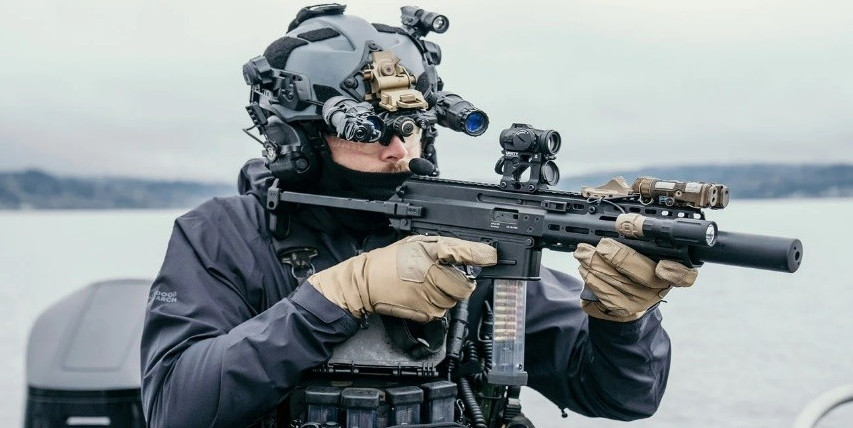
Jagdkommando with a suppressed Steyr AUG A3 SF carbine. Photo credit: Nick Rainer/Austrian Armed Forces.
“The Jagdkommando is the special task force of the Austrian Armed Forces…specially selected, trained, and equipped soldiers carry out their missions under high physical and mental strain. They operate under difficult terrain and weather conditions, as well as extremely dangerous situations.” — Selina Lukas of Truppen Dienst magazine, September 20, 2023.
The Republic of Austria (not quite as large as the U.S. state of Indiana) is a landlocked, officially non-aligned, German-speaking, European nation, bordered by Germany and the Czech Republic (Czechia) to the north, by Slovakia and Hungary to the east, by Slovenia and Italy to the south, and by Switzerland to the west. At least 62 percent of the country is mountainous, due to the majestic Alps in the western and southern regions, and it is not a member of the NATO alliance, but maintains excellent relationships with NATO nations.
Advertisement
The Austrian Armed Forces (Bundesheer) have one special forces unit, the elite Jagdkommando (“Hunting Command”), based at Flugfeld Kaserne in Wiener Neustadt, just 21 miles south of Vienna, and 15 miles from the Hungarian border. The unit is directly adjacent to Wiener Neustadt Air Base, with six one-mile-long, grass runways, primarily used for parachute training, and only a mile to the west, across the broad airfield, is the headquarters for Einsatzkommando Cobra (“Special Intervention Unit Cobra,” or EKO Cobra), a paramilitary, police tactical unit of the Federal Ministry of the Interior.
Jagdkommando had its origins in World War I with small assault squads, but the unit was formally established in 1962, when some Austrian officers graduated from the U.S. Army Ranger School and decided to create a similar force in their own country. Official training began on May 4, 1963.
The selection course is arduous and is held only once per year, beginning in January and lasting for six months. Requirements include a basic knowledge of English and computer science, and above-average physical and mental performance. Most candidates (about 75 percent) are eliminated during the first three weeks, especially during the grueling, 72-hour Field Exercise, which includes long road marches in squads, psychological testing, and total sleep deprivation.
Advertisement
The remaining candidates are then trained in demolitions, parachuting, amphibious insertion and extraction, field survival, combat scuba diving, close-quarters battle, and finally, SERE (Survival, Evasion, Resistance, and Escape) training in the Alps near Salzburg. Only 10 to 15 percent of candidates make it all the way through the SERE course, to be accepted into the Jagdkommando unit, and awarded the olive-green beret (they call it “mud-green.”)
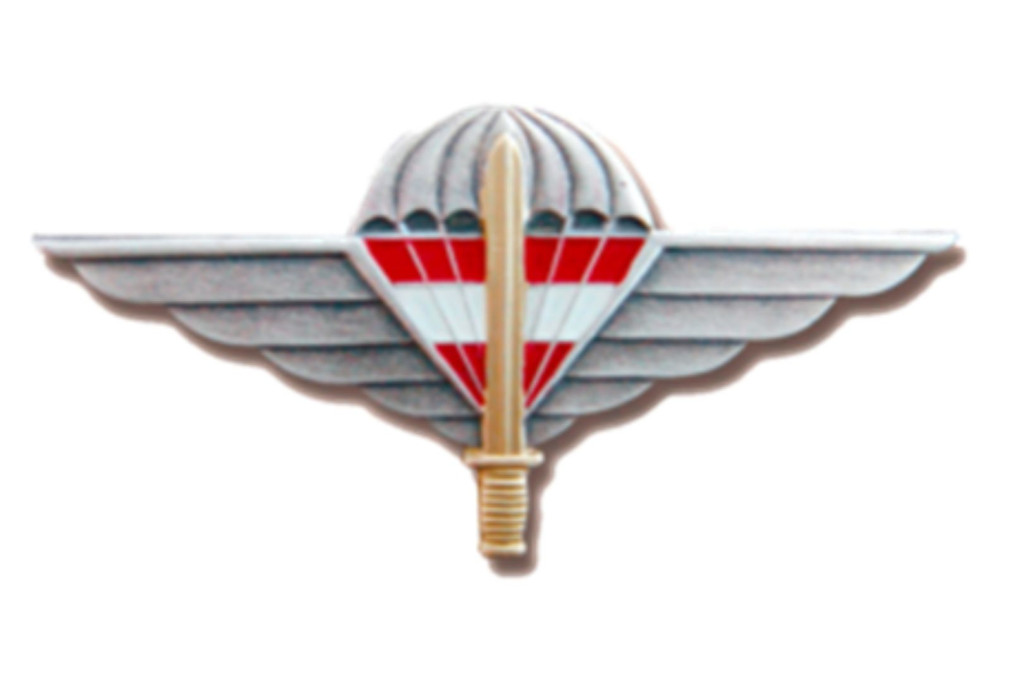
Jagdkommando qualification badge. Photo credit: Truppen Dienst magazine.
Jagdkommando is tasked with counterterrorism, direct action, commando operations, special reconnaissance, counterinsurgency, unconventional warfare, hostage rescue, search-and-rescue missions, and military training with friendly nations. The primary emphasis is on special reconnaissance and commando operations.
Advertisement
Accordingly, Jagdkommando operators undergo one year of additional training, including driving and shooting classes, mountaineering, airborne operations, skiing, winter warfare, and individual job training for each position, such as Medic Sergeant, Weapons Sergeant/Sniper, Communications Sergeant, or Engineer Sergeant specialties.
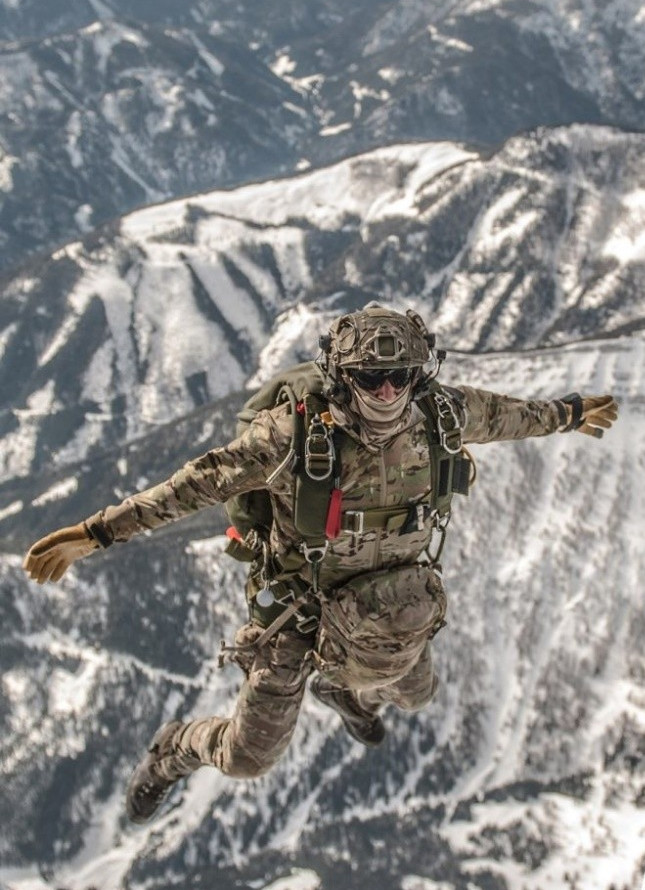
Jagdkommando freefall parachutist over the Alps. Photo credit: Austrian Armed Forces.
Over the next six months, they will add training in close-quarters battle (CQB), air assault techniques, hostage rescue, urban warfare, and cross-training with various NATO special operations forces. There are also an array of peacekeeping or combat deployments, which have included Afghanistan (2001-2022), Bosnia, Burkina Faso, Chad (under French command), Ghana, Kosovo, Mali, Senegal, Syria, Ukraine (embassy evacuation, February 2022), and other world hot spots.
On November 3, 2022, Jagdkommando officially adopted the MultiCam Arid camouflage pattern for its field uniforms. Their primary weapons include the Glock-17 Gen. 5 FDE, Glock 18C (P18C) selective-fire handgun, Glock-21 (in .45 ACP, used by Jagdkommando combat swimmers), and subcompact, Glock-26 (P26) pistols. The standard assault carbine is the Steyr AUG A3 SF (StG 77 A2 Kommando) bullpup design, with 16-inch barrel, although optional, quick-change, barrel lengths of 14.5 inches, 15 inches, 16.4 inches, or 20 inches are available.
Advertisement
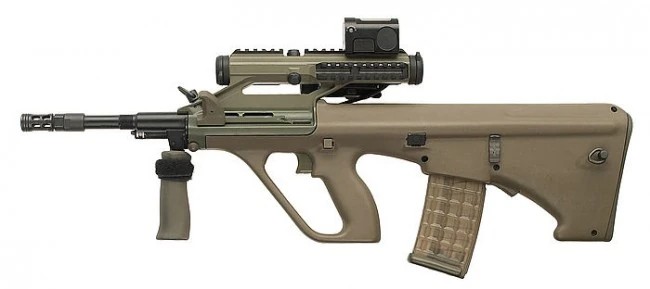
Steyr AUG A3 SF carbine. Photo by Steyr Arms.
Tactical Life magazine reviewed the Steyr AUG A3 on November 25, 2025, writing, “Austrian AUG rifle (Armee Universal Gewehr, or Universal Army Rifle)…The AUG A3 comes with the 1.5X-14mm high-quality, Steyr ‘Austrian scope.’ It has superb optical performance…You can expect average, 10-shot groups of 1.5 minute-of-angle (MOA)…The trigger itself is used to control the rate of fire. Pulling it halfway back will produce single shots, while pulling it fully will produce fully-automatic bursts…The magazines are clear polymer, available in 30- and 42-round capacity. The Steyr AUG A3 is one of the best tactical rifles/carbines available…This is a superb rifle; accurate, configurable, and incredibly cool.”
Jagdkommando sniper rifles include the HK417P in 7.62mm NATO, Steyr SSG 08A2 in .338 Lapua Magnum, and Barrett M82A1 in .50 BMG. Their standard, combat knife is the Glock FM78 Field Knife. The FN P90 personal defense weapon in 5.7x28mm is also widely used, often with a suppressor. Optional firearms include the HK416 carbine, SSG M1 sniper rifle in .338 Lapua Magnum, and the Browning M2 heavy machine gun.
Stationed just across the airfield, EKO Cobra also uses the Steyr AUG carbine, Glock-17, 18C, and 19 pistol variants, and they use a suppressed version of the B&T (Swiss) APC9 submachine gun in 9x19mm, replacing the earlier, H&K MP5SD3 series.
Interestingly, EKO Cobra is the only counterterrorist unit in the world to terminate a hijacking while the aircraft was still in the air. On October 17, 1996, four Cobra officers were aboard an Aeroflot (Russian) Tupolev Tu-154M airliner, escorting deported prisoners to Lagos, Nigeria, when a Nigerian man threatened the cockpit crew with a knife, and demanded a diversion to Germany or South Africa. The Cobra team overpowered the man, and handed him over to local authorities after landing.
Jagdkommando vehicles include the Puch G 290/LP Sandviper, with machine gun mounted, the Defenture GRF (Netherlands) armored, tactical vehicle, the Polaris DAGOR, Polaris MRZR D2/D4, Polaris Sportsman 570cc 6×6 Big Boss ATV, and KTM 450 SX-F Enduro off-road motorcycles. They also employ Hurricane H955 Mach II and Silinger Proraid 765 rigid-hull, inflatable boats
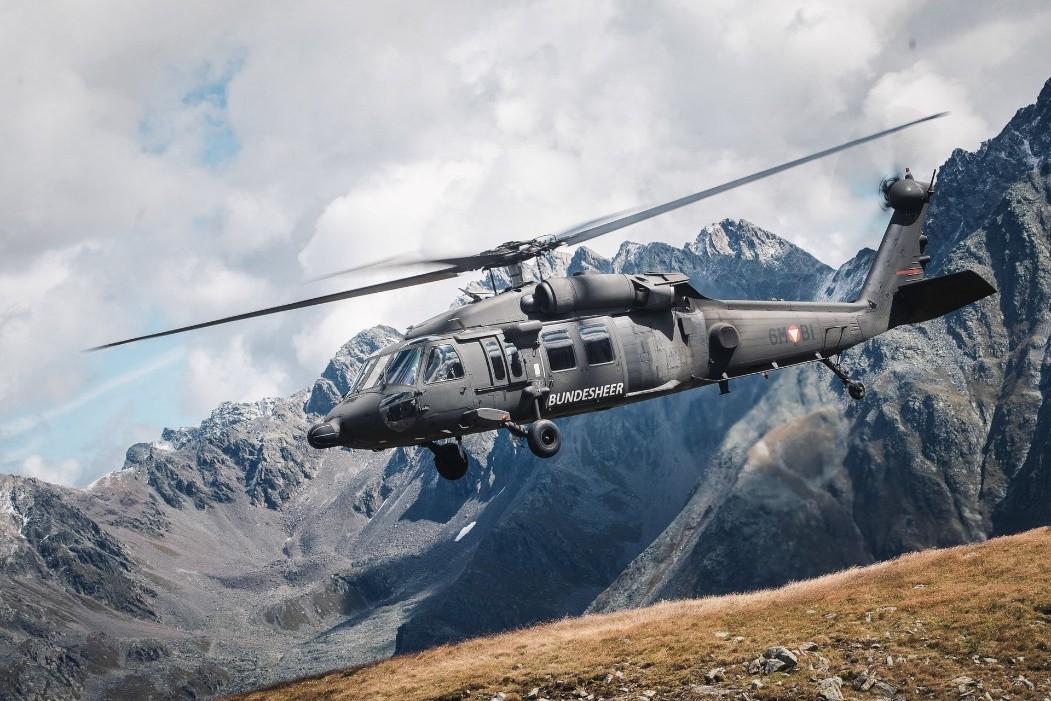
Tactical aviation assistance for the Jagdkommando unit is provided by the Air Support Wing at Figl Air Base, just south of Landenlebarn, which is only 12 miles northwest of Vienna. The base houses nine S-70A-42 Black Hawk medium transport helicopters, 10 OH-58B Kiowa light utility helicopters, and eight PC-6/B2-H2 Turbo-Porter light transport planes (of the 4th Air Squadron.)
Austrian Air Force S-70A-42 Black Hawk over the Alps. Photo credit: Austrian Armed Forces.
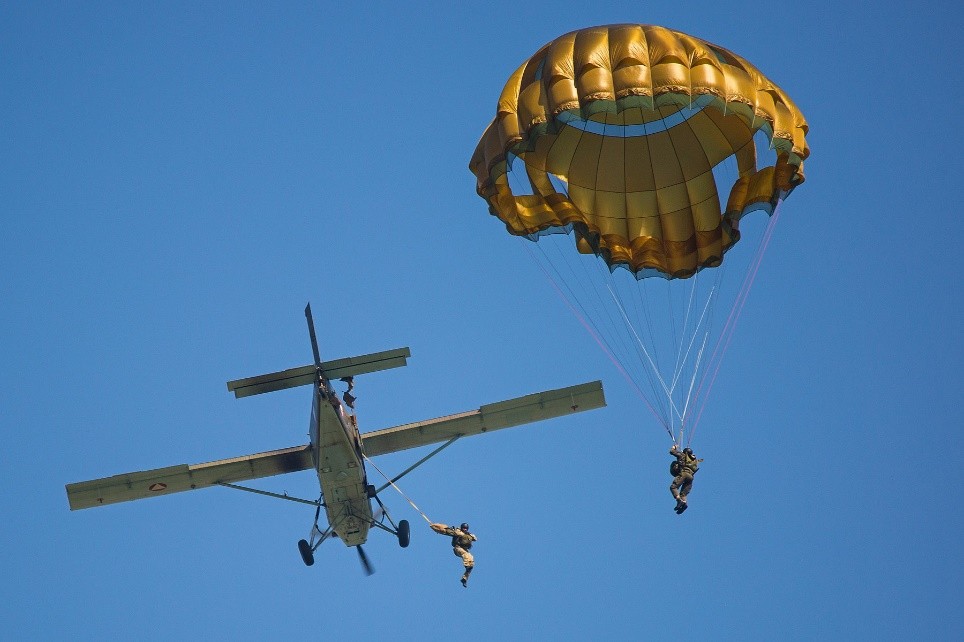
The short-takeoff-and-landing (STOL) PC-6s (they can take off in just 640 feet, and land in 427 feet) actually spend most of their time with the Kommando Wing at Wiener Neustadt Air Base, providing parachute training for Jagdkommando and EKO Cobra.
At the southern edge of the base, the civilian, Fallschirmspringen (“Skydiving”) Club offers tandem or solo jumps from various light aircraft, including Cessna 182Js and 208Bs, PC-6/B2-H4s, and a Dornier Do 28G-92 Skyservant.
Austrian Air Force PC-6/B2-H2 Turbo-Porter parachute training. Photo credit: www.milak.at.
Austria has also ordered six AW169B Lion helicopters from Italy for training use, 12 AW169MA Lion light attack variants, and 18 AW169M Lion troop transports. These will replace most older helicopters currently in service, with deliveries to be completed by 2028. Nine aircraft have been received so far.
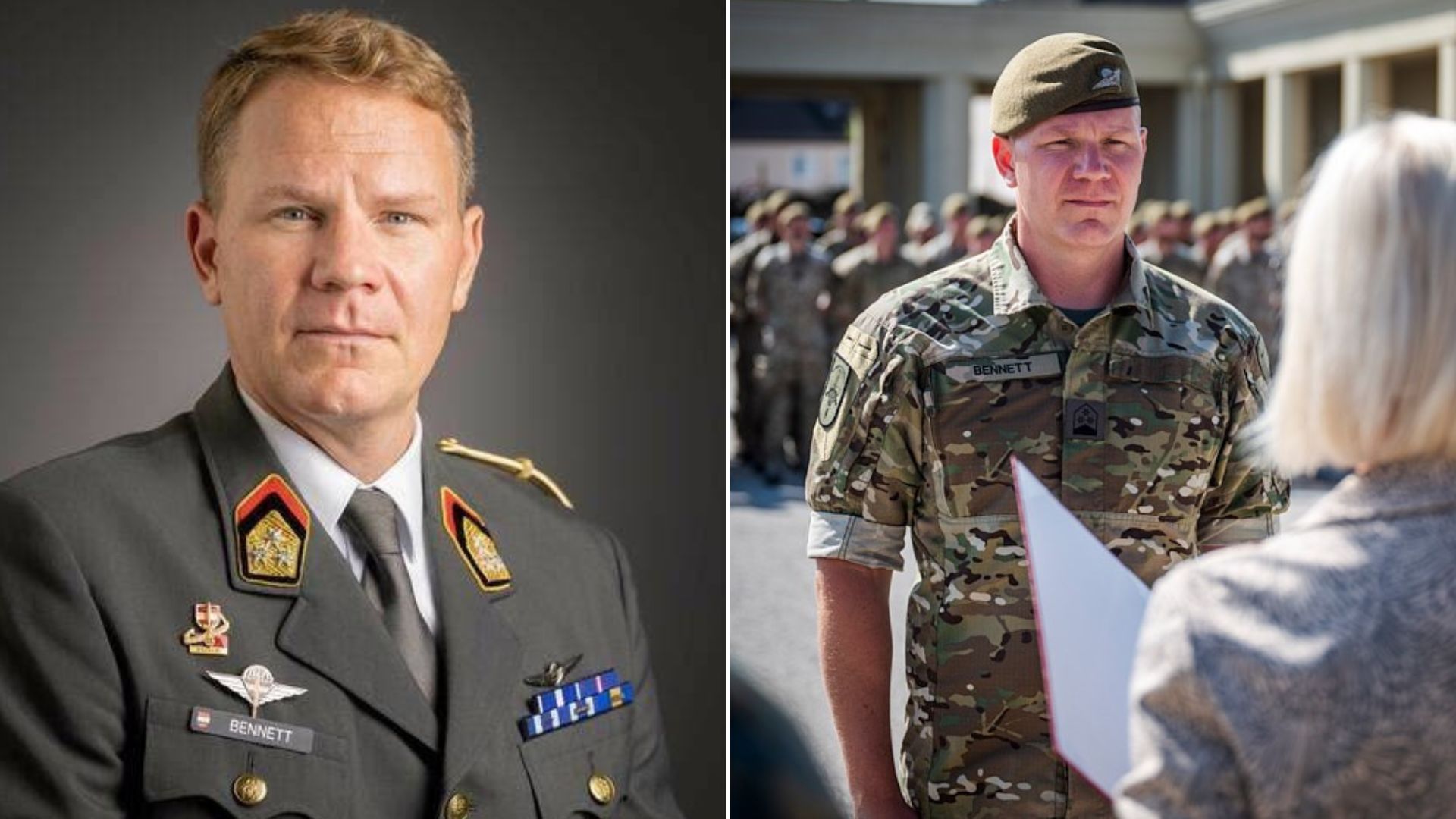
Colonel Arthur Bennett took command of Jagdkommando in June 2024. Photo credits: BMLV/Daniel Trippolt, and Austrian Armed Forces.
On June 27, 2024, Colonel Arthur Bennett, age 44, took command of the Jagdkommando. He was a previous graduate of the Jagdkommando Basic Course, served as a lieutenant in the Jagdkommando in 2004, and in various, related functions and foreign missions until 2010. After an assignment as a planning officer in Brussels for four years, he returned to the Jagdkommando from 2014 to 2016, then completed the General Staff Course, and served in the Federal Ministry of Defense until 2024.
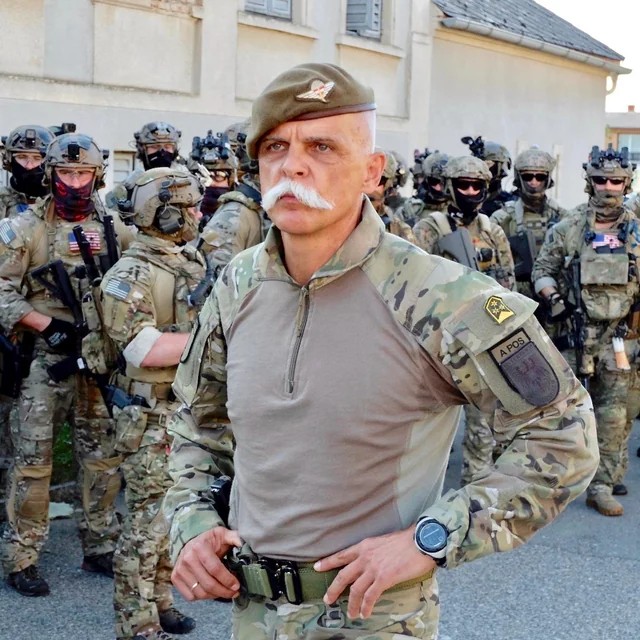
Colonel Horst Hofer, former Jagdkommando commander, 2017. He was promoted to brigadier general in 2020, and now commands the 7th Jäger Brigade. Photo credit: Austrian Armed Forces.
Jagdkommando manpower is estimated at 400 operators, including at least one woman, since 2012, as a reported dog handler for the unit. She was also valuable for deception operations during hostage rescues or intelligence operations.
They’re organized into two Special Operations Task Groups of nearly 100 operators each, plus a reserve group, and additional staff members. A typical, Jagdkommando team consists of six operators: the team leader, the team sergeant, a weapons sergeant/sniper, engineer sergeant, medic sergeant, and communication sergeant. Each team is assigned to one insertion specialty, such as freefall parachuting, amphibious, mountain, or high-mobility operations.
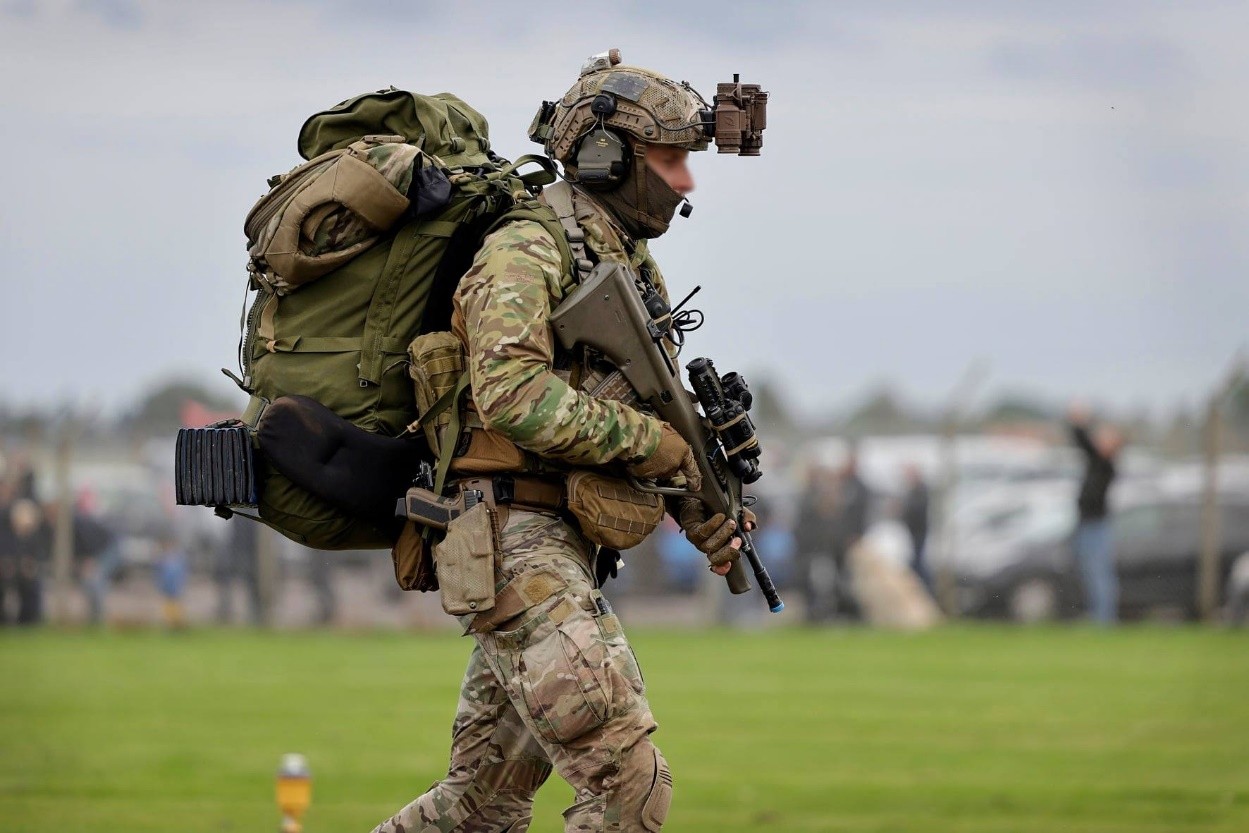
Jagdkommando operator from during Exercise Night Hawk 21, 2021. The night-vision goggles are Greek Theon 3D models. Photo credit: Reddit.
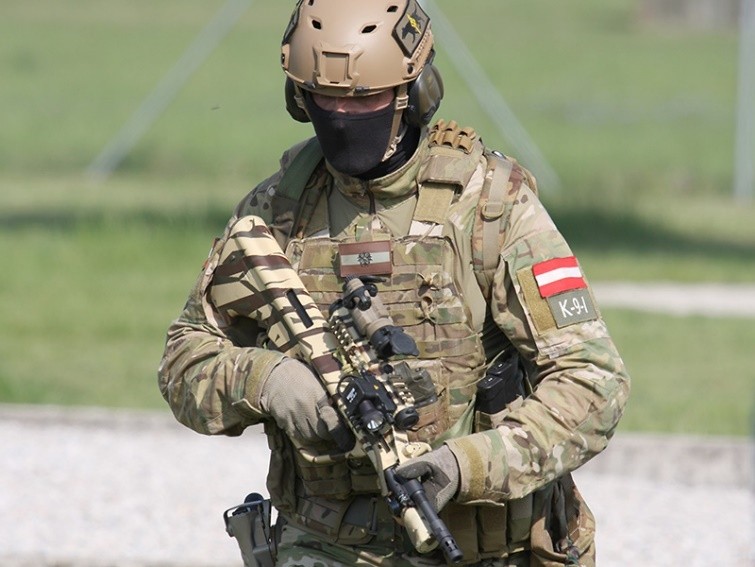
Jagdkommando with specially camouflaged Steyr AUG A3 SF. Photo credit: de.arms.wikia.com.
In the near future, Jagdkommando’s greatest challenge will be in the area of human resources, since there are fewer candidates who make it through the selection process, or the basic, Jagdkommando course.
One operator, nicknamed Charlie, noted that, “The will is the be-all and end-all. We need strong-willed people. It doesn’t matter if it’s raining, snowing…if you’re hungry or tired – you have to stand above it…Because it’s cool, because you experience adventures and are part of an elite unit that sticks together all the more strongly, the more difficult the assignment is.”
For those who can meet their exceptionally high standards, Jagdkommando remains the single, elite, special operations unit and spearhead of the Austrian Armed Forces, with the highest level of operational readiness, and the inspiring motto of NumquamRetro in Latin, or “Never Retreat!”
Advertisement
What readers are saying
Generating a quick summary of the conversation...
This summary is AI-generated. AI can make mistakes and this summary is not a replacement for reading the comments.










COMMENTS