On March 15, 1951, US and allied naval forces launched a significant bombardment on Wonsan Harbor, marking the beginning of an 861-day siege that showcased the strategic importance of naval power in the Korean War. This operation aimed to disrupt North Korean supply lines and demonstrated the UN Navy's capability to influence land conflicts through sustained maritime operations.
Key points from this article:
The bombardment of Wonsan Harbor on March 15, 1951, was part of a prolonged naval campaign that lasted 861 days and aimed to choke North Korean supply lines.
How the siege affected North Korean forces: It forced them to divert troops and resources from frontline engagements, significantly impacting their military operations.
Why this matters: The Wonsan campaign exemplified the evolving role of naval power in modern warfare, illustrating how sustained maritime operations can shape land conflicts and contribute to broader military strategies.
Updating summary...
Korean War Naval Operations: Siege of Wonsan Harbor and UN Blockade Explained
Guy D. McCardle
Speed
1x
Listen
COMMENTS
UN warships struck Wonsan Harbor on March 15, 1951, launching a brutal naval siege that tied down North Korean forces.
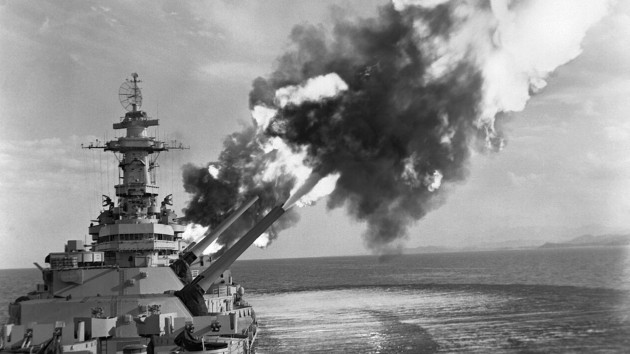
The US Navy battleship USS New Jersey (BB-62) fires a nine gun salvo of 40.6 cm into a target Kaesong, Korea on January 1,1953. (Image Credit: US Navy / National Archives)
On March 15, 1951, US and allied naval forces unleashed intense minutes of bombardment on Wonsan Harbor, a strategic port on North Korea’s eastern coast. The operation was part of a prolonged naval campaign that would become one of the longest sieges in modern naval history, lasting 861 days.
Advertisement
While early Korean War battles like the Inchon landing and the Chosin Reservoir withdrawal dominate public memory, the Wonsan campaign demonstrated the sustained, crushing firepower and strategic reach of the United Nations (UN) Navy and remains a defining example of sea power shaping a land conflict.
Setting the Stage: Wonsan’s Strategic Value
By early 1951, North Korean forces had been pushed back from South Korea, and UN troops had regained territory along the 38th parallel. Yet Wonsan, with its deep-water harbor, industrial facilities, and ice-free ports, remained a critical node for North Korean logistics. The city’s petroleum refinery, heavy metal plants, railway repair yards, and a bustling fishing fleet supplied both the population and the front lines.
Allied leaders recognized that controlling Wonsan’s harbor could choke enemy supply lines, provide bases for amphibious operations, and force North Korea to divert troops from frontline engagements.
Advertisement
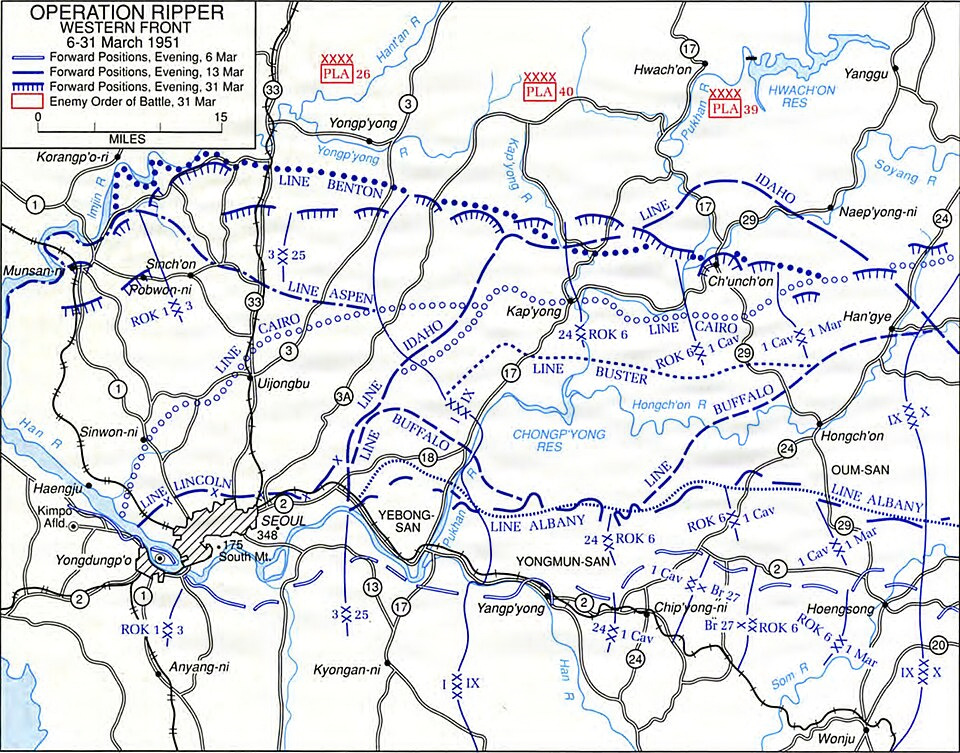
Map of UN forces in the west and central zones during Operation RIPPER, March 1951. (Image Credit: DVIDS)
Rear Admiral Allen E. “Hoke” Smith, commander of Task Force 95, and Vice Admiral C. Turner Joy, overseeing UN naval forces in the Far East, quickly prioritized the blockade. Islands within the harbor (including Yo-do, Tae-do, and Hwangto-do) offered ideal positions for intelligence operations, shore bombardments, and staging raids against enemy forces.
US, British, and South Korean marines occupied these islands, establishing forward bases to disrupt enemy activity and support the growing naval siege.
Advertisement
March 15, 1951: Intense Minutes of Fire
The March 15 bombardment marked an early and vivid demonstration of naval dominance. Light cruisers and destroyers targeted artillery positions, supply depots, and rail lines within Wonsan. The coordinated strikes supported by Task Force 77 carrier planes, which patrolled the skies for enemy positions and anti-aircraft batteries, combined precision and overwhelming firepower. For several intense minutes, waves of gunfire and air strikes converged on the port and surrounding industrial areas, sending smoke and debris across the harbor.
The assault not only inflicted material damage but also reinforced the psychological impact of the UN naval presence on the North Korean defenders.
This action was far from isolated. On February 16, just weeks prior, the USS Manchester (CL-83), USS Ozbourn (DD-846), and the British light cruiser HMS Belfast (C-35) had begun bombarding targets ashore, and the following weeks saw islands like Sin-do occupied without opposition.
Advertisement
The sustained operations demonstrated a shift in UN strategy: naval forces were no longer mere escorts for amphibious landings but central instruments in a campaign designed to immobilize and wear down enemy forces.
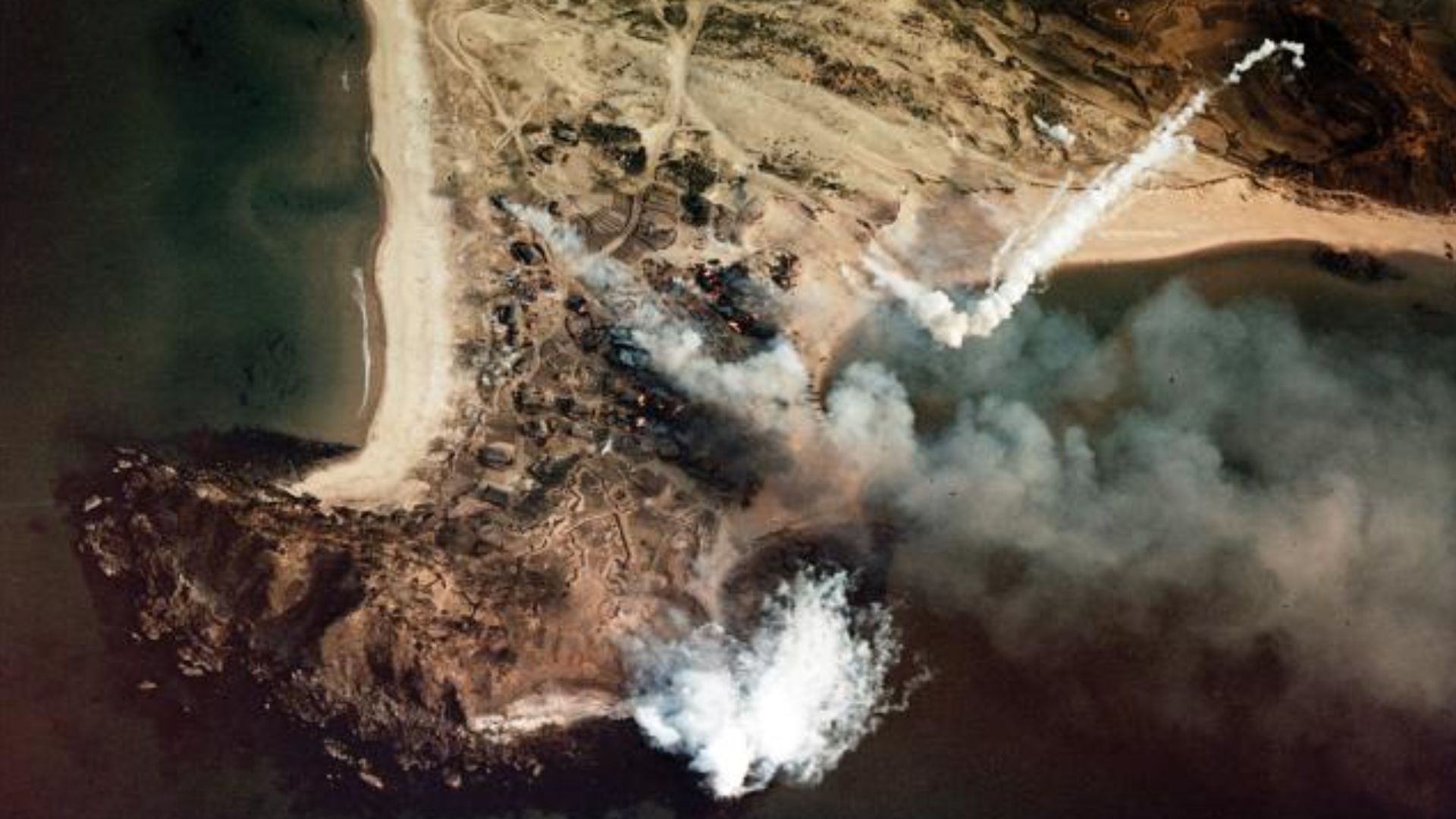
White phosphorus from the heavy cruiser USS Saint Paul detonates over enemy targets during a Wonsan bombardment, April 20, 1951. (Image Credit: National Archives)
The Siege of Wonsan: A Campaign of Attrition
The March 15 action was one element in an 861-day siege that combined surface firepower, air strikes, mine clearance, and intelligence operations. Mines posed a persistent threat, as North Korean forces laid Soviet-supplied contact mines using sampans and fishing vessels.
Minesweepers from the US and South Korea continually cleared the harbor, often under enemy fire, while destroyers and battleships protected these vulnerable vessels and fired on shore targets. By mid-1951, the combined naval operations had inflicted thousands of casualties on North Korean troops and disrupted supply lines, though some convoys continued moving under cover of night.
Battleships like the USS Iowa (BB-61), NewJersey (BB-62), Missouri (BB-63), and Wisconsin (BB-64) brought their 16-inch guns to bear on fortified positions, warehouses, and artillery batteries. Cruisers and destroyers fired tens of thousands of rounds over the course of the siege, demonstrating the destructive potential of sustained naval bombardment.
Allied planes from Task Force 77 struck railways, bridges, and supply depots, complementing surface fire and creating a near-constant threat for enemy forces in Wonsan.
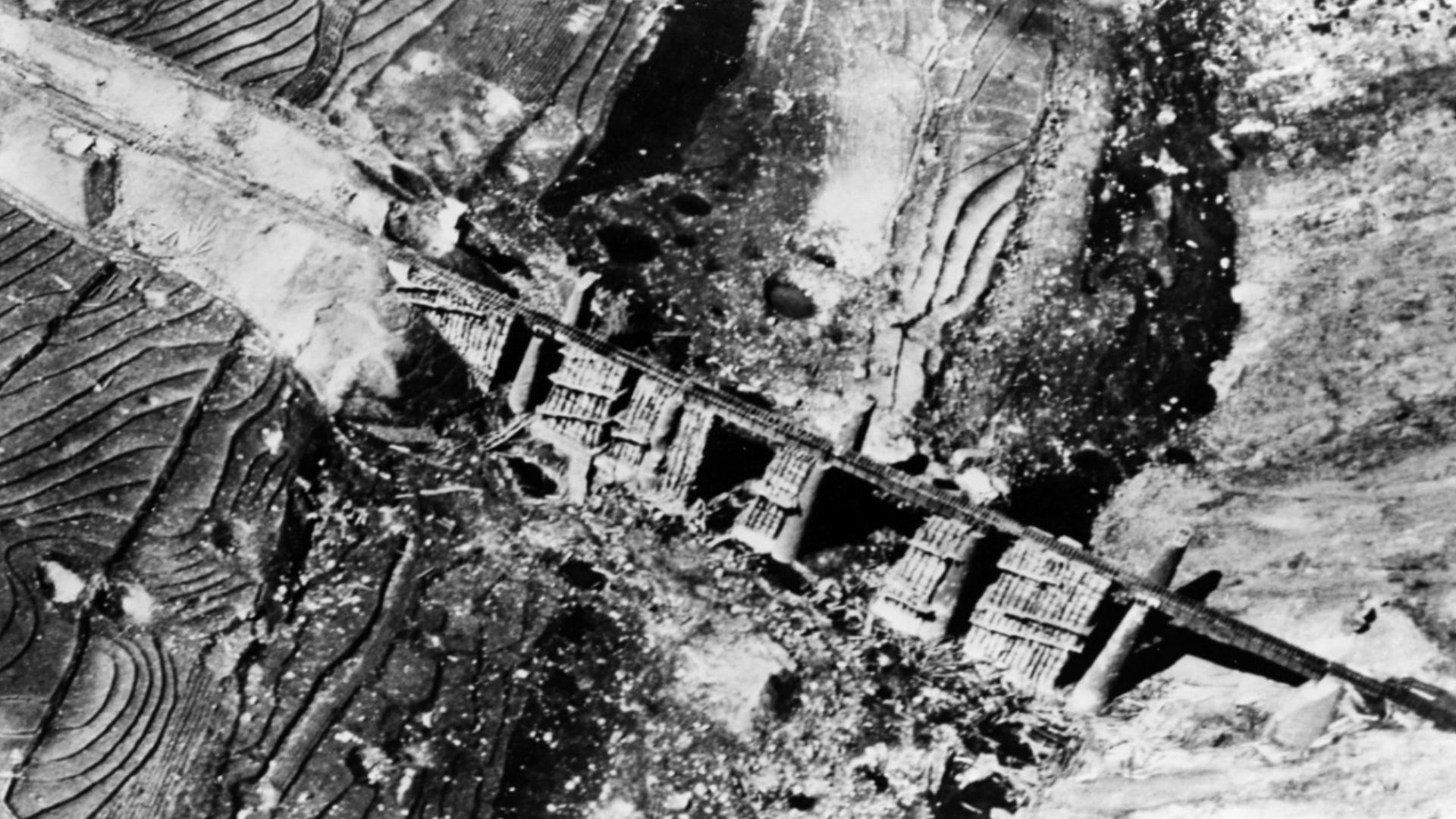
Carlson’s Canyon Bridge, March 30, 1951. Rebuilt after March 3 strike, hit again March 15, destroyed April 2. South of Kilchu, northeastern Korea. (Image Credit: US Navy / National Archives)
Intelligence and special operations also leveraged the harbor islands. Destroyers delivered operatives ashore to gather information, sabotage infrastructure, and disrupt enemy fishing fleets. Helicopters stationed on LSTs (Landing Ship, Tanks) rescued downed airmen, highlighting the multi-dimensional role of naval forces in both combat and support operations.
By combining firepower, intelligence, and logistics control, the UN Navy constrained North Korean and Chinese operations on the east coast, forcing them to divert thousands of troops and artillery pieces to protect Wonsan.
Strategic Impact and Historical Significance
The March 15 bombardment, while brief in minutes, exemplified the operational philosophy of the Wonsan campaign: relentless pressure, precise targeting, and integration of surface and air assets.
Over the course of the siege, UN naval operations reduced Wonsan’s industrial and military output, limited coastal traffic, and supported intelligence and special forces operations behind enemy lines. By drawing significant enemy resources away from the frontlines at the 38th parallel, the siege played a critical role in sustaining the broader UN strategy to stabilize Korea and contain the Communist offensive.
The Wonsan Harbor operations also reinforced the evolving concept of sea power in modern warfare. While initial naval actions in Korea focused on troop movements and amphibious landings, the prolonged siege demonstrated that naval forces could impose strategic attrition, project power inland, and coordinate seamlessly with carrier-based aircraft.
The campaign remains a testament to the integration of surface firepower, air support, and special operations in shaping the battlefield.
Remembering March 15
Today, March 15 stands as a reminder of how a few intense minutes of naval bombardment can echo through an extended campaign. The action at Wonsan Harbor highlights the skill and courage of US, British, and South Korean sailors and marines who operated in a heavily mined and contested harbor. Their efforts contributed to the eventual stabilization of Korea and the preservation of the Republic of Korea’s sovereignty, illustrating how the Navy’s might and resolve helped define the Korean War’s outcome.
Advertisement
What readers are saying
Generating a quick summary of the conversation...
This summary is AI-generated. AI can make mistakes and this summary is not a replacement for reading the comments.










COMMENTS