
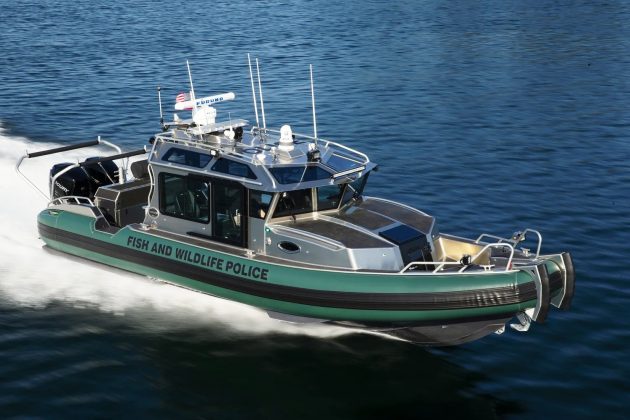
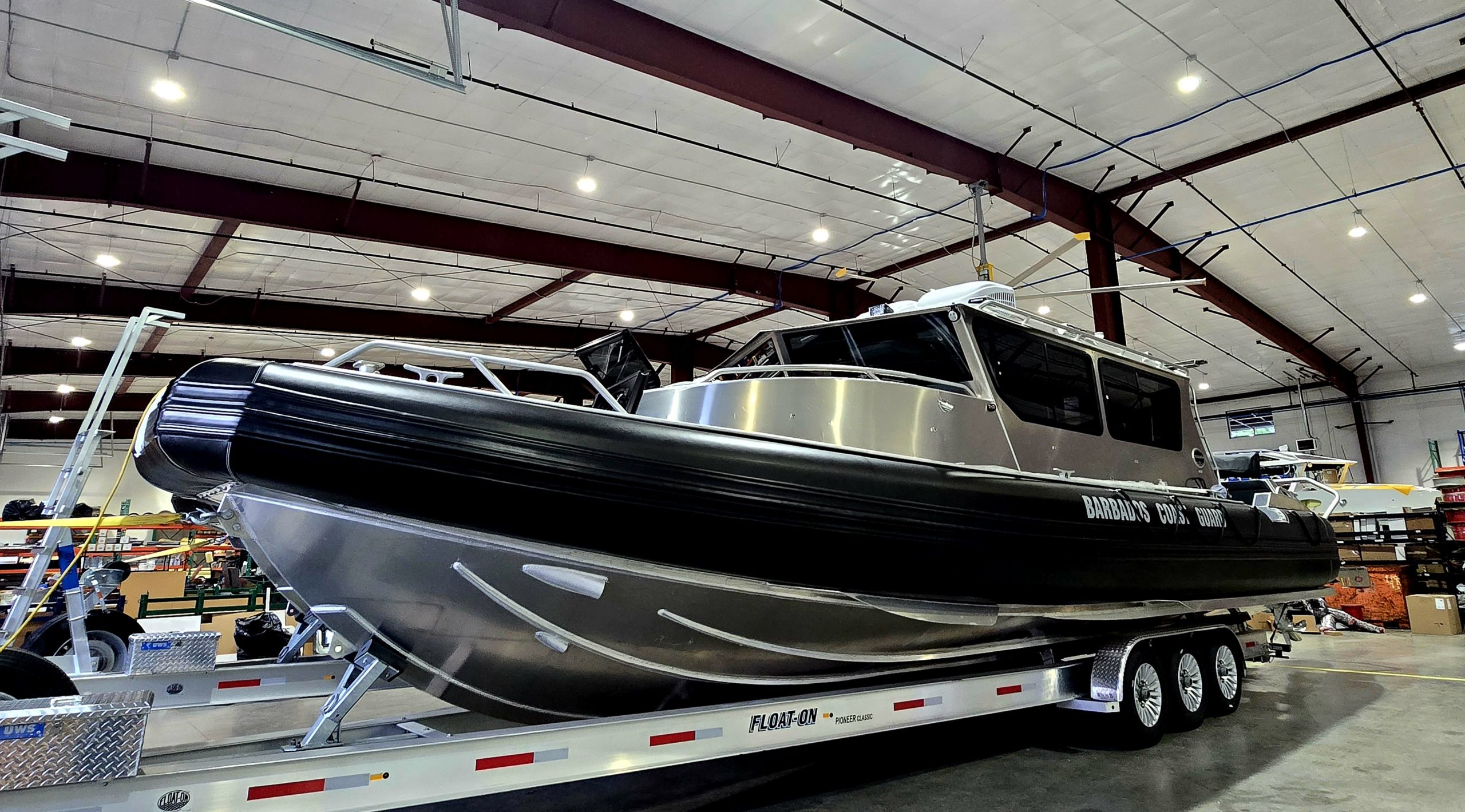
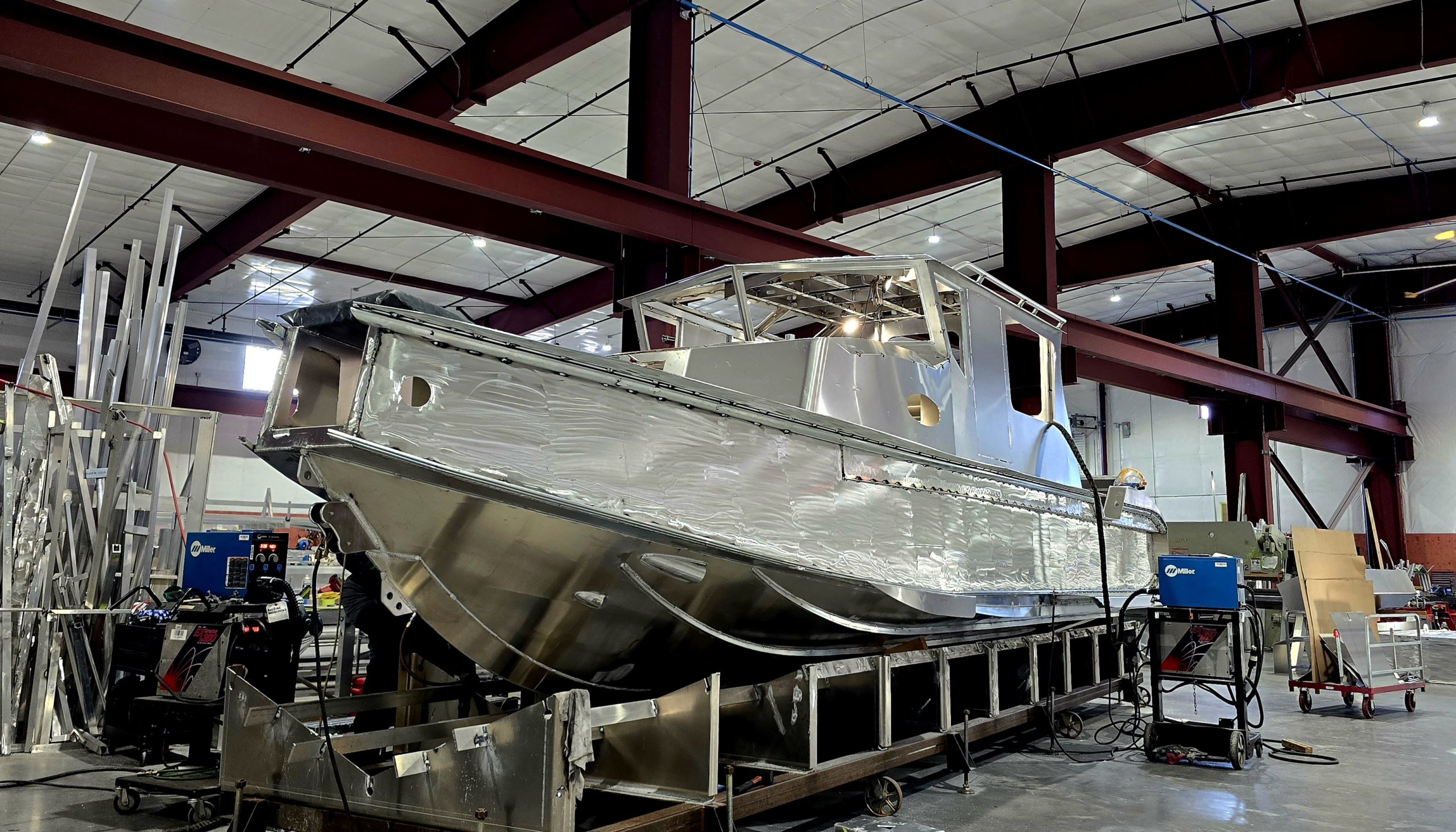
Here is the key detail operators appreciate: the boat does not depend on the collar to function. The hull remains operable without it. The collar is insurance, not a single point of failure. That is the difference between “mission-capable” and “praying.”
Built for control when everything is moving
Life Proof designs these craft for real-world handling, not brochure bragging.
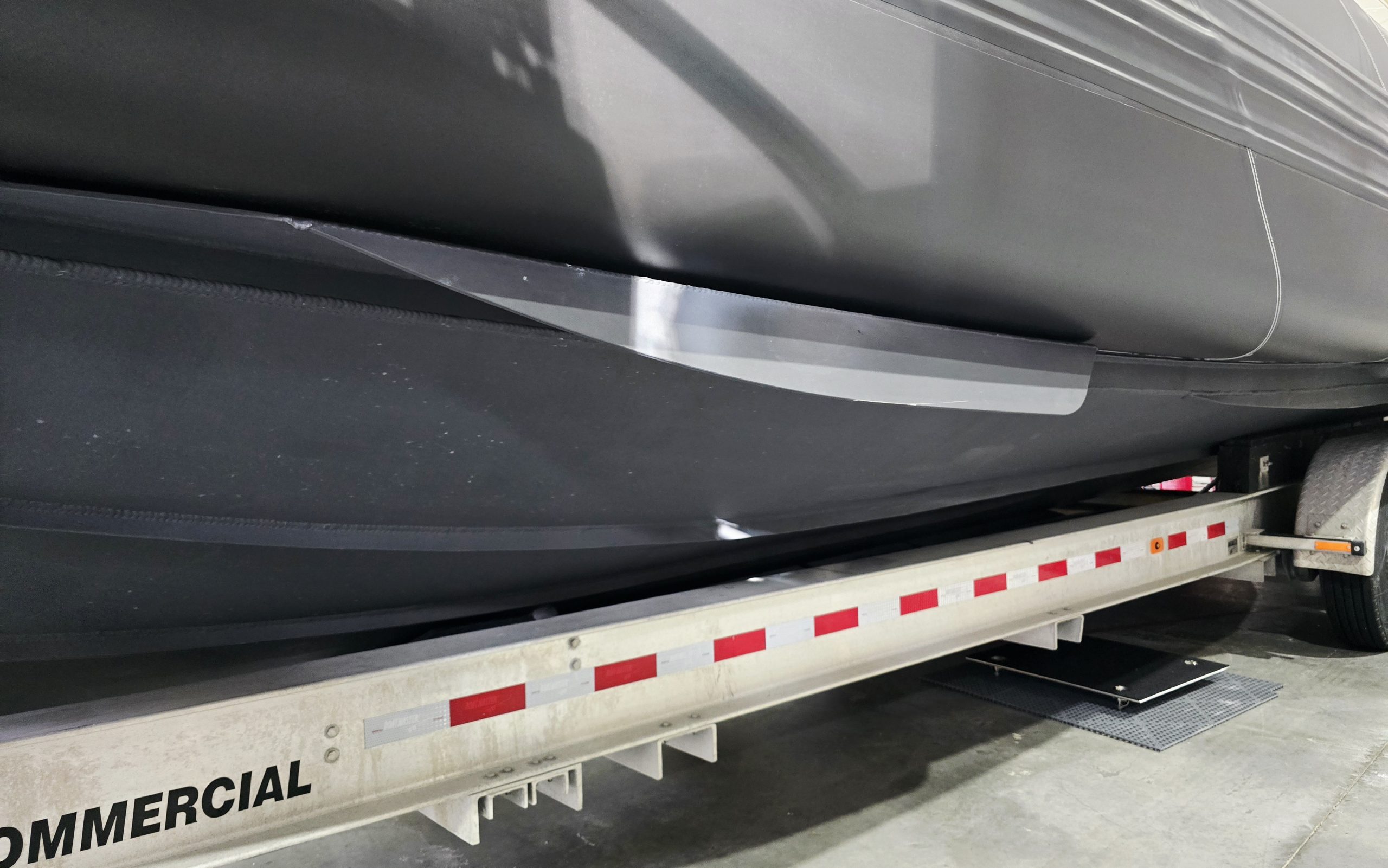
Low-speed control is improved with amidships canard fins. They help reduce bow dive in sharp turns, improve directional control, and shift the pivot point for tighter, more predictable maneuvering. That pays off during docking, boarding operations, and confined-water work where mistakes cost money, time, and sometimes people.
Decks are self-bailing and clear water fast. Shock-mitigating seats are standard on most professional builds to reduce crew fatigue on long transits in heavy seas. The hull is foam-filled in key voids for additional buoyancy and impact resistance. It is a full package built around survivability.
Range and speed: practical numbers, not bar talk
Fuel efficiency is mission-minded. Life Proof boats average a little better than one gallon per mile. With a 440-gallon tank, a boat can expect roughly 450 miles of range under normal conditions. That means fewer refuel points and more time on station.
Top speed depends on the hull size, power package, and configuration. Many patrol and combat-oriented builds sit in the 50-knot class, with higher speeds possible in lighter setups. The emphasis is not on hero runs. It is on staying controlled and structurally solid in rough water, where speed is often unsafe and useless.
Not just interceptors: sustained operations
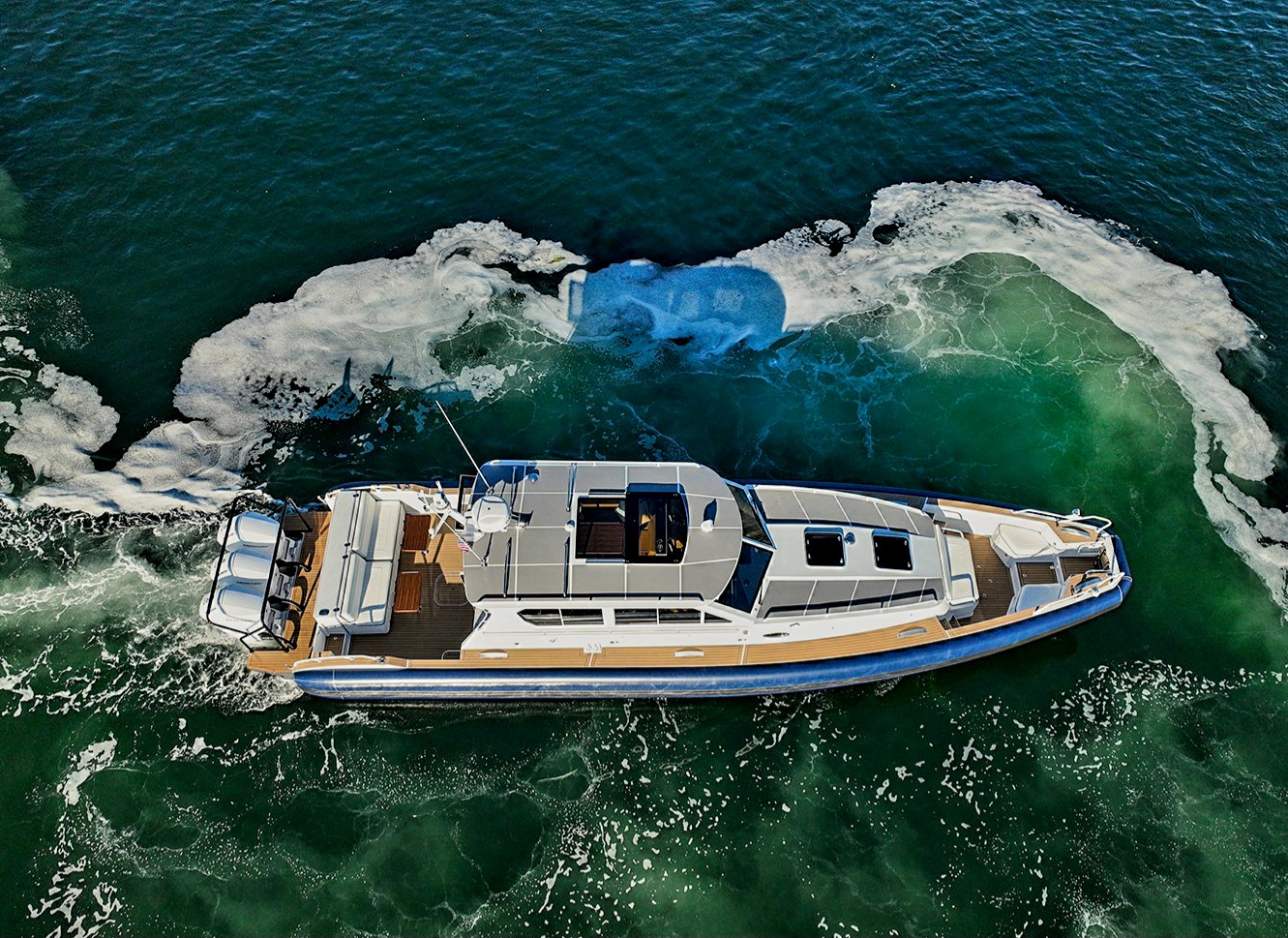
Most Life Proof boats run from the mid-20s up to about 50 feet. For military and law enforcement customers, that includes enclosed cabins, ballistic protection options, and mission-specific deck layouts. Larger patrol and combat configurations can include marine heads, berths, and galleys so crews can stay underway longer. These are working craft, not stripped-out toys.
A specialized example is the TAMB II, the Trailerable Aids to Navigation Boat. It is built to remove and install buoys and channel markers. That niche matters for port operations, harbor authorities, and expeditionary logistics. It combines precise low-speed handling with the stability and deck strength to manage heavy navigation aids safely.
The civilian side funds the serious side
As much attention as the professional boats get, recreational sales keep the lights on. Pleasure craft remain the financial engine. Many first-time buyers come back quickly for a larger boat, sometimes before they even take delivery of the first one.
Life Proof stays involved in that ownership cycle. When customers upgrade, the company helps resell the older boat when the new one delivers. That keeps owners in the ecosystem and protects resale value. Steady civilian demand keeps production lines moving and funds the same standards that show up on professional craft.
Quality control is not a department
Life Proof treats quality control as everyone’s job. Every employee goes through a 40-hour training and testing process before working on boats. The standard is blunt. If you cannot meet it, you do not build boats.
Sustainment follows the same logic. Instead of flying technicians around the world, Life Proof supports warranty and service through local repair partners. That cuts downtime and keeps costs controlled, which helps both government agencies and private owners.
Bottom line
Life Proof Boats is not selling hype. It is selling survivability, control, and longevity.
These boats are built to take the hit and keep going. The irony is that the better they are, the harder it is to write an “exciting” story about them. They are designed to delete the chaos, keep the crew functional, and bring you home. That is the whole mission.








COMMENTS