Lockheed Martin has developed two advanced missile systems, the MHTK and Mako, which offer significant capabilities for the U.S. Armed Forces. Despite their innovative designs and potential to enhance military effectiveness, the U.S. military has not yet funded or purchased these technologies.
Key points from this article:
The MHTK missile is a lightweight, high-velocity weapon designed to intercept small aerial threats, developed for the U.S. Army and capable of hitting targets with pinpoint accuracy.
How the Mako hypersonic missile, compatible with stealth fighters like the F-22 and F-35, enhances U.S. military capabilities by allowing for rapid strikes on time-sensitive targets while penetrating advanced air defenses.
Why the lack of funding for these missile systems is concerning, especially as adversaries like Russia deploy their own hypersonic weapons, highlighting the need for the U.S. to maintain technological superiority in modern warfare.
Updating summary...
Lockheed’s Amazing, MHTK and Mako Missiles
Warren Gray
Speed
1x
Listen
COMMENTS
From the five pound MHTK that swats mortars midair to the F-35 ready Mako sprinting at Mach 5, Lockheed has handed the Pentagon two precise, affordable missiles built for the fights ahead, and the real question is why we are not buying them.
“Mako, named after the fastest shark in the seas, puts air-launched, hypersonic mass on critical targets at operationally significant ranges when every second counts. Its all-digital, open and mature design…using innovative techniques that lower cost and accelerate schedule. Mako puts customers on a fast track to fielding a game-changing, hypersonic capability.” — Lockheed Martin Corporation, 2024.
Lockheed Martin Corporation, based in Bethesda, Maryland, has recently produced two amazing, even incredible, new missile designs that the U.S. Armed Forces have inexplicably failed to fund or purchase. These include the tiny-but-innovative,Miniature,Hit-to-Kill Missile (MTHK),and the much larger,Mako hypersonic missile.
Advertisement
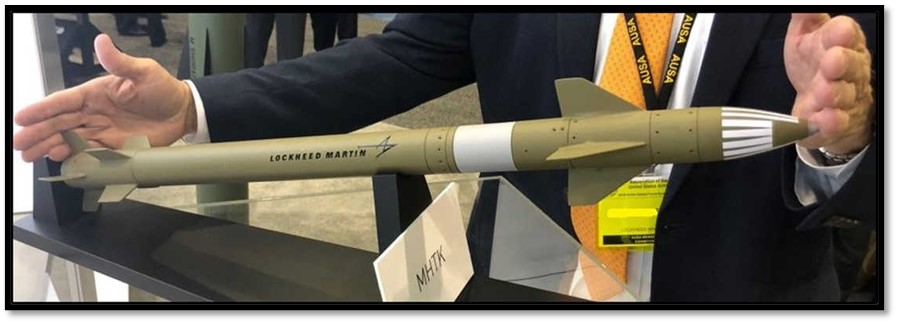
Lockheed Martin MHTK missile. Photo credit: Lockheed Martin.
The MHTK was developed for the U.S. Army as an ultra-modern, extra-small, lightweight, high-velocity weapon, capable of destroying incoming rockets, artillery rounds, or mortar rounds with astoundingly precise, pinpoint accuracy in mid-air. The missile has no warhead, maintains an airspeed of Mach 2 (1,522 miles per hour, or about 2,260 feet per second!) for up to two miles, and kills its targets through the sheer kinetic energy of a head-on collision, using a hardened, tungsten penetrator core for piercing metallic targets in the air.
It sounds unbelievable to stop something as small as a four-to-10-pound mortar projectile in mid-air, but that’s exactly what the MHTK does! It’s currently the very smallest, rocket-powered, guided missile in the world, measuring only 2.5 feet long, 1.6 inches (40.6mm) in diameter, with a 2.8-inch wingspan, and weighing a mere five pounds.
Development began in 2012, and on January 26, 2018, the latest configuration of the MHTK was flight-tested in New Mexico, with an active-radar seeker in the nose, and redesigned tail surfaces with four small, fixed, vortex-generating fins near the rear, ahead of four movable tail fins, for greatly-increased agility in flight, to rapidly achieve the correct, intercept geometry to strike a fast-moving target.
Advertisement
This new seeker contains an active, electronically-scanned array (AESA) radar unit, with a range of well over two miles, a 45-degree field of view in elevation angle, and a lateral, 90-degree scan angle, and is capable of autonomously detecting, tracking, and hitting airborne targets as small as mortar rounds.
A multi-mission launcher (MML) for the Army holds hold up to 15 Lightweight, Low-Cost (LLC) launch canisters from San Diego Composites (SDC), Inc., with each canister containing four MHTK missiles, so the full, launcher assembly has 60 ready-to-fire missiles available. A single canister weighs 39 pounds, fully loaded with four missiles.
Advertisement
More than a dozen flight tests have been completed thus far, and the unit cost of each missile has been established at $16,000, which is less than half the cost of a proven, FIM-92H Stinger heat-seeking missile ($44k), yet it’s just as effective, in a different way, being active-radar-guided instead of infrared-guided.
While the MHTK was specifically designed as a ground-based interceptor system, one of the more-interesting, potential applications is as a self-defense weapon for military helicopters, or an air-to-air weapon for helicopter gunships.It can be used to shoot down hostile drones, helicopters, and even jet fighters within its limited range, and a single canister of four missiles is astoundingly small and lightweight, and is easily fitted to almost any aircraft, thereby incorporating an amazing, new weapon system that can literally shoot any metallic object, down to the size of a golf ball, out of the sky from up to two miles away, in less than 10 seconds!
In November 2018, Popular Science magazine chose the MHTK for their “Best of What’s New Award” for the very top, scientific innovations of the year. However, as of October 15, 2019, MHTK development was “paused” due to the Army suddenly shelving the MML launcher concept (for three different types of missiles) and temporarily adopting two Rafael Iron Dome systems instead, as an interim solution toclose-range,air defense.
Advertisement
So, the still-experimental, miniaturizedMHTK missile certainly exhibits tremendous possibilities for saving American lives on the ground, in the air, and probably at sea, as well, offering incredible accuracy, speed, and agility in responding to various airborne threats to U.S. forces.
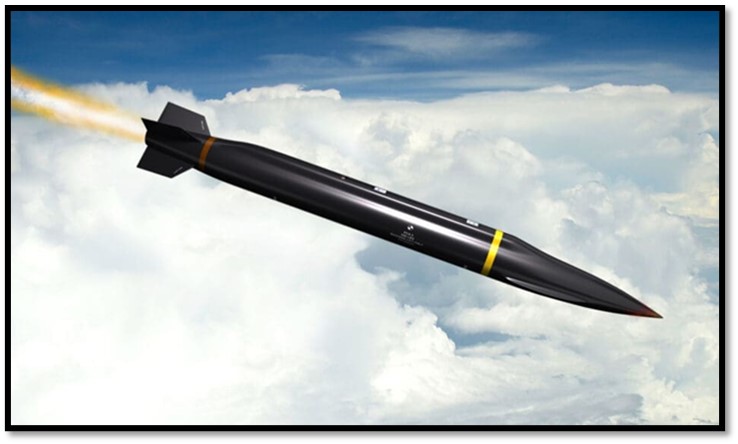
Lockheed Martin Mako hypersonic missile. Photo credit: Lockheed Martin.
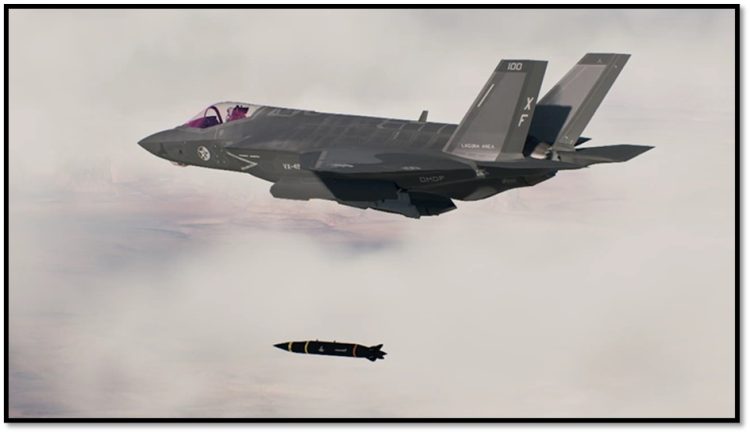
Lockheed Martin’s latest development is the Mako hypersonic missile, initially unveiled in April 2024, and specifically designed to be carried internally by the company’s own, F-22A Raptor and F-35A/C Lightning II stealth fighters. They state that, “Named after the fastest shark in the seas, Mako blazes down on time-sensitive targets when every second counts. Able to maneuver in a high-altitude, hypersonic regime, it penetrates advanced, air-defense systems to engage these high-value targets at or below hypersonic speeds, depending on mission requirements.”
The Mako missile may be carried and launched by the F-22 and F-35, as well as legacy aircraft, such as the F-15E/EX Strike Eagle, F-16CM Fighting Falcon, F/A-18E/F Super Hornet, EA-18G Growler, and P-8A Poseidon. It’s also possible to utilize the Mako on Air Force bombers, such as the B-52H Stratofortress, B-1B Lancer, and B-21 Raider.
It’s powered by a conventional, solid-fuel, rocket motor capable of reaching Mach 5 speed at high altitude, while retaining maneuverability, significantly reducing the reaction time available to enemy defenses. Its modular design and additive manufacturing (3-D printing) techniques help to speed up production, and keep costs down, making it make it a scalable and cost-effective weapon that allows for salvo fires. The company claims that, “The additive guidance section meets all engineering requirements at 1/10th cost, and it’s 10 times faster and cheaper than conventional subtractive methods.” Multiple types of guidance systems are available, depending upon mission requirements.
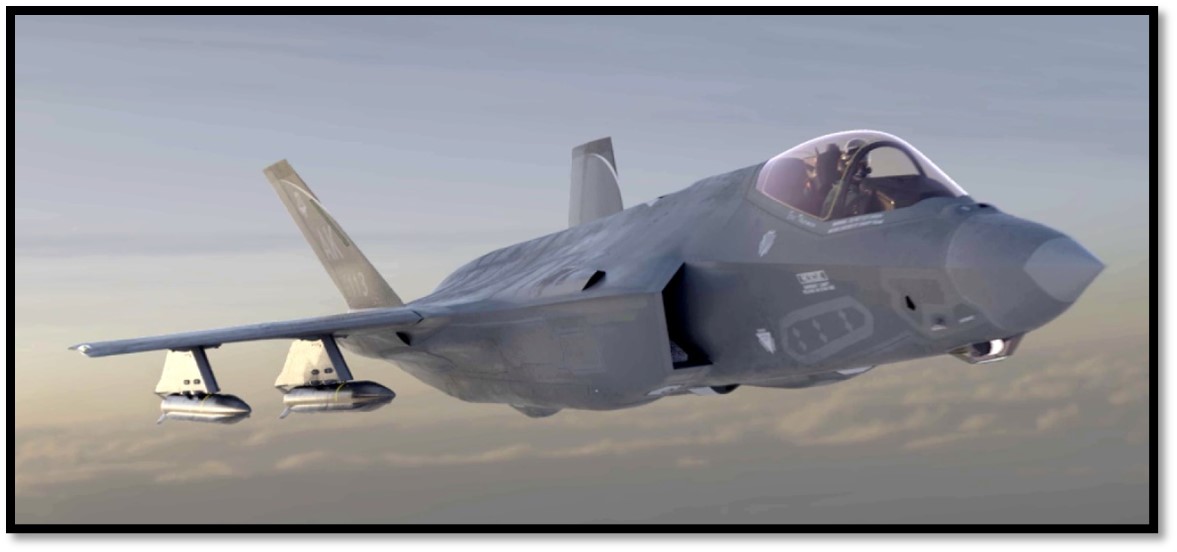
USAF F-35A stealth fighter with four Mako missiles loaded externally. Photo credit: Lockheed Martin.
The advanced missile itself is 13 feet long, 13 inches in diameter, and weighs 1,300 pounds, including a 130-pound, high-explosive warhead, and its relatively compact size means that an F-35 fighter can carry as many as six weapons (two internally, plus four more under the wings, when stealth is not a critical consideration.)Mako is the very first hypersonic missile compatible with fifth-generation, stealth fighters, which is a decisive factor in U.S. long-rangestrike capabilities, in a critical period when hypersonic technology is absolutely essential for military superiority.
Mako is also capable of being launched from submarines or surface warships, broadening its combat versatility, and it’s believed that the U.S. Navy might try to divert any surplus funding from programs into a possible,Mako purchase, under the Other Transaction Authority (OTA.)
Although the U.S. Armed Forces have thus far expressed no interest in the Mako missile design, at the Farnborough International Airshow in England, on July 25, 2024, Lockheed Martin proposed opening its first Mako production facility in the U.K., to produce missiles for the RAF’s Eurofighter Typhoons. The British Ministry of Defence actively seeks a national, hypersonic missile capability by 2030, and is evaluating the Mako as a viable option.
The Mako’s smaller size, compared to other hypersonic weapons, may not be suitable for attacking large, naval vessels or major land targets, but its ultra-high speed makes it ideal for smaller or even mobile targets, such as air defense systems, command centers, and especially fleeting, time-sensitive targets, where quick reaction time is essential. Mako certainly has the potential to combine speed, flexibility, and multi-platform usage, for destroying high-value, land and naval targets well into the future.
Any military veteran knows that the U.S. Armed Forces do not always receive the very best or latest weapons and equipment available. But these two new missile systems from Lockheed Martin are simply amazing, offering highly-advanced capabilities that are sorely needed in this fast-paced era of modern warfare.
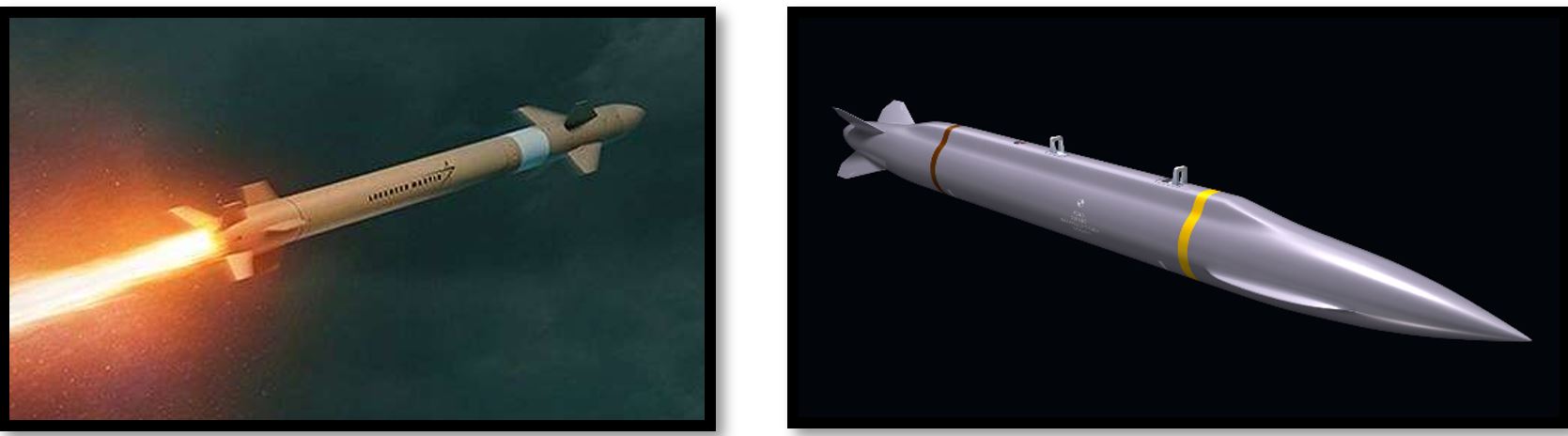
Lockheed Martin MHTK and Mako missiles, Photo credits: Lockheed Martin and cgtrader.com
The MHTK is an ultra-miniature, incredibly accurate and lightweight, defensive weapon that can detect and shoot down the very smallest of enemy, aerial targets, while the Mako is the world’s very first, hypersonic missile specifically designed for use by our latest, stealth fighters, in a seriously dangerous time, where Russian hypersonic missiles such as the massive Kh-47M2 Kinzhal (“Dagger,” in Russian, or AS-24 Killjoy in NATO terminology) have already been used in battle in Ukraine. The United States cannot afford to fall behind in the critical areas of these sophisticated technologies in an uncertain world, so our high-level Pentagon acquisitions officers need to take another, very hard look at the astounding MHTK and Mako.
Advertisement
What readers are saying
Generating a quick summary of the conversation...
This summary is AI-generated. AI can make mistakes and this summary is not a replacement for reading the comments.










COMMENTS