

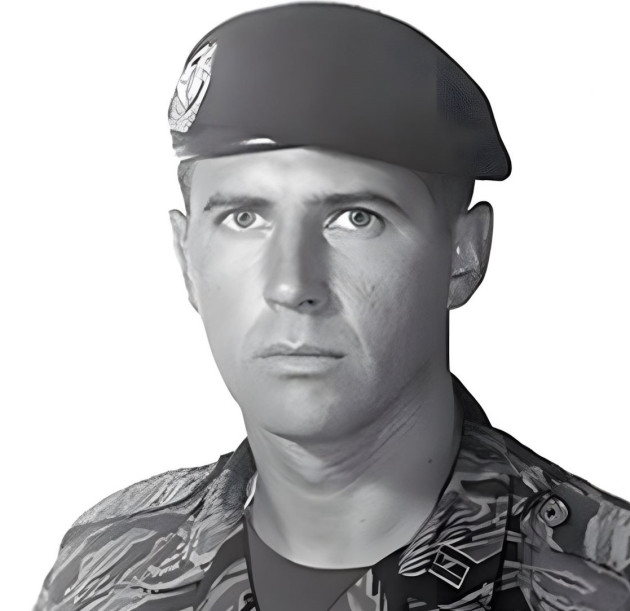
Ripley later noted that, “We didn’t have the wherewithal to stop that many tanks. We had little, hand-held weapons. And we certainly didn’t have anything on the scale that was needed to deal with the threat.”
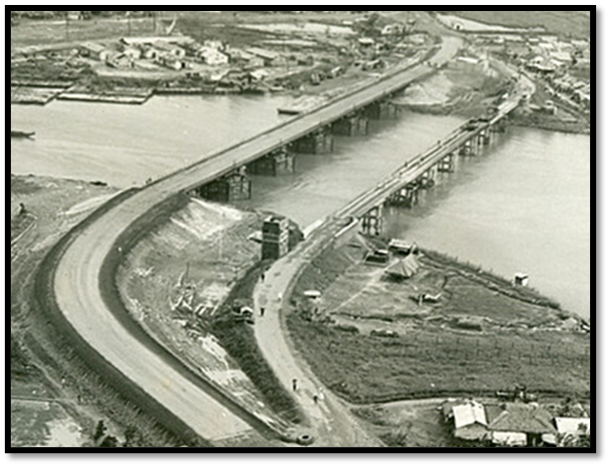
He had lived, worked, and fought around Dong Ha for a full year in 1967 as a company commander and was very familiar with the bridge spanning the Cua Viet River. He was there when U.S. Navy Seabees built it in 1970, so he knew exactly how the bridge was constructed, and where and how to place explosive charges to destroy it.
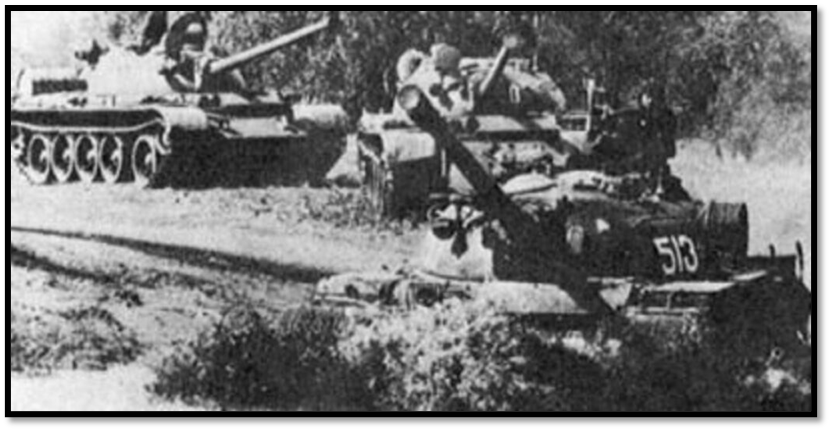
As the NVA T-54 tanks began rolling across the reinforced span at 12:15 PM, South Vietnamese Marine Sergeant Huynh Van Luom openly fired upon the lead tank with his M72A2 light, anti-tank weapon (LAW), but his first shot missed. The entire battalion possessed only 10 LAW rockets, but Luom, standing boldly in the open at the south end of the bridge, fully exposed to intense, enemy fire, grabbed another M72, launched the rocket, and disabled the rotating turret on the lead tank, buying valuable time for Ripley and the South Vietnamese battalion.
Ripley later remembered Sergeant Luom’s actions as “the bravest, single act of heroism I have ever heard, witnessed, or experienced.” He realized that the sergeant “single-handedly reversed the momentum of the entire attack.”
According to an official citation later, “It became imperative that a vital river bridge be destroyed…Advancing to the bridge to personally supervise this most dangerous but vitally important assignment, Captain Ripley located a large amount of explosives which had been pre-positioned there earlier, access to which was blocked by a chain-link fence…approximately 500 pounds of explosives.”
With U.S. Army Major James E. Smock, the advisor for a South Vietnamese M48A3 Patton tank battalion, assisting him under heavy, enemy gunfire, feeding him boxes of explosives and ammunition, Captain John Ripley then began single-handedly swinging beneath the bridge, literally hand-over hand, under vicious, enemy fire, with 15-pound satchels of TNT and C4 plastic explosives over his shoulders, expertly placing the charges in precisely the right places to bring down the concrete, steel, and wood structure.
“I’m dangling under the bridge (50 feet above the river), and hanging by my arms with a full load of explosives,” he later told the U.S. Naval Institute. “I would drop down out of the steel, grabbing the flanges of the I-beam (steel girder), swing sideways, and leap over to hand-walk all the way out over the river.”
From the north bank, the NVA assault force tried to stop him with sniper fire, and finally, a T-54 tank, which fired at him under the bridge, but its projectile ricocheted a mere two feet away from him and exploded on the south riverbank.
“Boy, when that 100mm round went off with me in the steel of the bridge, what a racket!” Ripley recalled in 2008, shortly before his death. The vibrations from the cannon impact almost knocked him into the river.
Ripley continued his relentless, solo mission for three long, grueling hours, placing the full 500 pounds of explosives beneath the span over the course of 12 trips, plus two more trips to attach the detonators. He did not have a crimper to secure the explosive heads to the fuzes, so he had to use his teeth to tighten them instead. Since the metallic cylinders would explode if gripped too hard in the wrong place, a slight miscalculation could blow his head apart.
Major Smock slapped him on the back, remarking, “I can’t believe you, you crazy sonofabitch! Wiring a bridge by the numbers.” Smock was clever enough to connect some TNT boxes under the adjacent French railway bridge, and hoped that when the Dong Ha Bridge exploded, the explosion would also blow up the old wooden bridge.
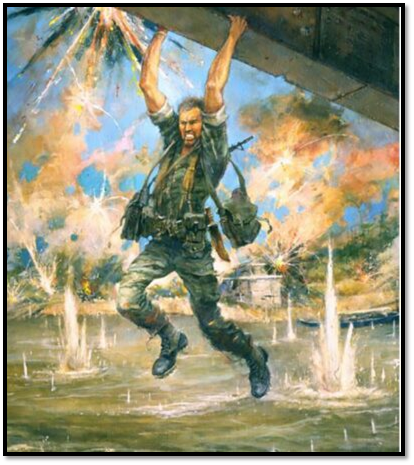
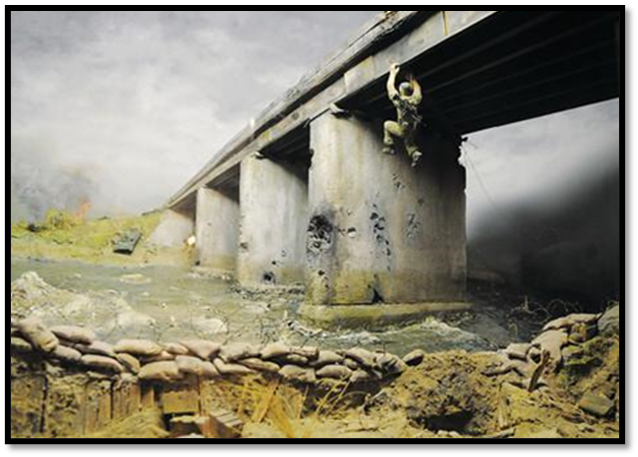
Weak from exhaustion, with his arm muscles burning, he repeatedly urged himself onward by chanting, “Jesus, Mary, get me there, get me there.” Pushed to extreme limits and beyond, his heroic action is considered one of the greatest examples of concentration under fire in the annals of U.S. military history.
Finally, after attaching all of the explosives, he waited on the riverbank for the huge explosion, when he saw an injured mother with her little girl trailing well behind. The explosion would have killed the girl, so Ripley dashed out, scooped her up, and bolted away from the bridge toward the mother. The explosion blew Ripley and the child into the air, and they landed on the ground, with the girl safely on top of him.
“I’m lying on my back, looking skyward, and I can see enormous chunks of this bridge going through the air,” Ripley told the U.S. Naval Institute. “It was a tremendous feeling.” As the smoke cleared, he could see that the entire bridge had collapsed, with a 100-foot gap in the road surface, away from the southern riverbank. The adjacent, old, French railroad bridge made of wood, just to the west, was also destroyed in the huge blast.
At 4:30 PM, Ripley radioed to Colonel Turley, “The bridge collapsed! I say it again, the bridge collapsed!”
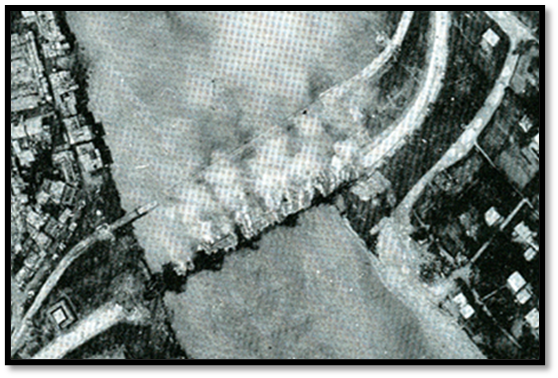
Ripley never understood why the North Vietnamese had not crossed the bridge during the three-hour period that he and Smock had worked so hard to rig it with explosives. “That was one of the most inexplicable parts of the whole affair,” he said. The North Vietnamese never did cross the Cua Viet River at Dong Ha.
As a direct result of Captain Ripley’s incredible actions, the North Vietnamese tanks were bottled up and pounded by U.S. bombers and warships. The NVA Easter Offensive failed, and General Võ Nguyên Giáp, who had led the Vietnamese communists to victory over the French at Dien Bien Phu in 1954, was replaced as the commander of the North Vietnamese armed forces. It also delayed NVA forces from taking Saigon, the capital of South Vietnam, for another three years.
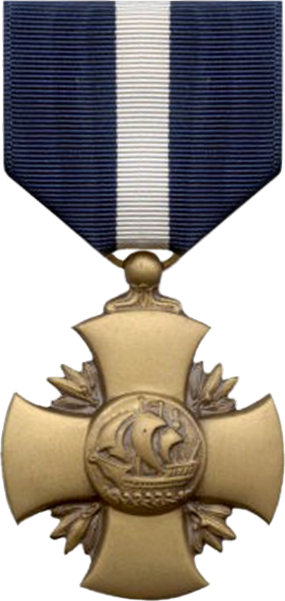
John Ripley was awarded the prestigious Navy Cross, the second-highest award for valor, for his extraordinary heroism at Dong Ha, with the official citation reading, “He then detonated the charges and destroyed the bridge, thereby stopping the enemy assault. By his heroic actions and extraordinary courage, Captain Ripley undoubtedly was instrumental in saving an untold number of lives. His inspiring efforts reflected great credit upon himself, the Marine Corps, and the United States Naval Service.” Major Smock was killed by mortar fire soon after the bridge blew, and posthumously received the Silver Star medal for assisting Ripley in action at the bridge.
Ripley went on to rise to the rank of full colonel in 1984, finally retiring from active duty in 1992, after 35 years of distinguished service. In October 2006, he returned to the site of the Dong Ha Bridge to film a documentary of his action, hosted by Oliver North, and it was shown on November 12, 2006, on Fox News. Ripley died suddenly on October 28, 2008, at his home in Annapolis, Maryland, of undetermined causes at age 69, and was buried at the United States Naval Academy graveyard, with full, military honors.
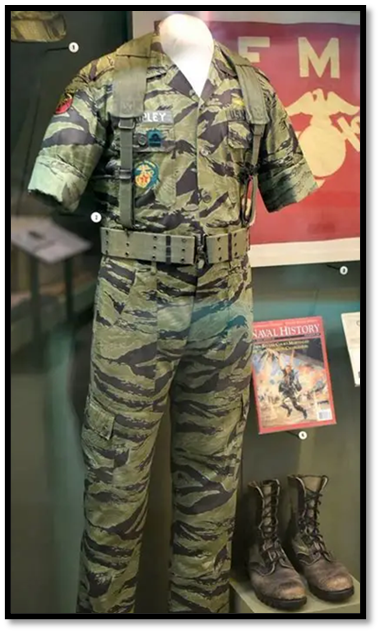
The same tiger-stripe uniform and web harness that he wore at the Dong Ha Bridge are currently on display in the Vietnam War Gallery at the National Museum of the Marine Corps in Triangle, Virginia.
On March 3, 2026, the U.S. Senate officially approved the posthumous upgrading of Ripley’s Navy Cross from 1972 to the Medal of Honor. This bill (H.R. 7211), sponsored by Representative Morgan Griffith (R) of Virgina, “authorizes the President to award the Medal of Honor, the highest military decoration for valor, to John W. Ripley for his courageous actions as a member of the Marine Corps during the Vietnam War on April 2, 1972, for which he had previously received the Navy Cross.”
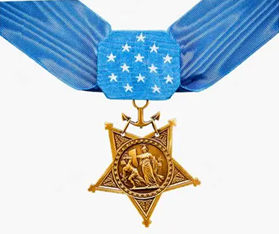
In a related development, President Donald J. Trump signed the Medal of Honor Act into law on December 1, 2025, increasing the monthly payment for living, Medal of Honor recipients from $1,407 to $5,625, the first pay increase in at least 20 years, bringing the annual total to about $67,500, so that none of our aging, retired awardees live at the poverty level. The act also creates a brand-new, monthly pension for surviving spouses, a benefit that never existed before.
This is an astounding story of strength, determination, and heroism well above and beyond the call of duty, and President Trump should be presenting the Medal of Honor to Ripley’s family very soon. His heroic action at the Dong Ha Bridge is a shining example of how just one individual can change the outcome of a major battle.








COMMENTS