John 'Manila John' Basilone, a Marine Corps legend, was born in 1916 and became renowned for his extraordinary heroism during World War II, particularly at Guadalcanal and Iwo Jima. Despite receiving the Medal of Honor, he preferred combat over fame, ultimately sacrificing his life in battle.
Key points from this article:
The article details the life of John Basilone, born in Buffalo, New York, who became a Marine Corps hero during World War II.
How Basilone's actions during the Battle of Guadalcanal, where he resupplied his machine gun section under fire, earned him the Medal of Honor and stabilized a critical defensive position.
Why Basilone's legacy endures as a symbol of quiet courage and sacrifice, with streets and schools named after him, reminding us of the true cost of freedom.
Updating summary...
Medal of Honor Monday: “Manila John” Basilone, USMC
Guy D. McCardle
Speed
1x
Listen
COMMENTS
He was not built for parades or speeches, but for the dark hours when the line is breaking, the ammo is gone, and one man’s refusal to quit decides whether others live or die.
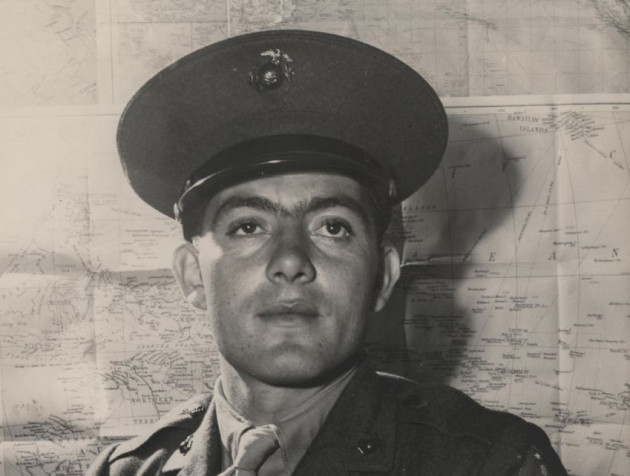
Gunnery Sergeant John Basilone, a Marine’s Marine, captured here in the quiet resolve that would carry him through Guadalcanal and into legend. Image Credit: Wikimedia Commons
Early Life and the Road to the Marines
John “Manila John” Basilone was born on November 4, 1916, in Buffalo, New York, the sixth of ten children born to Italian immigrants Salvatore and Dora Basilone. The family soon settled in Raritan, New Jersey, a working class town where grit, faith, and hard work were not abstract virtues but daily requirements. Basilone grew up poor by modern standards, raised in a crowded home where discipline came early and excuses did not. Like many sons of immigrants, he learned quickly that nothing was handed to you and that respect was earned, often with your hands and your back.
Advertisement
As a teenager, Basilone was restless. He worked odd jobs and boxed locally, developing the toughness and physical confidence that would later define him. In 1934, at just 17 years old, he enlisted in the U.S. Army and was shipped to the Philippines. There he earned his nickname, “Manila John,” and got his first real taste of soldiering overseas. He completed his enlistment and returned home, but civilian life never quite fit.
The structure, the purpose, and the brotherhood were missing.
In 1940, with war clouds gathering, Basilone enlisted again, this time in the United States Marine Corps. He was assigned as a machine gunner, a role that would become inseparable from his legend. Those who served with him noted that he was not flashy, not loud, and not particularly interested in rank. What he cared about was competence, his weapon, and the men to his left and right.
Advertisement
Guadalcanal and the Night That Made a Legend
When the United States entered World War II, Basilone was a Gunnery Sergeant in the 7th Marines, 1st Marine Division. In August 1942, he landed on Guadalcanal, a name that would soon be burned into Marine Corps history. The campaign was brutal, confused, and fought in suffocating jungle heat against a determined and skilled Japanese enemy.
It was during the Battle for Henderson Field, on the night of October 24 and into October 25, 1942, that Basilone performed the actions that would earn him the Medal of Honor. Facing a massive Japanese assault by elements of the Sendai Division, Basilone’s machine gun section was positioned along a critical stretch of the defensive line. The attack came in waves, bayonet charges in the dark, supported by mortars and machine guns. The fighting was close, savage, and unrelenting.
Advertisement
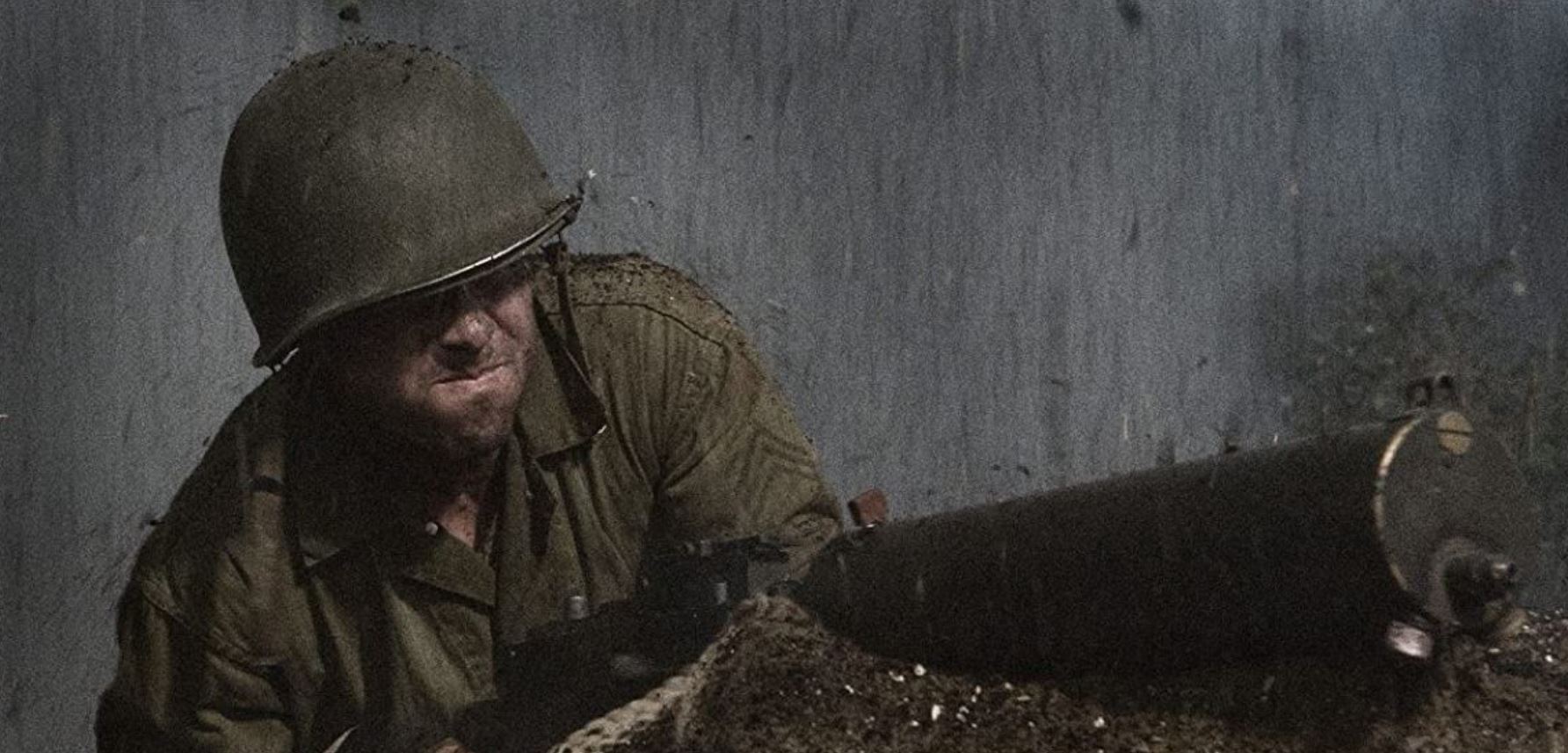
John Basilone, portrayed by Jon Seda in the HBO series The Pacific.
As ammunition ran low and casualties mounted, Basilone moved up and down the line under constant fire, clearing jams, repositioning guns, and encouraging his Marines. When his section’s ammunition supply was nearly exhausted, Basilone left the safety of the perimeter alone and fought his way through enemy-held jungle to reach a rear supply dump. He then returned, carrying ammunition crates on his back, again under fire, and resupplied the guns that were holding the line together by sheer will.
Over the course of the night, Basilone is credited with killing at least 38 enemy soldiers with his machine gun and pistol. More importantly, his actions stabilized a collapsing sector of the defense. By dawn, hundreds of Japanese dead lay in front of the Marine positions. Henderson Field held. Guadalcanal held. The campaign turned, in no small part because one Marine refused to yield.
A Reluctant Hero and a Rare Distinction
For these actions, John Basilone was awarded the Medal of Honor. The citation spoke of “extraordinary heroism and conspicuous gallantry,” but those words barely capture the physical exhaustion, fear, and determination required to do what he did for nearly two days of continuous combat.
Advertisement
After Guadalcanal, Basilone was sent back to the United States and became a national hero. He was paraded across the country to sell war bonds, appeared in advertisements, and was celebrated wherever he went. He accepted this duty without complaint, but he hated it. Basilone believed his place was with Marines in combat, not on stages. Despite pressure to accept a commission or remain stateside, he repeatedly requested a return to the fleet.
What makes Basilone unique in American military history is that he is one of the very few men to receive both the Medal of Honor and the Navy Cross. He earned the Navy Cross not before, but after his Medal of Honor, a reversal of the usual progression, and a reflection of his refusal to trade safety for status.
In 1944, Basilone returned to combat as a platoon sergeant with the 5th Marine Division. On February 19, 1945, he landed on Iwo Jima. On the black volcanic sand, under heavy fire from fortified Japanese positions, Basilone once again led from the front. He helped push a tank through a minefield and enemy fire to break a stalemate. Later that day, while moving along the line under mortar and small arms fire, Basilone was killed by an exploding artillery shell.
He was 28 years old.
John Basilone was KIA 80 years ago today on Iwo Jima, but every time I watch the Pacific I’m always hoping he survives.
Basilone never lived to receive the Navy Cross awarded for his actions on Iwo Jima. His Medal of Honor was presented earlier, on May 27, 1943, by President Franklin D. Roosevelt at the White House. Like everything else, Basilone treated the ceremony as an obligation, not a coronation. He reportedly told friends that the medal belonged to the men who did not come home.
John Basilone is remembered today as more than a war hero. He is remembered as a Marine’s Marine, a man who embodied the uncomfortable truth that real courage is usually quiet, reluctant, and costly. Streets, bridges, schools, and even a destroyer have borne his name. His story has been told in books, documentaries, and dramatizations, but the core of it remains simple.
He did his job. He stayed when others fell. He went forward when retreat would have been understandable. He refused comfort when others were still fighting.
We should never forget John Basilone because he represents the standard, not the exception we excuse ourselves from, but the one we measure ourselves against.
His sacrifice reminds us that freedom is not maintained by speeches or slogans, but by men willing to stand their ground in the dark, with empty guns, and go back out anyway.
Advertisement
What readers are saying
Generating a quick summary of the conversation...
This summary is AI-generated. AI can make mistakes and this summary is not a replacement for reading the comments.










COMMENTS