

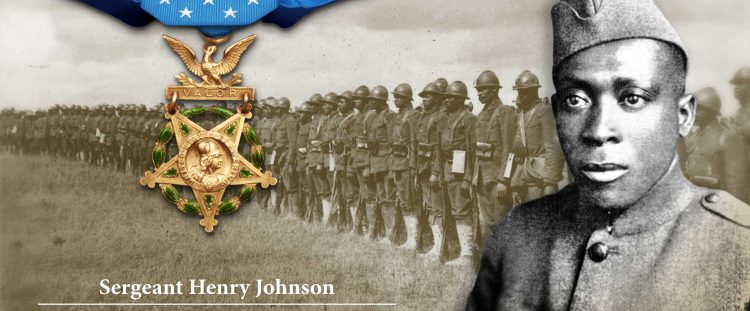
When reinforcements arrived, Johnson had repelled the entire German party and prevented Roberts from being taken prisoner. The area around him was littered with bodies. At least four Germans were confirmed dead, and many others were wounded. Johnson was later found unconscious from blood loss, having sustained 21 wounds.
Decorated Abroad, Ignored at Home
The French didn’t hesitate. They awarded Johnson the Croix de Guerre with a Gold Palm, France’s highest military honor. But the United States? Not so much. While Johnson did receive some attention back home—he was nicknamed “Black Death” and even did speaking tours with the likes of Theodore Roosevelt Jr.—his heroism didn’t translate into long-term recognition or support.
Johnson returned to Albany, unable to work due to his injuries, and was denied a disability pension by the Army. He died in 1929 at the age of 32, penniless and broken. For decades, his name all but disappeared from military history books. There were no statues. No medals. No official recognition from the country he bled for.
A Medal Too Long in Waiting
It wasn’t until the 21st century—nearly 100 years after his act of heroism—that the Army began to properly recognize what Henry Johnson had done. He was posthumously awarded the Purple Heart in 1996 and the Distinguished Service Cross in 2002. But the real turning point came in 2015.
President Barack Obama, standing in the East Room of the White House, finally awarded Henry Johnson the Medal of Honor, the nation’s highest military decoration. “He became a legend,” Obama said. “They gave him the nickname ‘Black Death.’ He didn’t receive the nation’s highest military decoration… because of his race.”
It was a long overdue correction to a shameful oversight. Johnson’s descendants and advocates, including Senator Chuck Schumer and members of the New York National Guard, had lobbied for decades to see the wrong made right.
Final Rest and Lasting Legacy
Johnson is now buried at Arlington National Cemetery, a long way from the train station in Albany where he once worked. His story has become a symbol of both extraordinary courage and the institutional racism that once kept such courage in the shadows. In 2021, the U.S. Army Center of Military History officially updated its records to include Johnson’s Medal of Honor status in its rolls.
His story also prompted a reevaluation of the way the military recognizes the contributions of Black soldiers. Johnson wasn’t the only African-American hero overlooked by history, but his case might be one of the most egregious.
The man took on multiple enemy soldiers with a knife and bare hands—and won, saving a fellow American soldier in the process. He deserves our recognition and respect.








COMMENTS