William 'Ryan' Pitts, a former U.S. Army soldier, displayed extraordinary bravery during the Battle of COP Keating in Afghanistan, where he sustained severe injuries yet continued to direct artillery fire, ultimately earning the Medal of Honor in 2014. His story highlights the realities of war and the importance of teamwork and resilience in the face of overwhelming odds.
Key points from this article:
The Battle of COP Keating on October 3, 2009, involved hundreds of Taliban fighters attacking a U.S. outpost in Afghanistan, where Pitts was severely injured yet continued to fight.
How Pitts' refusal to quit despite life-threatening injuries exemplifies the extreme challenges faced by soldiers in combat and the importance of mental fortitude.
Why Pitts' advocacy for veterans and emphasis on accountability and leadership post-military service underscores the ongoing impact of combat experiences on soldiers' lives.
Updating summary...
Medal of Honor Monday: William “Ryan” Pitts – Holding the Line at Combat Outpost Keating
Guy D. McCardle
Speed
1x
Listen
COMMENTS
Ryan Pitts didn’t survive COP Keating because he was invincible; he survived because, in the chaos of a fight designed to kill him, he refused to quit.
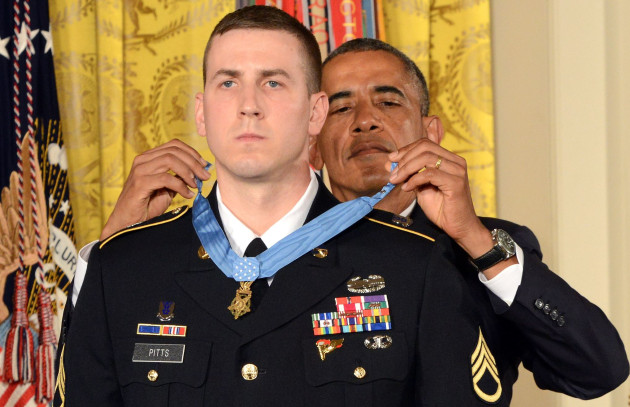
Ryan Pitts is awarded the Medal of Honor by President Barack Obama. Image credit: Wikimedia Commons.
Early Life and the Road to the Army
William “Ryan” Pitts was born in 1985 and raised in New Hampshire, far from the mountains and battlefields that would later define his life.
Advertisement
By his own account, he was never chasing medals or heroics; he was looking for purpose, structure, and a way to test himself.
After high school, Pitts enlisted in the U.S. Army, drawn to a profession that demanded accountability and teamwork. He trained as a forward observer, a job that requires calm under pressure, precision under fire, and the ability to think clearly when chaos is the norm.
By 2009, Pitts was serving with 2nd Battalion, 503rd Infantry Regiment, 173rd Airborne Brigade Combat Team, deployed to eastern Afghanistan.
Advertisement
The Battle of COP Keating
On the morning of October 3, 2009, the enemy chose the time, the terrain, and the terms.
Hundreds of Taliban fighters poured down from the surrounding high ground onto Combat Outpost Keating, a remote U.S. position in Afghanistan’s Kamdesh district. The outpost sat at the bottom of a steep valley; tactically indefensible, impossible to reinforce quickly, and fully exposed to plunging fire.
Advertisement
Staff Sgt. Pitts was hit early by enemy fire but remained in the fight. As the assault intensified, he moved to reinforce a collapsing position. A second round struck him, shattering his leg and severing his femoral artery: a wound that is usually fatal within minutes.
Still, in great pain, Pitts refused to quit.
Bleeding heavily and drifting in and out of consciousness, he continued to call in artillery and close air support, adjusting fire as enemy fighters breached the perimeter and moved within the wire. He declined morphine so he could stay lucid. He relayed grids, corrected impacts, and stayed on the radio while the outpost burned around him.
Advertisement
At one point, Pitts was presumed dead, not out of neglect but because of his massive injuries and the fact that reaching him under fire risked more lives. When fellow soldiers finally dragged him to cover, he was pale, soaked in blood, and barely conscious—yet he continued to assist in directing fire.
After nearly 14 hours of sustained combat, eight Americans were killed, and much of the outpost was destroyed. But the attack was broken. The defense held.
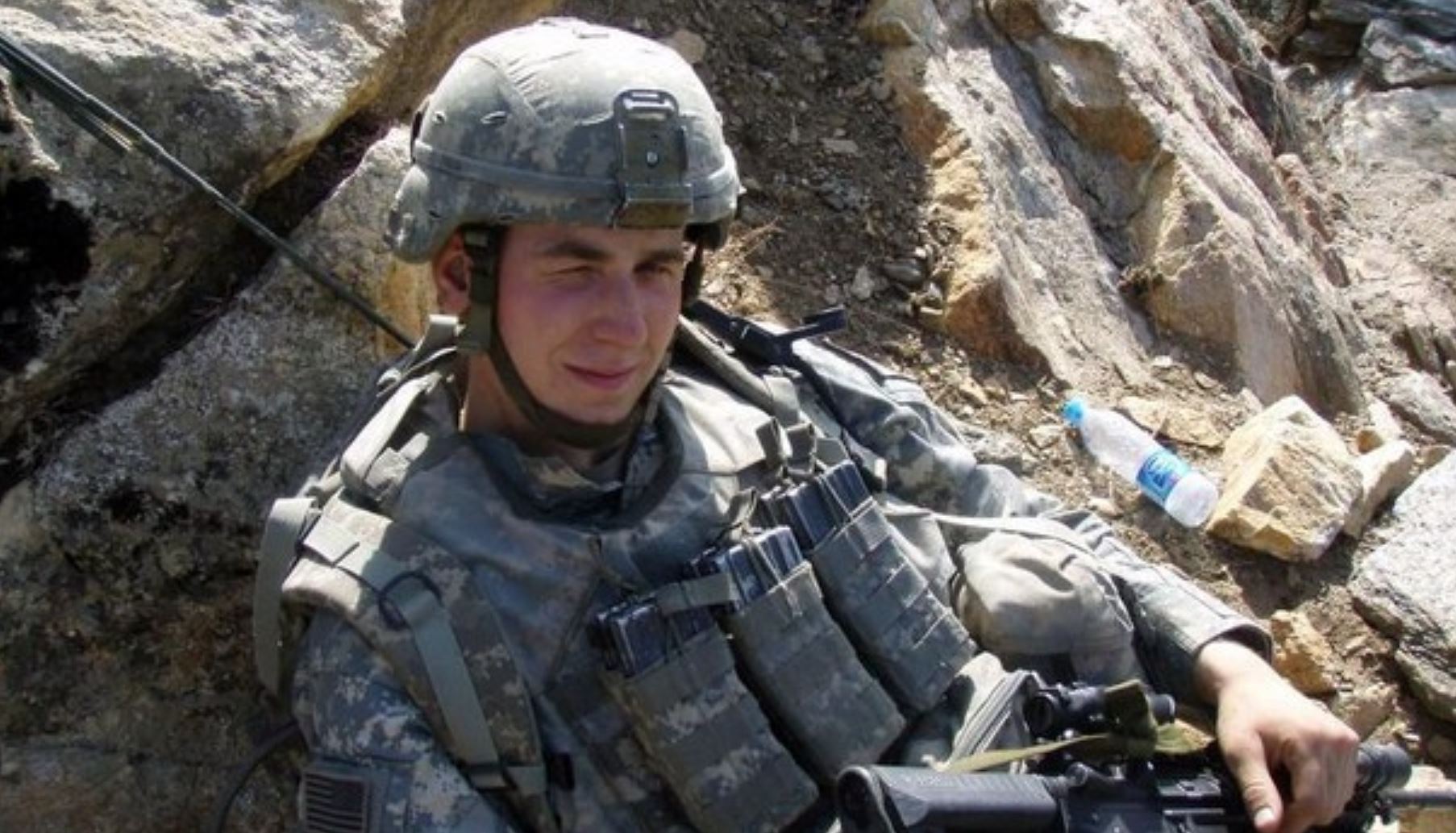
Pitts in Afghanistan. Image credit: Wikimedia Commons.
The Medal of Honor
In July 2014, Pitts received the Medal of Honor from President Barack Obama. As with many recipients, his remarks focused less on his own actions and more on the men who fought beside him—especially those who didn’t come home.
He has consistently described his survival as a matter of teamwork and luck, redirecting attention to the broader sacrifice made at COP Keating rather than the individual citation bearing his name.
Life After the Medal
Following his recovery, Pitts medically retired from the Army. Adjusting to life after combat and catastrophic injury was not easy, and he has spoken openly about the physical and psychological challenges that followed.
In the years since, Pitts has become a quiet advocate for veterans, speaking about resilience, recovery, and the realities of war without romanticism. He has worked with veteran-focused organizations and used his platform to emphasize accountability, leadership, and the obligation to care for those sent into harm’s way.
He does not posture. He does not mythologize.
The Standard That Remains
COP Keating no longer exists, reclaimed by the mountains that once dominated it. But what happened there still matters—especially to anyone who understands small-unit warfare, terrain-driven risk, and the thin margin between survival and annihilation.
Ryan Pitts didn’t win the Medal of Honor because everything went right.
He earned it because everything went wrong, and he refused to let that be the end of the story.
Advertisement
What readers are saying
Generating a quick summary of the conversation...
This summary is AI-generated. AI can make mistakes and this summary is not a replacement for reading the comments.










COMMENTS