

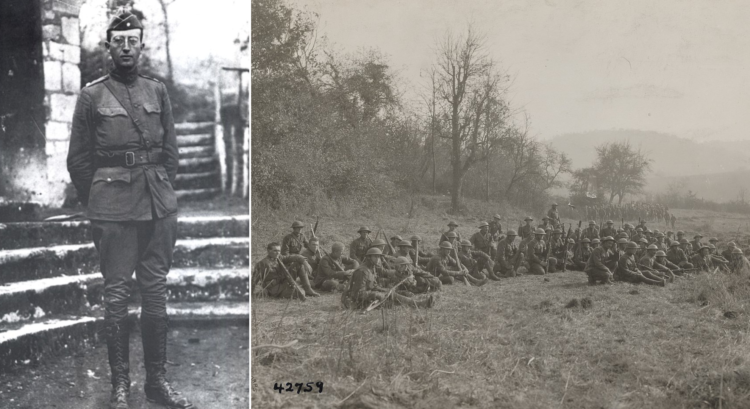
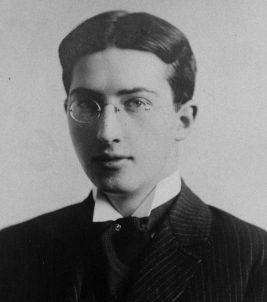
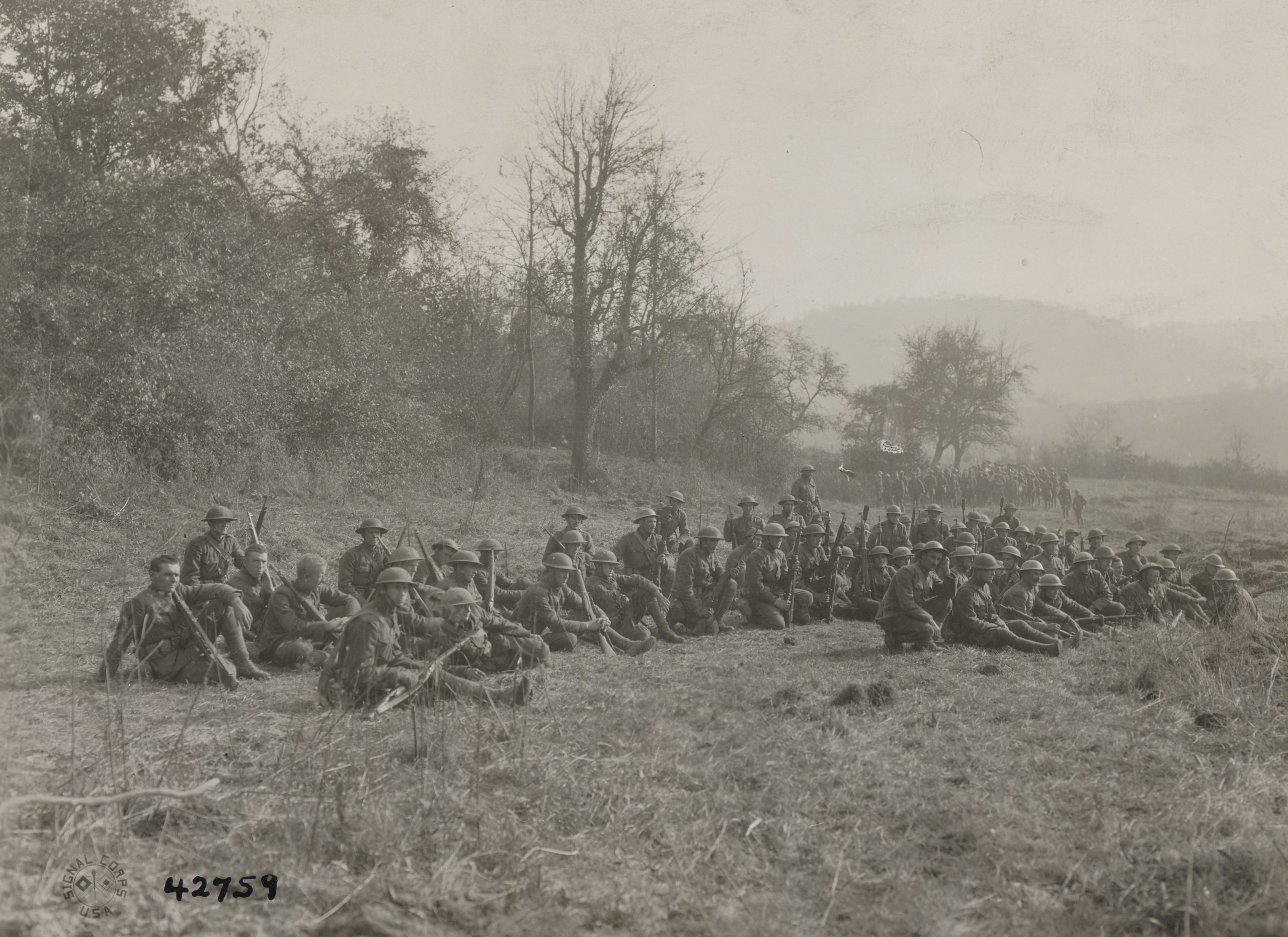
Whittlesey, Major 308
The pigeon who made the delivery was “Cher Ami.” Despite getting shot by the Germans, the pigeon made it back to base and legend has it stopped the firing. Still, the 90-minute barrage had wreaked carnage. 30 men were killed and 80 wounded.
The story of the heroic pigeon who had lost an eye, and a foot, and had a hole in one of its wings is not exactly true. The commander and intelligence officer of the 308th Infantry were in their command post when an observer came in to report on the fall of their shells. Several artillery units were tasked with laying a protective barrage around Whittlesey’s men to hold off German infantry assaults on their positions. Neither the commander of the 308th nor his intelligence officer was aware of the fire mission to protect their men and asked the observer to show where the rounds were falling. As the observer pointed to the places on the map where the artillery barrage was being laid, the 308th CO saw that their rounds were falling on a line of the northern slope of the Charlevaux Ravine to protect the Lost Battalion’s positions believed to be on the southern slope. They had it wrong. Whittlesey’s men were in fact on the northern slope and the rounds were falling right on top of them. The Colonel knew very precisely his battalion’s position on the northern slope and immediately lunged for a field telephone to order the barrage to be lifted. All this occurred as brave Cher Ami was arriving back at HQ with her message. Given the wartime press censorship in place at the time, there is no way a US newspaper story was going to run with the actual facts that an American artillery battalion had mismarked the position and killed Whittelsey’s men, so some half-truths were told, French guns were responsible and a valorous pigeon had saved the day.
On the fifth day, a captured American prisoner of war was sent back to the lost Battalion to deliver a message from the German commanding officer, asking them to surrender. This soldier had been one of a group of nine starving men who left their position on the left flank to try and retrieve a package that had been dropped by air to them but had fallen on German lines instead(as they all did). They did not find the package but instead ran into a German machine gun position which cut down three of them instantly and wounded the other six who were taken prisoner. One of the survivors, wounded above the knee was sent back with a letter from the German commander for Whittlesey.
The letter read,(we have left misspellings intact)
Sir
The Bearer of the present, has been taken prisoner by us on October (the date was left blank)
He refused to the German Intelligence Officer every answer to his questiones and is quite an honourable fellow, doing honour to his fatherland in the strictest sense of the word.
He has been charged against his will, believing in doing wrong to his country, in carrying forward this present letter to the Officer in charge of the 2nd Batl.J.R.308 of the 77th Div. with the purpose to recommend this Commander to surrender with his forces as it would be quite useless to resist any more in view of the present conditions.
The suffering of your wounded man can be heared over here in the German lines and we are appealing to your human sentiments.
A withe Flag shown by one of your man will tell us that you agree with these conditions.
Please treat the (released prisoner) as an honorable man. He is quite a soldier we envy you.
From this, another legend grew, that Whittlesey read the letter crumpled it in his hands, and yelled toward the German lines
“GO TO HELL!”
The press back in the states probably made the whole thing up and stuck the young Major with the nickname “Go To Hell Whittlesey” in stories about the battle which he greatly resented for the rest of his life. Eyewitness reports and memoirs written after the battle make no mention of him saying this. What he did do was chew out the private for leaving his position, and order that nothing white was to be visible along his lines. There would be no surrender and remained confident that American forces would not abandon him and his men. He ordered his men to prepare for another German assault.
That night, reinforcements finally came after concerted attacks by American infantry to drive the Germans back were successful. Out of the original 694 Soldiers of the battalion Whittlesey took into the fight, only 194 walked out of the ravine unscathed.
The Great War ended five weeks later, and Whittlesey was immediately promoted to Lt. Col. for his steadfast leadership. He was also among the seven men who received the prestigious Medal of Honor alongside Captain McMurtry (promoted to Major) and others during the Meuse-Argonne offensive—a record-holder of the most Medal of Honor recipients in a single five-day event that would not be matched until U.S. Army Air Forces raid on the Ploesti oil fields in Romania in 1943.
Below is the Official citation of Whittlesey during his Medal of Honor awarding ceremony:
“Although cut off for five days from the remainder of his division, Maj. Whittlesey maintained his position, which he had reached under orders received for an advance, and held his command, consisting originally of 46 officers and men of the 308th Infantry and of Company K, of the 307th Infantry, together in the face of superior numbers of the enemy during the five days. Maj. Whittlesey and his command were cut off, and no rations or other supplies reached him, in spite of determined efforts which were made by his division. On the fourth day Maj. Whittlesey received from the enemy a written proposition to surrender, which he treated with contempt, although he was at the time out of rations and had suffered a loss of about 50 percent in killed and wounded of his command and was surrounded by the enemy.”
Forever Lost…at Sea
After the war, Whittlesey returned to his old life as a lawyer and later worked with the Red Cross. He was in very high demand as a public speaker, But even as he was hailed by the military as a hero, who desperately defended a critical position, the press which had elevated him to near-mythic proportions suddenly turned against him. In the press, he was heavily criticized for his decision not to surrender, which resulted in more than 70 percent of his Battalion being killed or wounded. Couple that with endless public events and requests—heck, Whittlesey even participated in a re-enactment of the five-day siege that was released a year after the scarring incident—prevented him from moving forward. He couldn’t correctly process the trauma, and the stress was building up inside him. Whittlesey was responsible for those hundred souls who died in action because of a failed, uncoordinated siege. He could only hold on for so long.
On November 11, 1921, over three years since that fateful attack, Whittlesey participated in the burial of the first Unknown Soldier. Two weeks later, he boarded the British steamship SS Toloa en route to Havana, Cuba. To others aboard the ship he seemed perfectly normal. Even the Captain of Toloa, who dined with him at his table and chatted with him, said the hero was in a festive mood with no signs he was up to something that night. He even moved to the smoking salon, where he’d caught up with another friend and chatted “for more than two hours on a wide range of subjects.”
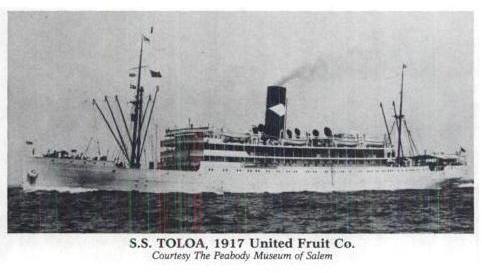
Shortly after midnight, Whittlesey would rise and announce that he was retiring to his stateroom to bed… never to be seen again. The only thing they found in his room were letters addressed to his family and close friends and an instruction to the Captain to dispose of his belongings.
Whittlesey, the man who led and fought beside his men while “lost” in the Argonne Forest, was forever lost at sea.










COMMENTS