


The convergence of external pressure and internal accountability demands leaves Iran navigating a narrow corridor. The leadership is signaling resolve abroad while managing unresolved legitimacy challenges at home, relying on deterrence and controlled engagement to prevent escalation it cannot fully control. The near-term outlook points to sustained tension, active signaling, and diplomacy aimed at preventing miscalculation rather than resolving core disputes.

Precious Metals Record Sharpest Decline in Years
Gold and silver prices fell sharply at the start of February, marking one of the steepest short-term declines for precious metals in recent years. The sell-off cut across futures and spot markets, reversing gains accumulated during months of elevated geopolitical tension and inflation hedging.
Gold dropped decisively below recent support levels, while silver experienced a steeper percentage decline, reflecting its thinner liquidity and higher volatility. The move was broad-based rather than disorderly, suggesting a repricing driven by macroeconomic recalibration rather than panic liquidation.
The speed and scale of the decline surprised many investors who had positioned precious metals as a durable hedge against geopolitical risk, monetary instability, and fiscal expansion.
This chart from the Financial Times illustrates the significant ongoing volatility in precious metals, as speculators have effectively sidelined institutional investors for the time being.
Gold is currently trading down 5%, while silver has slumped 10%.
The pressing question is… pic.twitter.com/ZG3pw4GfLO— Mohamed A. El-Erian (@elerianm) February 2, 2026
Interest Rate Expectations Drive Repricing
The primary driver behind the sell-off appears to be a reset in interest rate expectations. Recent economic data and policymaker commentary have strengthened the view that U.S. rates may remain higher for longer, undercutting one of the central pillars supporting gold and silver prices.
Higher real yields reduce the appeal of non-yielding assets, particularly in an environment where inflation appears more contained than previously feared. As bond yields firmed and the U.S. dollar strengthened, the opportunity cost of holding precious metals increased, accelerating outflows.
Market participants also reassessed the probability of near-term monetary easing, dialing back expectations that had buoyed metals late last year. The repricing reflects a shift from defensive positioning toward yield-sensitive assets rather than a wholesale abandonment of safe-haven demand.
Geopolitics Proves an Inconsistent Hedge
The sell-off has highlighted a recurring feature of modern markets: geopolitical risk does not translate cleanly into sustained demand for traditional safe havens. Despite ongoing conflicts in Ukraine and the Middle East, investors prioritized monetary policy signals over strategic uncertainty.
This dynamic has been reinforced by the growing role of algorithmic and macro-fund trading, where positioning responds rapidly to rate differentials and currency movements. In this context, gold’s role as a geopolitical hedge has become more episodic than structural.
Silver’s sharper decline reflects its dual identity as both a precious and industrial metal, leaving it more exposed to shifts in global growth expectations alongside monetary conditions.
Outlook: Volatility Over Direction
Some analysts caution that the move may not signal a long-term reversal but rather a violent adjustment to crowded positioning. Former Federal Reserve official Kevin Warsh has argued that markets remain highly sensitive to policy communication, with asset prices vulnerable to abrupt swings as expectations are repriced.
Near-term volatility is likely to persist as investors digest incoming economic data and reassess the policy trajectory. While gold and silver retain long-term appeal for some institutional holders, the recent plunge underscores that their performance is increasingly contingent on interest rate dynamics rather than geopolitical headlines alone.
For now, precious metals appear less a refuge than a referendum on monetary credibility — and that vote remains unsettled.
Musk Says Russian Access to Starlink Has Been Curbed

Elon Musk said steps taken to prevent Russian forces from using Starlink satellite internet terminals in Ukraine have been effective, addressing long-standing concerns about the system’s exploitation on the battlefield. Musk stated that technical and policy measures were implemented to block unauthorized use and that those measures are now working as intended.
Starlink, operated by SpaceX, has been a critical component of Ukraine’s battlefield communications since the early stages of the war, supporting command-and-control, drone operations, and frontline connectivity. Reports over the past year indicated that Russian units had obtained and used Starlink terminals through illicit channels, raising alarms among Ukrainian officials and Western governments.
Musk did not provide technical details on how access was restricted, citing security concerns, but emphasized that the company had taken active steps to limit misuse while continuing to support Ukraine’s connectivity needs.
PLUG PULLED: UKR’s MoD has announced the black-market Starlink terminals that guide Russian murder drones are about to go dark. Soon, only authorized & verified terminals will work within Ukrainian territory. Someone at Starlink FINALLY, FINALLY did the right thing. pic.twitter.com/P2SNr6uZl6
— Chuck Pfarrer | Indications & Warnings | (@ChuckPfarrer) February 1, 2026
A Persistent Grey Zone in Modern Warfare
The episode underscores a structural tension in contemporary conflict: the reliance of state militaries on privately owned, globally distributed infrastructure. Starlink is not a military system in the traditional sense, yet its role in Ukraine has made it a de facto element of modern warfare.
Efforts to restrict Russian access highlight both the flexibility and the fragility of this arrangement. While SpaceX can implement controls at the network level, enforcement is complicated by black-market hardware flows, spoofed identities, and the challenges of verifying end users in active combat zones.
The situation has reinforced concerns within defense and policy circles about the degree of leverage held by private actors over systems with strategic military value. Decisions made by corporate leadership can have direct operational consequences, often without the transparency or accountability mechanisms associated with state-run defense assets.
Implications for Ukraine and Western Militaries
For Ukraine, effective restriction of Russian access would help preserve a critical asymmetric advantage, particularly in drone coordination and battlefield awareness. Ukrainian officials have repeatedly warned that Russian use of Starlink could negate some of Kyiv’s tactical adaptations and increase risks to frontline units.
For Western militaries, the Starlink case is increasingly viewed as a precedent rather than an exception. Reliance on commercial space-based systems is growing across NATO forces, raising questions about governance, contractual control, and wartime authorities.
What comes next is less about Starlink specifically than about doctrine. As conflicts continue to integrate commercial technology at scale, states will face mounting pressure to clarify who controls access, under what conditions, and with what safeguards. The Ukraine war is exposing these gaps in real time.
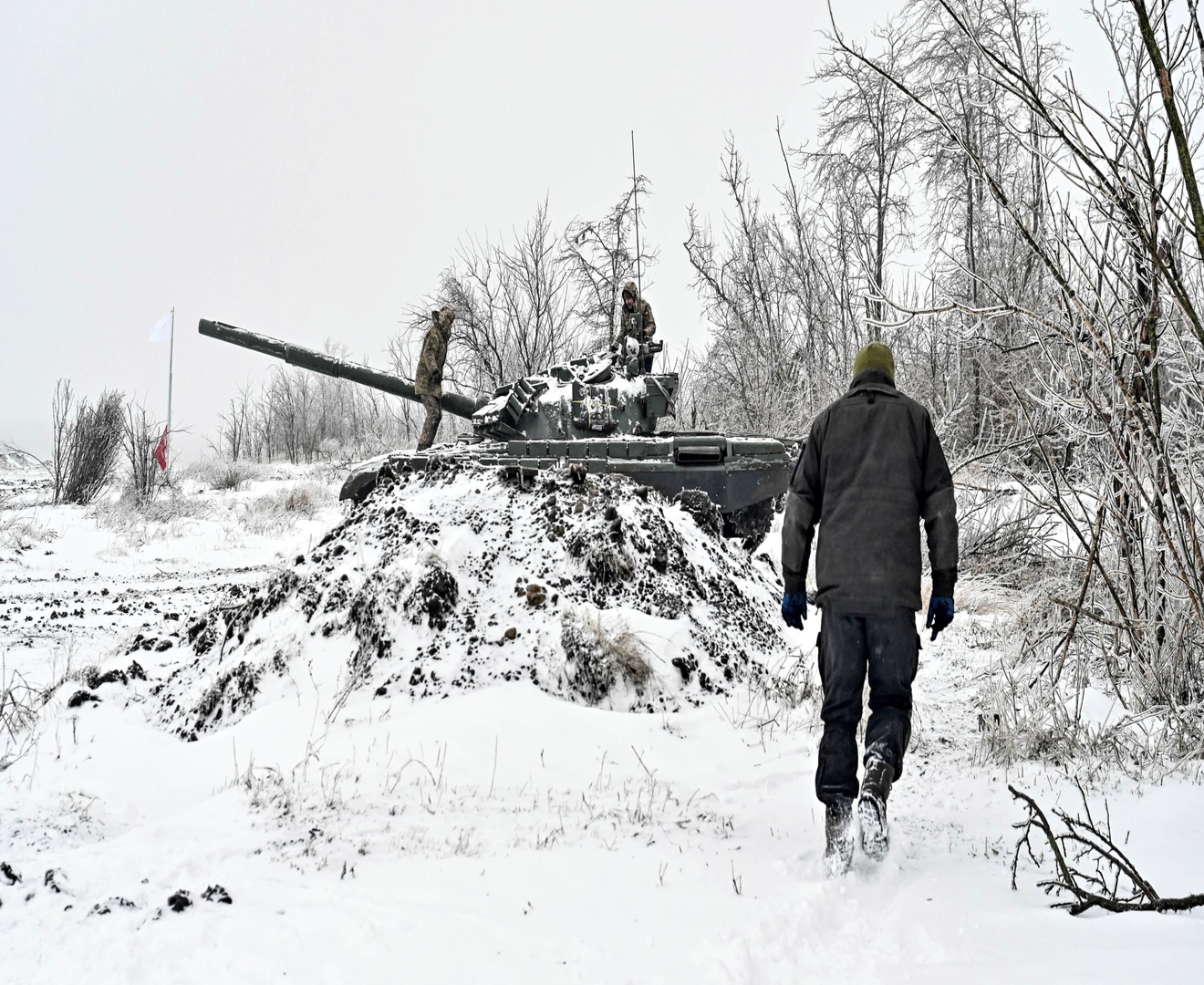
Ukraine: Power Strain and Diplomacy Delays Shape the Winter Fight
Ukrainian officials have postponed planned peace-related discussions, citing scheduling and security constraints as fighting continues and infrastructure pressures mount. The delay reflects the practical limits of diplomacy during an active winter campaign, rather than a substantive shift in Kyiv’s political position.
Ukrainian leadership has maintained that any talks must be grounded in battlefield realities and credible security guarantees. With front-line fighting ongoing and Russian strikes continuing against infrastructure targets, the space for meaningful negotiations remains constrained. The rescheduling underscores a broader pattern: diplomatic processes remain secondary to immediate military and civilian resilience concerns.
MORE: Insider reports continue to demonstrate that Russia is trying to portray itself to external audiences as a willing negotiator in order to gain control over all of Donetsk Oblast through diplomatic means. ⬇️
Bloomberg reported on January 31, citing unspecified knowledgeable… https://t.co/eBuBFmoS2R pic.twitter.com/WsgEuj3Z0M
— Institute for the Study of War (@TheStudyofWar) February 2, 2026
Power Grid Under Sustained Stress
Ukraine’s energy system remains under strain following repeated Russian strikes on generation and transmission infrastructure. While emergency repairs and load management have prevented nationwide collapse, localized outages persist, particularly during cold snaps that increase demand.
Energy officials continue to prioritize grid stability, relying on a combination of rapid repair teams, rolling outages, and imported electricity where available. The strain is cumulative rather than catastrophic. Each strike compounds maintenance challenges, diverting resources and limiting the margin for error as winter conditions persist.
Russia’s targeting strategy appears aimed less at total blackout than at sustained degradation, keeping pressure on civilian morale and forcing Kyiv to allocate manpower and air defense assets away from the front.
Battlefield Conditions Favor Attrition
On the battlefield, winter conditions have reinforced an attritional dynamic. Mud, cold, and limited visibility have reduced the tempo of maneuver operations, favoring artillery exchanges, drone strikes, and localized probing attacks. Russian forces continue to press selectively, while Ukrainian units focus on holding prepared defensive positions and inflicting costs.
Drone warfare remains central on both sides, with reconnaissance and strike platforms compensating for limited movement. Neither side has achieved a decisive operational breakthrough, and the front lines remain largely static.
What Comes Next
The near-term outlook points to continued pressure on Ukraine’s infrastructure alongside incremental fighting at the front. Kyiv’s ability to balance civilian resilience, military endurance, and diplomatic signaling will remain central as winter grinds on. For now, the war’s trajectory is defined less by movement than by stamina — political, military, and societal.








COMMENTS