


Footage Emerges Showing Pretti Striking Border Patrol Vehicles
Newly released video from Minneapolis shows a physical confrontation between Alex Jeffrey Pretti, a 37-year-old intensive care nurse, and federal immigration agents 11 days before Pretti was fatally shot by U.S. Customs and Border Protection officers during a separate encounter on January 24, 2026. The footage captures a January 13 protest against immigration enforcement in which Pretti approaches agents, kicks the taillight of a federal vehicle, and is taken to the ground. Officers then deploy chemical agents into the crowd. At no point does the video show Pretti reaching for or displaying a firearm other than what is legally carried on his waistband.
The encounter ended without arrest or charges. Pretti walked away. Federal agents cleared the area and continued operations.
WOW: Footage appears to show Alex Pretti spitting on a federal agent and kicking out a taillight 11 days before fatal shooting
— The Post Millennial (@TPostMillennial) January 28, 2026
A Second Encounter Turns Fatal
Less than two weeks later, Pretti was dead. On January 24, bystander video shows him holding a cell phone as multiple federal officers tackled him to the pavement. Officers fired multiple rounds while Pretti lay on the ground. Federal authorities initially described Pretti as a lethal threat. Subsequent video and reporting have raised serious doubts about that account, including whether he ever reached for a legally carried weapon.
The gap between the official narrative and the available footage has driven public outrage and forced repeated clarifications from federal agencies. DHS has acknowledged that two officers fired their weapons but has not released a full timeline explaining the decision to use deadly force.
Context Without Justification
The January 13 footage provides context. It does not provide legal cover. Legal analysts note that a prior non-lethal confrontation cannot justify deadly force days later, especially when that earlier incident resulted in no arrest and no charges. Pretti’s attorneys argue that the video shows a pattern of escalation by federal agents rather than evidence of ongoing threat.
The footage also adds context to earlier claims about the level of threat Pretti posed. He did not flee the scene, no officer was assaulted with a weapon, and no charges were filed following the initial encounter. Authorities treated the incident as resolved at the time.
Federal Authority Under a Microscope
The killing has intensified scrutiny of how federal immigration enforcement now operates inside U.S. cities. Critics argue that DHS increasingly deploys heavily armed personnel using crowd-control tactics more typical of riot response or counterterror operations than administrative enforcement. Minnesota officials have publicly criticized the lack of coordination with state and local authorities and the initial limits placed on investigative access after the shooting.
This tension reflects a broader national issue: federal agencies exercising wide operational autonomy while operating in civilian environments where local governments remain politically and legally accountable.
Political and Institutional Fallout
Calls for independent investigations have come from across the political spectrum. Civic organizations and elected officials have demanded clearer rules of engagement, stronger use-of-force standards, and mandatory body-camera requirements. Protests have spread beyond Minnesota, signaling that the case has moved beyond a local tragedy into a national test of federal law-enforcement legitimacy.
Federal authorities have indicated that senior personnel tied to the Minneapolis operation will rotate out and that the federal footprint may shrink. Reviews are ongoing.
What remains unresolved is the core question: how an administrative enforcement action escalated into a fatal shooting, and whether federal power inside American cities now operates with fewer effective constraints than the public was led to believe.
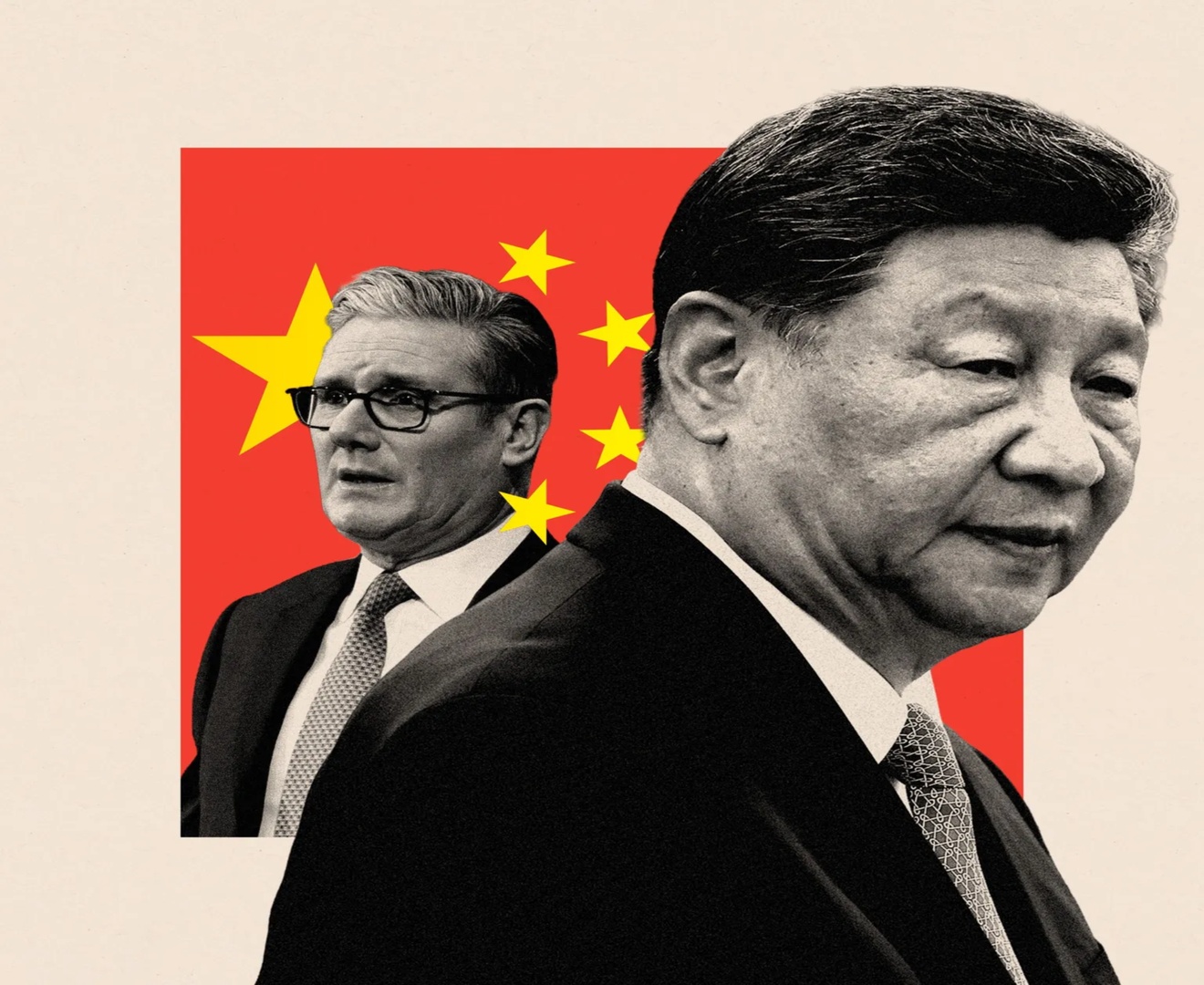
Starmer Visits China as UK Reassesses Global Partnerships
Britain’s prime minister, Keir Starmer, has arrived in China for a significant diplomatic visit, marking the first time a UK leader has visited Beijing in eight years. Starmer’s mission is to reset and strengthen political and economic relations with China after a long period of acrimony and geopolitical tension. This comes amid wider strains in Western alliances, particularly between the U.S. and key European partners as global diplomacy shifts.
Starmer’s diplomatic balancing act
Starmer stressed that the UK will remain pragmatic and vigilant about security risks — including Chinese espionage allegations and concerns over political freedoms — but cannot afford to ignore economic opportunities with the world’s second-largest economy. He said engaging China is essential for Britain’s national interest and future prosperity, while still affirming that the UK will maintain strong ties with its European and U.S. partners.
The prime minister travels with a large delegation of more than 50 business leaders and executives, signaling a strong economic focus on trade, investment, and cooperation with Chinese markets and companies. Part of the outreach includes talks on visa arrangements and ways to enhance commercial ties while seeking to protect national security.
Strategic context: Western alliances under strain
Starmer’s visit is taking place against the backdrop of recent diplomatic friction involving the United States. Tensions have emerged over U.S. President Donald Trump’s handling of Arctic diplomacy — including threats related to Greenland and tariff rhetoric — and what some European leaders see as unpredictable American policy. That has encouraged several Western capitals to diversify diplomatic engagements, including deeper talks with Beijing as a hedge against uncertainty.
In this context, Starmer explicitly rejected the idea that closer engagement with China would inherently conflict with the UK’s relationship with the United States. He described the U.S.–UK relationship as among Britain’s closest, especially on defense, security, and intelligence cooperation, and stressed that building ties with China doesn’t need to come at the expense of that partnership.
Lingering geopolitical issues
The visit also comes amid unresolved disagreements with China on political and human rights issues. Starmer has not ruled out raising concerns — such as the case of jailed pro-democracy activist Jimmy Lai — but has largely emphasized practical engagement first, seeking progress on trade and mutual challenges.
Starmer declined to commit on whether he would push China to pressure Russia to end the war in Ukraine during this visit, underscoring the careful diplomatic balance London is trying to strike amid shifting global pressures.
What this visit signals
At its core, Starmer’s China visit reflects a broader re-evaluation of Western diplomacy as global power dynamics evolve. Europe and the UK are increasingly engaging with China not simply as an adversary or competitor, but as a complex partner with significant economic weight and geopolitical influence. That shift is shaped in part by unpredictability in U.S. foreign policy, encouraging allies to pursue more diversified international relationships.
In summary, the BBC coverage portrays the China trip as a high-stakes diplomatic effort: one that seeks to advance British economic and strategic interests while preserving traditional Western alliances and managing the security challenges inherent in deeper engagement with Beijing.

Dollar Weakens as Markets Absorb Mounting Risks
The U.S. dollar remained under pressure as global markets reacted to a growing accumulation of economic and political uncertainty. Investors showed increasing caution, pushing the currency lower against major peers while volatility rippled across equities, bonds, and commodities.
The dollar has fallen roughly 2 percent so far this year, extending a decline of nearly 10 percent over the past twelve months. Traders say the weakness reflects not a single shock, but a convergence of concerns ranging from U.S. monetary policy to political risk and uneven global growth. Recent swings have reinforced a sense that markets are reassessing assumptions about U.S. stability and the durability of its economic institutions.
Policy and Politics Weigh on Confidence
Federal Reserve signaling has been a central driver of recent currency moves. The central bank held interest rates steady this week and struck an optimistic tone on inflation and labor market resilience. Markets interpreted the messaging as reducing the likelihood of further rate increases, dampening the dollar’s appeal to investors seeking yield.
At the same time, traders continue to price in the possibility of rate cuts later in 2026, adding to downward pressure on the currency. Analysts say uncertainty over the Fed’s longer-term path has been compounded by political noise in Washington, particularly around central bank independence and fiscal direction. Public comments from senior political figures about the dollar and interest rates have added to investor unease, even as officials insist that U.S. policy remains committed to stability.
Market participants note that the dollar’s role as the world’s dominant reserve currency relies heavily on confidence in predictable governance and institutional credibility. Any perception that economic policy could become politicized tends to amplify volatility in foreign exchange markets.
Global Ripple Effects and Investor Caution
As the dollar weakened, several major currencies gained ground. The euro rose toward multi-year highs, prompting caution from European Central Bank officials concerned that excessive strength could complicate inflation control. The British pound advanced alongside expectations of tighter monetary policy in the UK, while the Japanese yen firmed modestly amid speculation that authorities could step in to limit sharp moves.
The Australian dollar climbed to its highest level in years, supported by strong domestic data and expectations of higher interest rates. Meanwhile, investors increased allocations to traditional hedges, with gold prices rising as traders sought protection against currency swings and broader financial uncertainty.
Bond markets sent mixed signals, reflecting a balance between slowing growth expectations and lingering concerns over inflation and fiscal sustainability. Analysts say markets are likely to remain sensitive to economic data releases, central bank commentary, and political developments in the weeks ahead.
For now, the dollar’s volatility is seen less as a disorderly sell-off than as a barometer of risk. As one strategist put it, markets are not pricing in a crisis—but they are clearly pricing in uncertainty.








COMMENTS