

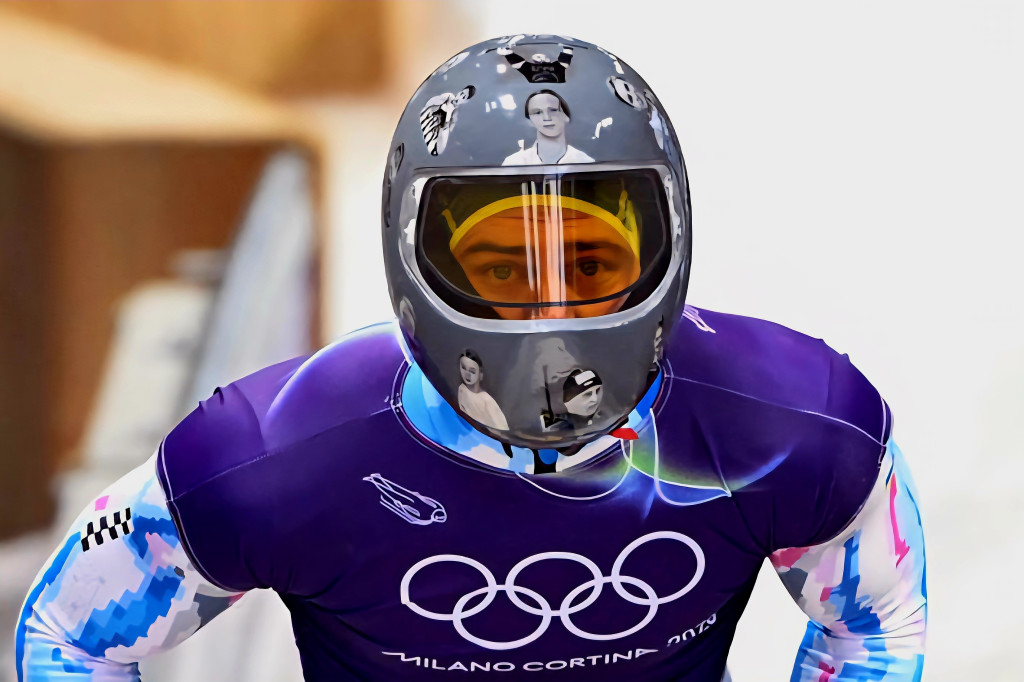
Heraskevych’s helmet was painted with the faces of Ukrainian athletes killed since Russia launched its full-scale invasion in 2022. Olympic officials said the design violated the IOC’s guidelines on athlete expression, which restrict political messaging in competition areas. The IOC said the disqualification followed Heraskevych’s refusal to comply.
The dispute escalated earlier in the week after Olympic officials ruled the helmet could not be used in competition. IOC President Kirsty Coventry traveled to meet Heraskevych and his father in person on Thursday morning, saying athletes have asked for wider freedom to speak on political issues while also keeping specific zones off limits. Coventry said athletes identified the field of play, the podium, and the Olympic village as areas they want kept “safe” from political statements.
Officials attempted to negotiate a workaround. The IOC offered to let Heraskevych wear a black armband instead of the helmet design. He declined, saying honoring the dead on the Olympic stage was the point.
Heraskevych said on social media that the IOC’s decision was inconsistent and unfair, adding that the ruling cost him his chance to race at the Games despite strong training results. He described the penalty as “the price of our dignity.”
Ukrainian President Volodymyr Zelenskyy publicly backed Heraskevych, and the incident added fresh fuel to Kyiv’s long-running push to keep Russian athletes out of international competition while the war continues.
For the IOC, the line stayed the same: athlete expression has lanes, and competition is one of the restricted ones. For Ukraine’s team, the message landed hard. The Olympic stage remains a bad place to try to force the world to look.
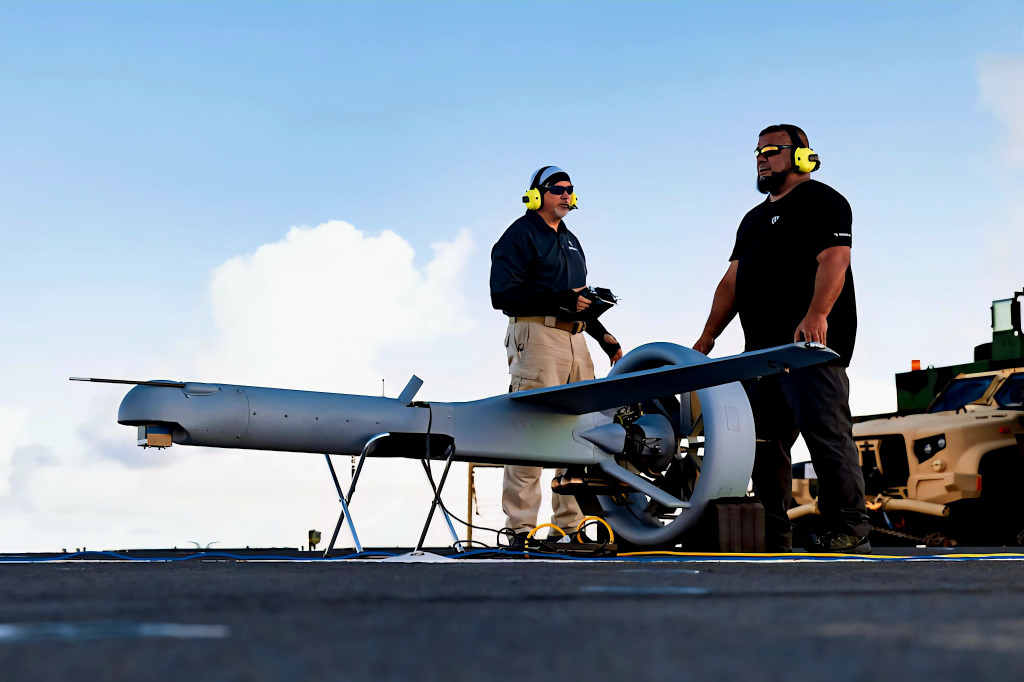
U.S. Navy Seeks Long-Range Strike Drones for Destroyers Under RIMES Program
The U.S. Navy is looking for a way to put long-range strike power on ships that do not carry fixed-wing aircraft.
A new Defense Innovation Unit solicitation outlines a concept called Runway Independent Maritime and Expeditionary Strike, or RIMES. The goal is to give destroyers and other surface combatants a reusable, long-range strike drone that does not require a large flight deck or a traditional runway.
Navy planners are increasingly focused on the limits of vertical launch missile cells.
Once a destroyer fires its Tomahawks or other strike weapons, it cannot reload at sea. In a protracted fight against a peer armed with long-range anti-ship missiles, magazine depth becomes a hard constraint.
The RIMES concept would field an unmanned aircraft capable of carrying standard munitions already in the inventory, including 1,000-pound class weapons. The solicitation calls for a one-way range of at least 1,400 nautical miles, translating to roughly a 600 nautical mile strike radius. The system must be able to operate in contested environments with mission autonomy in the face of jamming and GPS denial.
DIU lists platforms such as Arleigh Burke-class destroyers, littoral combat ships, and the Navy’s future Constellation-class frigates as potential hosts. None of those ships currently support fixed-wing strike aircraft.
That gap is the problem the Navy wants industry to solve.
The solicitation leaves open whether the drone will be highly survivable, relatively expendable, or a mix of both. Cost-effectiveness, minimal support requirements, rapid launch and recovery, and open architecture for upgrades are all priorities.
Industry has until February 27 to respond. DIU expects viable prototypes within 12 months of contract award.
This is not a program of record yet. It is a signal. The Navy is preparing for a fight where carriers may be stretched, runways may be targeted, and surface ships will need more than a finite stack of missiles to stay in the game.
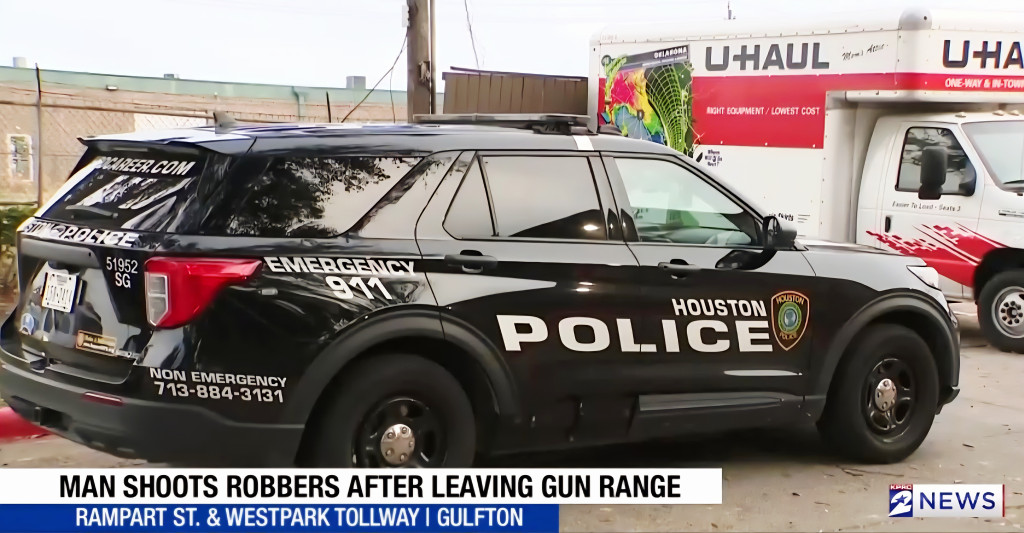
Followed Home from the Range: A Houston Gun Jugging Turns Into a Shootout
On February 10th, a man left Top Gun Range in west Houston with a bag of firearms and drove less than a mile to his apartment complex in the 5300 block of Rampart Street in Gulfton. He had no idea he was being followed.
Two suspects tailed him from the range. When he parked, they moved in, swarmed him, and tried to rob him at gunpoint. What they didn’t account for was that the man they targeted was armed and willing to fight. During the exchange, he shot one of the suspects in the chin. That suspect survived and was transported to a hospital. As of February 12th, one suspect is in custody and the other remains at large. Houston PD recovered the abandoned getaway vehicle and continues to review surveillance footage. The intended victim was not injured.
This is what’s commonly referred to as “gun jugging” or a follow-home robbery. Criminals watch gun ranges and gun stores, identify customers leaving with visible firearms or range bags, and follow them to a secondary location. Apartment complexes are ideal. So are gas stations and residential driveways.
Many SOFREP readers spend real time on the range. You leave with rifle cases, ammo cans, and range bags that might as well have dollar signs painted on them.
Don’t relax. If something feels off, it probably is. Make a few deliberate turns before heading home. If someone mirrors you, don’t pull into your driveway. Go somewhere public and well lit, or straight to a police station.
We train to handle problems. Part of that is recognizing when someone else is trying to be one








COMMENTS