In his State of the Union address, President Donald Trump emphasized a tough stance on Iran's nuclear ambitions, stating the U.S. will not allow Tehran to develop nuclear weapons while remaining open to negotiations. The speech also highlighted domestic issues like immigration enforcement and trade, setting the stage for the upcoming midterm elections.
Key points from this article:
The President declared Iran's nuclear ambitions as the primary threat in the Middle East and indicated a preference for a diplomatic solution while keeping military options on the table.
How Trump's focus on military strength and defense spending ties into his Iran policy aims to create leverage in negotiations and reduce the likelihood of conflict.
Why the address serves as a critical political marker ahead of the midterm elections, with Trump framing Democratic opposition as obstructionist while pushing for border security and economic policies.
Updating summary...
Morning Brief: State of the Union Highlights Iran Warning as Epstein Scrutiny Resurfaces
Benjamin Reed
Speed
1x
Listen
COMMENTS
President Donald Trump’s 2026 State of the Union address focused on Iran’s nuclear ambitions, border enforcement and economic policy. Meanwhile, separate reporting shows Russia assessed capable of sustaining the war in Ukraine through 2026 as global defense spending continues to rise.
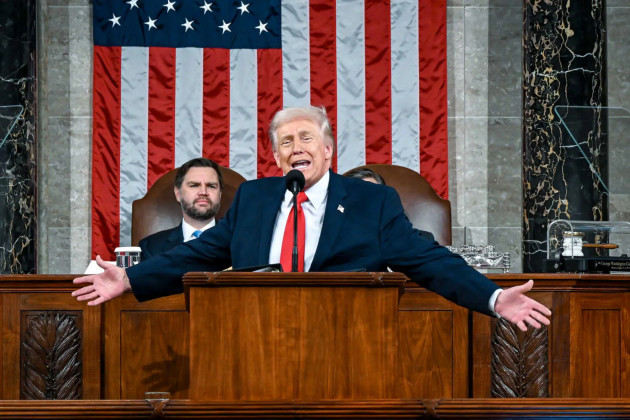
Donald Trump delivers his State of the Union address before a joint session of Congress at the U.S. Capitol in Washington, Feb. 24, 2026. Credit: Kenny Holston/The New York Times
STATE OF THE UNION ADDRESS
WASHINGTON, Feb. 25, 2026 — President Donald Trump used his State of the Union address Tuesday to sharpen his administration’s posture toward Iran, declaring that the United States “will not allow” Tehran to obtain a nuclear weapon while signaling openness to negotiations if Iran changes course.
Advertisement
The speech, which ran approximately 108 minutes, was the longest State of the Union in modern history. Trump blended domestic political messaging with national security warnings, returning repeatedly to themes of economic strength, border enforcement and military readiness.
Iran emerged as the most consequential foreign policy element of the address.
Iran and Nuclear Red Line
Trump described Iran’s nuclear ambitions as the primary threat in the Middle East and said his administration is pursuing a “serious diplomatic solution.” At the same time, he made clear that military options remain available.
Advertisement
He did not outline a specific framework for talks or announce new sanctions. Instead, the message centered on deterrence: the United States would prefer a negotiated settlement but would act if necessary.
The remarks come amid renewed scrutiny in Washington over Iran’s uranium enrichment levels and the durability of existing diplomatic channels. Congressional leaders from both parties have recently received classified briefings on Iran’s capabilities and U.S. response options.
Advertisement
Military Strength as Leverage
Trump tied his Iran warning to broader calls for increased defense spending and force modernization. He argued that visible military strength creates negotiating leverage and reduces the likelihood of conflict.
He praised U.S. forces deployed in the region and highlighted missile defense and naval readiness as core elements of deterrence.
No new deployments were announced.
Advertisement
Petty Officer 2nd Class Scott Ruskan, a U.S. Coast Guard Rescue Swimmer, assisted in the evacuation of 169 people during the Central Texas floods on July 4. President Trump awarded him the Legion of Merit during the State of the Union. pic.twitter.com/QNklQ3mekv
While Iran dominated the foreign policy section, the bulk of the speech focused on domestic priorities.
Trump emphasized stepped-up immigration enforcement and declining unauthorized border crossings under his administration. He urged Congress to codify expanded executive authorities and provide additional funding for federal enforcement agencies.
On trade, he defended tariffs as tools of national leverage and economic protection, dismissing criticism that they raise consumer costs. He portrayed manufacturing gains and stock market performance as evidence that his approach is working.
Democrats remained largely seated during portions of the address and later criticized the administration’s record on affordability and judicial compliance.
Political Backdrop
The address unfolded with midterm elections less than nine months away. The tone was at times confrontational, with Trump framing Democratic opposition as obstructionist and pledging to press ahead with or without bipartisan support.
The speech served both as a constitutional report to Congress and as an early campaign marker for 2026.
What Comes Next
Iran now becomes the administration’s most visible foreign policy test. If negotiations take shape, the White House will face pressure to define clear terms. If talks stall, the deterrence language in Tuesday’s speech raises expectations for escalation.
On Capitol Hill, Republican leaders signaled they will move first on border security and defense funding. Democrats are expected to focus on cost-of-living issues and oversight of executive actions.
Trump closed by reiterating that the United States has entered what he called a new era of strength. Whether voters agree will be measured in November.
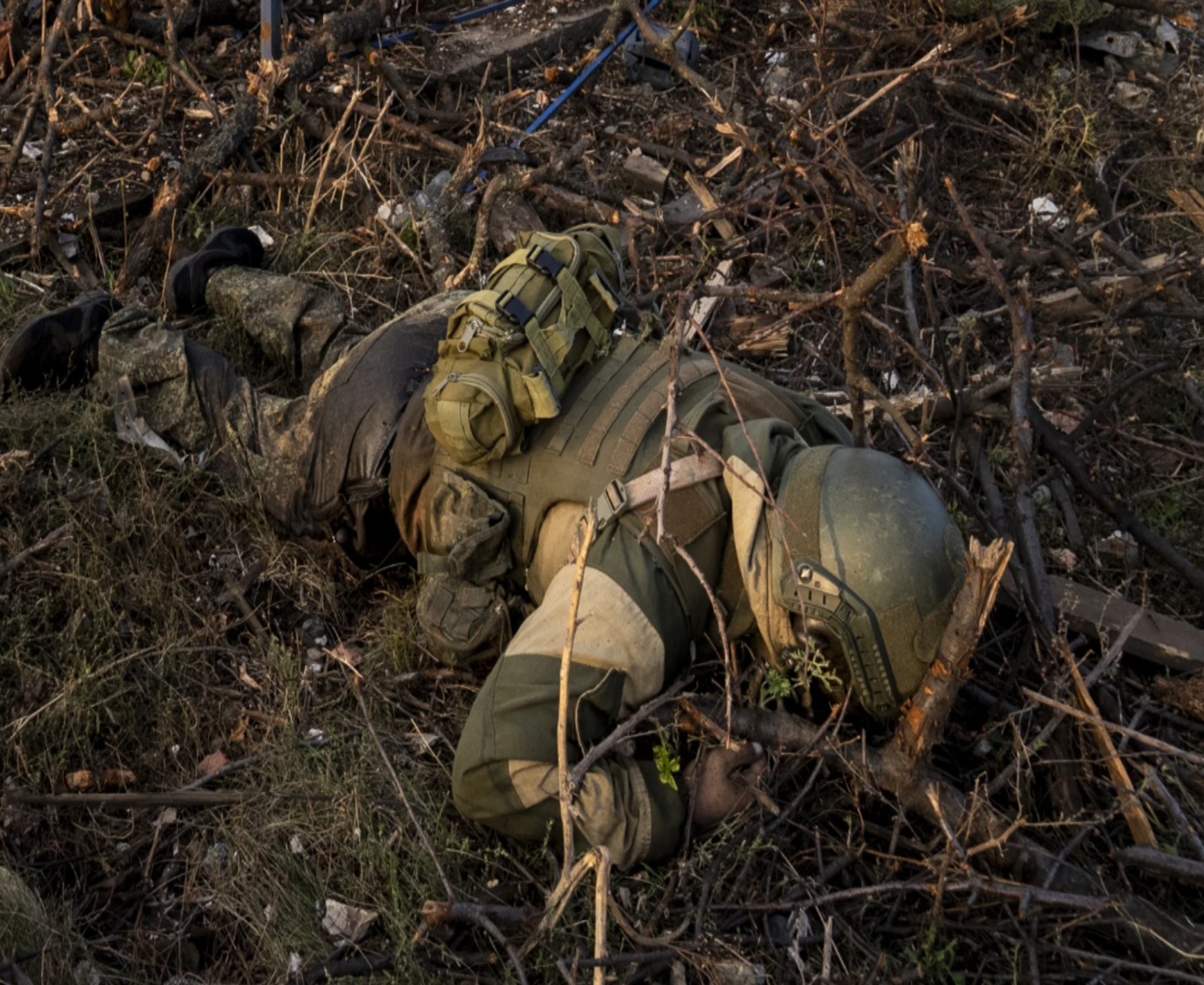
A Russian soldier trains in the prone position outside Bakhmut, Ukraine, date unknown. Source: AP
Russia Seen Able to Sustain Ukraine War Through 2026
Russia retains the manpower, industrial output and financial capacity to continue large-scale combat operations in Ukraine throughout 2026, according to a new assessment by the International Institute for Strategic Studies.
The London-based defense institute said Moscow has adapted its economy to wartime footing, expanded munitions production and restructured force generation systems to offset heavy battlefield losses. While sanctions have constrained certain sectors, analysts conclude Russia’s defense-industrial base is now oriented toward sustained attritional warfare.
The assessment aligns with ongoing frontline conditions, where fighting remains largely positional along eastern and southern sectors. Neither side has achieved a decisive breakthrough in recent months.
Global defence dynamics are shifting fast. In this episode of Sounds Strategic, @MeiaNouwens and IISS experts, Henry Boyd, Fenella McGerty, Ester Sabatino and Ruben Stewart, unpack the key findings from The Military Balance 2026:
Independent reporting estimates that combined Russian and Ukrainian casualties have climbed into the hundreds of thousands since the full-scale invasion began in February 2022. Exact figures remain disputed, with both Kyiv and Moscow releasing limited official data.
Ukrainian President Volodymyr Zelenskyy has acknowledged the scale of losses while maintaining that Ukrainian forces continue to degrade Russian offensive capacity. Russian President Vladimir Putin has framed the conflict as a long-term strategic contest with the West and has signaled no retreat from stated war aims.
Recent battlefield reporting indicates sustained use of artillery, drones and glide bombs, with incremental territorial shifts rather than sweeping advances.
Global Defense Spending Climbs Amid Prolonged Conflict
The war has contributed to continued growth in global defense spending. The International Institute for Strategic Studies reported that worldwide military expenditure rose again over the past year, driven in part by European states increasing procurement and replenishing depleted stockpiles.
Several NATO members have expanded budgets beyond previous targets, prioritizing air defense systems, long-range fires and ammunition production capacity.
The institute said the trajectory reflects broader geopolitical uncertainty and the expectation that the war in Ukraine will remain a central security concern for Europe in the near term.
Outlook for 2026
Analysts assess that absent a significant shift in battlefield dynamics or political negotiations, the conflict is likely to remain a war of attrition through the year. Ukraine continues to depend heavily on Western military assistance, while Russia’s wartime industrial adjustments have reduced the immediate impact of sanctions.
Diplomatic channels remain limited, and no formal ceasefire framework is under active implementation.
With both sides demonstrating capacity and intent to continue fighting, the war appears set to enter another year without resolution.
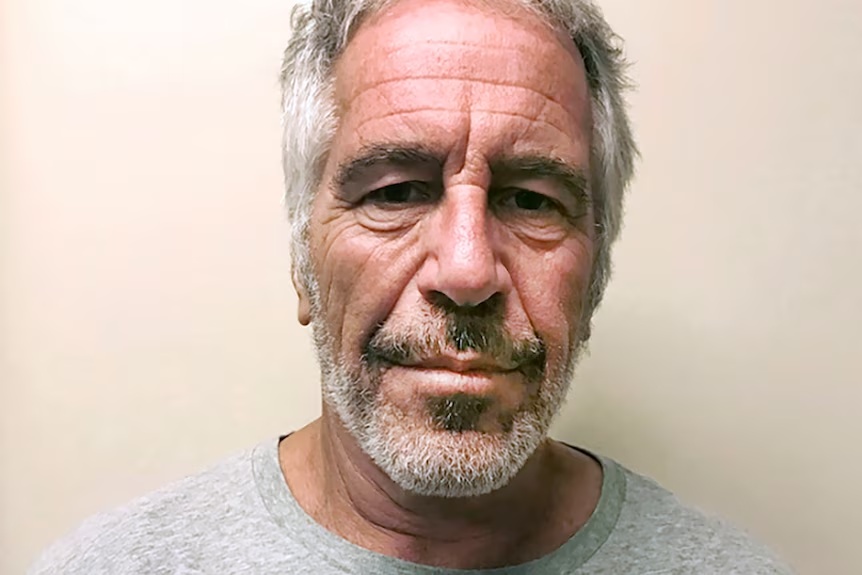
Mugshot of Jeffrey Epstein released by the New York State Sex Offender Registry. Credit: AP/New York State Sex Offender Registry.
Trump Faces Questions Over Epstein Files and Maxwell Allegations
Former President Donald Trump is facing renewed scrutiny following accusations tied to newly discussed materials related to convicted sex offender Jeffrey Epstein and his associate Ghislaine Maxwell.
The controversy follows public debate over whether additional government-held documents connected to Epstein’s case should be released. Trump has denied wrongdoing and has not been charged in connection with the case.
The renewed attention stems in part from claims and political rhetoric surrounding Maxwell’s 2021 conviction on federal sex trafficking charges. Maxwell is currently serving a 20-year prison sentence after being found guilty of recruiting and grooming underage girls for Epstein.
Document Release Debate Intensifies
Calls for broader disclosure of Epstein-related investigative files have resurfaced amid pressure from lawmakers and advocacy groups seeking transparency. Some critics argue that the public deserves a fuller accounting of individuals who had contact with Epstein, while others caution against conflating association with criminal conduct.
Legal experts note that many documents tied to the case remain sealed due to privacy concerns, ongoing legal sensitivities and protection of victims.
Trump has previously acknowledged knowing Epstein socially years ago but has said he severed ties before Epstein’s legal troubles became widely known. He has repeatedly denied any improper conduct.
Political Fallout
The issue has reentered political discourse as opponents raise questions about associations within elite social and political circles. Trump allies characterize the renewed scrutiny as politically motivated.
The Justice Department has not announced new charges related to the matter, and there is no indication of an active criminal case involving Trump tied to Epstein or Maxwell.
The debate over transparency and accountability in high-profile sex trafficking cases continues to draw public attention, particularly as litigation and document disputes related to Epstein’s network remain in the courts.
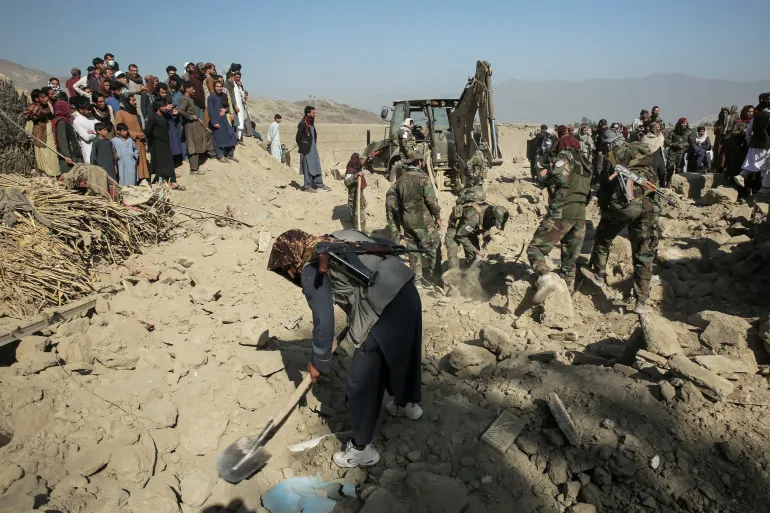
Taliban security personnel search for victims after an overnight Pakistani air attack on a residential area in Girdi Kas village, Bihsud district, Nangarhar province, Afghanistan, Feb. 22, 2026. Credit: AFP
Pakistan and Afghan Forces Exchange Fire After Airstrikes
Tensions escalated along the Afghanistan–Pakistan border after Pakistani airstrikes inside Afghan territory were followed by exchanges of fire between Pakistani and Afghan forces, according to officials on both sides.
Pakistan said it carried out targeted strikes against militant positions it accuses of launching cross-border attacks into Pakistani territory. Islamabad has repeatedly blamed Tehrik-e-Taliban Pakistan (TTP) fighters for attacks on security forces and civilians and has accused Kabul of failing to curb their operations from Afghan soil.
Afghan authorities condemned the strikes as a violation of sovereignty and reported civilian casualties. Taliban officials said Afghan border forces returned fire after Pakistani shelling hit areas near the frontier.
The clashes mark one of the most serious flare-ups between the two countries in recent months and underscore deteriorating security ties since the Afghan Taliban returned to power in 2021.
Cross-Border Militancy at Center of Dispute
Pakistan has seen a rise in militant attacks in its western provinces, particularly Khyber Pakhtunkhwa and Balochistan. Islamabad maintains that militant groups operate from sanctuaries inside Afghanistan, a charge the Taliban government denies.
The Afghan Taliban have rejected accusations that they harbor anti-Pakistan militants and have called for disputes to be resolved through dialogue. However, border skirmishes and air incidents have become more frequent as both sides fortify frontier positions.
The disputed Durand Line, which demarcates the border between the two countries, has long been a source of tension and remains unrecognized by Kabul as an international boundary.
Risk of Further Escalation
The latest exchange of fire raises concerns about a broader deterioration in relations between two states already grappling with economic strain and internal security challenges.
Pakistan’s military has signaled it will continue pursuing militants it considers threats to national security, including through cross-border operations if necessary. Afghan Taliban officials have warned against further strikes and have pledged to defend Afghan territory.
Regional analysts say sustained cross-border operations risk widening instability in a region already affected by insurgency, refugee flows and economic fragility.
Whether the confrontation settles into diplomatic channels or intensifies militarily will depend on near-term talks between security officials and the trajectory of militant attacks inside Pakistan.
Advertisement
What readers are saying
Generating a quick summary of the conversation...
This summary is AI-generated. AI can make mistakes and this summary is not a replacement for reading the comments.










COMMENTS