The Trump administration has scaled back its immigration enforcement operations in Minneapolis following the controversial shooting of U.S. citizen Alex Pretti by federal agents, amid growing public and political pressure. This shift includes leadership changes and a reassessment of tactics after initial defenses of the operation faced scrutiny.
Key points from this article:
The Trump administration has reassigned senior Border Patrol leadership in Minneapolis and reduced the presence of federal agents following the January 24 shooting of Alex Pretti.
How the shooting of Pretti, a 37-year-old ICU nurse, has intensified scrutiny over federal immigration enforcement tactics and rules of engagement, leading to bipartisan calls for transparency.
Why the administration's change in posture and messaging reflects the mounting pressure from Minnesota officials and the public, as well as the need to address concerns over the use of lethal force by federal agents.
Updating summary...
Morning Brief: Trump Administration Retreats After ICE Shooting, Meta Restricts ICE Content, Ukraine War Casualties Near Two Million
Benjamin Reed
Speed
1x
Listen
COMMENTS
Federal immigration enforcement in Minneapolis, platform moderation decisions by Meta, and new casualty estimates from the war in Ukraine dominated developments overnight, as governments and institutions adjusted posture under growing scrutiny and pressure.
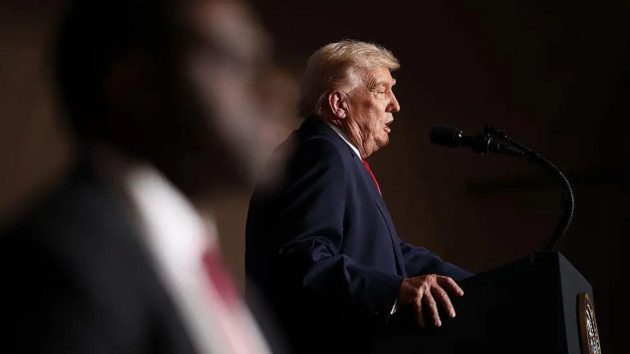
President Donald Trump speaks during a public address. (Kayla Epstein/Getty Images)
Trump administration scales back ICE posture after Minneapolis shooting
The Trump administration has begun pulling back elements of its immigration enforcement operation in Minneapolis following the fatal shooting of Alex Pretti by federal agents, marking a shift after initially offering an unqualified defense of the operation. According to federal disclosures and internal Homeland Security reporting, two officers discharged their weapons during the January 24 encounter, a detail confirmed to Congress as public scrutiny intensified.
Advertisement
Early statements from the Department of Homeland Security described Pretti as approaching agents while armed and resisting commands. Subsequent reporting, eyewitness video, and internal notifications complicated that account, indicating that the confrontation escalated rapidly after agents used pepper spray and attempted to restrain him. DHS has not released full-body-worn camera footage, citing ongoing investigations, but acknowledged that both officers fired their weapons during the encounter.
As pressure mounted from state officials, lawmakers, and the public, the administration quietly adjusted its posture. Senior Border Patrol leadership overseeing Minneapolis operations was reassigned, and federal authorities confirmed that some agents have begun drawing down from the city. President Donald Trump designated former ICE acting director Tom Homan to assume federal coordination duties in Minnesota, replacing the previous command structure that had overseen the enforcement surge.
The shift followed criticism from Minnesota Gov. Tim Walz and Minneapolis officials, who said they were not fully briefed on the scope or tactics of federal operations prior to the shooting. Pretti, a 37-year-old ICU nurse and U.S. citizen, was the second American killed by federal immigration agents in the region in recent weeks, intensifying questions about rules of engagement and oversight.
Advertisement
The administration’s messaging has also softened. Trump, who initially blamed Democratic leadership for “chaos” and publicly defended the agents involved, has avoided repeating those claims in recent statements. DHS officials have emphasized internal reviews and cooperation with investigations rather than asserting that Pretti posed an imminent threat. Bipartisan calls for transparency continue, including from some Republican lawmakers who said the administration moved too quickly to justify lethal force.
Meta CEO Mark Zuckerberg poses with UFC President Dana White at the UFC APEX in Las Vegas, Oct. 1, 2022. (Jeff Bottari / Zuffa LLC)
Meta blocks ICE-related links as scrutiny of enforcement grows
Meta has begun restricting links to a third-party website that compiles information on Immigration and Customs Enforcement and Border Patrol personnel, following a surge of public attention tied to recent federal enforcement actions. The website, known as ICE List, aggregates publicly available data from sources such as LinkedIn and professional directories and gained widespread circulation in the days after the Minneapolis shooting.
Advertisement
Users reported that links to the site were blocked across Facebook, Instagram, and Threads, with platform notices citing violations of policies related to sharing personal information. Meta said the action was taken under existing rules prohibiting the distribution of what it defines as personally identifiable information, even when drawn from public records.
The site’s creator said links had circulated on Meta platforms for months without restriction before the sudden enforcement. Initially, blocked posts were labeled as spam; later notices referenced broader community standards. Meta declined to explain why similar people-search websites remain accessible on its platforms, saying only that enforcement decisions are made on a case-by-case basis.
The timing of the restriction drew attention as criticism of ICE and Border Patrol intensified following multiple fatal encounters involving federal agents. Civil liberties groups and digital rights advocates said the move could reduce the visibility of online efforts to document federal enforcement activity, while Meta maintained that the decision was unrelated to politics or current events.
Advertisement
Meta has faced increasing pressure from both lawmakers and advocacy groups over how its platforms handle politically sensitive content tied to law enforcement and public safety. The company said it continues to review enforcement policies as situations evolve, but gave no indication that the restriction would be reversed.
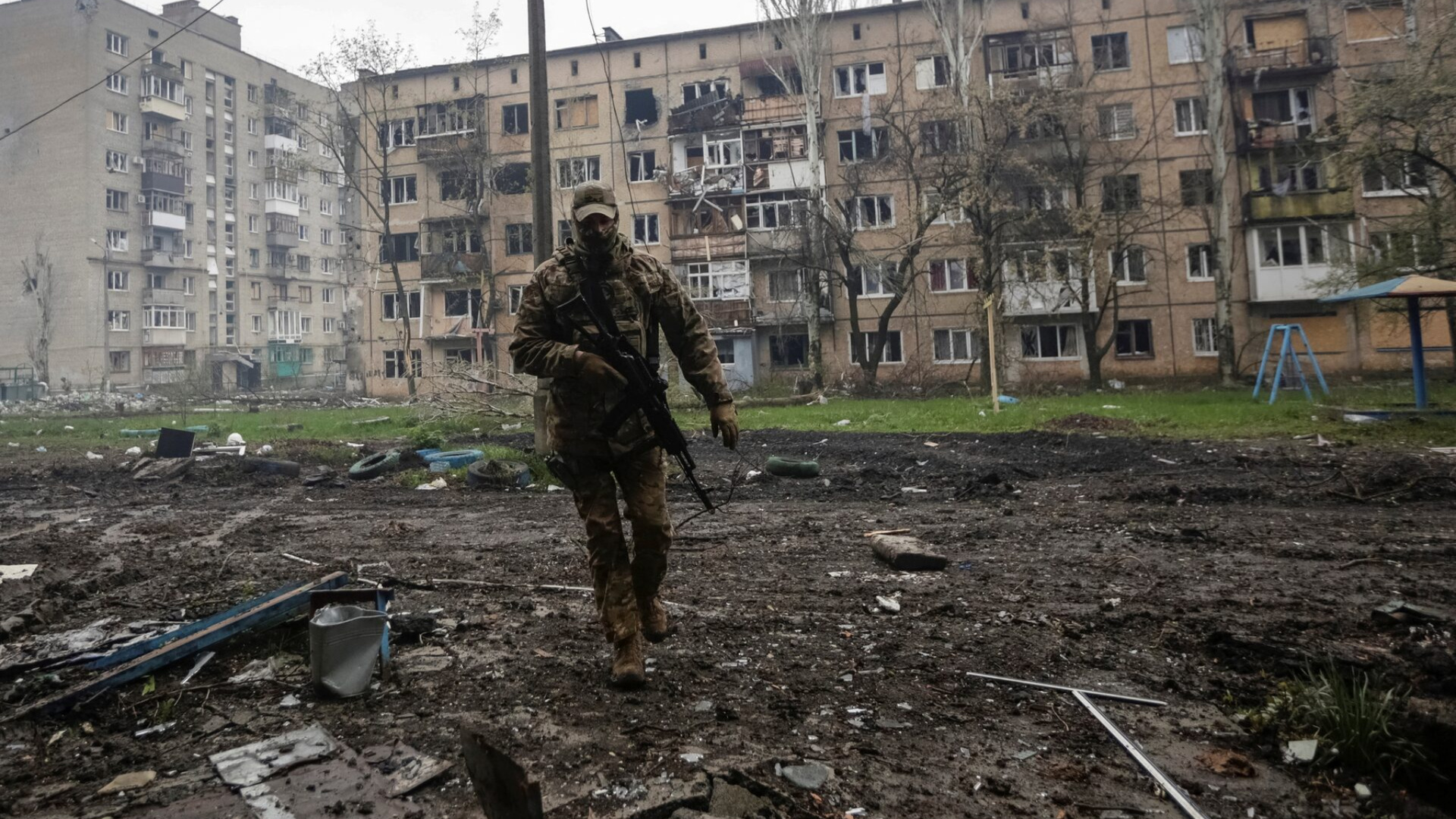
A Ukrainian service member walks near damaged residential buildings in the frontline town of Bakhmut, April 21. (Anna Kudriavtseva/Reuters)
Study estimates nearly two million military casualties in Ukraine war
Nearly two million Russian and Ukrainian troops have been killed or wounded since Russia’s full-scale invasion of Ukraine began in February 2022, according to new estimates cited by Western analysts and security officials. The figures, drawn from a study by the Center for Strategic and International Studies and referenced by European and U.S. officials, place the conflict as the deadliest war in Europe since World War II.
The analysis estimates that Russia has suffered the majority of casualties, with losses driven by repeated large-scale assaults, reliance on massed infantry tactics, and sustained artillery use across multiple fronts. Ukrainian losses, while lower in absolute terms, are also assessed as severe, reflecting prolonged defensive operations and counteroffensive efforts over nearly four years of fighting.
Researchers cautioned that precise casualty figures are difficult to verify, citing limited transparency from Moscow and Kyiv. Russian authorities have released minimal information on losses, and independent reporting inside Russia remains constrained. Ukrainian officials acknowledge heavy casualties but do not provide detailed breakdowns, citing operational security.
Western intelligence agencies have relied on satellite imagery, intercepted communications, hospital data, and battlefield reporting to construct estimates. Analysts said casualty rates remained high through 2024 and into early 2026 despite increased use of drones, precision strikes, and long-range fires by both sides.
The scale of losses has raised concerns about long-term sustainability. Analysts noted that Russia retains advantages in population and recruitment capacity but has suffered repeated degradation of experienced units. Ukraine faces mounting strain on manpower despite continued Western military assistance, prompting renewed debate over mobilization policies and troop rotation.
The findings come as diplomatic efforts to end the war remain stalled and military operations continue along multiple axes. Analysts said the casualty estimates underscore how the conflict has settled into a prolonged war of attrition, with neither side achieving decisive breakthroughs despite the human cost.
Advertisement
What readers are saying
Generating a quick summary of the conversation...
This summary is AI-generated. AI can make mistakes and this summary is not a replacement for reading the comments.











COMMENTS