World

Morning Brief: Ukraine War Fourth Anniversary, West Bank Mosque Arson, and ICE Training Scrutiny

Four years into the Ukraine war, the conflict remains defined by attrition and energy pressure as Russian forces sustain offensives and Kyiv relies on Western support; meanwhile, tensions rise in the West Bank after a mosque arson during Ramadan, and scrutiny grows in Washington as a former ICE official calls the agency’s training program “broken.”

Ukraine War: Four Years On, Attrition Defines the Fight as Energy Revenues Slip and the Front Holds

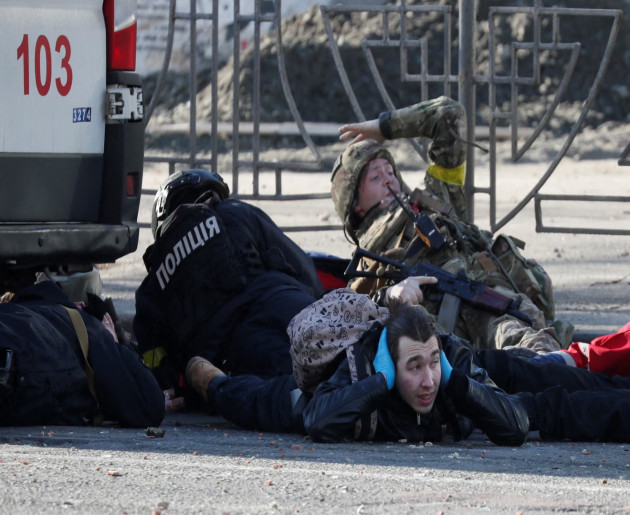
Four years after Russia launched its full-scale invasion, the war in Ukraine has settled into a grinding contest of manpower, ammunition, and industrial endurance. The front lines in the east and south continue to shift in increments measured in meters rather than kilometers. Casualty rates remain high on both sides. Political leaders in Kyiv and Moscow signal resolve. Neither government shows readiness for concessions that would alter the strategic picture.

Advertisement

The anniversary comes amid intensified Russian offensive operations across several sectors. Ukrainian forces report sustained pressure near Avdiivka and along parts of the southern axis. Russian units continue to rely on massed artillery fires, glide bombs, and localized infantry assaults to probe Ukrainian defensive belts. Kyiv, for its part, prioritizes defensive fortifications, counter-battery fires, and limited counterattacks aimed at blunting Russian gains without overextending thin reserves.

Western military aid remains central to Ukraine’s war effort. Ammunition flows have improved compared to shortages seen earlier in the conflict, but Ukrainian commanders continue to calibrate fire discipline. Air defense systems protect major cities and energy infrastructure, yet Russian missile and drone strikes still penetrate at intervals. The war has become a sustained test of logistics and political will rather than maneuver warfare.

Russian Offensive Campaign Intensifies

Russian forces have sustained offensive momentum into early 2026, according to battlefield assessments. Moscow concentrates combat power along key sectors in eastern Ukraine while conducting shaping operations elsewhere along the line. These operations aim to degrade Ukrainian reserves, stretch defensive positions, and force Kyiv to allocate resources across multiple threatened axes.

Advertisement

The pattern reflects an attritional strategy. Russian units accept incremental gains in exchange for continued pressure. Commanders deploy mobilized personnel alongside contract soldiers, maintaining force density even as losses accumulate. The approach relies on sustained artillery advantage and the integration of unmanned aerial systems for reconnaissance and strike missions.

Ukraine counters with layered defenses. Engineers expand trench networks and anti-vehicle obstacles. Drone operators track Russian assault groups and direct precision fires. Ukrainian leadership signals that holding terrain, even at high cost, prevents Russia from achieving operational breakthroughs that could alter negotiations in Moscow’s favor.

Advertisement

The result is a battlefield characterized by localized advances rather than sweeping offensives. Strategic outcomes hinge on endurance: which side can sustain matériel, manpower, and domestic support over time.

Energy Revenues and the Russian War Machine

Four years into the war, Russia’s energy sector shows measurable strain. Western sanctions and price caps have reduced state revenues from oil and gas exports compared to pre-war levels. Energy income, which underwrites a significant share of the federal budget, has declined as European markets diversified supply and global prices fluctuated.

However, Russian oil exports continue to flow. Moscow redirected shipments toward Asia, particularly China and India, often at discounted rates. The Kremlin has used a “shadow fleet” of tankers and alternative payment mechanisms to bypass some restrictions. While revenues have dropped, they have not collapsed.

Oil remains the backbone of Russia’s wartime economy. Even at lower margins, sustained exports provide foreign currency and fiscal space for military spending. Defense expenditures have risen as a share of the national budget. Industrial production has shifted toward munitions, armored vehicles, and drone manufacturing.

The economic picture therefore reflects contraction rather than crisis. Russia absorbs inefficiencies and sanctions-related costs but maintains sufficient revenue to finance continued operations. Long-term sustainability remains uncertain; short-term capacity to wage war persists.

Ukraine’s Strategic Position and Western Commitments

Ukraine enters the fifth year of full-scale war with institutional resilience but limited strategic flexibility. Mobilization continues. Training pipelines expand in coordination with NATO partners. Kyiv seeks additional air defense systems, long-range strike capabilities, and sustained ammunition deliveries.

Political dynamics in Western capitals influence the tempo of support. Budget debates and election cycles in allied states create periodic uncertainty over funding packages. Ukrainian officials emphasize that predictability of assistance matters as much as volume. Defense planning requires steady supply chains rather than episodic surges.

On the battlefield, Ukrainian commanders weigh the balance between defense and selective offensive actions. Large-scale counteroffensives have given way to smaller operations aimed at improving tactical positions. Kyiv frames the war as a long campaign rather than a near-term decisive battle.

Civilian infrastructure remains under threat. Russian strikes on energy facilities seek to degrade economic capacity and morale. Ukraine has adapted by dispersing assets, repairing grids rapidly, and expanding domestic drone production. The war has accelerated institutional changes within Ukraine’s defense sector and civil society.

The Strategic Outlook

The fourth anniversary underscores a central reality: the war has evolved into a protracted conflict of attrition with global economic implications. Russia has not achieved its initial objectives of rapidly subduing Ukraine. Ukraine has not forced a strategic reversal that compels Moscow to withdraw from occupied territories.

Energy markets continue to adjust to disrupted supply patterns. European states have reduced direct reliance on Russian gas, while global oil flows reconfigure along new trade routes. The conflict shapes defense budgets, alliance planning, and military procurement decisions across Europe and North America.

Negotiated settlement remains distant. Public statements from both Moscow and Kyiv emphasize incompatible territorial positions. Diplomatic channels remain limited and largely indirect. Military operations, therefore, continue to define leverage.

Four years after the invasion, the war in Ukraine stands as a sustained test of state capacity. Russia demonstrates an ability to absorb economic shocks and maintain offensive pressure. Ukraine demonstrates institutional cohesion and battlefield adaptation under prolonged stress. The trajectory of the fifth year will depend less on singular offensives and more on cumulative endurance.

West Bank Mosque Set Ablaze During Ramadan

Israeli settlers set fire to and defaced a mosque in the occupied West Bank during the early days of Ramadan, according to Palestinian officials and local witnesses. The attack damaged parts of the structure and left graffiti on exterior walls. No fatalities were reported, but the incident heightened tensions in an already volatile security environment.

The mosque, located in a Palestinian village in the central West Bank, sustained fire damage to its entrance and interior furnishings. Residents reported that attackers arrived overnight, ignited flammable materials, and fled before emergency responders arrived. Israeli security forces later entered the area and opened an investigation.

Incident During Ramadan

The attack occurred during Ramadan, a period marked by increased religious gatherings and heightened sensitivities across the region. Worshippers had reportedly gathered at the mosque hours before the incident. Palestinian officials described the timing as deliberate and provocative.

Religious sites carry symbolic weight in the Israeli-Palestinian conflict. Incidents involving mosques or synagogues have historically triggered broader unrest, particularly when they occur during major holidays.

Official Responses and Investigation

Palestinian authorities condemned the incident and called for international intervention to deter further settler violence. Community leaders urged protection for religious sites and accountability for those responsible.

Israeli officials stated that law enforcement agencies were reviewing evidence and seeking suspects. The Israeli government has previously denounced vandalism targeting religious property, while also asserting that violence in the West Bank involves actors on both sides.

Human rights organizations have criticized what they describe as inconsistent enforcement against extremist settler groups. Israeli authorities reject allegations of systemic inaction and maintain that investigations proceed according to legal standards.

Broader Security Context

The incident comes amid increased Israeli military operations in parts of the West Bank targeting Palestinian armed groups. Settler-Palestinian confrontations have risen over the past year, particularly in areas near outposts and contested land.

Security analysts assess that localized attacks can produce outsized effects. Armed factions have previously cited incidents at religious sites as justification for retaliatory violence. Israeli security planners therefore monitor developments closely during Ramadan, when tensions often run higher.

Diplomatic channels between Israeli and Palestinian officials remain limited. Regional actors, including Jordan, have warned that actions involving Islamic holy sites risk inflaming tensions beyond the immediate locality.

As authorities continue their investigation, the episode underscores the fragile security environment in the West Bank. Enforcement decisions, political messaging, and restraint at the local level will shape whether the incident remains contained or contributes to broader escalation.

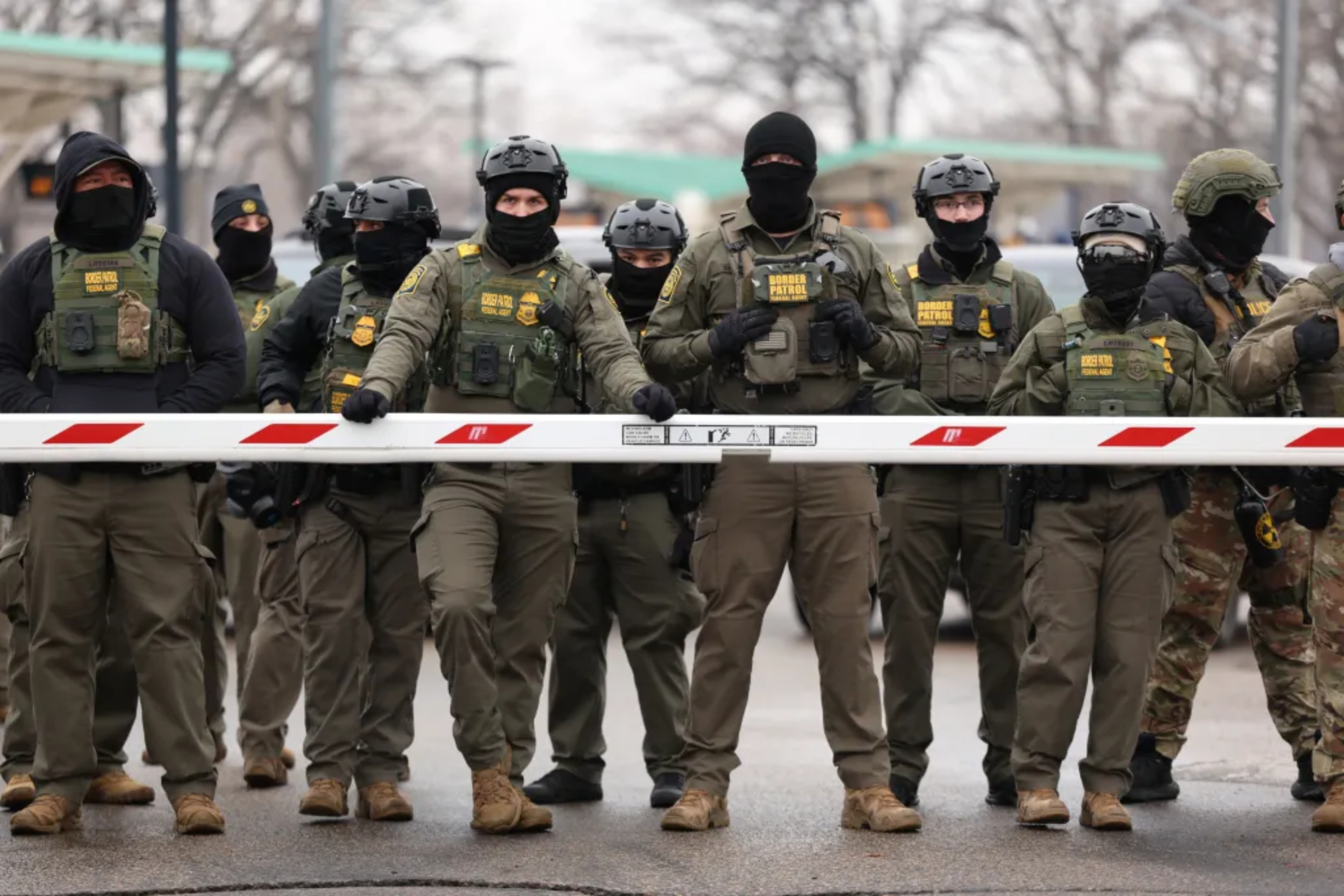
U.S. Border Patrol agents wearing tactical gear and face coverings stand behind a security barrier outside the Bishop Henry Whipple Federal Building in Minneapolis on Jan. 8, 2026.
Border Patrol agents stand guard at the Bishop Henry Whipple Federal Building in Minneapolis on Jan. 8, 2026. Photo: Charly Triballeau/AFP via Getty Images

ICE Training Under Scrutiny: Former Agency Lawyer Calls Program ‘Broken’

A former lawyer for U.S. Immigration and Customs Enforcement (ICE) testified before Congress this week that the agency’s training program for new deportation officers is seriously flawed, describing it as “deficient, defective and broken.” The testimony comes amid broader national concern over ICE practices as the federal government rapidly expands its enforcement workforce.

Ryan Schwank, who served both as a legal advisor and an instructor at the ICE training academy, resigned from the agency in February 2026 and addressed a Democratic forum hosted by Sen. Richard Blumenthal of Connecticut and Rep. Robert Garcia of California. Schwank said the current curriculum has been dramatically truncated, with critical training components removed or diluted.

Whistleblower Alleges Cuts to Core Curriculum

According to testimony and whistleblower materials released during the forum, the ICE training program underwent significant reductions. Schwank and supporting documents indicate that multiple courses and exams were eliminated, including those focused on constitutional protections, use-of-force standards, and other fundamental aspects of lawful enforcement. Witnesses told lawmakers that the length of training was shortened and that new recruits are graduating despite serious gaps in knowledge of tactics and legal requirements.

Schwank claimed the agency has created a training environment that leaves officers unprepared for the complexities and constitutional constraints of real-world enforcement. He recounted instances during training where recruits mishandled firearms, used excessive force in simulations, or failed to demonstrate mastery of essential policing skills, yet still graduated from the program.

DHS Pushes Back on Allegations

The Department of Homeland Security (DHS), which oversees ICE, has denied that training standards have been reduced. In response to inquiries, DHS officials said recruits still receive comprehensive instruction on firearms safety, use-of-force policies, constitutional rights, and safe arrest procedures. They characterized changes to the curriculum as efforts to streamline training without cutting substantive content.

The department stated that ICE recruits complete both academy instruction and additional on-the-job training, underscoring that curriculum adjustments reflect updated instructional methods rather than a reduction in quality. Critics, however, argue that the pace of recruitment and shortened training increases the risk of poorly prepared officers entering the field.

Broader Context: Expansion and Controversy

The scrutiny of ICE’s training program occurs against a backdrop of exponential growth in the agency’s enforcement ranks under the current administration. The rapid hiring surge has drawn attention from oversight bodies and civil liberties advocates, who warn that expanded powers without robust training and accountability mechanisms can lead to constitutional abuses.

Recent incidents involving ICE officers have heightened these concerns. Federal immigration enforcement has faced allegations ranging from excessive force during arrests to confrontations with observers and members of the public. Independent reviews have also documented cases of criminal conduct by some employees, further complicating public discourse about training adequacy and agency oversight.

Congressional Response and Calls for Reform

Democratic lawmakers have used Schwank’s testimony to call for increased oversight and reforms within ICE. They argue that recruiting thousands of new officers without ensuring a solid foundation in constitutional law and enforcement standards undermines both public safety and civil liberties. Some members of Congress are advocating for conditions on funding that would tie assistance to demonstrable improvements in training and accountability.

As the debate unfolds, ICE’s training methods and enforcement philosophy are likely to remain central issues in discussions about U.S. immigration policy, law enforcement integrity, and the balance between enforcement capacity and civil rights protections.

Advertisement

What readers are saying

Generating a quick summary of the conversation...

This summary is AI-generated. AI can make mistakes and this summary is not a replacement for reading the comments.