


Governor Newsom’s Response: A Clash of Authorities
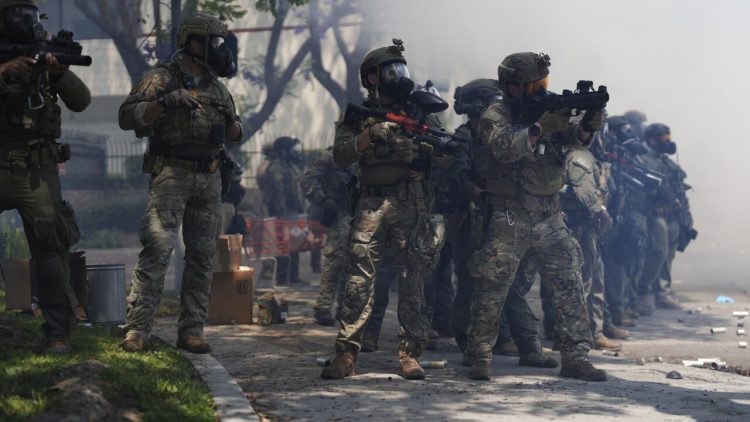
Governor Gavin Newsom isn’t mincing words. He’s flat-out furious about President Trump’s decision to federalize the California National Guard and deploy 2,000 troops to Los Angeles County. According to Newsom, this isn’t about law enforcement or public safety — it’s about theater.
“The federal government is taking over the California National Guard and deploying 2,000 soldiers in Los Angeles — not because there is a shortage of law enforcement, but because they want a spectacle,” he said, firing off statements both through official channels and social media.
Newsom’s view is that this entire move is “purposefully inflammatory,” meant to provoke rather than protect. He’s warning it will only pour gasoline on an already smoldering fire. Rather than restoring order, he says it’s more likely to escalate tensions and damage the public’s trust in leadership. He’s calling on Californians — especially those protesting immigration crackdowns — to stay cool-headed. “Do not provide them with one,” he warned. “Avoid violence. Advocate for change peacefully.”
Alongside other state leaders, Newsom made it clear: California didn’t ask for this. They didn’t need it. Local cops and sheriffs were already on the ground with enough muscle to keep things from boiling over. By sending in the Guard without state consent, Newsom argues the federal government is undercutting California’s authority and turning a tense moment into a dangerous power struggle. In his eyes, this isn’t about maintaining peace — it’s about flexing for the cameras.
Gavin Newsom incited violence against ICE.
He encouraged illegals to riot.
Now he’s backtracking.
It’s too late.
LOCK NEWSOM UP.
Deport ALL the illegals.
Make California American Again!pic.twitter.com/0VDPSsCfS9
— Paul A. Szypula 🇺🇸 (@Bubblebathgirl) June 8, 2025
Historical Context: Echoes of the Past
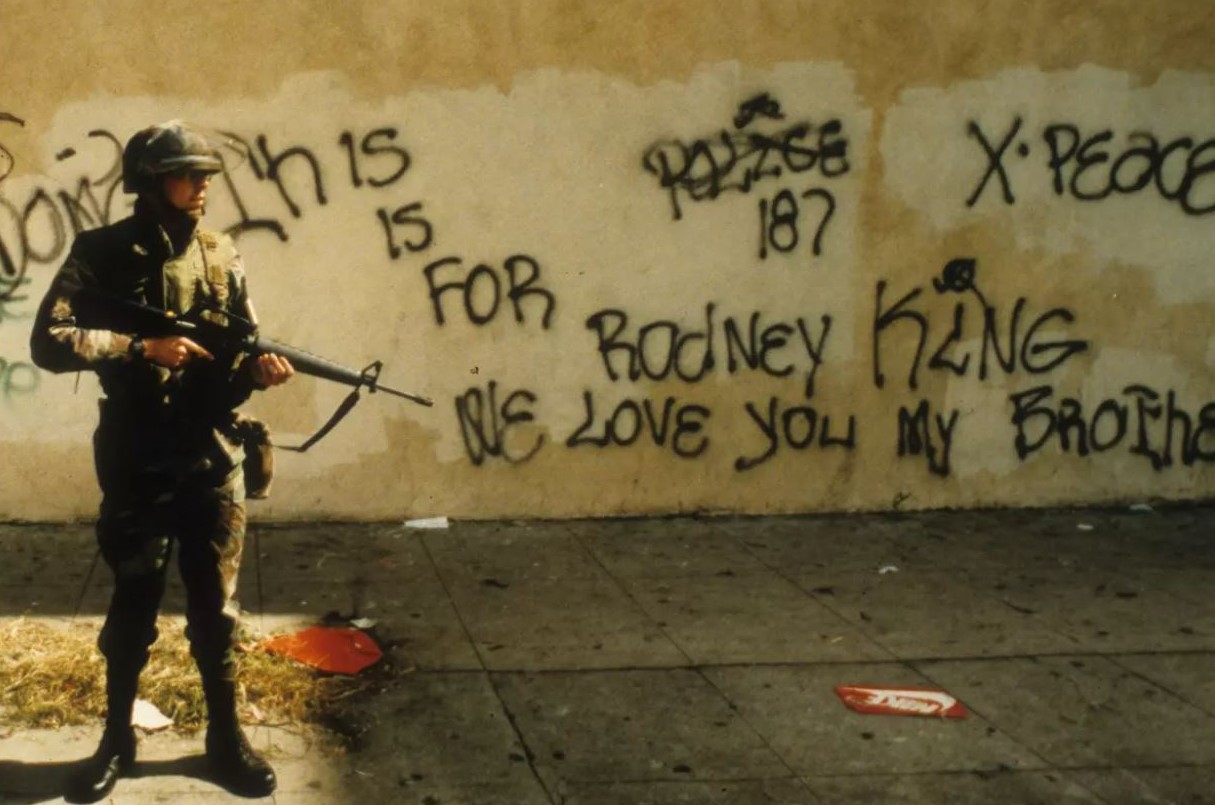
Sending the National Guard into Los Angeles isn’t a new trick—it’s happened more than a few times when things have gone sideways. One of the most infamous cases was back in 1992 during the Rodney King riots. After four LAPD officers were acquitted in King’s brutal beating, the city exploded in chaos.
Governor Pete Wilson asked the feds for help, and President George H.W. Bush answered by federalizing the California National Guard and even sending in U.S. Marines from Camp Pendleton. It took days to get things under control, and by then the damage was staggering: over 60 people dead, thousands injured, and property losses north of $1 billion. The Guard and Marines finally managed to restore order, but the help came after Los Angeles had already been set on fire—literally and figuratively.
Fast-forward to 2020, when George Floyd’s murder ignited massive protests across the country. Los Angeles was right in the middle of it again. But this time, Governor Gavin Newsom kept things in-state. He activated about 5,500 California National Guard troops, working hand-in-hand with local law enforcement. Their mission was more focused—hold the line, enforce curfews, and protect property. No federal takeover. The Guard’s presence was temporary, and within days, things calmed down. That deployment was an example of coordination done right—state-led, purpose-driven, and short-term.
Looking even further back, the Guard’s been called up for all sorts of domestic chaos: labor strikes, riots, and natural disasters going back to the 19th century. The common thread? They were always the backup plan—a last resort when local authorities couldn’t keep a lid on things.
What makes this 2025 deployment different—and controversial—is who’s giving the orders. In 1992, the Guard was federalized at the governor’s request. Now, Trump’s sending them in over the governor’s objections, which is rare and legally murky. That shift in power dynamics changes the game. In the past, success depended on coordination and timing. When things clicked, the Guard helped stabilize the situation. When they didn’t—like in ’92—the cavalry arrived after the worst had already happened.
Bottom line: whenever the Guard shows up in Los Angeles, it usually means the situation’s gone from bad to worse. They help restore order, sure, but it often comes after blood’s been spilled and buildings are burning. The stakes in 2025 are no different—only this time, the political battle over who’s in charge might be just as explosive as the unrest in the streets.
The Broader Implications: A Nation on Edge
What we’re witnessing in Los Angeles isn’t just another flashpoint—it’s a full-blown stress test for American democracy. When a sitting president seizes control of a state’s National Guard and drops 2,000 troops into one of the country’s largest urban centers over the objections of that state’s elected leadership, we are no longer simply talking about protest control. We’re talking about the raw exercise of federal power—executive muscle being flexed to keep the peace.
This is equal parts law enforcement and performance art with bayonets.
And the stakes? They couldn’t be higher. If this becomes the new norm—where the president can override governors on a whim, federalize the Guard like pawns on a board, and send armed soldiers into American neighborhoods under the thinnest veil of legality—then what stops the next guy from doing the same? Or worse?
So here we are—watching the slow-motion collision of crisis and control, protest and provocation, law and the long shadow of authoritarian instinct. The streets of Los Angeles are the proving ground once again, and every American should be paying attention.
This is more than a military deployment. It’s a canary in a coal mine, and that canary is democracy.








COMMENTS