

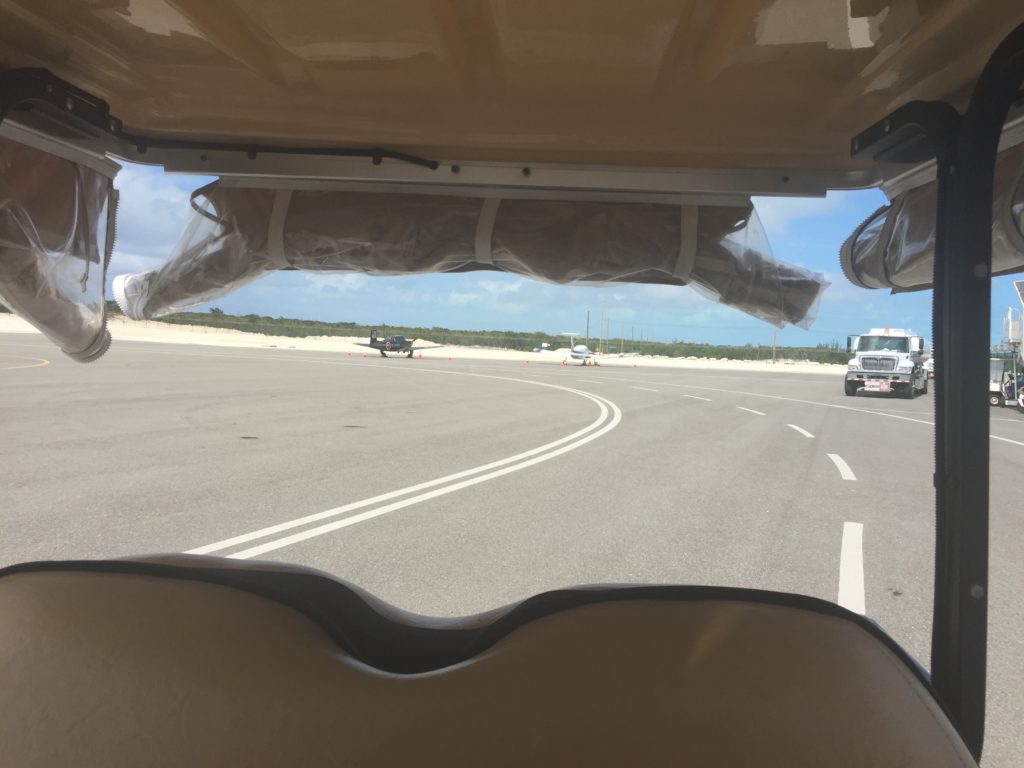
I called ahead to Puerto Plata tower in the DR, and they said it was scattered at 3,500 feet and calm winds, making the fact that we couldn’t get out of Provo feel even worse. John and I decided to grab a quick bite and see what developed.
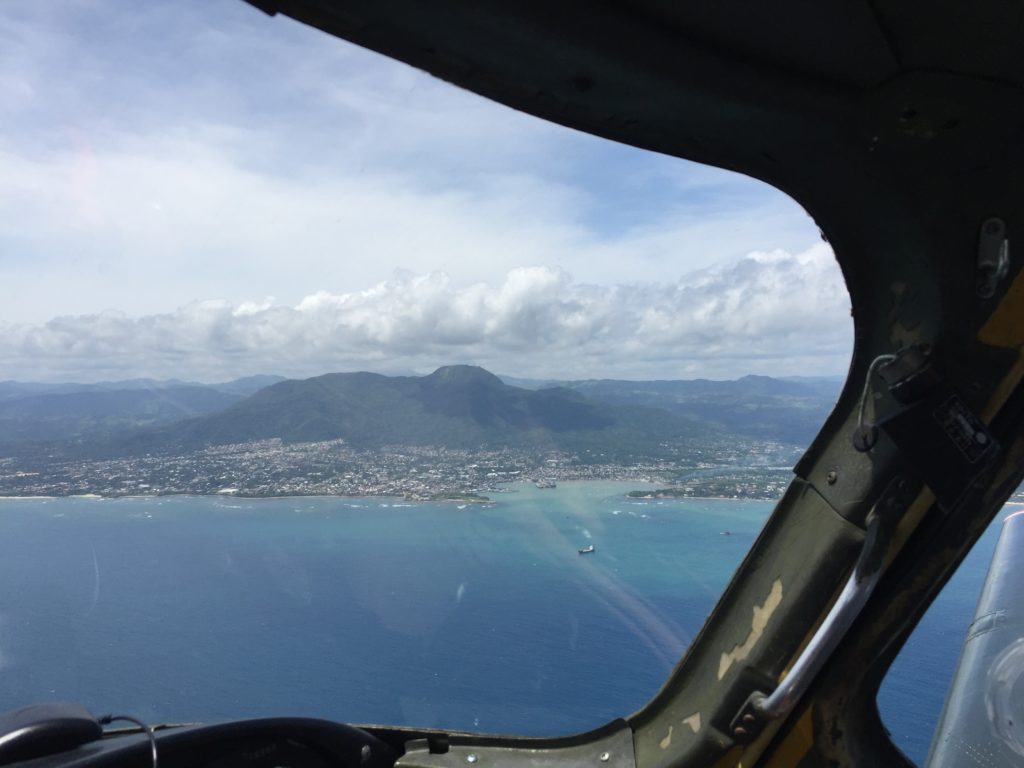
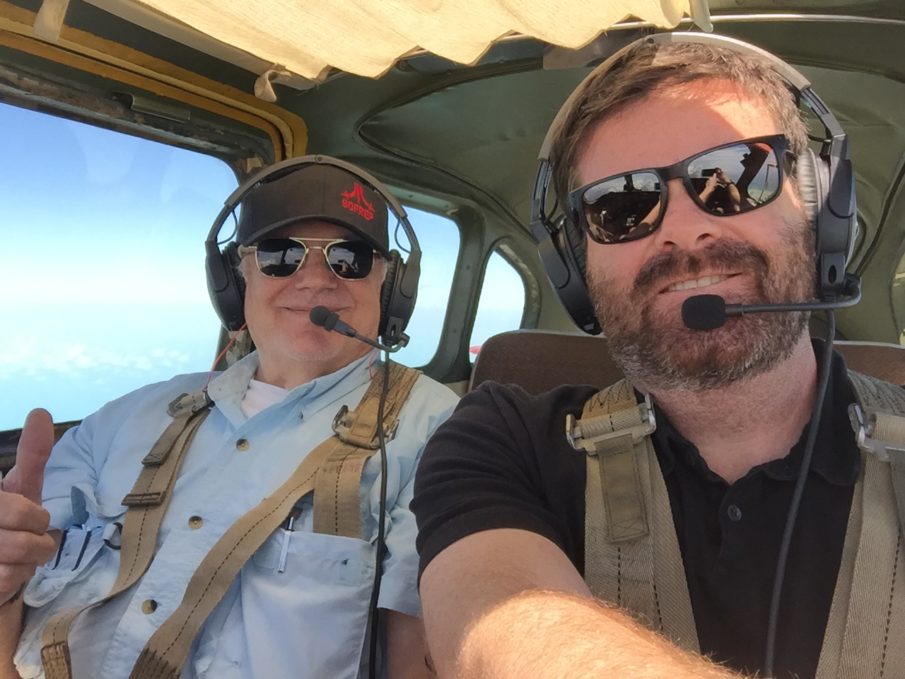
After breakfast at the main international terminal, the sky cleared up to the south and we finally had our window. I filed our flight plan into DR, and faxed it over to the tower with help from the FBO (fixed-base operator). We still weren’t sure of the comms “gremlin” situation (I had checked the connector jacks and found nothing wrong), and we decided John would handle the takeoff and I would handle all the comms.
John offered to let me fly and handle the radio, but I thought it would be better to use a little crew resource management. He smiled at me with pride, in a way only a teacher can understand. He knew it was the smart decision.
This was our longest stretch over water—over a hundred nautical miles—but we had great comms with Miami center, and having a good radio is a damn good feeling when your ass is hanging out like that in a single-engine plane over ocean. Between my Garmin 696 and GTR200, I was ready to buy some Garmin stock after this trip.
We had a quartering 10-knot tailwind and made Puerto Plata in a short time. I asked John if he wanted the landing since I’d hogged them all up to this point. For the record, this was a new plane and I wanted to familiarize myself!
The runway was over 10,000 feet long, but we had some vicious downdrafts close to the numbers. Afterwards, we both agreed that landing a bit long with more altitude would have been better than a by-the-numbers approach skimming the tree tops. If you have a lot of runway, use it. Altitude is your friend in this case, especially when you’re dealing with strong winds and an unfamiliar field.
Checking into the DR was a piece of cake. In fact, flying an old war bird made for good conversation every stop we made; it was a real icebreaker and one of the reasons I love owning an interesting plane.
They checked us in, gassed us up, and filed our flight plan for us. After we made a quick bathroom stop, they stamped our papers and off we went. It was very hassle free.
Before we departed, I asked what the tie-down fees were, and the ramp official said $10 U.S. a night. Not bad considering it’s an international airport. I asked because I plan on coming back for a visit; it’s only just over an hour from San Juan, and I’ve heard the island has a lot to offer.
During our taxi out, I did some quick math and figured we had over 6,000 feet available. I requested an intersection departure to save time, and more importantly, fuel. Tower cleared us to depart from Echo 3, and at 4,500 RPM, we were off at 60 knots under the wings.
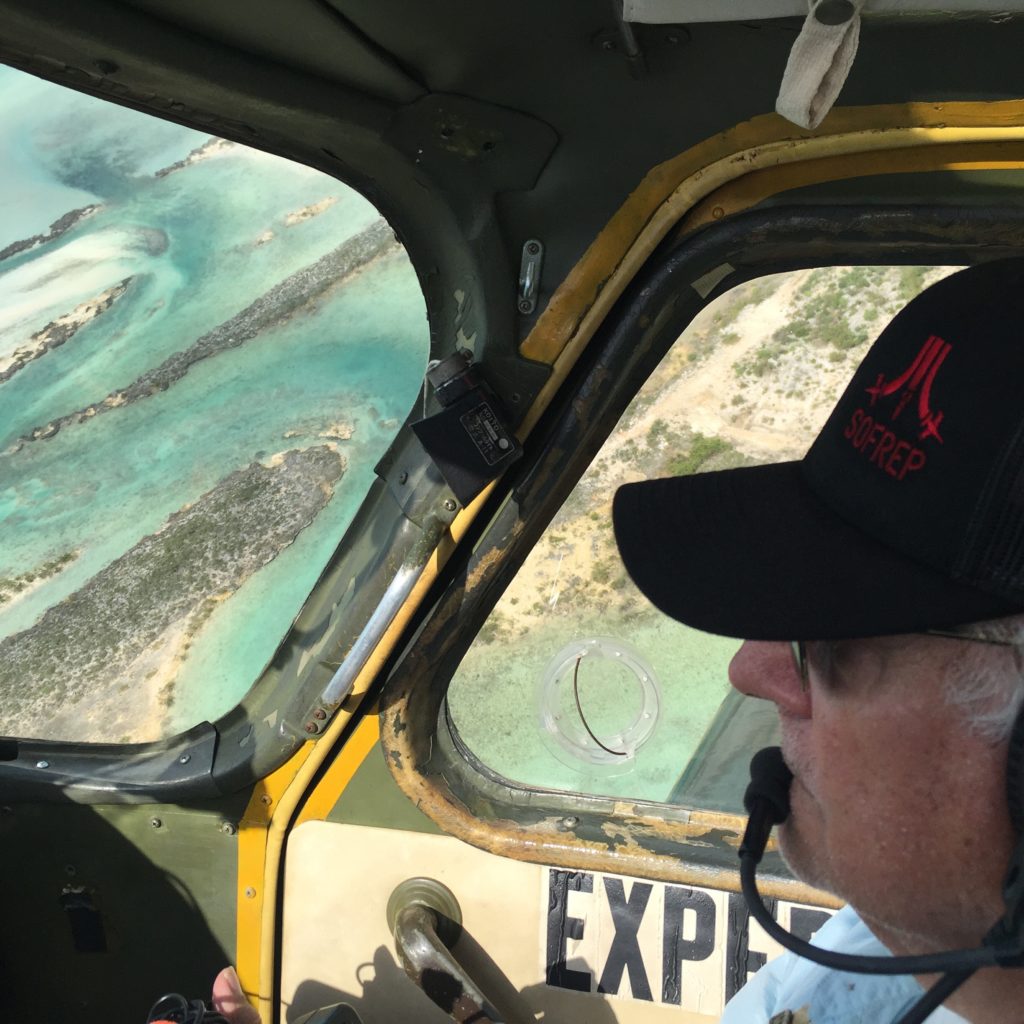
I did some low-level flying along the coast under the clouds, and then climbed up to 7,500 feet, our planned cruising altitude. The Fuji climbs at a thousand feet per minute even at cruise power settings. It’s an amazing machine, and it continued to impress me the entire trip.
The flight to San Juan was beautiful, and within an hour we were outside of Dominican airspace and talking to San Juan center. The final leg took two hours, and it was a beautiful bay approach over the harbor abeam Old San Juan, and into Isla Grande airport, the Fuji’s new home in Puerto Rico.
The guys at U.S. customs were extremely cooperative, and once again we had plenty of questions related to the old Japanese plane.
My big mistake of the trip was not filing my EAPIS (Electronic Advance Passenger Information System) all the way through to San Juan from Florida. I had sketchy Internet access, no cell service, and shouldn’t have gambled that I’d be able to complete it along the way. This was a huge lesson learned for me.
U.S. customs was understanding, but I could have done a lot better job setting myself up for success.
We left on a Friday afternoon and flew over 1,200 miles through the Bermuda Triangle and out to San Juan, Puerto Rico. It was an amazing flight. The experience is one I’ll treasure for the rest of my life, and I’m sure John will as well.
I have no doubt that the spirit of general aviation and the camaraderie among fellow pilots is still alive and well in America. This is especially heartening to me in the age of drones and unmanned flight. Only a human pilot understands this type of experience.
To read part one, “A Navy SEAL takes flight…” click here.
Brandon Webb is a former U.S. Navy SEAL (after a brief stint as a Helo SAR crewman), and the founder and CEO of Force12 Media. He is a thousand-hour instrument-rated pilot and flies an RV6A, a Yak 50, and now a Fuji LM-2.








COMMENTS