Nigeria is running out of runway, and every day Washington hesitates is another day armed groups tighten their grip on a country too strategically important to watch slide into chaos.
Read the full article for more on:
Important insights and detailed analysis
Expert commentary on current events
Breaking developments and updates
Updating summary...
Nigeria’s Breaking Point and the Quiet Calls for American Help
Galen Fries
Speed
1x
Listen
COMMENTS
Nigeria is running out of runway, and every day Washington hesitates is another day armed groups tighten their grip on a country too strategically important to watch slide into chaos.
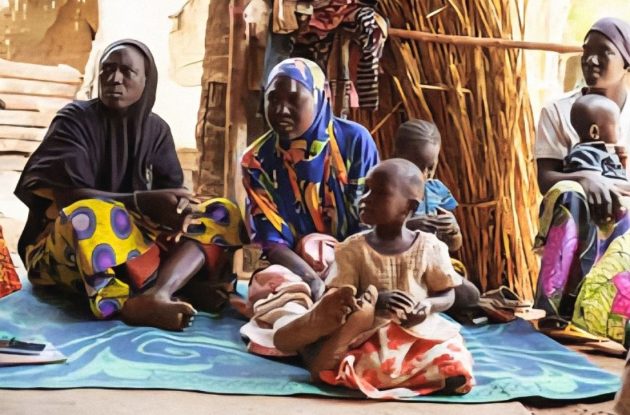
Women and children in a shelter who fled violence. Image Credit: UNHCR/Insa Wawa Diatta
Nigeria is walking into a security collapse that has been building for more than a decade. What used to be a handful of isolated conflicts has fused into a nationwide crisis. Terror groups, criminal gangs, and splinter factions are overrunning rural districts.
Advertisement
Kidnapping crews are operating like businesses with payroll and logistics officers. Farmers are abandoning land, not because they want to, but because planting in some regions now means taking your life in your hands.
Humanitarian groups estimate more than three million Nigerians are displaced across the north. Another thirty million are in some stage of food insecurity. No one can argue the country is stable. People are being pushed off their farms, schools are being raided, and military units are absorbing steady losses.
The violence is not theoretical. It is daily life.
Advertisement
President Trump meeting with Nigerian delegates. Image Credit: Reuters
This week Abuja sent one of the most significant security delegations in years to Washington. National Security Adviser Nuhu Ribadu. The Chief of Defence Staff. The Inspector General of Police. Senior intelligence chiefs. Their meetings with the White House and Congress carried a clear message. Nigeria needs help containing networks that are outpacing the state.
The Nigerians emphasized something they have been repeating for years. This is not simply a religious war. Christians and Muslims are both targets. Churches are burned in one district, mosques in another. Many of these attacks are tied to territory, smuggling corridors, and ransom income, not doctrine. In short, this is about control of land and the money that comes with it. It is about the collapse of order and the criminal opportunity that follows.
Advertisement
“We welcome U.S. assistance as long as it recognizes our territorial integrity,” the advisor told Reuters.
What the delegation asked for was not foreign troops. Nigerian officials have been firm on that point. What they want is targeted American support. Intelligence sharing. Technology to track fighters moving through dense forests. Surveillance that can help identify camps, arms flows, and movement patterns. Assistance in shutting down illicit mining operations that are funneling money into criminal groups. Support for the financial investigations that can cripple kidnap-for-ransom syndicates.
They are asking for partnership with teeth. Enough to tip the balance. Enough to keep the country from sliding into a long conflict that will be twice as hard to contain five years from now.
Meanwhile, trust between Nigerians on the ground and Abuja is thin. President Bola Tinubu has made sovereignty and self-reliance central themes of his security policy. Many citizens believe the government is moving too slowly. In parts of the north, calls for outside help are growing louder, driven by people who have lost farms, family members, and entire villages to armed groups. At the same time, other Nigerians remain wary of foreign involvement. No one wants another Libya or another foreign-led intervention with unclear goals. The country is divided, but the frustration is real.
Advertisement
The kidnapping industry alone shows how far things have fallen. Private security groups estimate that ransom flows total billions of naira every year. Some gangs are moving hundreds of people at a time. The recent abductions in Kebbi State fit the pattern. Gunmen storming a school, overwhelming small security teams, and disappearing with children into forested terrain where the state has almost no reach.
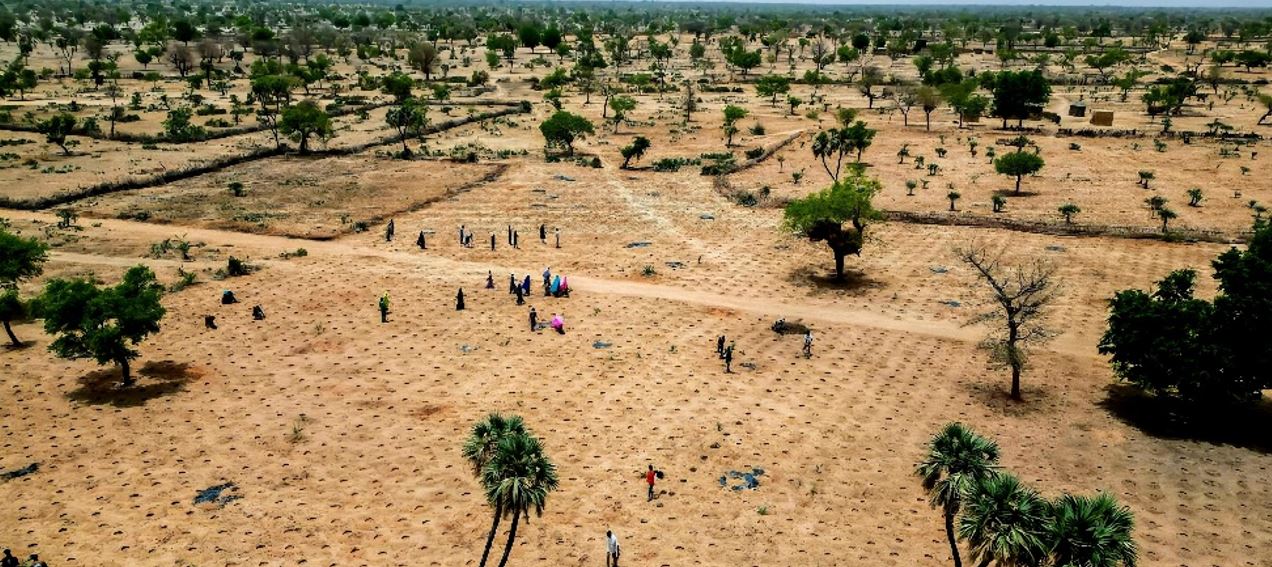
Communities are facing severe food insecurity. Pictured here, farmers in Niger attempt to reclaim land. Image Credit: WFP/Adamou Sani Dan Salaou
To many Americans, this is a distant story. To Nigerians, it is the dividing line between a country that can still pull out of a dive and one that enters a long decline. A strategic partner of the United States with 235 million people cannot afford to fall apart while everyone debates terminology or diplomatic phrasing. The Sahel region is already unraveling. Fighters move freely across borders out of Mali, Niger, and Chad. Every unchecked group in the region eventually looks south at Nigeria because that’s where the money is.
The question now is how long the United States waits before treating this situation like the security threat it has become. No one is asking for an occupation. Nigerians want a partner that can help them hit targets they cannot reach alone. They want leadership that matches the scale of the problem. Every delay has a cost. The kidnappers do not pause. The terror cells do not hold still. Families do not get their daughters back.
At some point, Washington has to decide whether to answer the call.
Advertisement
What readers are saying
Generating a quick summary of the conversation...
This summary is AI-generated. AI can make mistakes and this summary is not a replacement for reading the comments.











COMMENTS