


Under the TACAMO mission, the E-6B Mercury plays a crucial role in connecting high-ranking officials with naval ballistic missile forces during times of crisis—a capability essential for maintaining open lines of communication in scenarios where swift decision-making is paramount to national security.
Additionally, the E-6B Mercury is involved in the Airborne Command Post mission, which facilitates the launch of US land-based intercontinental ballistic missiles using an airborne launch control system. This capability ensures that the nation’s nuclear triad remains functional and responsive, even in the face of potential threats.
Northrop Grumman’s Role in Enhancing the E-6B Mercury
Northrop Grumman, a technology company focused on global security, has been at the forefront of enhancing the E-6B Mercury aircraft to meet the evolving needs of the US Navy and the nation’s defense strategy.
Under the IMMC, the aerospace and defense tech company has undertaken vital modifications to the E-6B aircraft to improve its command, control, and communications functions.
The IMMC contract, valued at $111 million, encompasses six major modifications collectively called “Block II.” These upgrades are designed to ensure that the E-6B Mercury can continue executing its mission for years to come.
The enhancements strengthen the connection between the National Command Authority and US strategic and non-strategic forces, reinforcing the aircraft’s role in national security.
The US Navy received the first upgrades back in June.
Historical Achievements and Process Improvements
One of the most noteworthy achievements in this endeavor is Northrop Grumman’s ability to deliver the upgraded E-6B Mercury aircraft ahead of schedule.
The recent accomplishment of delivering the second upgraded aircraft 19 weeks earlier than anticipated highlights the company’s commitment to meeting the Navy’s requirements with efficiency and precision.
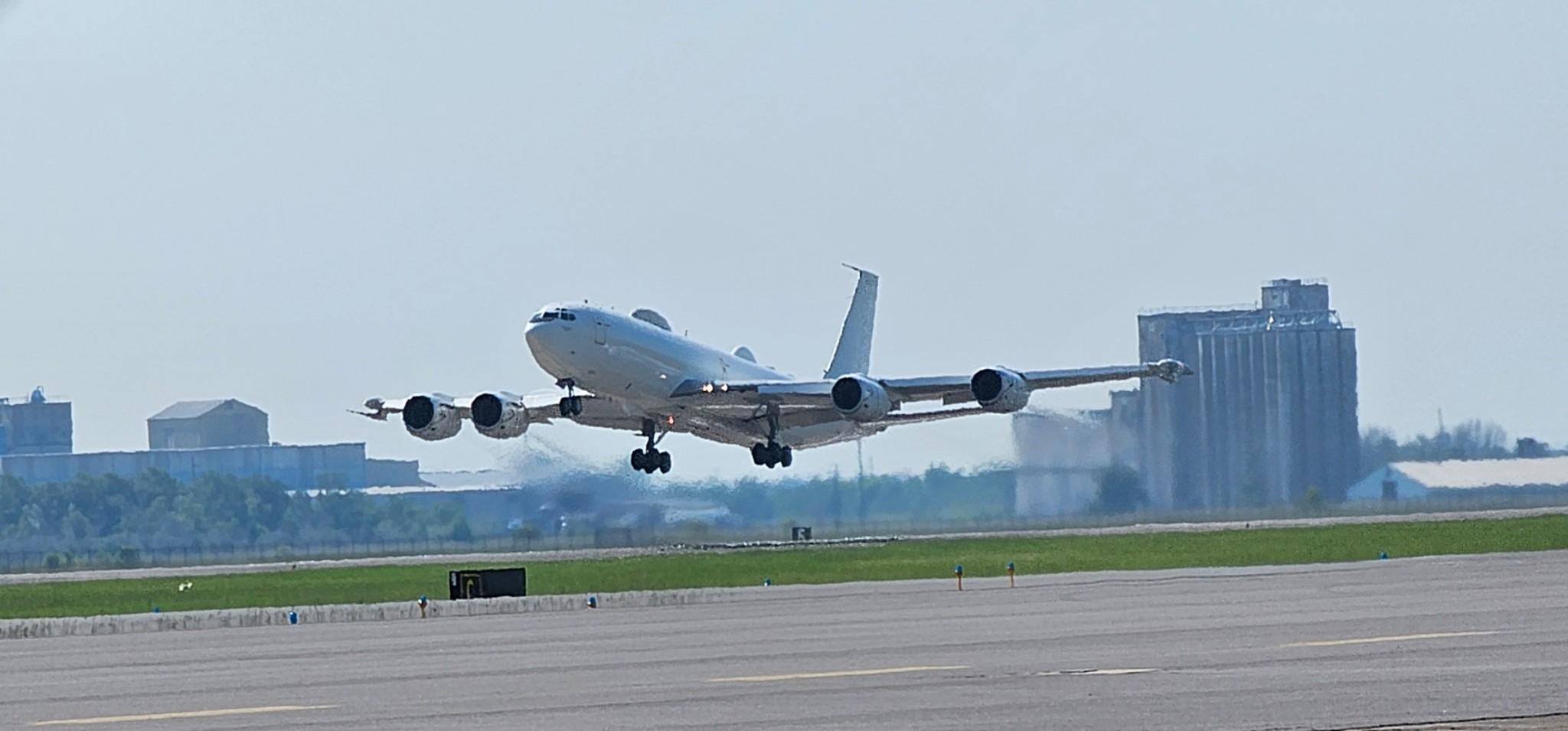
The upgrades were conducted at Northrop Grumman’s Aircraft Maintenance and Fabrication Center in Lake Charles, which serves as the hub for implementing the Block II modifications.
The successful completion of these upgrades is a testament to the collaborative efforts of Northrop Grumman, the US Navy, and other involved stakeholders.
Crucially, Northrop Grumman has worked diligently to bring the contract’s required turnaround time to six months by implementing process improvements that span various areas, including engineering, scheduling, management, and production. This represents a significant milestone as the first instance of a single company overseeing the entire installation process.
This streamlined approach reduces bureaucracy and accelerates upgrades, ensuring the readiness of the E-6B Mercury to meet the nation’s defense requirements.
PMA-271’s Role in Ensuring National Security
The successful execution of the IMMC upgrades and the delivery of the enhanced E-6B Mercury aircraft would not have been possible without the crucial role played by the Airborne Strategic Command, Control, and Communications Program Office (PMA-271).
PMA-271, functioning as an acquisition command, is responsible for providing and sustaining robust and enduring airborne command, control, and communications capabilities to serve the President, Secretary of Defense, and US Strategic Command.
PMA-271’s vision is clear: to provide national security and deterrence through assured airborne strategic communications.
The office has worked tirelessly to implement improvements that deliver the Block II capability with the utmost urgency.
This dedication ensures that the E-6B Mercury continues to be a cornerstone of the nation’s defense and security apparatus.
~
The recent E-6B Mercury aircraft upgrades showcase the dedication of Northrop Grumman and the US Navy to maintaining crucial defense assets.
The E-6B’s pivotal role in the nation’s nuclear deterrence strategy is paramount, serving as a vital link between high-ranking officials and the nuclear triad.
These successful upgrades and ongoing dedication fortify the nation’s readiness to address evolving security challenges, ensuring a robust and reliable US nuclear deterrence.
—
Check out:










COMMENTS