

If you’re a musician, you develop a style rooted in what you love. You refine it. You get better at executing it. But “better” often means “more consistent,” and consistency is the enemy of experimentation.
Your experimental phase, the weird, raw, boundary-pushing work, usually happens before you fully know what you’re doing. Before training hits a certain level and taste solidifies. Before you’ve built a lane.
Once you’re established, you’re drawing from the familiar. You might intentionally push the edges, but you’re still inside a box shaped by decades of preference. It’s bias you can’t fully escape.
Ryan Tedder is one of the most successful songwriter-producers alive. Lead singer of OneRepublic, he’s also the guy behind massive hits for Adele, Beyoncé, Taylor Swift, and Ed Sheeran. And in his 40s, he’s still working with brand-new artists, still charting songs, still operating at the bleeding edge of pop music.
And when he goes home? He listens to Muddy Waters.
Hypocrisy? No. That’s the whole point.
Tedder figured out the mechanics of what works for new audiences. He can build hits like an engineer builds bridges, because he understands the formula. But his personal taste? Anchored in the past. The music that moves him is the music that shaped him decades ago. And the new music he writes for his band fits within their ever-narrowing lane, still great, mind you, but shaped by his inspirational bias.
He can mechanically create for the new world. He just doesn’t live there.
—
So Beato’s right… kind of. Artistic creativity, the raw, lightning-bolt stuff, tends to peak early. The youth thrive without maps or speed limits. The twenty-year-old isn’t drawing from decades of preference because they don’t have decades yet.
BUT… here’s where the theory falls apart: Not all creativity is artistic.
Strategic creativity (just my own term, not an oxymoron) is the ability to solve problems under pressure, navigate chaos, or find the third option when the first two are blocked. And it doesn’t decline with age; it improves.
Because experience isn’t a cage. It’s a catalog of failures.
Every year you spend in a high-stakes profession, you’re collecting data. You learn what doesn’t work. You recognize the young guy’s “innovation” as the same mistake you made a decade ago. The rookie thinks he’s being creative. The veteran knows that “creativity” got someone killed in ’08.
That library of dead ends is a gift. It lets you discard bad options faster, freeing you to focus your creative energy on new solutions that are more likely to work.
—
An example from my own playbook:
Early in my career, I was running warrants on a shoestring budget. We operated on a grant with hand-me-down SWAT gear that was expired… and I mean expired. We didn’t have access to flashbangs or any of the fun stuff unless we called in the big boys, which meant delays and red tape.
So, we learned to improvise.
Often, we needed to hit a fortified target… hastily. Bad guys inside, evidence that could disappear in seconds, a “New York Stop” reinforcing the doors, the usual.
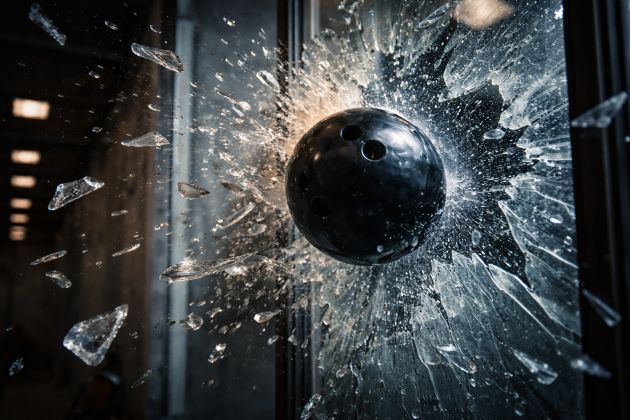
Our creative solution? Bowling balls.
I’m not kidding. We launched bowling balls through strategically selected windows. It sounded like a damn grenade went off and kept the bad guys away from bathrooms where they could flush evidence or arm up and lie in wait. Because they thought we were coming in from “everywhere,” their brains panic-froze, buying us enough time to hit the door the old-fashioned way… crowbar and ram.
By the time they figured out what was happening, we were already inside. Evidence preserved. Nobody shot. Mission accomplished.
Now, would a rookie have come up with that? Maybe. But probably not. Because a rookie doesn’t yet understand how dynamic breaches work, how suspects react under pressure, or what the actual priorities are when you’re stacking up outside a door.
That bowling ball idea wasn’t flippant. It was informed creativity built on years of watching what works, what fails, what gets people killed, and what doesn’t.
—
My conclusion:
When it comes to raw artistic output… painting, music, etc., youth have the edge, because we older cats are anchored to decades of taste, practice, and preference. And nostalgia is the weight that keeps us in familiar waters.
But when it comes to creative problem-solving, the kind that matters when lives are on the line, or a huge business deal is on the table, age is an asset. Experience teaches you what not to try again. And knowing what not to try is over half the battle.
The young musician has no lane, which is freedom.
The old tactician has a library of failures, which is wisdom.
Both are creative, but simply different lanes.
—
So, the next time some 28-year-old tells you that creativity dies after 30, just nod and smile. Because they are right, and at the same time, you’ve forgotten more solutions than they’ve ever attempted.
Then go listen to some Muddy Waters. You’ve earned it.
—
Tegan Broadwater spent 13 years with the Fort Worth Police Department, including two years assigned to the FBI working deep undercover inside a violent Crip organization. That operation, detailed in his book Life in the Fishbowl, resulted in 51 convictions. He has since founded Tactical Systems Network, an armed security & protection firm primarily staffed by veterans, is a creative writer and musician, and hosts The Tegan Broadwater Podcast. All book profits benefit children of incarcerated parents. Learn more at TeganBroadwater.com








COMMENTS