

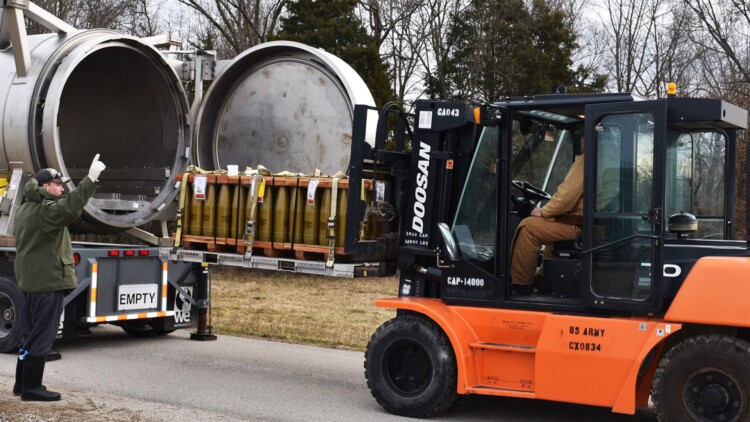
However, achieving this monumental milestone was no easy task.
Over the years, nearly 3.5 million chemical munitions, 22,500 bulk containers, and more than 57,500 bottles of chemical agents were destroyed. This demanding process required meticulous and hazardous work to disassemble rounds that were originally designed for battlefield detonation and the infliction of horrendous suffering.
Reif praised the dedication of thousands of military and civilian employees and contractors who played pivotal roles in accomplishing this mission. He acknowledged:
“As a nation, we owe an enormous debt of gratitude to those who dedicated their time, talent, and efforts to this mission.”
Yet, the United States’ mission to ensure a world free of chemical weapons is far from over. The Pentagon now faces the task of closing two facilities located in Colorado and Kentucky, which were instrumental in the destruction process.

Reif assured that this mission will be completed by 2028.
Historical Emergence of Chemical Weapons
Throughout history, the emergence and control of chemical weapons have shaped the landscape of warfare and global security. These deadly substances have been used for centuries, but it was the horrors of World War I that led to international efforts to limit their use.
The Geneva Protocol of 1925 was an early attempt to prohibit the use of chemical and biological weapons in warfare, though it did not ban their production or stockpiling.
More significant strides were made with the Biological Weapons Convention (BWC) of 1972 and the Chemical Weapons Convention (CWC) of 1993. The CWC, in particular, aimed to completely eliminate chemical weapons by its signatories and established the Organization for the Prohibition of Chemical Weapons (OPCW) to oversee compliance.
The Pentagon’s Ongoing Role in Chemical Weapons Disarmament
In addition to these domestic efforts, the US remains committed to supporting the Organization for the Prohibition of Chemical Weapons (OPCW), the international body responsible for implementing the Chemical Weapons Convention.
Reif cautioned that despite this significant milestone, the threat posed by chemical weapons persists. He affirmed that the Pentagon will continue to support the assessment and destruction of chemical weapons threats, regardless of their size, location, or environment.
“Though the [United States’] destruction mission is over, the Defense Department will not cease its efforts to support the effective implementation of the Chemical Weapons Convention by working to ensure the OPCW’s readiness to face current and future chemical weapons threats,” concluded Reif.
The United States’ unwavering commitment to eradicating chemical weapons underscores its dedication to global peace and security, setting a precedent for responsible disarmament and diplomacy on the international stage.








COMMENTS