

Surveillance or Political Tool?
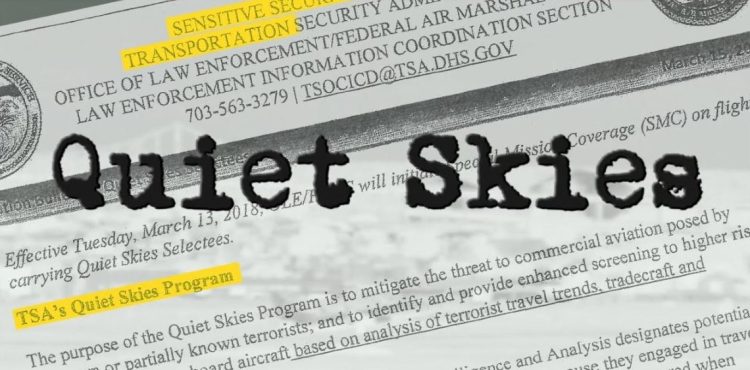
Tulsi Gabbard’s run-in with the Quiet Skies program reads like something straight out of a Cold War-era surveillance thriller—except this one happened in 21st-century America, on our own dime, and under the nose of the traveling public.
According to whistleblowers within the Federal Air Marshal Service, Gabbard—now the Director of National Intelligence and a former congresswoman—found herself secretly targeted by TSA surveillance mere days after she publicly torched Vice President Kamala Harris, President Biden, and the broader national security apparatus in a televised broadside. The resulting message was clear: step out of line, and Big Brother flies with you.
Her inclusion on the Quiet Skies list kicked off a miniature domestic intelligence operation every time she passed through an airport. Each flight featured an entourage she never knew she had—two Explosive Detection Canine Teams, a TSA explosives specialist, a plainclothes supervisor, and three federal air marshals whose sole job was to track her every move from curb to cabin. All of this was orchestrated without a shred of evidence that Gabbard posed any kind of threat—unless being politically inconvenient now qualifies as a national security risk.
As you might imagine, Gabbard didn’t take this lying down. She publicly condemned the surveillance, calling it a blatant abuse of power and a dangerous politicization of federal law enforcement. In her view—and frankly, in the view of anyone with a functioning spine—Quiet Skies had morphed from a counterterrorism tool into a weapon for silencing dissent.
Her case set off bipartisan alarm bells and ultimately helped catalyze the program’s downfall. The Trump administration pointed to Gabbard’s targeting as a textbook example of the system gone rogue, removed the official responsible for enrolling her, and demanded a full-blown Congressional investigation into the entire debacle. In a nation built on the idea that power should never go unchecked, this was a flashpoint—and a really good reason to pull the plug on Quiet Skies.
A Program Without Results
Despite its extensive surveillance activities, Quiet Skies did not yield tangible security benefits. A 2020 report by the Department of Homeland Security’s Inspector General criticized the program for lacking clear performance metrics and failing to demonstrate effectiveness in enhancing aviation security.
Critics argued that the program amounted to “security theater,” providing the illusion of safety without substantive results. The lack of transparency and oversight further eroded public trust in the TSA’s surveillance initiatives.
The End of an Era
Homeland Security Secretary Kristi Noem recently announced the termination of Quiet Skies, citing its ineffectiveness and the potential for abuse. “The program, under the guise of ‘national security,’ was used to target political opponents and benefit political allies,” Noem stated. She called for a congressional investigation into the program’s misuse and emphasized the need to refocus the TSA on its core mission of ensuring the safety and security of the traveling public.
With Quiet Skies grounded, the TSA is expected to continue its standard security measures without the controversial and unproven surveillance component. The move marks a significant shift in the agency’s approach to balancing national security concerns with individual privacy rights.
Looking Ahead
The dismantling of Quiet Skies serves as a reminder of the delicate balance between security and civil liberties. As the government reevaluates its surveillance strategies, transparency and accountability must remain at the forefront to prevent future overreach.
For travelers, the end of Quiet Skies may mean fewer covert observations during flights, but it also underscores the ongoing debate over the appropriate scope of government surveillance in general in the name of national security.








COMMENTS