

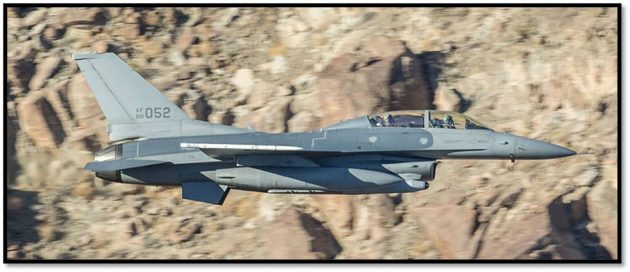
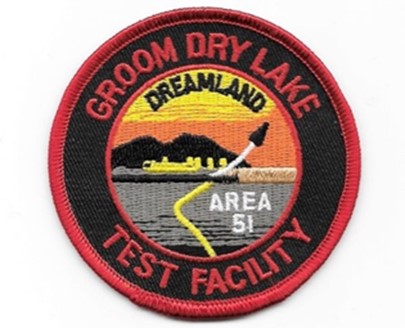
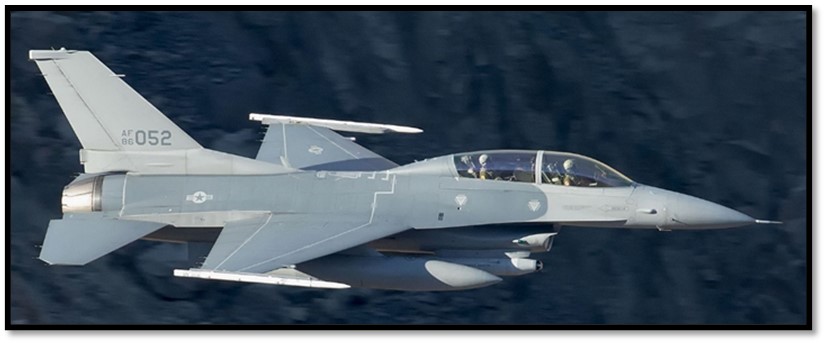
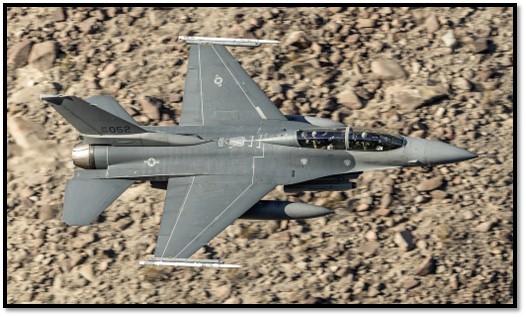
Only three months later, on November 14, 2017, photographer David Atkinson took two very clear photos of a two-seat, F-16DM Fighting Falcon jet patrolling Rainbow Canyon near Groom Lake, revealing some interesting details. First, nearly all USAF F-16s, except those at Groom Lake, carry two-letter codes on their vertical tail surfaces, designating their assigned base, but Area 51 is so secret that it has no tail codes.
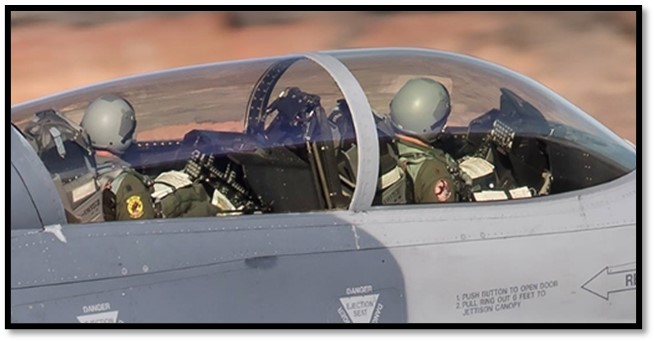
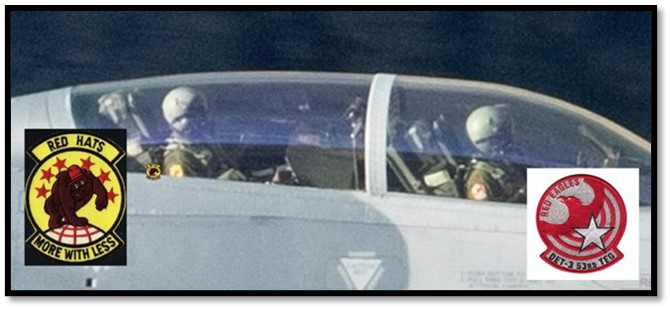
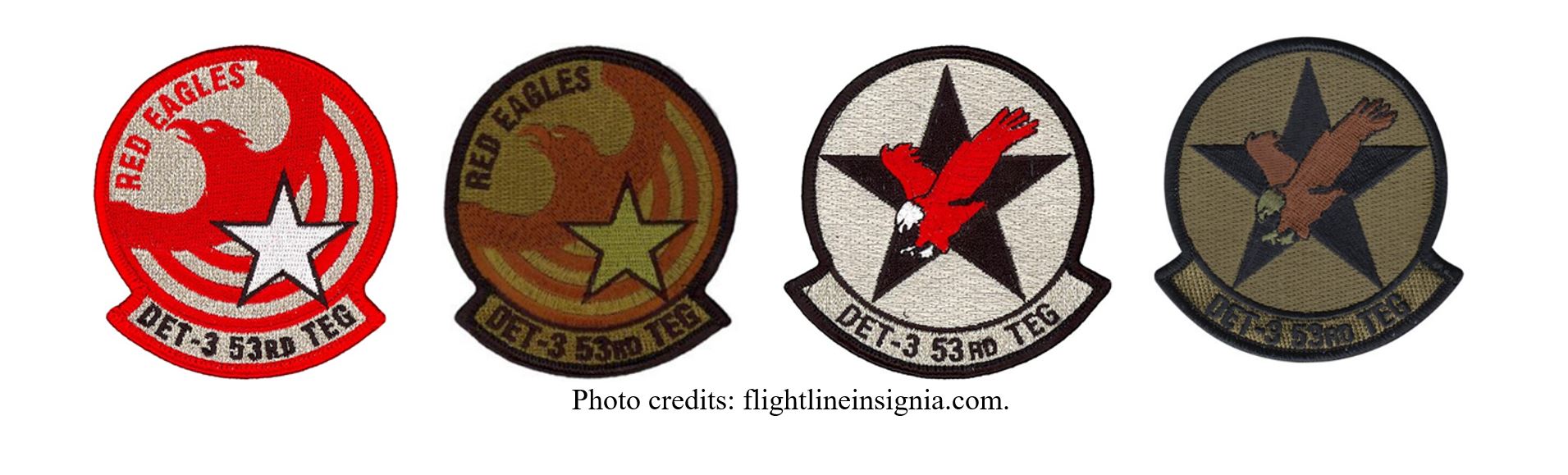
Second, photographer Alan Chadwick got an astounding, close-up shot of this same F-16, showing a “Red Eagles” patch on the pilot’s right shoulder, and a “Red Hats” patch on the weapon systems officer’s (WSO’s) shoulder. While both of these units were officially deactivated in the past, it appears that they still live on as Detachment 3 of the 53rd Test and Evaluation Group, and Detachment 3 of the Air Force Flight Test Center.
And third, the F-16DM was carrying a Lockheed Martin AAS-42 infrared search-and-track (IRST) sensor pod, a system never officially adopted by the Air Force, but used aboard the Navy’s F-14D Tomcat fighter until its retirement in 2006. The Navy just began using the newer, Lockheed Martin IRST21 system, an updated version of the AAS-42, on February 4, 2025, as part of their ASG-34A(V)1 system, carried externally on some F/A-18E/F Super Hornet fighters.
This is a passive tracking system for detecting airborne heat sources, and Russian MiG-29 Fulcrums and Su-27 Flankers have used on-board, IRST sensors successfully for decades. The United States and Europe have been slow to adopt this advanced technology until very recently.
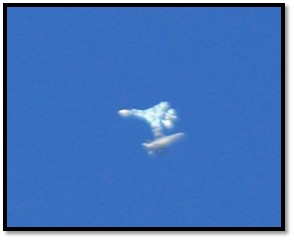
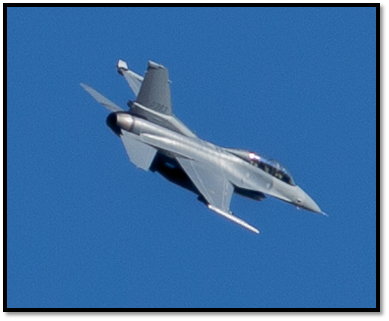
The distinct advantage of an IRST sensor is that it can passively detect and track almost any heat source in the sky, including stealth aircraft, which have a low radar cross-section, but still emit heat from their hot engines. This same F-16DM was seen earlier that day, flying alongside an F-117A Nighthawk.
It’s interesting to note that the F-117A, America’s first true, stealth fighter, was officially retired from active duty in 2008, but at least seven aircraft (#788, 807, 809, 811, 824, 828, and 841, marked “Mystic Warrior”), known as the “Dark Knights,” have been fully restored to flying status, and frequently operate over their home base at Tonopah Test Range Air Base, Nevada, as well as the vicinity of Groom Lake, for research-and-development, testing, and training purposes.
In 2016, four F-117s were secretly deployed to fly combat missions over Syria, supposedly employing GBU-39/B Small Diameter Bombs, and one had to make an emergency landing at Ali Al Salem, Kuwait. In the Tonopah and Groom Lake region, they act as stealthy, aggressor aircraft for advanced pilot training, or to simulate stealthy, cruise missiles.
So, the AAS-42 pod on the F-16DM appears to be for the purpose of passively tracking F-117s and other stealthy fighters during training, or quietly tracking any aircraft intruding upon Area 51 airspace. While the Groom Lake F-16s often do not carry air-to-air missiles, they each still have an M61A1 Vulcan 20mm electric Gatling gun, with 511 rounds of ammuntion loaded. More recent photos also show probable, AIM-9X-2 Super Sidewinder missiles on the left wingtips.
While the Block 30 version of the F-16DM is an older aircraft, the small detachment at Groom Lake is not a frontline, combat fighter force, like the latest, Block 70/72 variants. The mission of Detachment 3 of the 53rd Test and Evaluation Group is to patrol, protect, and defend the restricted airspace of Area 51, and to interact with classified aircraft as aggressors, or as chase aircraft. In this respect, the Block 30 is perfectly adequate for their assigned tasks.
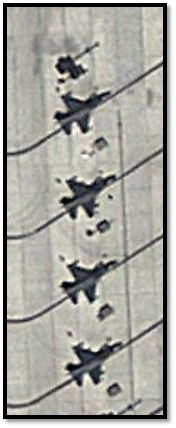
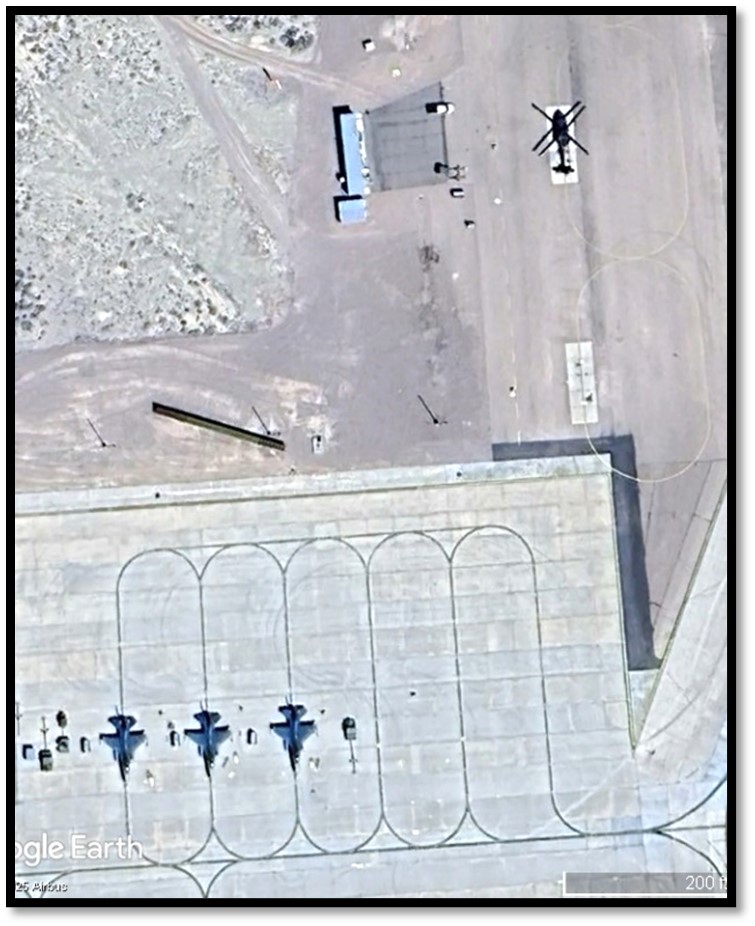
Groom Lake is also patrolled by three HH-60U Ghost Hawk helicopters, which replaced three earlier, MH-60G Pave Hawk special operations helicopters from 2011 to 2013. These are modified variants of the HH-60M Black Hawk, with upgraded avionics, including MX-15HDi FLIR sensors, and a self-defense suite with radar warning receivers, missile-warning sensors, and countermeasures dispensers loaded with chaff and flares. However, unlike the earlier MH-60Gs, their long, refueling probes, problematic rescue hoists, and weather radar were removed, yet they are still quite suitable for short-range missions, such as protecting Groom Lake.
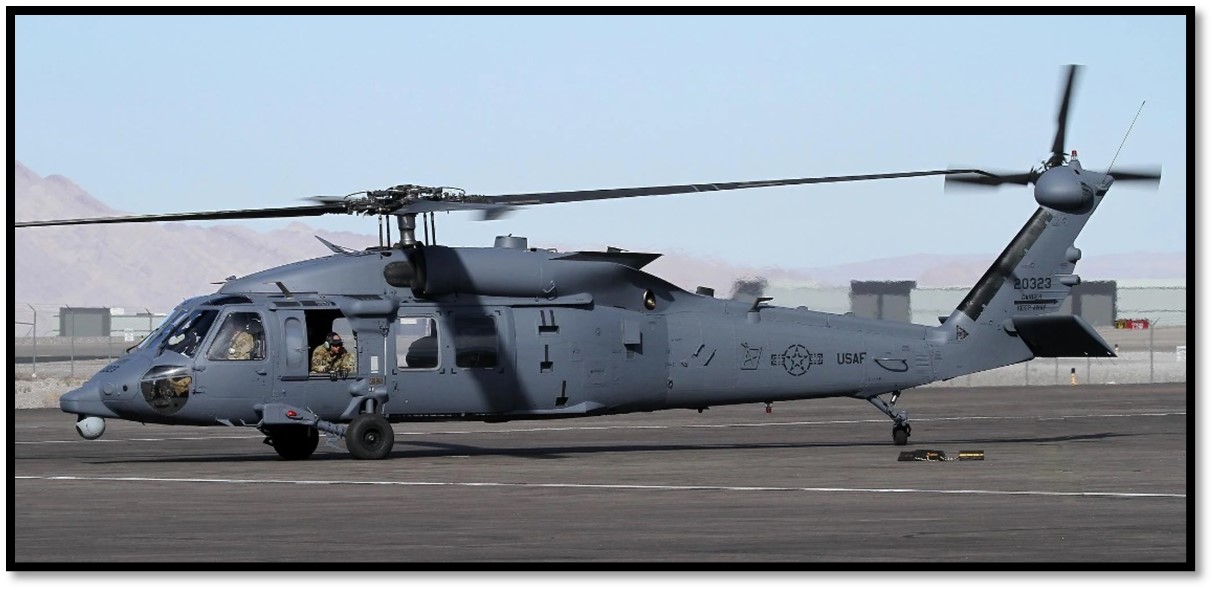
Only four HH-60U Ghost Hawk aircraft exist. The first three (#10-20321, 10-20322, and 10-20323) are all based at Groom Lake, frequently using the radio callsigns of “Sabre-31,” “Sabre-33,” “Outlaw-42,” or “Outlaw-99.” The fourth aircraft, #10-20324, is based at Felker Army Airfield, on Fort Eustis, Virginia, often using the callsigns of “Anvil-46” or “Anvil-51,” assigned to the so-called “Felker AAF Experimental Unit,” as a test-bed for stealth helicopter research and development, although it’s not a stealth helicopter.
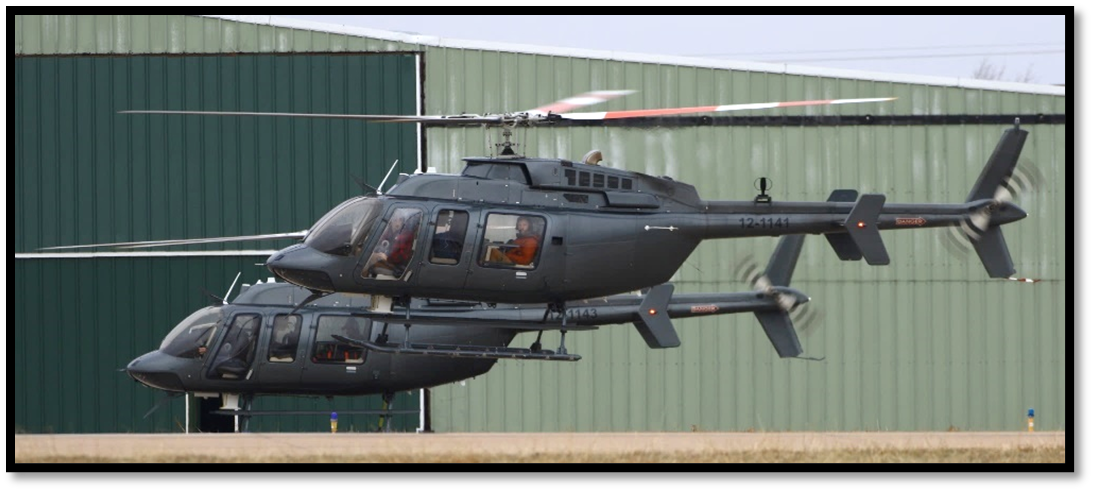
Coincidentally, or perhaps not, Felker AAF is home for the U.S. Army’s super-secret, Aviation Technology Office (ATO), an elite, handpicked, special operations force flying at least nine CH-47F Chinooks, three UH-60M Black Hawks, five or more Mi-171E1 Hip-Hs, two AS350B Écureuils (“Squirrels”), one C-27J Spartan transport, one S-92A Helibus, and five Bell 407GX helicopters in support of the nation’s very finest. counterterrorist units. So, it’s not exactly surprising to see a mysterious, Air Force HH-60U Ghost Hawk at the same airfield as a covert, special operations aviation unit.
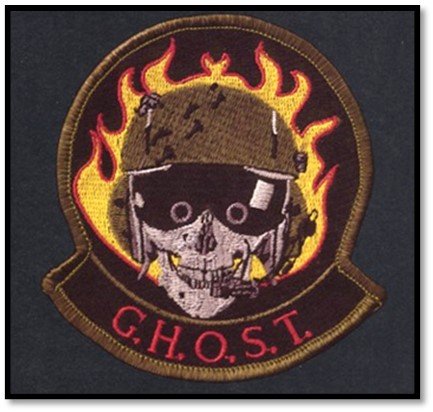
The three dark-gray Ghost Hawks at Groom Lake are colloquially known as the “Ghost Squadron,” tasked with defending the base perimeter, patrolling the restricted airspace, and rescuing assigned test pilots who crash-land on or near base property.
Groom Lake is so incredibly secret that the CIA transferred jurisdiction to the U.S. Air Force in 1979, yet the Air Force still refused to acknowledge its very existence until 1998, and the CIA finally admitted that the base existed in 2013. All research and events at Area 51 are Top Secret/Sensitive Compartmented Information (TS/SCI), comprised primarily of highly-classified, Special-Access Programs (SAPs.)
In fact, when President Bill Clinton signed an executive order requiring the Atomic Energy Commission to provide records for an oversight committee, he was denied access to records pertaining to programs at Area 51, on the grounds that even the president of the United States did not have a “need-to-know” about most Area 51 activities.
A nationwide poll conducted in 2019 reported that 54 percent of American adults thought that the U.S. government had far more knowledge about UFOs (now called UAPs: Unidentified Aerial Phenomena), a recognized, special-interest item at Area 51, than has been revealed to the public.
Working closely together with civilian, security contractor teams (Edgerton, Germeshausen and Grier, or EG&G, Technical Services, Inc., also known as the “Camo Dudes”) in white or gray pickup trucks patrolling the base perimeter, and Air Force Security Forces protecting the primary facilities, the aggressive, “Red Eagles” F-16 detachment, experienced, “Red Hats” aircrews, and “Ghost Squadron” HH-60Us are the secret, aerial guardians of Groom Lake’s enormous, enduring mystique.
** Editor’s Note: Thinking about subscribing to SOFREP? You can do it now for only $1 for your first year. Pull the trigger on this amazing offer HERE. – GDM








COMMENTS