Butler Martin, one of the first Black Marines and a member of the Montford Point Marines, passed away at 101, leaving behind a legacy of breaking racial barriers in the military. His service during World War II and the challenges he faced highlight the significant contributions of African Americans in the armed forces.
Key points from this article:
The Montford Point Marines, including Butler Martin, were the first African American Marines trained at Camp Lejeune, North Carolina, starting in 1942 after President Roosevelt's Executive Order 8802.
How Butler Martin's experiences during harsh training and combat in the Pacific Theater, including battles at Guadalcanal and Saipan, exemplified the resilience of Black service members despite facing segregation.
Why the legacy of the Montford Point Marines is crucial to understanding the evolution of racial integration in the U.S. military, culminating in President Truman's Executive Order 9981 in 1949.
Updating summary...
Remembering Butler Martin, One of America’s First Black Marines
Guy D. McCardle
Speed
1x
Listen
COMMENTS
Through the grit and courage of men like Butler Martin, the Montford Point Marines carved a path toward a unified military, leaving a legacy of resilience that stands as a testament to America’s journey toward equality.
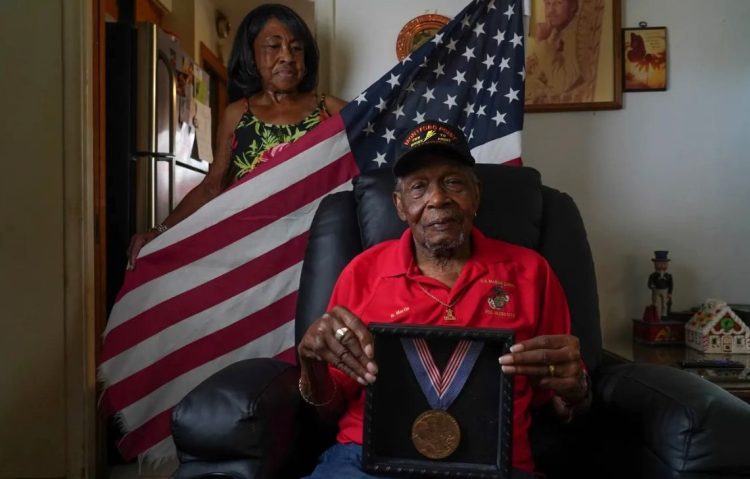
Butler Martin poses with his wife Anna and his Congressional Gold Medal. Image Credit: Detroit Free Press
Butler Martin, one of America’s first Black Marines, died on September 27th at the age of 101.
Advertisement
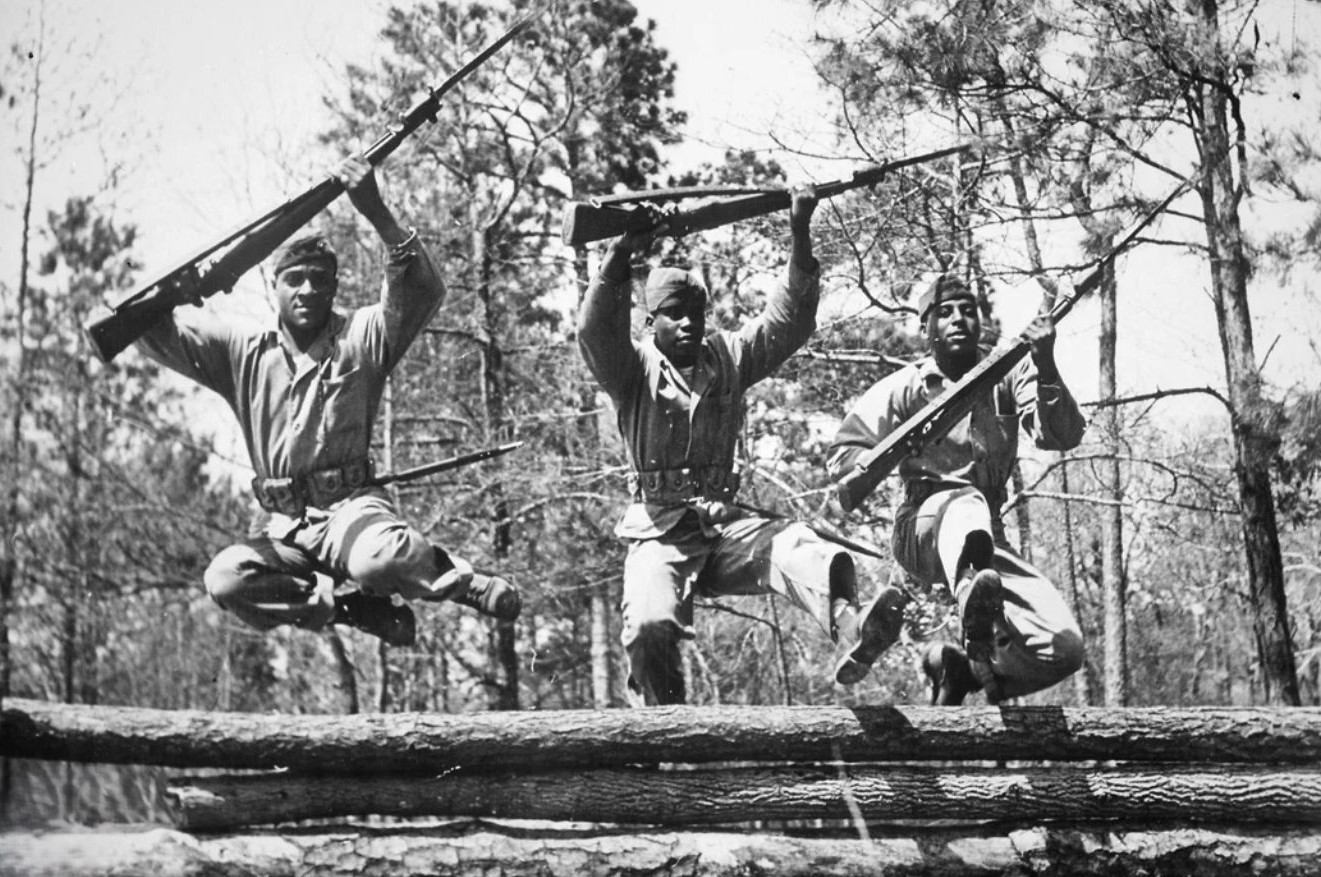
He was among the earliest African American Marines in the United States, part of the groundbreaking Montford Point Marines who trained in a segregated facility at Camp Lejeune, North Carolina, beginning in 1942. This historic group was formed following President Franklin D. Roosevelt’s Executive Order 8802, which opened the Marine Corps to Black Americans in response to the needs of the nation during WWII.
The Montford Point Marines represent a pivotal chapter in U.S. military history. Their story began with President Roosevelt’s Executive Order in 1941, which prohibited racial discrimination in the defense industry and paved the way for African Americans to enlist in the Marine Corps, a branch previously entirely closed to them.
These men endured severe discrimination both on and off the base. They faced harsh training conditions, were initially supervised by white officers, and were restricted in their interactions with white Marines at Camp Lejeune.
However, as training progressed, Black non-commissioned officers like Edgar Huff and Gilbert “Hashmark” Johnson assumed leadership roles, becoming key drill instructors who would inspire their men with rigorous discipline and military skills. The Montford Point Marines achieved remarkable success in training, particularly in artillery, breaking numerous Marine Corps gunnery records and proving their combat readiness.
Advertisement
While many Montford Point Marines served in support roles on Pacific islands, they faced limited combat exposure due to racial biases. Nonetheless, those in Ammunition and Depot Companies saw action in critical WWII battles on Saipan, Guam, and Peleliu. Tragically, Private Kenneth Tibbs became the first Black Marine killed in combat in 1944.
The legacy of the Montford Point Marines is impressive and important to the history of the United States. In 1949, President Truman’s Executive Order 9981 desegregated the armed forces, marking the end of Montford Point’s segregated training. Today, Camp Gilbert H. Johnson honors one of their distinguished leaders. In 2012, the surviving Montford Point Marines, including Butler Martin, received the Congressional Gold Medal, commemorating their historic contributions and breaking racial barriers in the Marine Corps.
These Marines not only excelled under extreme adversity but helped lay the groundwork for an integrated military that reflects the diverse fabric of America today. Their courage and resilience remain honored as a milestone in both military and civil rights history.
Advertisement
Martin, born in South Carolina and later raised in Hamtramck, Michigan, joined this pioneering unit to challenge racial barriers in military service. He initially aspired to join the Air Corps but chose the Marines when he learned about the formation of Black units.
During his time at Montford Point, Martin endured harsh training conditions as Black recruits were pushed to prove themselves equal to their white counterparts while facing exclusion and segregation both on and off-base. After training, Martin served in the Pacific Theater, stationed at critical points like Guadalcanal, Saipan, and Iwo Jima, handling hazardous ammunition supply tasks. Despite segregation back at camp, he fought alongside white Marines in battle, exemplifying courage and resilience. His contribution and those of his fellow Montford Point Marines paved the way for future integration in the U.S. armed forces.
Martin is remembered by his family as being a kind, loving man. One of his 16 grandchildren, Christine Russell Morgan, fondly remembers his giving spirit. She says, “He used to do my hair when I was young, and always gave me hair care tips.”
After serving in the Corps, Martin worked as a bus driver for a decade before going to cosmetology school and starting his own barber shop. That shop was in business for almost 40 years
Currently, only about 66,000 of the 16.4 million Americans who served in War II are still with us. They are a living treasure and a testament to the greatest generation.
Advertisement
What readers are saying
Generating a quick summary of the conversation...
This summary is AI-generated. AI can make mistakes and this summary is not a replacement for reading the comments.










COMMENTS