

Whatever the truth, the risk of conflict is growing. While Russia could attack US assets, such a direct attack is unlikely. The more likely outcome is horizontal escalation. Since Russia views the US as waging a proxy war, Russia can do the same. It can supply advanced weapons to its own proxies.
Given that the US would never deliberately target civilians, the delivery of the Russian demarche is a puzzling provocation. It might have been issued to excuse the action Russia has already taken.
ICBM Technology: The Topol-M and North Korea’s Hwasong-18
North Korea has been working to develop nuclear ICBM technology for decades. On July 12, 2023, North Korea tested a Hwasong-18 missile. Two features of the launch were important. First, the platform was solid-fuelled, unlike earlier liquid fuel North Korean efforts. The missile becomes easier to transport and conceal. Second, the missile was equipped with a decoy canister. The missile has MIRV (Multiple Independently Targeted Re-entry Vehicle) capability, and countermeasures to defeat anti-ballistic missile defenses.
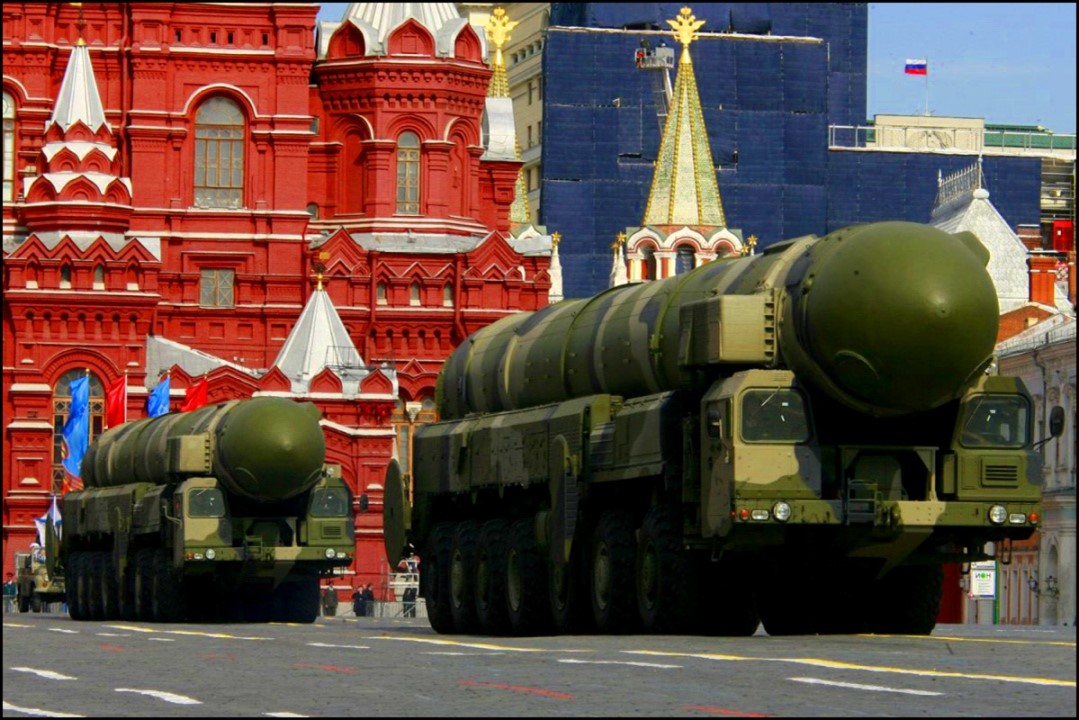
Analysis of the Hwasong-18’s characteristics indicates that this weapon is a close derivative of the Russian Topol-M. The Russians must have given North Korea extensive assistance in its development. It is even possible that Russia provided examples of the Topol-M itself.
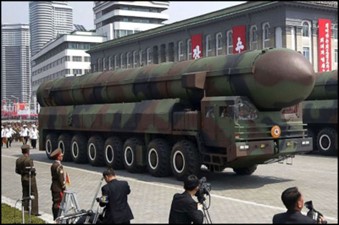
Compare the Topol-M in Figure 1 to the Hwasong-18 in Figure 2. They could be the same missile. The point is: we supply Ukraine with M1 Abrams, HIMARS, and ATACMs. The Russians supply North Korea with ICBMs.
Dr. Theodore Postol of MIT has analyzed the Hwasong-18 in detail. His analysis can be found here: https://beyondparallel.csis.org/the-transfer-of-a-russian-icbm-to-north-korea/
This development is a quantum leap in North Korean capability. Seven years ago, they could not hit Anchorage and Honolulu. It seemed they would take decades to reach the continental United States. With one stroke, Russia has given North Korea the ability to strike anywhere from San Francisco to New York and Washington, D.C.
Anti-Ship Missiles in the Middle East
Hamas attacked Israel on October 7, 2023, and Israel retaliated against Gaza. Tensions in the Middle East have escalated. The war is a complex affair, but there are at least three dynamics at play.
First, tensions between Hezbollah and Israel in the north have increased, and Israel is threatening war with Hezbollah. This would not be restricted to Lebanon but would certainly spill into Syria.
Second, the Houthi movement in Yemen, officially known as Ansar Allah, is supporting Hamas by attacking Israeli and Western shipping in the Red Sea and the Mediterranean. Yemen is using swarms of drones and missiles to attack US, UK, and European naval vessels, trying to keep the sea lanes open.
Third, Iran is supportive of Hezbollah, Hamas, and Ansar Allah.
The Middle East conflict has stretched on longer than anyone expected. The US and NATO have been unable to suppress Ansar Allah. Numerous commercial ships have been sunk or damaged. Commercial shipping through the Red Sea has dropped by ninety percent over five months. Delays (and cost overruns) have become the norm as ships use alternative routes.
Meanwhile, as Israel contemplates an assault on Hezbollah, the United States has transferred the carrier USS Eisenhower from the Red Sea to the Eastern Mediterranean to provide support. The Eisenhower has been at sea for almost nine months and is overdue for a rest. The US is sending the USS Theodore Roosevelt to provide welcome relief.
Russia has supplied Yakhont missiles (see Figure 3) to Syria and Hezbollah. The Yakhont is the export version of the P-800 Oniks-M, a ramjet-propelled, Mach 2.6 anti-ship missile. The Oniks-M has a maximum range of 500 miles and a CEP of 1.5 meters. The Yakhont has a range of 100 miles and is somewhat less accurate. For comparison, the USN Harpoon has a range of 75 miles at Mach 0.71. Exocet anti-ship missiles travel Mach 0.93.
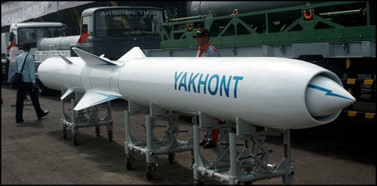
The Yakhont has been deployed to Syria and Hezbollah. The missiles are fired from Bastion mobile shore batteries (see Figure 4), which are easy to conceal.
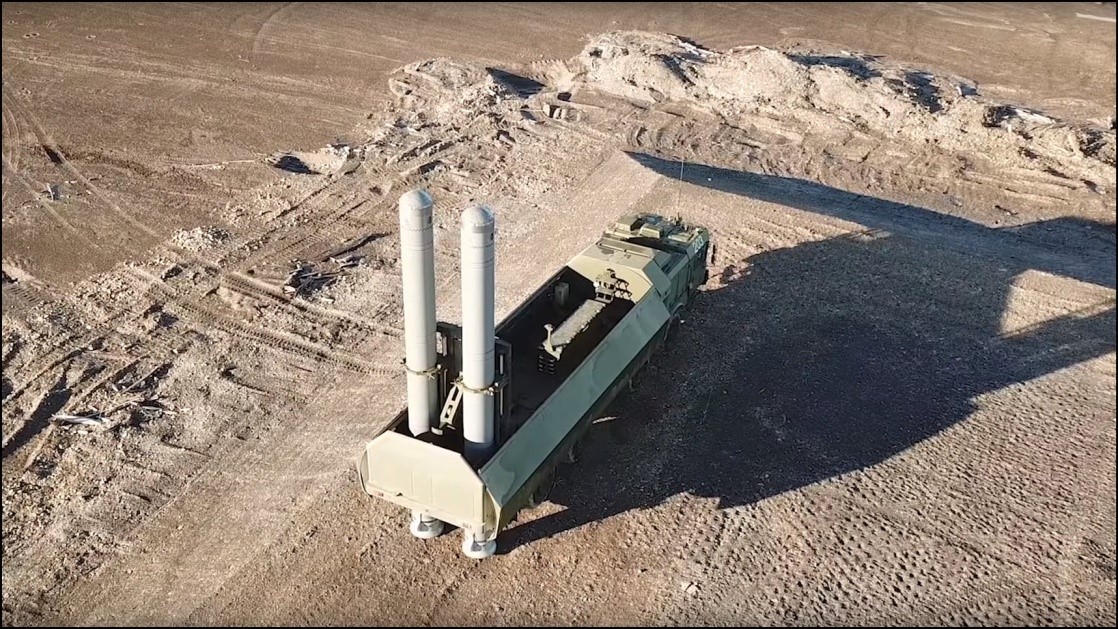
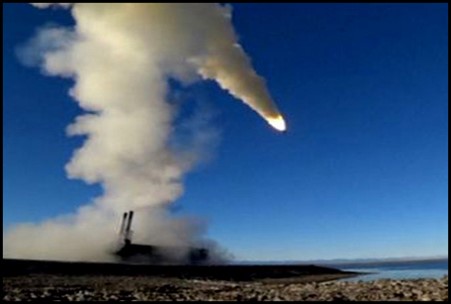
This video shows the launch of Oniks from a Bastion battery. The missiles shown are not the longer-range Oniks-M variant.
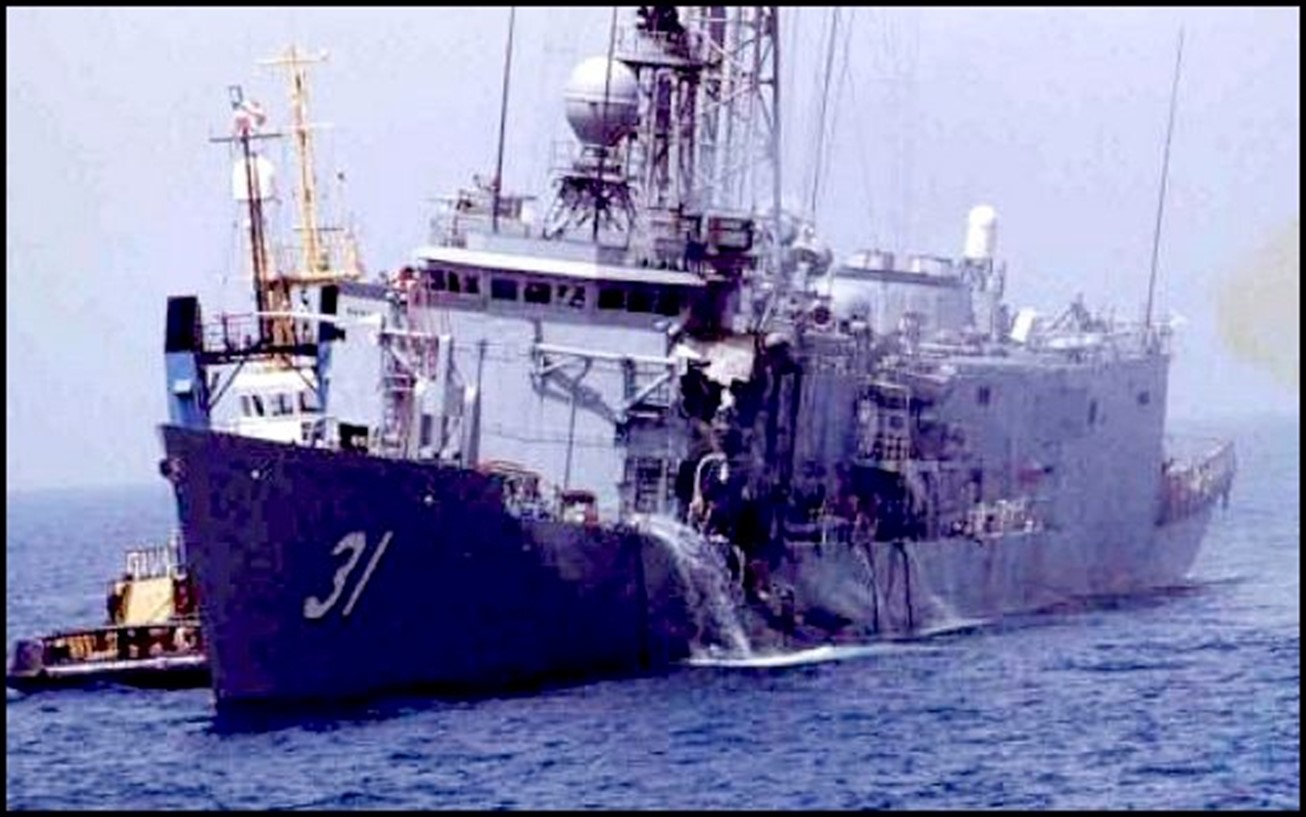
During the Iran-Iraq war, an Iraqi jet fired two Exocets (Mach 0.93) at the frigate USS Stark. One struck the frigate, resulting in serious damage and loss of life. The crew managed to save the vessel. See Figure 5.
During the Falklands War, in 1982, the destroyer HMS Sheffield was struck by another Exocet launched by an Argentine Super Étendard (that same airplane may be gifted to Ukraine 42 years later). The destroyer was crippled and ultimately foundered (Figure 6).
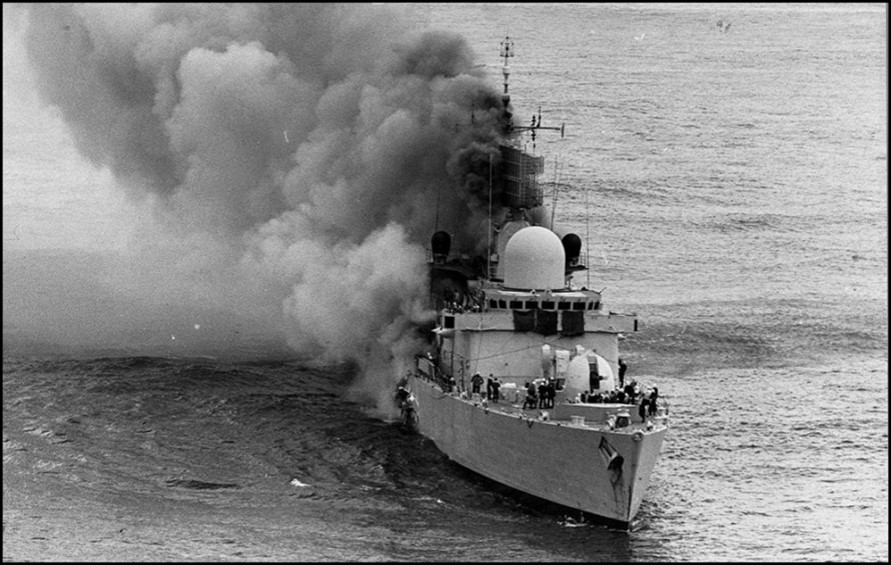
Modern missiles are far more capable than the Exocets that sank the Sheffield and crippled the Stark. The Exocet and Harpoon are 1980s technology, and both are subsonic.
Russia can provide Oniks-M upgrades to the Yakhont missiles already supplied to Syria and Hezbollah. It can provide the same to Ansar Allah by way of Iran. Let’s be honest – they are sneaky enough to have already done so, just like they provided the Topol-M technology to North Korea last year.
The key thing to understand is that our vulnerability comes from range. In an excellent paper, “Retreat from range: the rise and fall of carrier aviation,” Captain Jerry Hendrix (Ret.) outlines the problem.
Captain Hendrix’s paper is here: https://www.cnas.org/publications/reports/retreat-from-range-the-rise-and-fall-of-carrier-aviation. Highly recommended.
During the Cold War, naval aviation was equipped to launch strikes deep into enemy territory. After the breakup of the Soviet Union, the United States became the lone superpower.
There were consequences. First, military budgets shrank. Cold War carrier battle groups were configured into “strike” groups to project power against non-peer adversaries. As the lone superpower, the US had no peers. All the long-range aircraft of the air wing were consolidated into the highly capable but shorter-range F-18 Superhornet.
As far back as 1997, in his book, “The Future of War,” George Friedman warned that the proliferation of (relatively) cheap anti-ship missiles would push American carriers further away from littorals. This insight alone was reason to maintain longer-range platforms.
The F-18 Superhornet has a combat radius of 500 miles. Notice that’s the same as the maximum range of the P-800 Oniks-M. To launch an air strike with the Superhornet, the Eisenhower and the Theodore Roosevelt have to approach within 500 miles of the coast. That makes them vulnerable to the Oniks-M.
Our Aegis air defense screen is the most capable in the world. If Russia escalates horizontally and provides supersonic missiles to its proxies, our cruisers and destroyers are going to have to be on top of their game.
About the Author

Cameron Curtis has spent thirty years on trade floors as a trader and risk manager. He was on the trade floor when Saddam’s tanks rolled into Kuwait, when the air wars opened over Baghdad and Belgrade, and when the financial crisis swallowed the world. Having written fiction as a child, he is the author of the Breed action thriller series, available on Amazon.
Check out his new Breed thriller, BLOOD SPORT, here:
https://www.amazon.com/dp/B0D6RC5V4V

And visit the Breed series page here:
—
Disclaimer: SOFREP utilizes AI for image generation and article research. Occasionally, it’s like handing a chimpanzee the keys to your liquor cabinet. It’s not always perfect and if a mistake is made, we own up to it full stop. In a world where information comes at us in tidal waves, it is an important tool that helps us sift through the brass for live rounds.








COMMENTS