Russia’s nuclear-powered 9M730 Burevestnik (SSC-X-9 Skyfall) is a low-altitude, long-endurance cruise missile, with a claimed 14,000 km in 15 hours still unverified, built to slip past missile defenses and push the nuclear arms race into a harder phase.
Read the full article for more on:
Important insights and detailed analysis
Expert commentary on current events
Breaking developments and updates
Updating summary...
Russia’s “Flying Chernobyl” Claims 14,000 km Test
Guy D. McCardle
Speed
1x
Listen
COMMENTS
Russia’s nuclear-powered 9M730 Burevestnik (SSC-X-9 Skyfall) is a low-altitude, long-endurance cruise missile, with a claimed 14,000 km in 15 hours still unverified, built to slip past missile defenses and push the nuclear arms race into a harder phase.
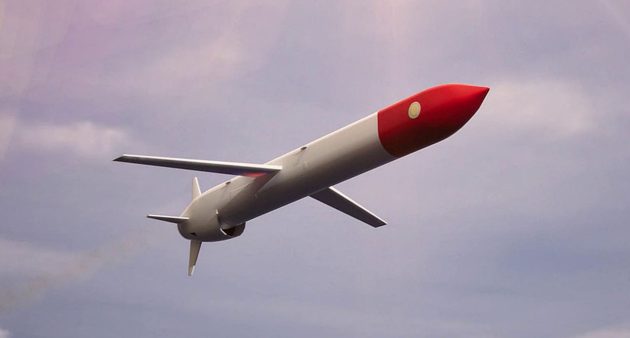
Meet the SSC-X-9 Skyfall. Image Credit: The Moscow Times
What it is, and why NATO calls it “Skyfall”
Russia’s 9M730 Burevestnik is a nuclear-powered, nuclear-capable cruise missile built to fly low, wander far, and thread around air defenses. NATO’s reporting name for it is SSC-X-9 Skyfall. NATO uses short, standardized “reporting names” so allied crews and analysts can talk about foreign systems clearly over radios and in shared documents without confusion over Cyrillic designations or shifting domestic names.
Advertisement
❗️🇷🇺⚔️🇺🇦 – Russian President Vladimir Putin declared on Sunday that Russia has completed the final tests of the Burevestnik (NATO: SSC-X-9 Skyfall), a groundbreaking nuclear-powered cruise missile capable of carrying nuclear warheads and flying at low altitudes to evade defenses.… pic.twitter.com/gaekdYz5du
Moscow now claims a breakthrough. In late October 2025, Russian officials said Burevestnik completed a 15-hour flight and covered roughly 14,000 kilometers during a “key test.” Video of President Vladimir Putin meeting with his top general accompanied the claim, and independent military outlets tracked the announcement. If accurate, that is global-reach performance for a cruise missile. It also signals a shift from sporadic experiments to something Russia wants to deploy, not merely show on slides.
The program’s road here was hazardous. In August 2019, a recovery operation off Nenoksa ended in an explosion linked to a nuclear-isotope power source, killing Russian specialists and briefly spiking local radiation. That incident is one reason the missile picked up its tabloid label, the “flying Chernobyl.”
Advertisement
How a nuclear reactor propels a cruise missile
Conventional cruise missiles carry jet fuel to feed a turbojet or turbofan. Burevestnik replaces most of that fuel with a compact reactor that supplies heat to the working fluid, producing thrust without the usual range limits. Analysts assess the engine behaves like a nuclear-heated air-breathing jet cycle, enabling flight at low subsonic speed for many hours or potentially days, hugging the terrain along circuitous paths. The idea echoes the Cold War’s Project Pluto concept of a direct-cycle nuclear ramjet, a technology never fielded due to intense technical, safety, and political costs.
That reactor-powered approach is unique among modern missiles because it trades the weight and finite energy of chemical fuel for the reactor’s sustained heat, yielding theoretical “unlimited” range and stamina well beyond any conventional cruise missile. A normal, fuel-burning cruise missile must budget every kilometer. This one treats distance like a suggestion.
Advertisement
Why Russia says it is “invisible”
Kremlin messaging paints Burevestnik as immune to present and “foreseeable” missile defenses, able to fly anywhere in the world with a nuclear warhead. The logic runs like this. Ballistic-missile defenses are optimized for high-arc, fast targets in space. Low-flying cruise missiles force sensors to look out across the clutter of the atmosphere and terrain. Give a cruise missile days of endurance, let it snake around radar fields, approach from odd bearings, and the defense calculus gets ugly. Russian state statements and briefings lean hard on that narrative.
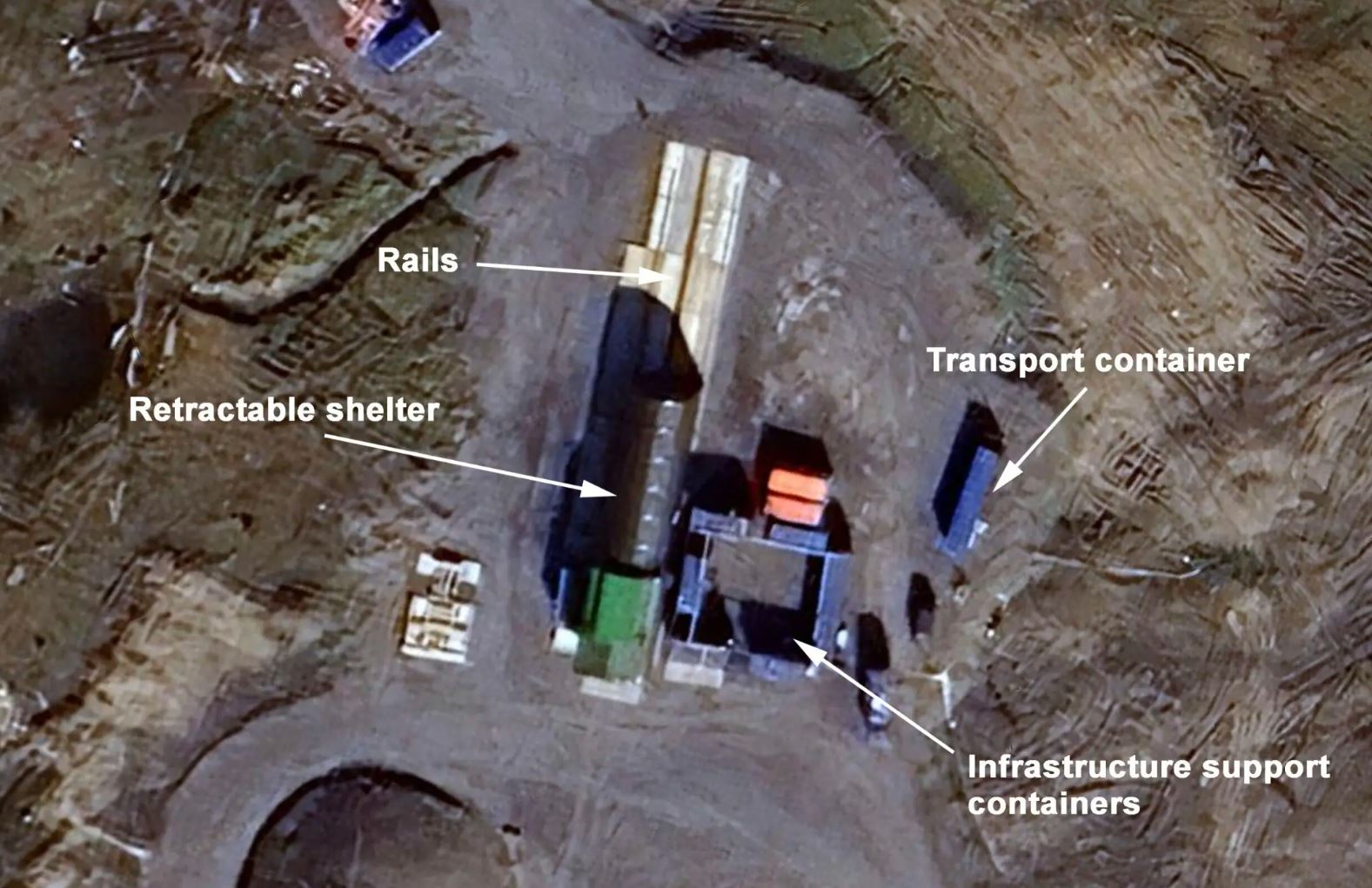
A satellite photo taken in August of this year shows a launchpad for Burevestnik missiles. This is the Pankovo test site at Novaya Zemlya. Image Credit: Google Earth / Barents Observer
What edge it promises
If the October flight data are genuine, Burevestnik can outlast every conventional cruise missile. Endurance plus low-altitude routing complicates detection and engagement windows. It offers planners a slow but stubborn tool for circumventing fixed radar belts and predictable intercept geometry, a kind of nuclear-tipped boomerang that can meander until the strike window opens. That is the edge: time and route flexibility.
Marching toward deployment
The latest Russian statements describe moving from demonstration toward operational fielding, part of a wider pattern that includes nuclear-themed exercises and the push to showcase novel systems. Public evidence is still thin by Western standards, and outside verification of flight profiles is limited. But the political signal is unmistakable. Moscow wants adversaries to factor Burevestnik into their planning now.
The same feature that makes this missile alluring to Russian planners makes it disturbing to everyone else. A reactor-powered airframe that can loiter for hours over oceans and remote regions is also a reactor-powered airframe if it fails. The 2019 fatal accident is the cautionary footnote. This isn’t an engine on a test stand behind a blast wall. It is a flying machine that, in failure, can seed contamination along its path. That is why the nickname sticks, fair or not.
What it means for the arms race
Long-range nuclear cruise missiles blur neat categories that arms control once relied on. They fly below strategic missile warning architectures, complicate counting rules, and invite mirror-image responses, from longer-range interceptors to wider, pricier sensor networks. Each step breeds the next step. Add in parallel Russian claims about other exotic nuclear systems, and you do not get stability. You get a contest that drives budgets, doctrine, and alert postures up the ladder.
Bottom line
Burevestnik is much more than a weapon built for the battlefield — it’s equally built for psychological warfare.
It’s Moscow saying to Washington, London, and Brussels: we can reach you from anywhere, at any time, and you can’t stop it.
A missile that drinks from a nuclear heart instead of a fuel tank is less about practical use than about rewriting the balance of fear. The “Flying Chernobyl” may never patrol the skies in squadrons (but then again, it may), but its shadow already does.
In a world teetering on the edge of a new Cold War, Burevestnik is a paradigm shift, and it’s the sound of the doomsday clock ticking louder.
Advertisement
What readers are saying
Generating a quick summary of the conversation...
This summary is AI-generated. AI can make mistakes and this summary is not a replacement for reading the comments.










COMMENTS