

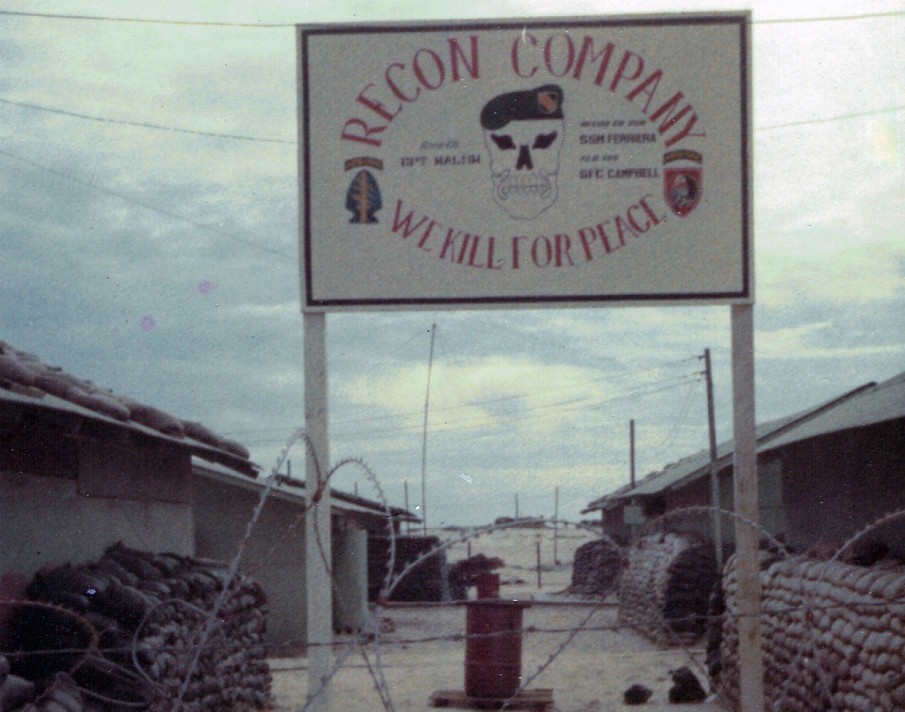
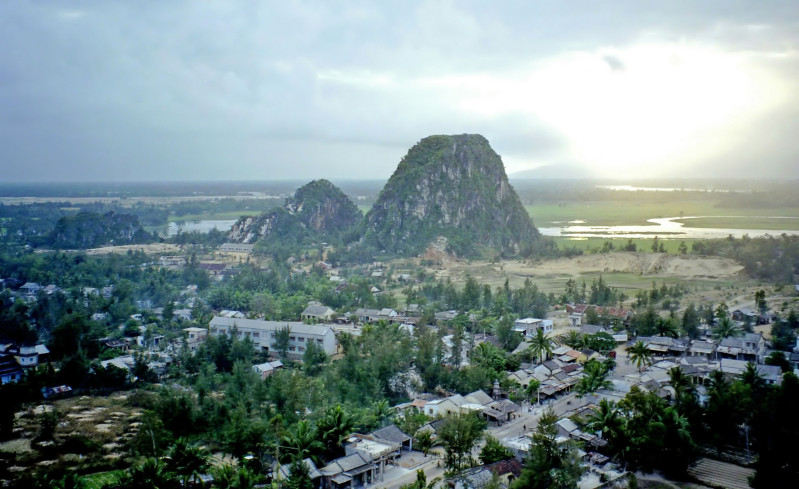
They also learned that the NVA launched probe attacks on nearby Marine units, as well as hit two Marine Corps 106mm recoilless rifle positions located across from ST Rattler on the second peak of Marble Mountain. The attack on ST Rattler was also part of the general action plan, as was its strike at the POW camp.
In a well-coordinated effort, the NVA hit the POW camp at its entrance from Highway 1, its most vulnerable point. Fortunately, Lt. Fullen had his PRC-25 FM radio with him, and when he heard the first report of the NVA hitting the POW camp to release enemy prisoners so they could join the battle, Fullen directed a Cobra gunship to make a gun-run across the northern perimeter of the camp, which broke the back of the NVA sappers’ attack on the POW camp.
The NVA also struck FOB 4’s eastern perimeter on the South China Sea. Simultaneously, sappers moved through the fishing village south of FOB 4 and infiltrated the compound by simply walking in. The corrupt and compliant South Vietnamese QC obligingly gave no warning. Some of the sappers had been provided with boats by communist sympathizers in the fishing village, and these were used to ferry troops north on the South China Sea, off-loading them on the beach near the POW compound.
As the collection of bodies continued at FOB 4 after the attack, a formation was ordered for all indigenous personnel. A heavily armed contingent of Special Forces Hatchet Force personnel and Chinese Nung mercenaries oversaw the painstaking process of accounting for and verifying the bonafides of all those assembled. They found several NVA sappers mixed in with the South Vietnamese indig, trying to pass themselves off as little people. The impostors were separated, restrained, and turned over to Intelligence for interrogation.
In addition, the SF personnel also found a few South Vietnamese from the FOB 4 security force trying to hide among the ranks of the other South Vietnamese troops. The security force men were getting beaten up pretty badly by the Nungs. Everyone understood that the attack could not have occurred unless the NVA had inside help. It was equally clear that the South Vietnamese security forces assigned to FOB 4 had not performed well.
By afternoon, a relief force from 5th Special Forces Headquarters arrived from Nha Trang. While bodies were still being sorted out, Seabees placed bodies of dead enemy soldiers into the scoop of a backhoe, drove across Highway 1 and unceremoniously dropped them in the dump.
A weary Pat Watkins walked back from the caves of Marble Mountain. He thought about another attack on FOB 4 that had taken place on New Year’s Eve, 1967. It became an eerie precursor to the attack he had just survived.
Back then, he was the One-Zero of ST Moccasin. He had been awakened by small-arms fire and grenade explosions from the camp’s eastern perimeter and its southern edge. In 1967, Watkins’s assigned defense position was the southern perimeter. After a 20-minute firefight, the enemy forces suddenly withdrew into the caves, an angry snake recoiling after a quick and poisonous strike.
The recon men had found dead and mangled VC bodies in the perimeter wire and many blood trails leading into Marble Mountain. No SF troops were killed, but the indig lost three men in the encounter.
Standing in the aftermath of 23 August, 1968, Watkins couldn’t help but note the similarities in the attacks and wonder if the earlier effort was simply a rehearsal, a tactical probe to gauge the responses of the FOB 4 defenders. Watkins was curious as to what lessons the VC had passed on to their NVA counterparts, especially in light of the identical routes used in both attacks.
He also had to wonder about the U.S. military’s institutional memory. “Did the brass ever hear of Pearl Harbor or Lang Vei [the Green Beret camp overrun west of Khe Sanh in early ‘68], where advance warnings were tragically ignored?” Watkins wondered. Eight months later, after the ’67 attack, the enemy launched an almost identical yet more sophisticated attack that killed the most SF troops in history. FOB 4 had been no better prepared.
As the day of 23 August moved toward darkness, Watkins and Gene Pugh hitched separate rides to the Army Field Hospital to have them pull the shrapnel and wood splinters from their hides. They didn’t want to bother the SF medics, who still had their hands full as night fell. Several hours later, they returned to FOB 4. Watkins spent the night in the mortar pit firing illumination rounds, and Pugh returned to the comms center, where he learned that the 22nd VC Sapper Battalion was involved in the attack.
The aftermath
At the end of the day, several things were clear:
- The NVA/VC sappers executed a well-planned attack, killing 17 Green Berets and at least 40 indigenous troops. Estimates on enemy dead fluctuate between 78 to more than 100. No one will ever know because the enemy was adroit at recovering dead personnel from the battleground, as evidenced by the many blood trails that lead south to Marble Mountain through the wire.
- If ST Rattler hadn’t been on Marble Mountain, far more casualties would have occurred.
- The indigenous troops had also fought valiantly. “The indig was super that night,” Watkins said. “Without them, our casualty rate would have been much higher, no doubt.”
- Fortunately, a few SF soldiers and the Cobra gunship, working with Lt. Fullen on the radio, were able to stifle the attack on the enemy POW camp, preventing hundreds of enemy soldiers from joining the fray.
- Lastly, there was a failure of response from leadership in the camp to the many reports of an imminent attack. There was a new S-2 officer in camp, the compound was adjusting to having the Command and Control element moved into FOB 4, and due to the top-secret nature of the secret war, there wasn’t enough communication between intelligence, recon, and Hatchet Force staff. The new S-2 officer arrived at FOB 4 in early August to find that the S-2 office was vacant. No one had worked in it for several weeks. Thus, the new officer had a lot to learn about the secret operations as well as local security issues.
Shortly after lunch on 24 August, a Kingbee arrived on Marble Moutain with a complete resupply of ammunition, claymore mines, grenades and more importantly, Coke, beer, cigarettes, food, and a replacement troop for the departed Ames. Unfortunately, the replacement severely twisted his ankle exiting the hovering Kingbee, which rendered him of limited use to the team. Undaunted by this latest misfortune, Trimble designated him radio operator and told him to keep a sharp lookout while the others ate and rested.
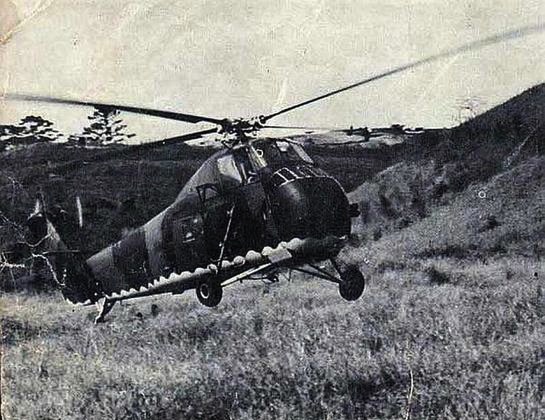
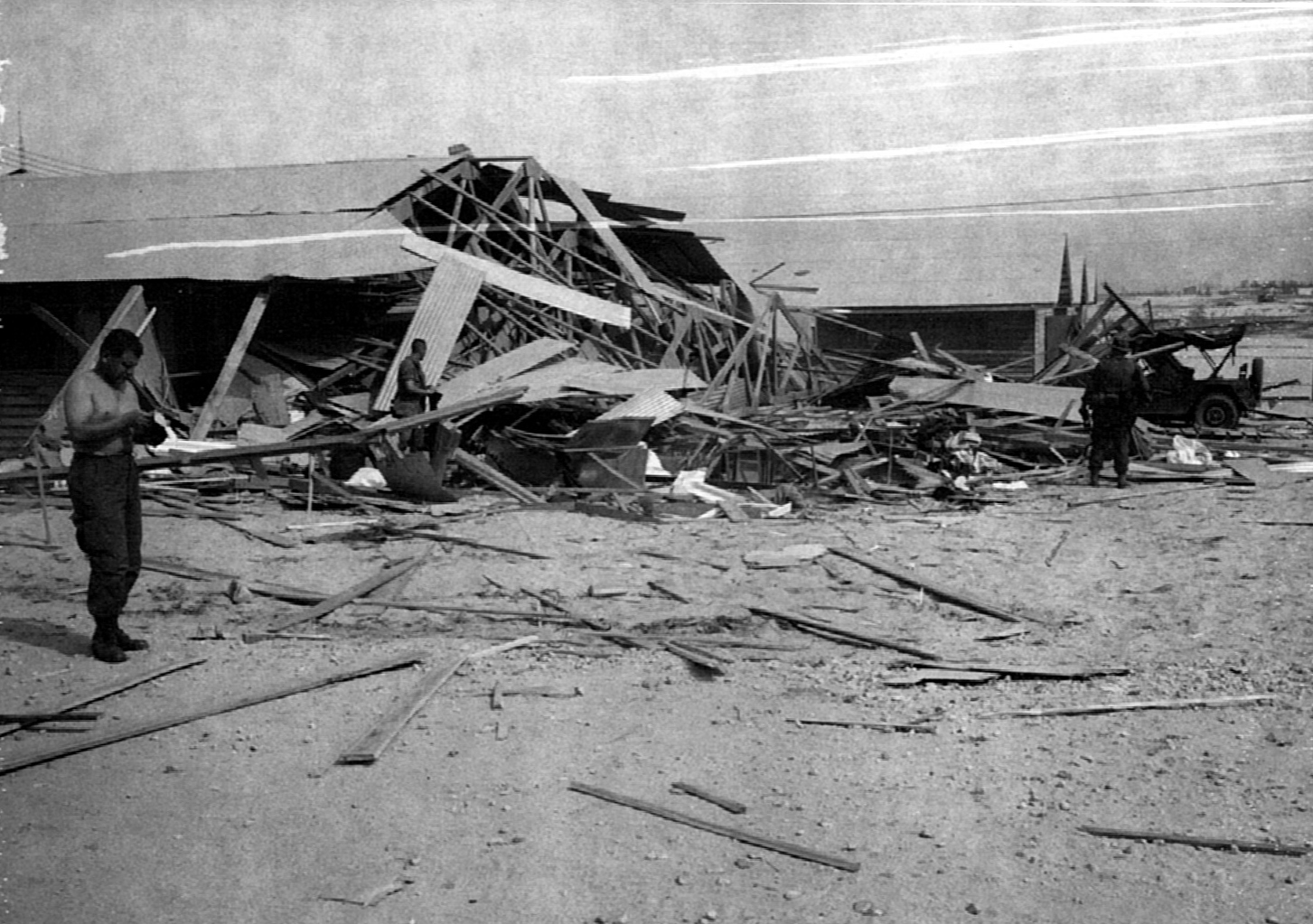
Trimble and ST Rattler were forced to spend another night on Marble Mountain. Fortunately, it proved to be uneventful. The next afternoon, a Kingbee picked up Trimble and ST Rattler, finally taking them back to FOB 4. Trimble took his two wounded indig to the dispensary, where they were treated and released. Then, Trimble walked around FOB 4 to inspect the damage. It had been one thing to watch it from the mountain, but to see the damage firsthand, on the ground, was painful to look at. His own hootch had been heavily damaged by a satchel charge, an explosion that killed his dog.
But for Trimble, there was a piece of good news: When Colonel Warren commended him and ST Rattler earlier in the week for snuffing out enemy mortar and sniper positions, he hadn’t been able to say over the radio that the recovered NVA rucksack contained not only mortar rounds, but also a stash of documents outlining NVA plans for a major attack on the amphibious Marine outfit located on the south side of Marble Mountain. The attack was set for 24 August. This information was hand-delivered to the Marines, who took appropriate defensive measures. Perhaps because of these vigorous countermeasures, no attack materialized.
Two weeks later, a contingent of Marines picked up Trimble and his Nungs and chauffeured them to their officers club, where they treated them to a splendid meal and thanked the team for having gathered the intelligence that prevented the Marines from being caught by surprise. In a sign of honor, the Marines had the entire team sign their guest book.
Postscript
One month later, a newly minted Green Beret, Douglas L. LeTourneau, arrived at FOB 4 after volunteering to serve in SOG. When he entered the transient barracks, he found etched into the concrete floor the charred outline of a man’s body, a grisly reminder of the August 23rd attack. “I’ll never forget that charred image as long as I live,” LeTourneau told SOFREP. “The deadly seriousness of guerrilla warfare hit me right between the eyes. From that moment forward, I was more vigilant and vowed to never let my guard down.”
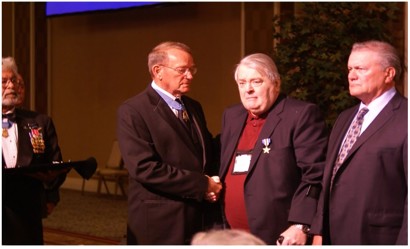
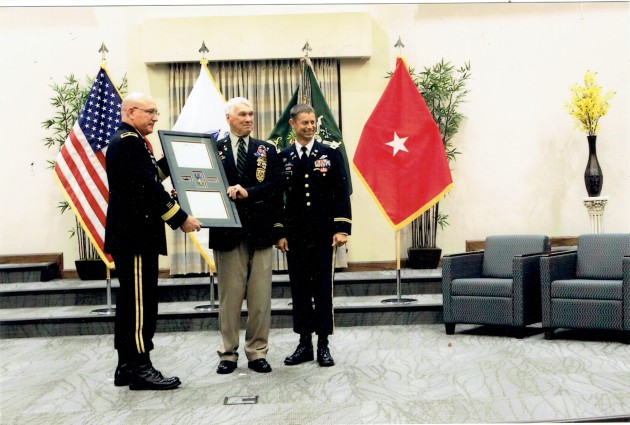
Four decades after the horrific night of Aug. 23, 1968, two of the Green Berets who were wounded in that attack received valor awards for their combat prowess during the attack.
Joe Conlon received a Silver Star in October 2012 at the 36th annual reunion of the Special Operations Association held in Las Vegas (below).
In May 2014, Pat Watkins received a Distinguished Service Cross, the nation’s second highest valor award, at a ceremony held in Florida at the 7th Special Forces Group (airborne) headquarters.








COMMENTS