

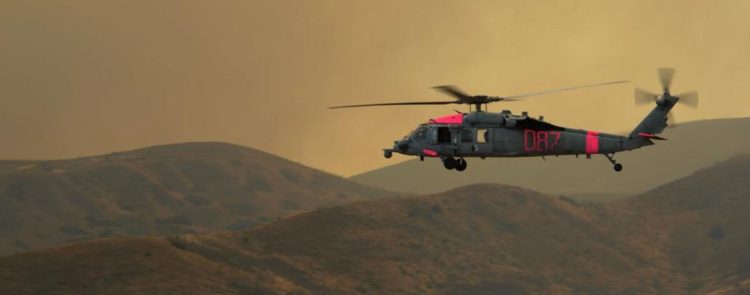
California has also adopted advanced technologies to improve interagency coordination and wildfire response. AI-powered tools are now used for faster fire detection, while the Fire Integrated Real-Time Intelligence System (FIRIS) provides real-time wildfire mapping. Partnerships with the U.S. Department of Defense have enabled the use of advanced satellite technology for fire detection, and LiDAR technology is being employed to create detailed 3D maps of high-risk areas. These innovations provide critical data to enhance decision-making and response efforts.
To streamline resource allocation and project planning, California has developed the Wildfire and Landscape Interagency Treatment Dashboard. This groundbreaking platform displays recent forest and wildland projects completed by more than a dozen federal and state agencies. By offering a comprehensive view of past efforts, the dashboard helps guide new projects and improves interagency collaboration.
These initiatives highlight California’s commitment to improving communication, training, and technological capabilities in the fight against wildfires. By fostering collaboration and adopting cutting-edge tools, the state aims to manage and mitigate wildfires more effectively, protecting communities and natural resources.
History of Military Involvement in Fighting Wildfires
The U.S. military has a long history of involvement in fighting wildfires, dating back to the early 20th century, and its role has evolved significantly over time. In the 1930s, the Civilian Conservation Corps (CCC) was instrumental in wildfire management, helping enforce the government’s “no burn” policy and constructing essential wildfire protection infrastructure. The CCC crews were often organized as firefighting units, monitoring and battling wildfires in remote areas.
After World War II, wildfire suppression efforts became more mechanized. Military combat tactics and equipment, including airplanes, trucks, and even tanks, were adapted for firefighting. Many of the tools and techniques used by modern firefighters, such as aerial firefighting and specialized vehicles, have roots in this era.
In 1975, military support for wildfire suppression was formalized through an interagency agreement between the U.S. Department of Agriculture, the Department of the Interior, and the Department of Defense (DOD). When civilian firefighting resources are fully committed, the National Multi-Agency Coordinating (NMAC) Group at the National Interagency Fire Center (NIFC) can request military assistance. This partnership ensures the military is ready to provide support when needed.
One of the military’s most notable contributions is the Modular Airborne Fire Fighting System (MAFFS) program. This initiative equips Air National Guard and Air Force Reserve units with C-130 aircraft modified to serve as air tankers. Since its inception, MAFFS-equipped aircraft have been a critical resource during severe wildfire seasons, dropping fire retardants to help contain fires.
In recent decades, military involvement has continued to grow. For example, in 2000, five military battalions were deployed to combat wildfires in Idaho and Montana. In 2018, 200 active-duty personnel from Joint Base Lewis-McChord assisted with the massive Mendocino Complex fire in California. In 2020, MAFFS-equipped C-130s dropped nearly 1.5 million gallons of fire retardant on California wildfires. In 2021, military personnel from Joint Base Lewis-McChord were again deployed, this time to fight the Dixie Fire.
Today, military support for wildfire suppression includes a wide range of efforts, such as ground firefighting, aerial suppression, logistical assistance, and deploying advanced technologies. The National Guard plays a significant role, with thousands of Guardsmen responding to wildfires across the Western United States. This long-standing collaboration between the military and civilian agencies has enhanced wildfire suppression capabilities and contributed to the development of modern firefighting strategies and technologies in the U.S.
Support Beyond Firefighting
The military plays a vital role in wildfire management that goes beyond direct firefighting. One key area is aerial reconnaissance and mapping. RC-26 aircraft equipped with Distributed Real-Time Infrared (DRTI) technology are used to detect and map wildfires. In 2024 alone, these aircraft mapped 268 wildfires during 143 sorties. By providing real-time data, they enhance situational awareness and help fire management teams develop strategic plans to combat fires effectively.
Logistical support is another crucial contribution. The military provides command and support staff to assist with large-scale firefighting operations, including setting up infrastructure and coordinating resource allocation. This ensures that firefighting efforts run smoothly and efficiently.
Training and equipment are also priorities. The military supplies wildland fire personal protective equipment (PPE) to soldiers deployed for firefighting. Additionally, experienced wildland fire strike team leaders and crew bosses from fire management agencies work alongside military personnel, providing guidance and expertise during operations.
The Department of Defense (DoD) is also at the forefront of research and development in wildfire science. Through the Wildland Fire Science Initiative, the DoD focuses on developing advanced fire behavior and smoke dispersion models. By fostering collaboration between fire managers and researchers, the DoD has become a leader in creating management-relevant science that benefits wildfire response efforts.
Interagency collaboration further highlights the military’s role in wildfire management. The military works closely with organizations such as the Wildland Fire Leadership Council and the National Wildfire Coordinating Group to ensure coordinated efforts across federal, state, and local agencies. These partnerships enhance the overall effectiveness of wildfire management strategies.
This comprehensive involvement demonstrates the military’s critical support in managing wildfires, from reconnaissance and logistics to training, research, and interagency collaboration. Together, these efforts strengthen the nation’s ability to respond to and mitigate the impact of wildfires.
Challenges and Ongoing Efforts
Despite the extensive mobilization of resources, the scale and intensity of the wildfires present significant challenges. High winds and dry conditions have exacerbated the situation, making containment efforts arduous. Servicemembers continue to work tirelessly alongside civilian agencies, demonstrating resilience and dedication in the face of adversity.
The commitment of servicemembers to protect lives and property during these wildfires exemplifies the military’s continuing vital role in domestic disaster response. Their efforts aid in controlling the immediate crisis and contribute to the long-term recovery and resilience of affected communities.








COMMENTS