

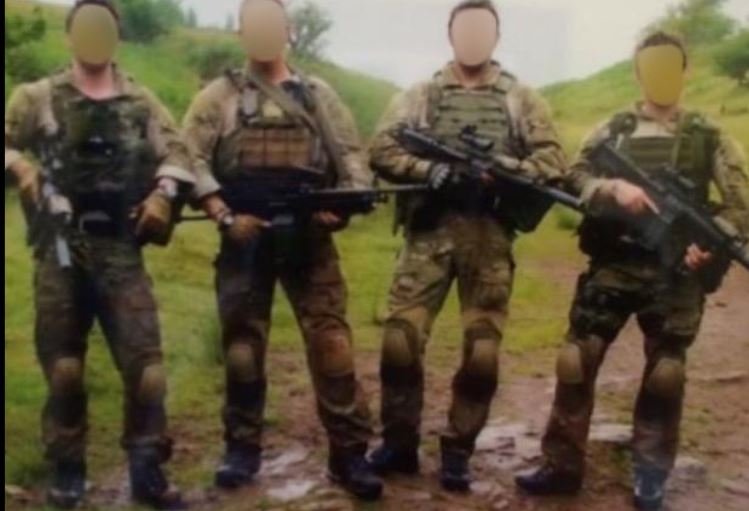
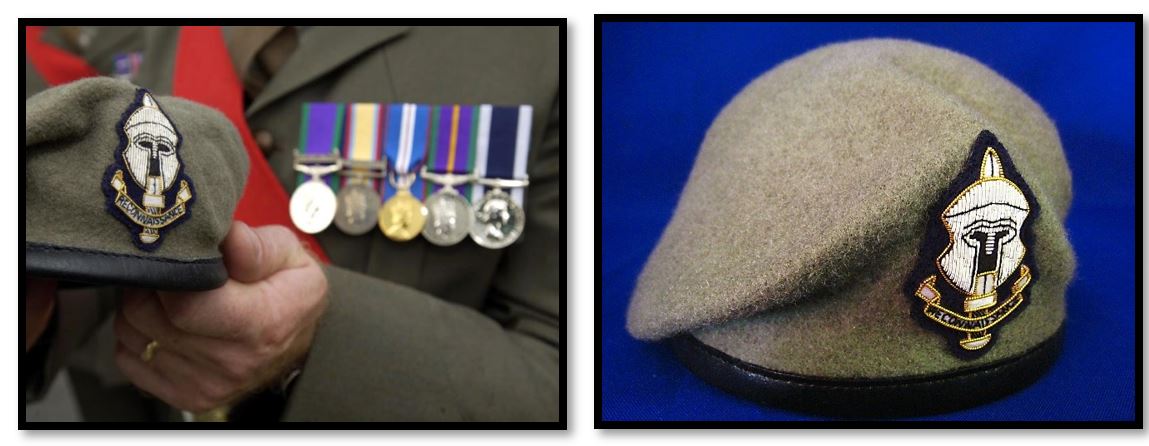
Lewis Page, former editor of The Register, wrote on October 5, 2012, that, “In the Special Forces…One SF formation, the relatively-obscure, Special Reconnaissance Regiment, is particularly (James) Bond-like in the skills it teaches its operatives.
“SRR soldiers learn to drive like lunatics, often in cars loaded with Q-Branch gadgetry (hidden, optical and thermal cameras, special radios, and microphones.) They are also intensely trained in fighting with concealable weapons, and as such are probably the best combat pistol shots in Britain, and second-to-none worldwide. They are also taught to operate undercover in plain clothes, and in various other Bond-like skills, such as unobtrusive breaking-and-entering, the photographing of documents, and dirty fighting with bare hands or improvised weapons.
“An SRR recruit normally joins the unit from the regular forces, but some are on secondment tours from the other ‘Tier One,’ Special Forces units (SRR is considered ‘Tier Two’), the Special Air Service and Special Boat Service…(and) may also have acquired most of the rest of James Bond’s skill set: explosives expert, frogman, skydiver, and so on. Such things are absolutely not discussed publicly.”
Special Reconnaissance Regiment personnel receive essentially the same firearms training as SAS and SBS commandos, and have access to the same weapons as the SAS at Credenhill. Their most-common, assault rifle is the Colt Canada L119A2 (C8 SFW or C8 CQB carbine variants), and H&K G36K and G36C carbines have been employed in Afghanistan, while longer-range rifles include the HK417A2 in 7.62mm NATO for team marksmen.
They have also used the ultra-compact HK416C with 9” barrel. The 5.56mm ammunition used is the new (as of 2016), 62-grain, BAE Systems L31A1 Enhanced-Performance round with an all-steel core and copper jacket, for improved target penetration, while the 7.62mm ammunition is the new, 155-grain, L59A1 High-Performance round with a steel tip inside the copper jacket.
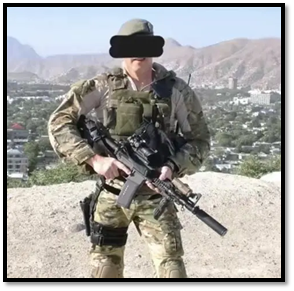
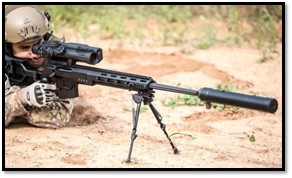
SRR weapons are primarily for close-range, self-defense, not for offensive operations, though, so SAS sniper rifles such as the Accuracy International L115A2/A4 Arctic Warfare AWM in .338 Lapua Magnum, and the lighter, super-accurate, Israeli-made, DAN .338 sniper rifle are very rare in the ultra-secret, reconnaissance unit.
In early 2016, SAS snipers began wreaking havoc against ISIS terrorists with the new, Israeli-manufactured, long-range, DAN .338 rifle in .338 Lapua Magnum. The lightweight, foreign weapon employed an innovative, 10-power, Meprolight MESLAS high-precision, daylight scope, which incorporated a single-pulse, laser rangefinder, compact fire-control system, and exacting measurements of air temperature, humidity, weapon elevation angle, target distance, and other sensors for ballistic calculations. The MESLAS was deadly accurate out as far as 2,000 meters, which far-exceeded the DAN’s recommended, effective firing range of 1,200 meters.
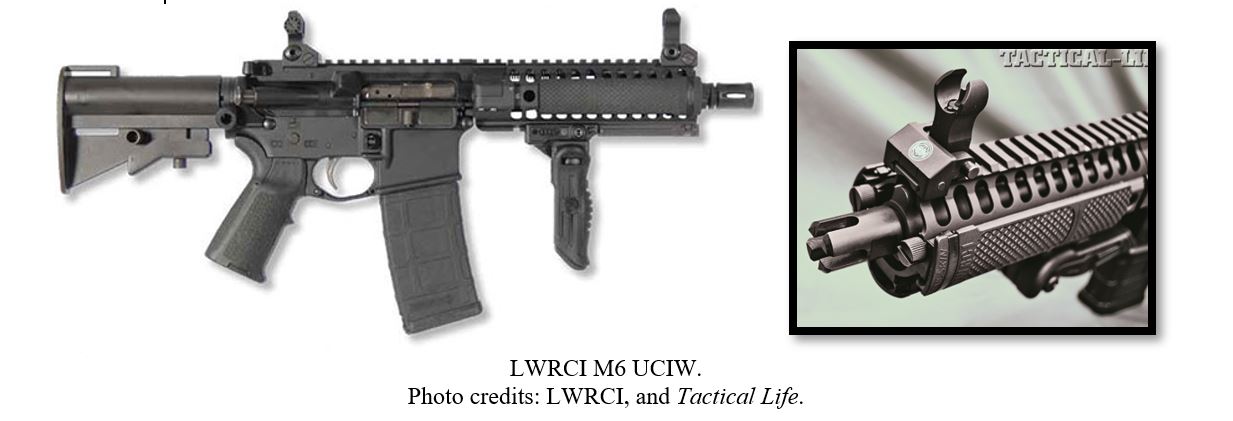
H&K MP5 submachine guns have largely been replaced by L119A2 CQB models, and the much-newer, LWRCI (of Cambridge, Maryland, USA) M6A2 Ultra-Compact, Individual Weapon (UCIW), a radically-shortened, M4A1 carbine variant with a seven-inch barrel, often used with a SureFire suppressor to tame the fierce muzzle blast.
 Available service pistols include the older L105A2 (SIG P226R) or L107A1 (SIG P228), or the current, standard L131A1 (Glock-17) or L137A1 (Glock-19.) Some Walther PPKs in either 7.65mm (.32 ACP), 9mm Kurz (.380 ACP), or .22 Long Rifle are apparently available, mostly as small, backup weapons, but they clearly lack the magazine capacity or stopping power of a larger, 9mm handgun.
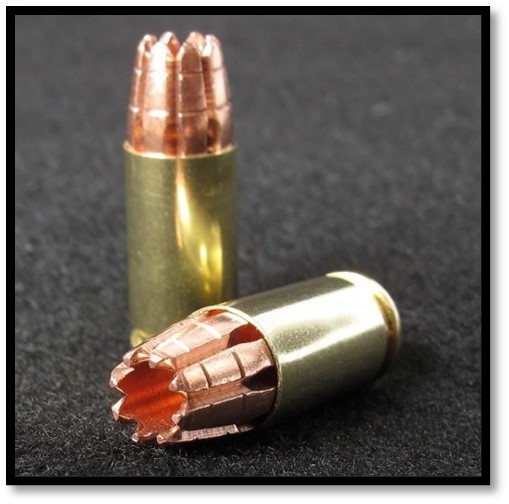
The SAS and SBS specifically requested high-velocity (1,320 fps), Federal 9mm, 95-grain, jacketed soft point (JSP) ammunition (#XM9R01) in the past, before hollowpoints were authorized, but in mid-2017, according to the Express and Daily Star, they ordered the very-deadly, 92-grain, G2 Research Radically-Invasive Projectile (RIP) ammunition (#G2R9MMRIP, at 1,250 fps), in which each round rapidly fragments into eight sharp pieces of solid copper with a blunt core piece, creating nine separate wound channels, for dangerous, counterterrorist operations. This exotic, new round was already reportedly in combat use by U.S. Special Forces, undoubtedly including Delta Force.
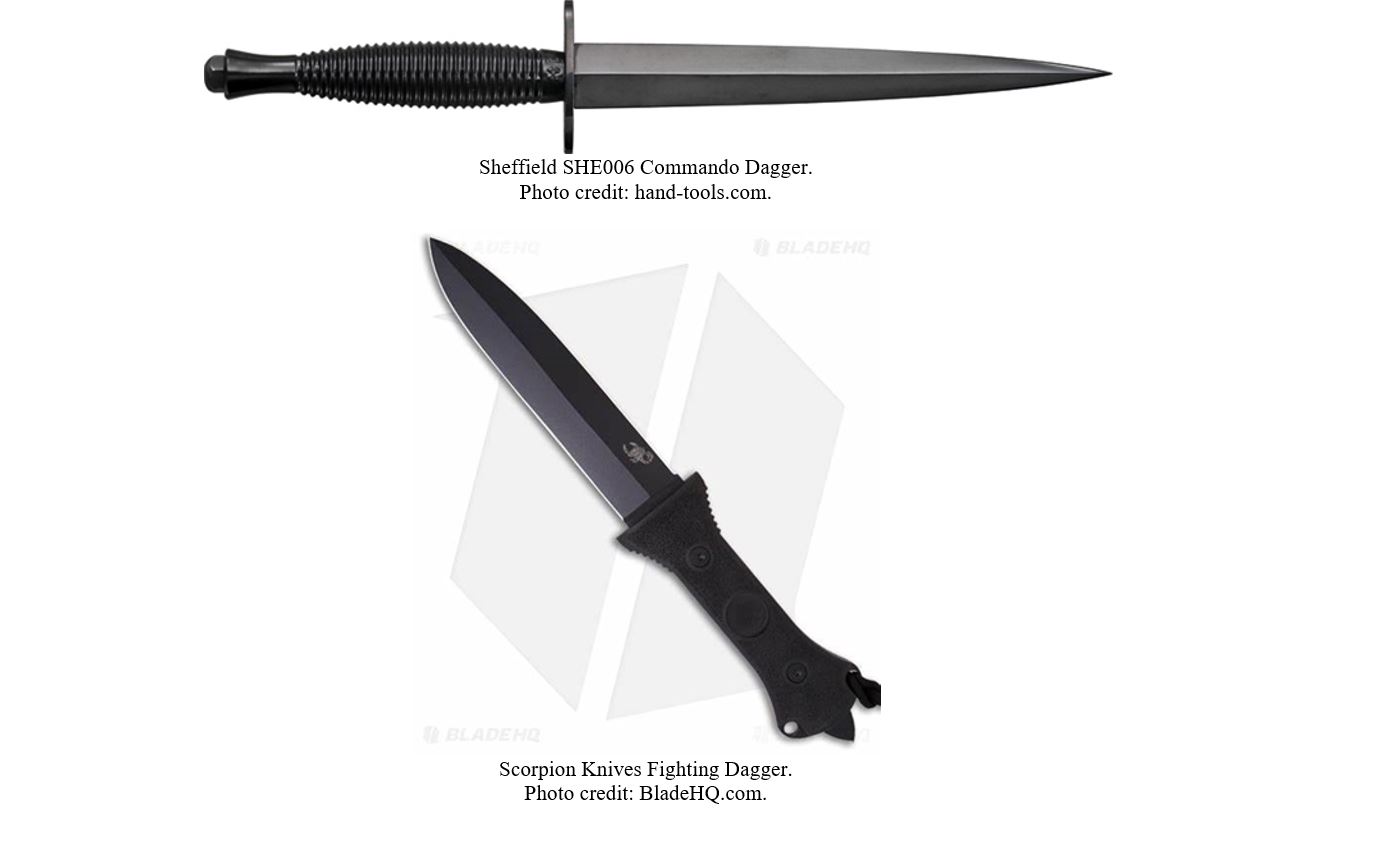
For plainclothes missions, where concealment is a major factor, the super-compact UCIW and Glock-19 are especially effective in close-range engagements. Sheffield Knives of Sheffield, England, still produces the venerable, combat-proven, SHE006 Fairbairn-Sykes Commando Dagger ($90), 3rd Pattern, of World War Two fame, for the Royal Marine Commandos (officially) and SAS (unofficially.) Scorpion Knives of Sheffield also makes a wide variety of military and survival knives, including Fairbairn-Sykes models, and UKSF commandos certainly carry various privately-owned knives on operations in the field.
In late 2015, there were approximately 60 plainclothes, SRR operators and unarmed surveillance troops in Northern Ireland, using unmarked vehicles. At the time, a senior source told the Daily Star in early March 2015 that, “The SRR is the best counterterrorist surveillance unit in the world. Their specialty is close, aggressive surveillance.”
On the day after Christmas 2017, James Clark of the Daily Star reported that, “A female sergeant with the British Army’s Special Reconnaissance Regiment is being lauded as the U.K.’s ‘G.I. Jane’ after reportedly killing at least three Islamic State (ISIS) militants in a town near the Syria-Iraq border after an intelligence mission went awry in September.
“The woman, who was not identified…was on a team with Special Air Service (SAS) troops, SRR personnel, and an MI6 officer…they came under attack by Islamic State militants…and returned fire with small arms…armed with a Heckler and Koch MP5K…‘She took down at least three terrorists who were very close to overrunning her position…and no doubt saved lives.’”
As of June 22, 2019, it was announced that Britain’s Director Special Forces (DSF) had developed a new plan, called “Special Operations Concept,” which, according to the BBC, “would take UKSF units…into closer cooperation with allied intelligence agencies and MI6…For example…an operation might be mounted in a Baltic republic…to uncover and pinpoint Russian, covert activities.” So, the British DSF clearly recognized that these new, plausibly-deniable, “gray wars” were the unfortunate wave of the future, and had to be dealt with accordingly.
In fact, The Guardian stated on April 11, 2023, that, “Leaked, U.S. military documents indicate that the U.K. has deployed as many as 50 Special Forces to Ukraine…of the 97 Special Forces from NATO countries active in Ukraine, 50 were British. This is considerably higher than the number from the U.S. and France, which were said to have deployed 14 and 15 Special Forces respectively…Unlike the intelligence services, the Special Forces are not subject to external, parliamentary oversight.”
While the élite, SBS and SAS were the world’s first permanent, Special Forces units, founded in July 1940 and July 1941 respectively, and the SAS is still universally regarded as the finest counterterrorism force in existence, it is the daring, undercover, shadow warriors of the Special Reconnaissance Regiment who are Britain’s true, military, “secret agents,” serving with honor, distinction, and courage wherever they are needed, against all enemies of the United Kingdom.








COMMENTS