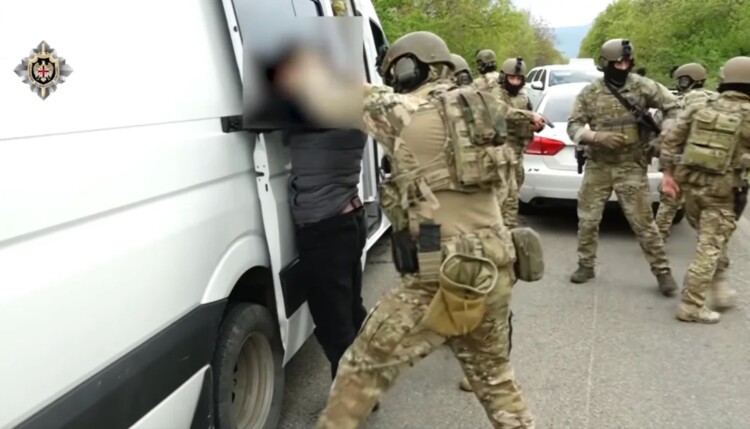
The Georgian Special Operations Forces, with roots in the 1992 War in Abkhazia, have evolved with international collaborations, especially with NATO, into an elite military unit that has tackled both homefront challenges and global threats, recently capturing an Islamic State member, underscoring their global significance.
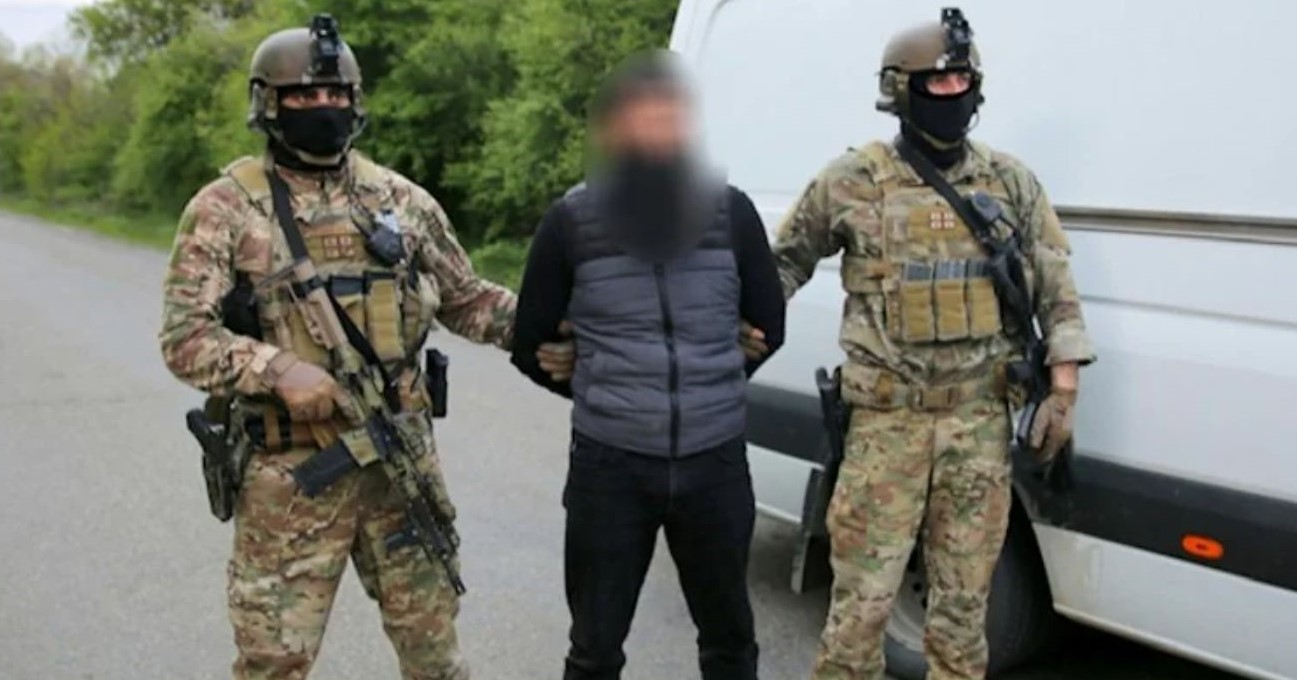
Georgian Special Forces soldiers arrest a member of the Islamic State.
In today’s SOF Pic of the Day, we see members of the Georgian Special Operations Forces arresting a member of the Islamic State. The particular conditions of his arrest, we do not know. But I do know that taking members of IS out of circulation is a good thing for everyone, regardless of where it happens.
Advertisement
The IS suspect in custody.
Georgian Special Operations Forces
The Georgian Special Operations Forces (GSOF) serve as the elite component of Georgia’s Defense Forces, specializing in a range of critical missions, from counter-terrorism to asymmetric warfare, both within and beyond Georgian borders. Falling under the MOD Special Operations Main Division, they’re organized at a brigade level, distributed across Georgia’s various regions and cities. Many of their instructors boast combat experience from past wars, including the Soviet-Afghan conflict, and have served in both Soviet and NATO forces.
GSOF’s genesis dates back to the 1992 War in Abkhazia. At that point, there was little distinction between military and paramilitary units, and those trained by ex-Soviet and Russian experts were highly valued by Georgia’s leaders. In 1999, Georgia formalized its special military unit structures. To transition away from Soviet influences, the SOF Train and Equip Program was initiated with support from Turkey, alongside contributions from nations like the US, UK, Israel, and more.
Advertisement
Initial challenges, including a lack of local training infrastructure, led to sending potential special forces candidates to Turkey. However, in 2001, Georgia ramped up its elite forces training in collaboration with various international special services. The US notably poured significant funds and resources into the Georgia Train and Equip program, training thousands of soldiers and committing millions to arm and support Georgia’s special forces.
By 2008, Georgia’s elite troops had not only contributed to international efforts like the Iraq War but also experienced homefront challenges such as the hostilities in South Ossetia. Post the 2008 Russo-Georgian conflict, the US momentarily halted its assistance, but this pushed GSOF to be more self-reliant and foster ties with NATO and European partners, especially Eastern European forces.
Advertisement
Following the 2014 Wales summit, US-Georgian joint training exercises resumed. Notably, by 2017, the GSOF underwent extensive assessments and received a NATO certification, a remarkable feat for a non-NATO nation. Their rapport with Polish Special Forces, especially units like JW GROM, JWK, and JW AGAT, played a pivotal role in this achievement. The collaboration between Georgian and Polish special forces continues to this day, marking a legacy of partnership and elite military preparedness.